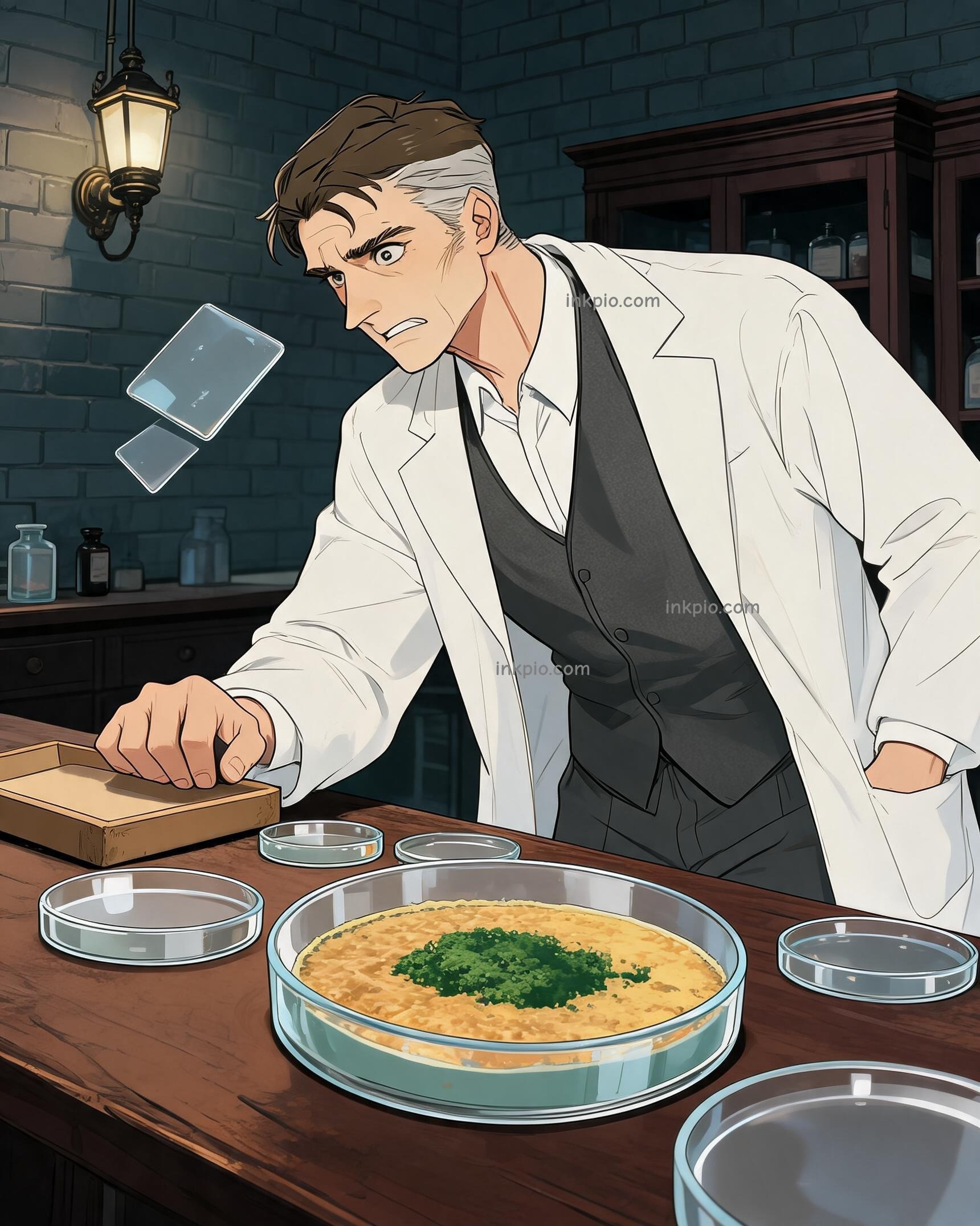
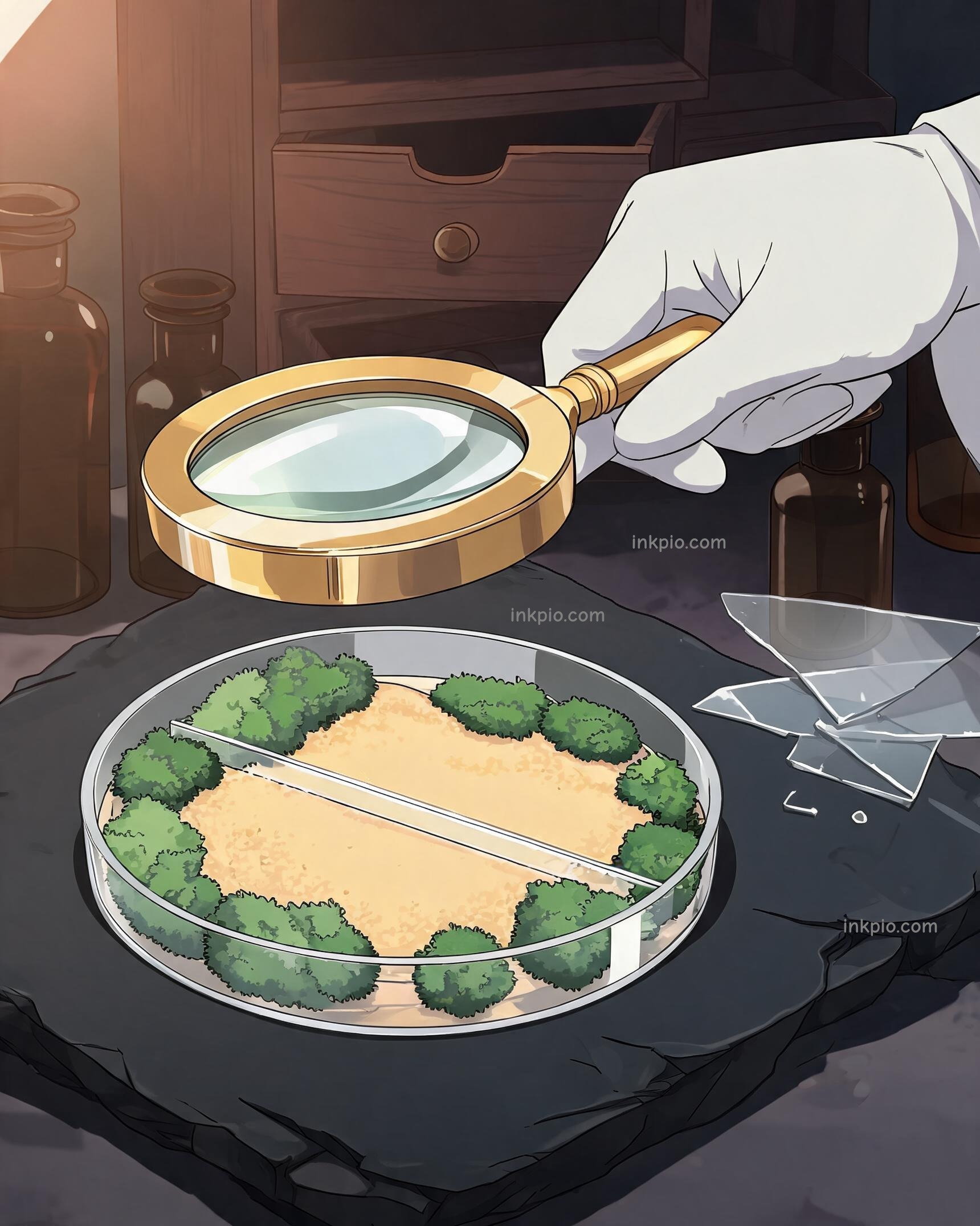

The holiday left his lab cluttered, but one ruined petri dish held the answer to a medical crisis. In September 1928, Fleming returned from a two-week holiday to find Staphylococcus cultures contaminated by Penicillium notatum. He should have tossed the entire stack into the sink. Instead, he leaned over the glass and noticed a quiet miracle. A fuzzy green colony had drifted down from a cracked window upstairs, and the yellow bacteria surrounding it had simply disappeared.
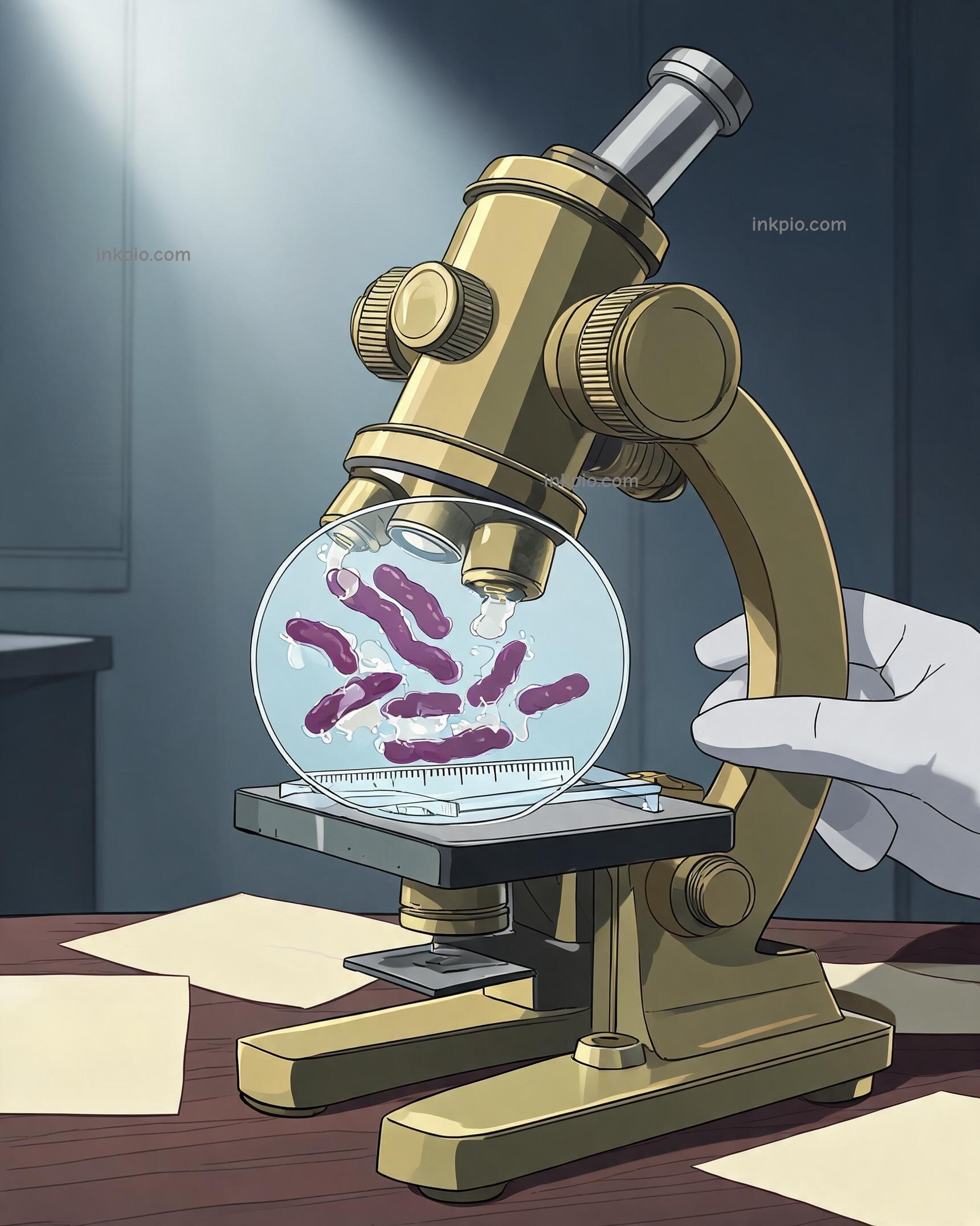
Doctors back then treated infected cuts with harsh antiseptics. Those chemicals scorched healthy tissue just as badly as they killed germs, leaving patients weaker than before. Fleming scraped the strange fungus into a clean broth and let a single drop fall onto a fresh slide. He slid the glass under the heavy brass microscope and turned the focus knob. The liquid worked like water washing over a poorly built mud wall. The mold secreted a specific compound that hunted the rigid outer shell of the bacteria. The chemical dissolved that protective layer, and the cells instantly burst open from internal pressure.
The empty space formed a sharp, transparent ring around the fungus. The clear zone of inhibition measured approximately 15-20mm in diameter, proving bacterial cell wall lysis without touching human tissue. He traced the spread with a ruler. The compound drifted outward from the colony, dissolving everything in its path until the concentration faded. It wasn’t random decay. It was a precise, targeted defense.
That quiet observation broke a century of dangerous medical guesswork. Surgeons slowly swapped out burning chemical washes for a refined extract pulled from a stray spore. Shrapnel wounds and blood poisoning that used to seal a patient’s fate suddenly had a real exit route. Fleming capped his ink pen, stepped back from the wooden bench, and let the morning quiet fill the room. The careless spill on his tray just handed millions of people a second chance.