
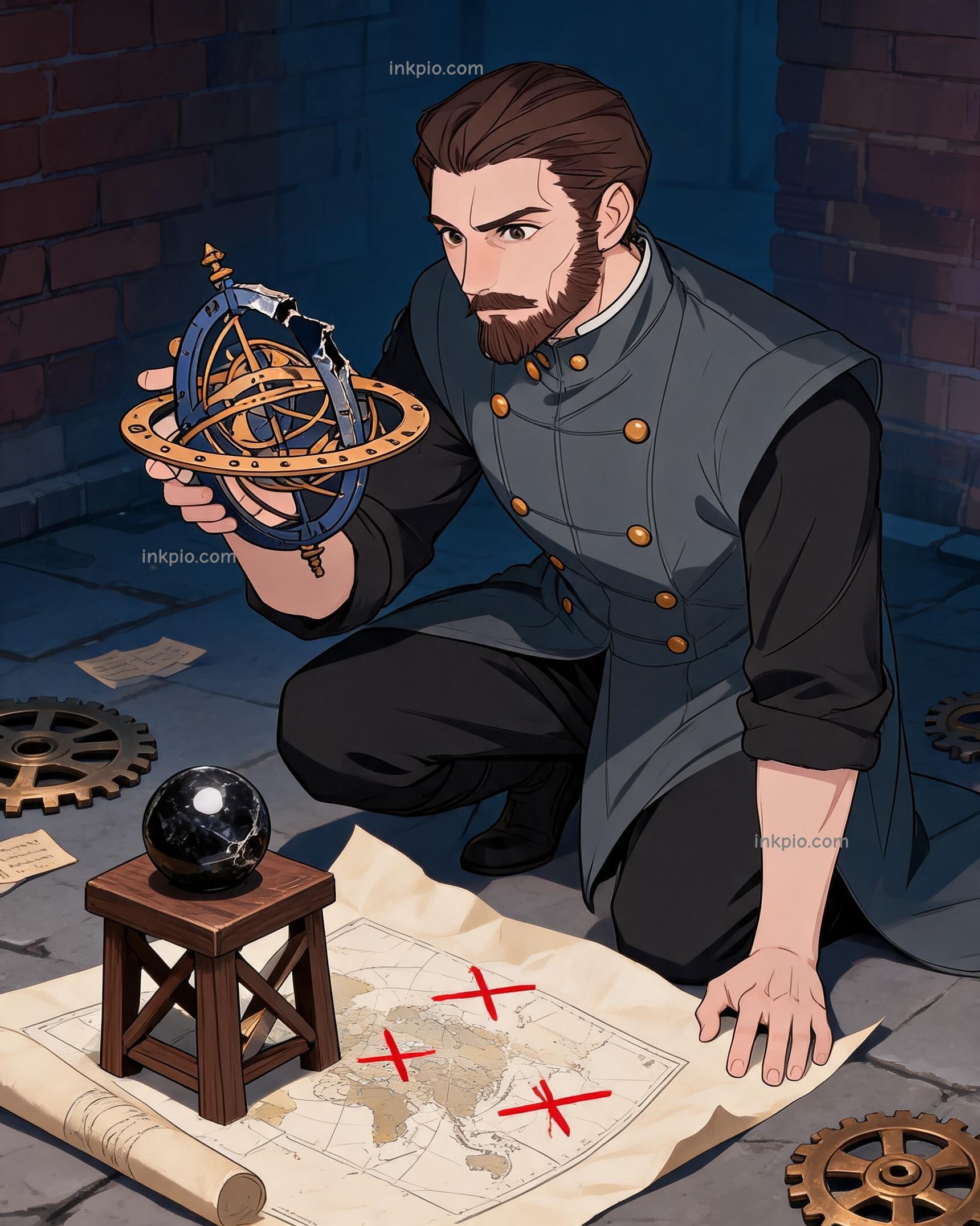

The brass needle on Gilbert’s desk spun wildly, refusing to settle on any direction. Sailors blamed the chaos on damp sea air or wandering star-magic. Ships missed their ports because the compass refused to sit flat, and captains paid for those errors with sunken hulls and lost cargo. Gilbert knew the old sky-theories were dead weight. He cleared his cluttered oak table and decided to track down the real source.
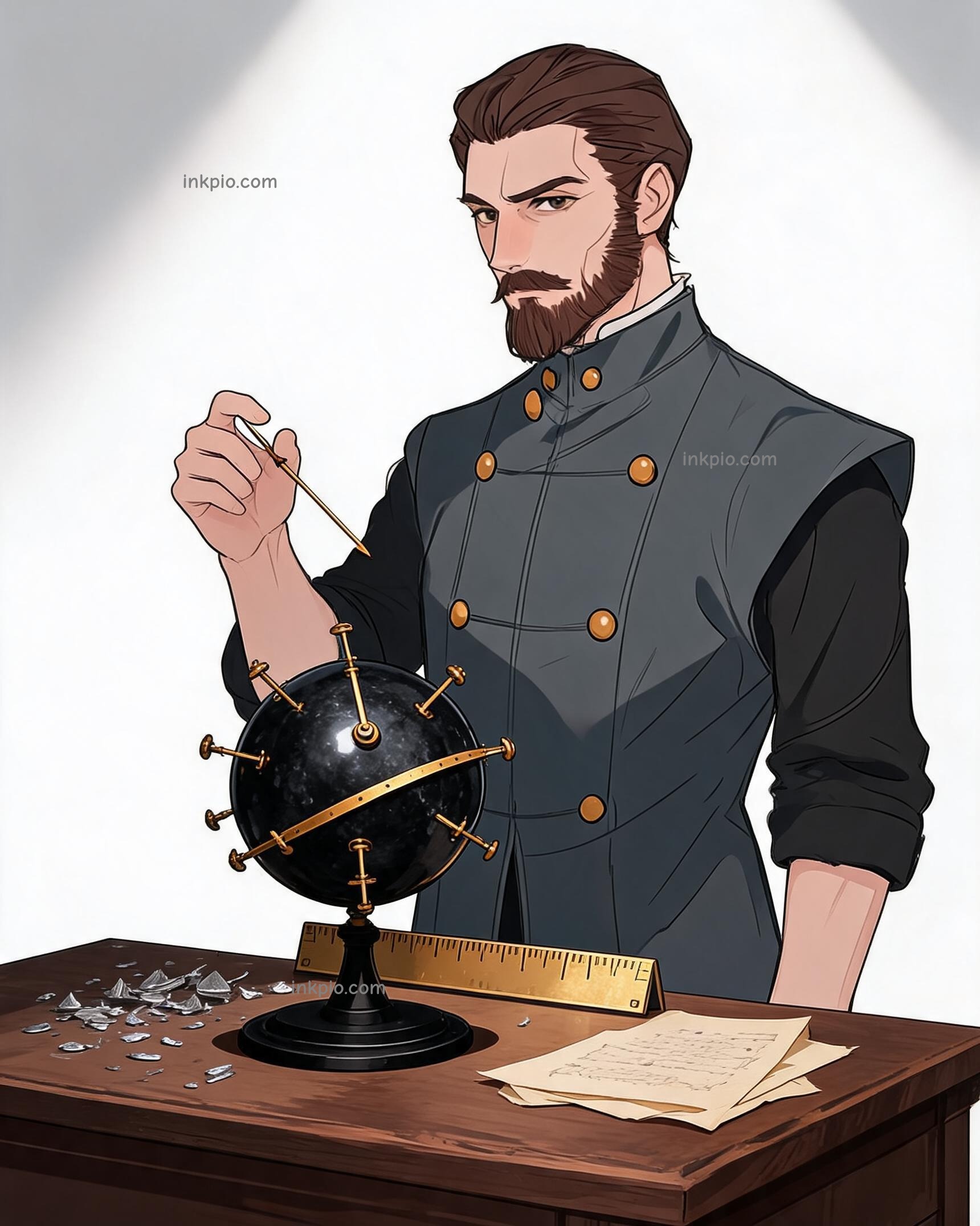
He brought out a heavy lodestone and ground it into a smooth, polished sphere. He called it a terrella, a miniature Earth. Setting a tiny pivoted iron needle on its curved surface, he watched it closely. The needle didn’t just swing north. It tipped downward, leaning into the stone like a marble settling into a shallow bowl. He rotated the sphere slowly, marking each new latitude on a sheet of parchment. The angles shifted in perfect order.
The pattern clicked quickly. The stone wasn’t dragging the needle toward the heavens. It was pulling from deep inside its own iron heart. Every measured dip matched a specific position on the curve. He realized the geometry worked exactly like a gentle hillside. If you stand at the very top, the ground pushes straight down against your boots. Walk halfway down, and the slope tilts. Reach the flat middle, and it levels out completely. The terrella showed the exact same predictable lean, proving the pull originated from within.
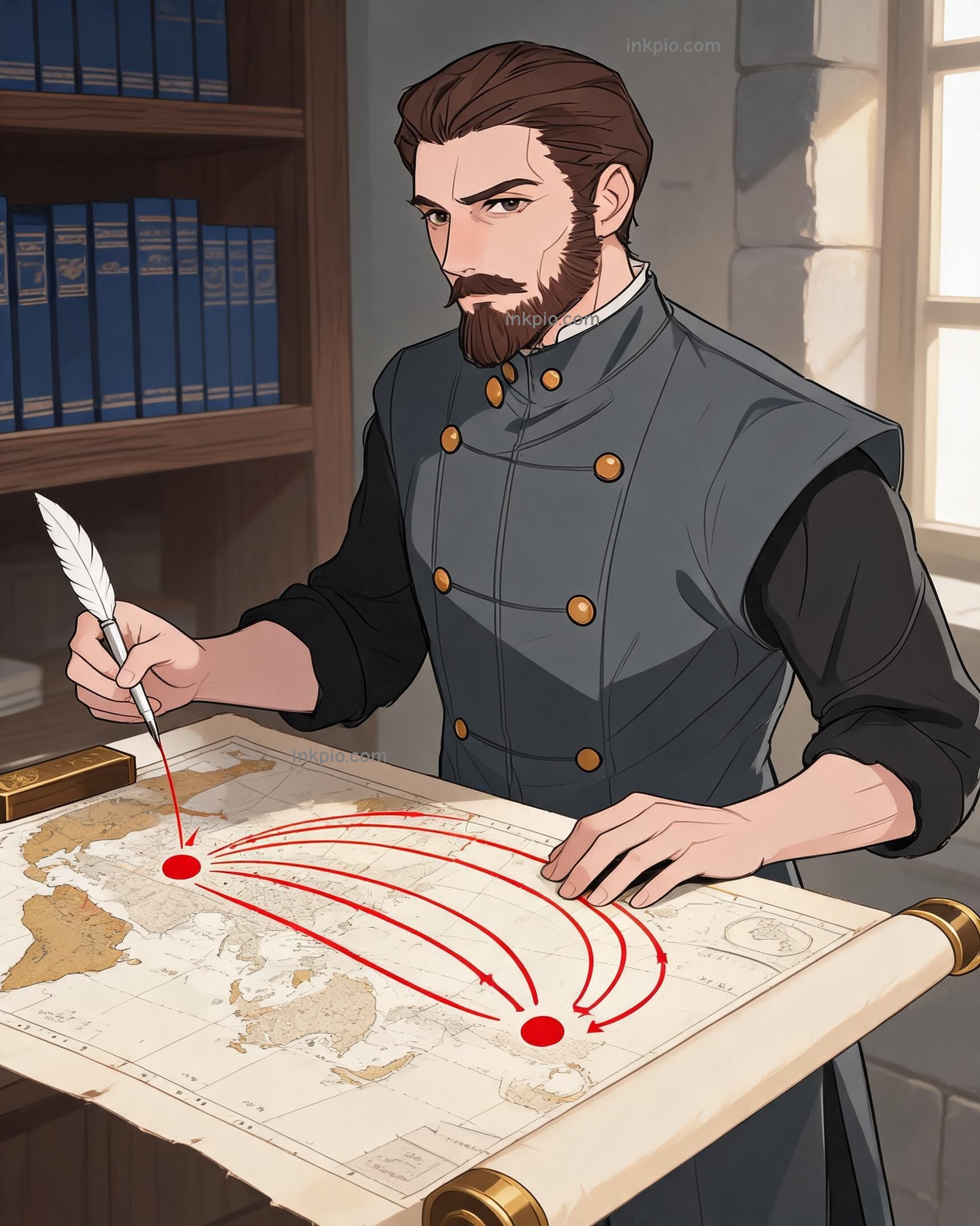
He filled page after page with those measurements, concluding that the Earth itself forms a perfect magnetic body. The old cosmic myths collapsed under the weight of his notebook data. He published De Magnete in 1600 and gave sailors a solid rule instead of guesswork. Navigators finally knew how to adjust their charts for that downward tilt, and ocean routes grew safer overnight.
He set his quill down on the heavy oak desk. The tiny iron needle held perfectly steady. It pointed true to a world he finally understood.