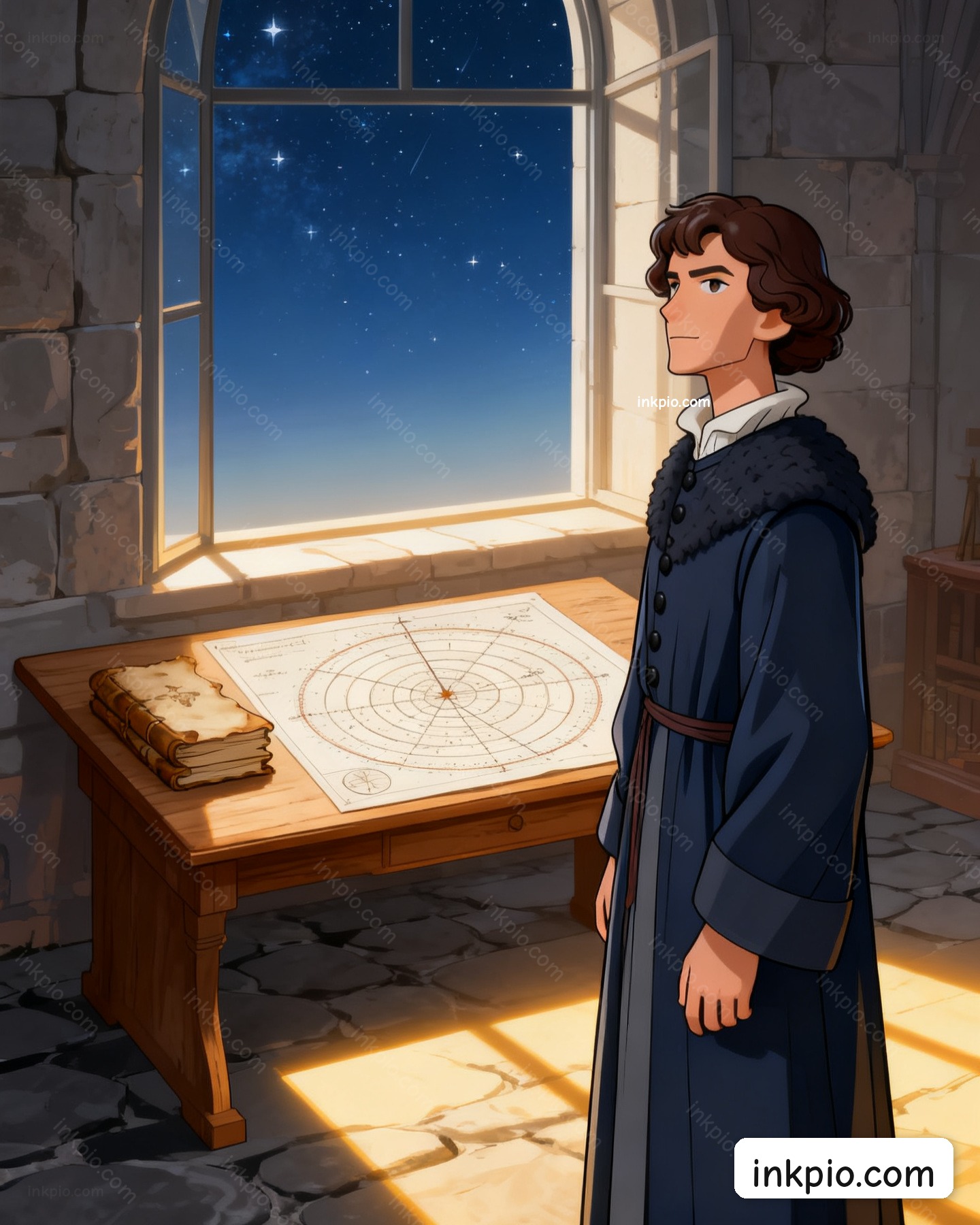

Mars kept looping backward across the night sky. Ancient rules promised perfect circles, but the red planet refused to obey. Scholars had spent generations trying to force it back into a straight line.
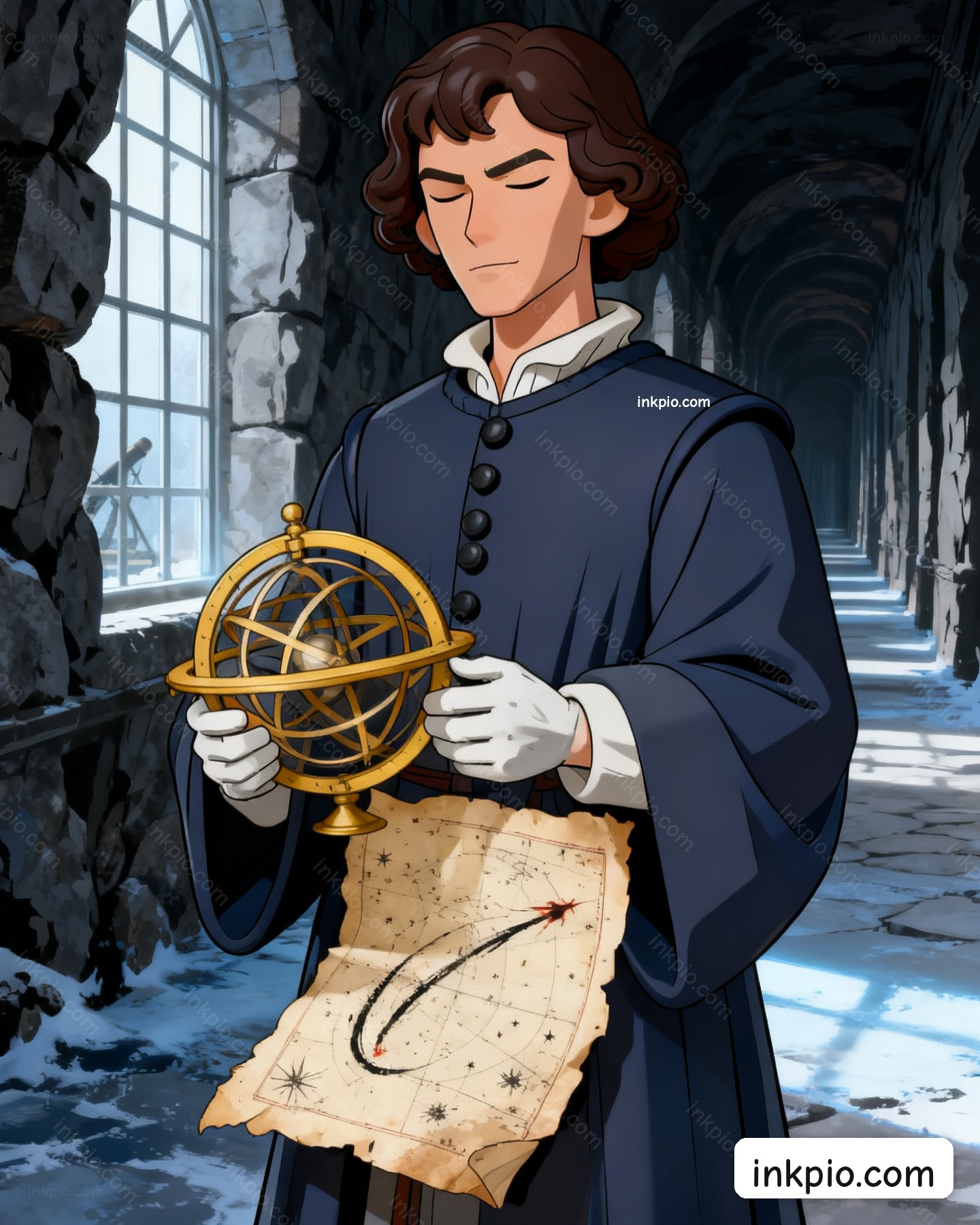
For centuries, astronomers patched the Earth-centered map with extra spinning loops just to force Mars into compliance. The geometry grew heavy and clumsy. Predictions drifted off by days, leaving sailors and scholars guessing at the wrong dates. In 1512, Copernicus tracked Mars's opposition through a brass quadrant, logging each degree as the planet stalled and slipped. He watched the Ptolemaic equants wobble and fail under the weight of their own corrections. The numbers simply would not balance.
He tried a simple shift in perspective and asked what happened if the Sun sat still at the center instead. Imagine two runners on a circular track. You sprint on the inside lane while a heavier runner stays outside. When you pull alongside, the slower runner seems to slide backward for a second. He took his quadrant readings as the starting point, lined Earth’s faster orbit alongside Mars’s wider path, and measured the shifting angles between them. The calculation stripped away the illusion instantly.
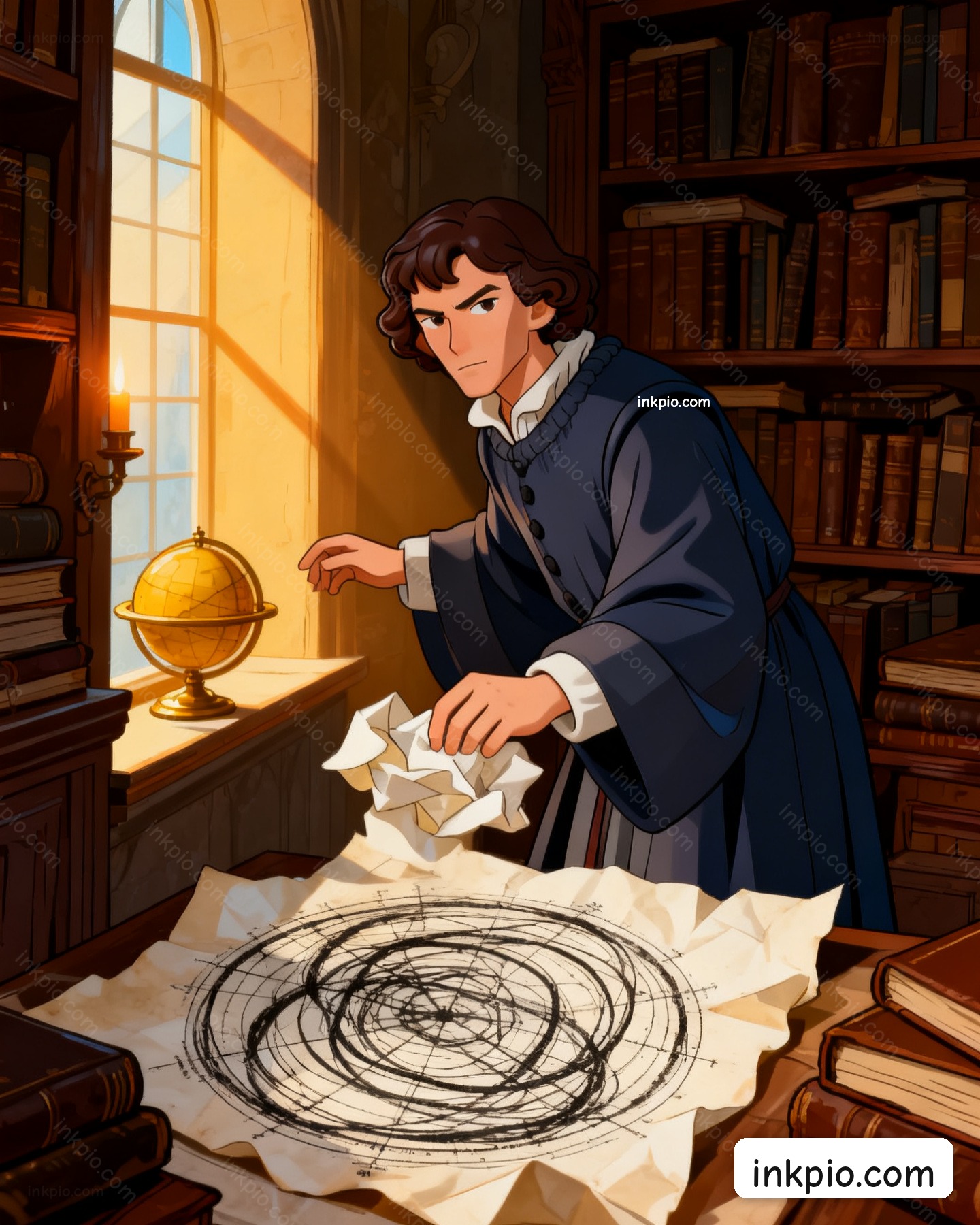
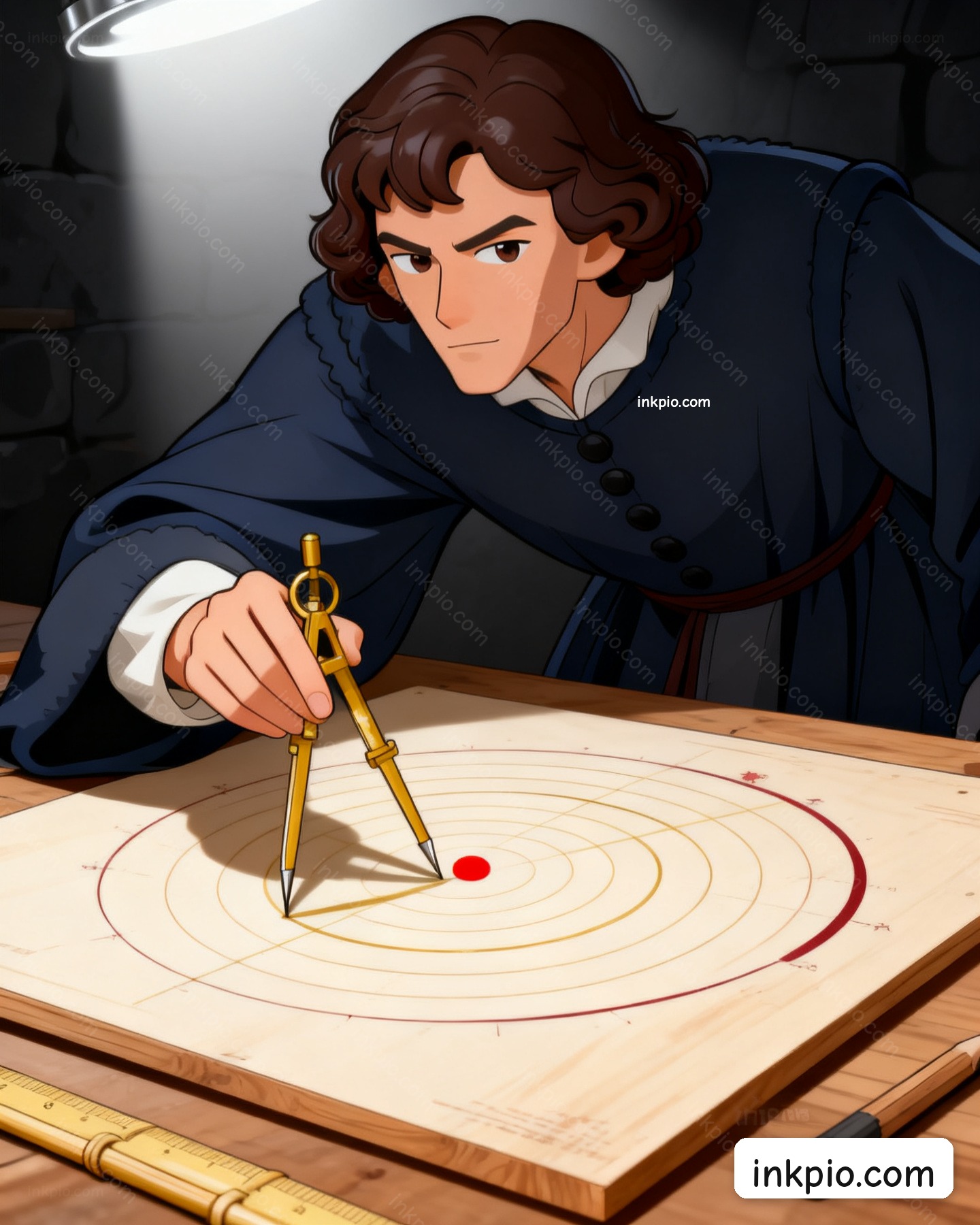
He swept the tangled epicycle drafts into the corner and laid out a fresh sheet. A single dot marked Sol. He traced two clean rings around it with a brass compass, letting the orbits sit side by side. The messy zigzags smoothed into steady arcs that matched his sightings perfectly. He wrote down the core idea in a short manuscript called Commentariolus around 1514, noting that the apparent retrograde motion came from Earth’s own journey, not the planet’s. Those pages moved quietly between trusted hands, carrying the first proof that Earth’s orbit around the Sun naturally explained the whole system.
He set the compass down and listened to the quiet room. The old charts looked like a tangled knot, but the new map sat clean on the desk. Morning light finally reached the stone floor as he watched Mars fade into the dawn.