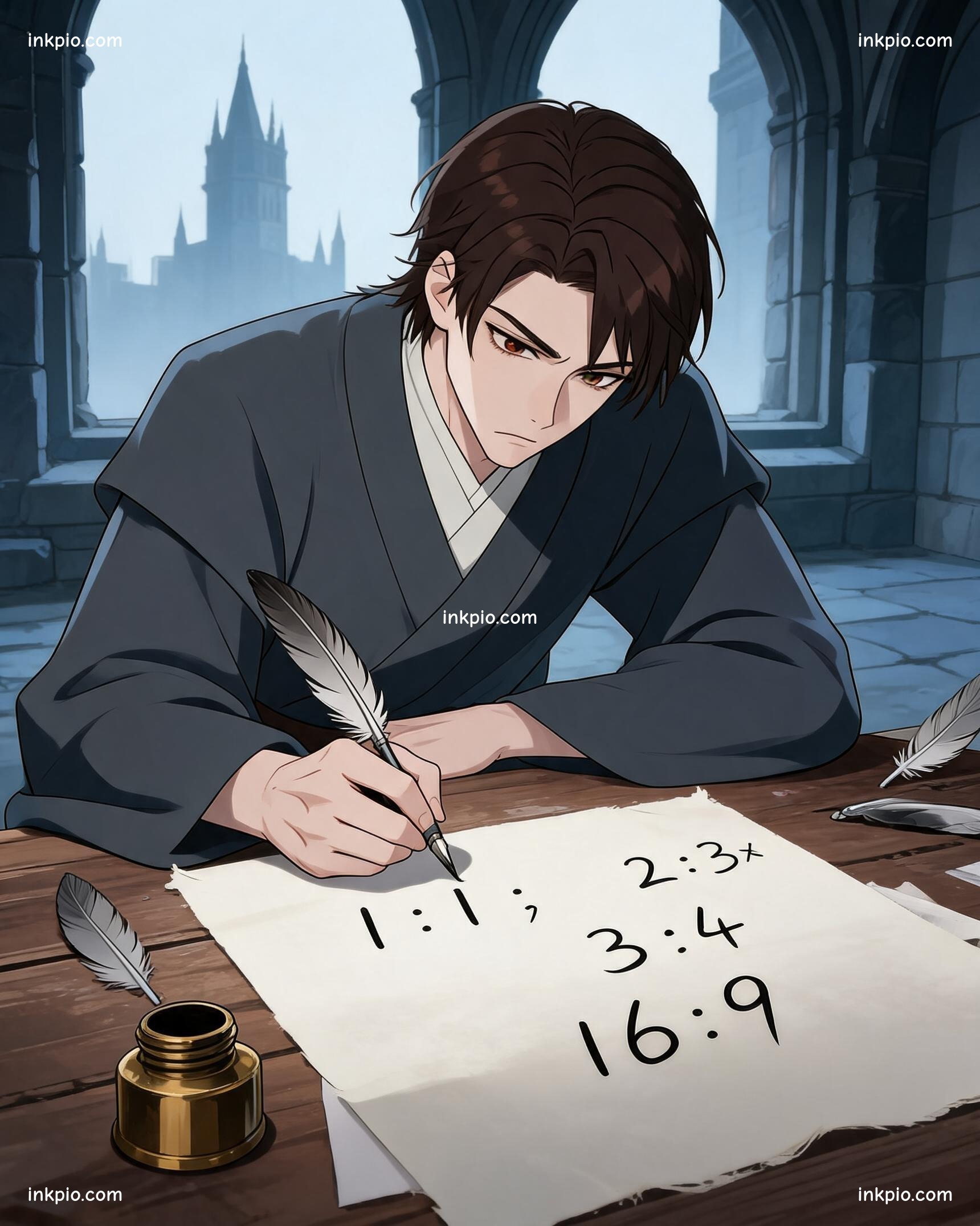



Aristotle’s rules for falling objects left a glaring gap. The old philosopher claimed things simply moved because they wanted to, calling it natural or violent, but he never tracked acceleration. Nicole Oresme sat in a drafty University of Paris study around 1360, scratching out ratio after ratio on thick parchment. Every rigid calculation fell apart when he checked it against a real dropping stone. He needed a way to track changing speed, but the old words just kept failing him.
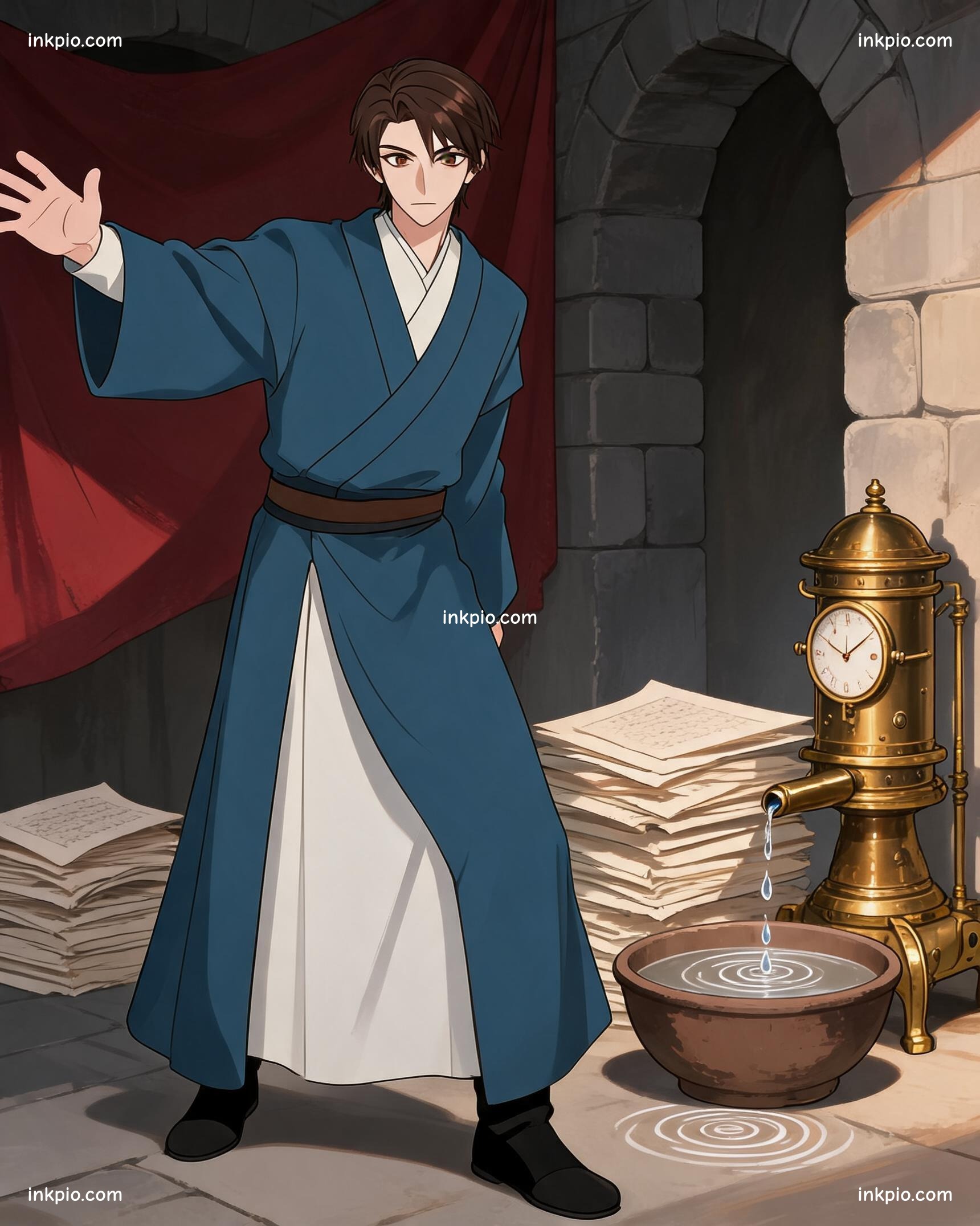
He swept the ruined sheets onto the floor and turned his attention to a brass water clock. Drops fell into a clay basin at a steady, unchanging rhythm, and the pattern suddenly clicked. Time could just be a straight line stretching forward. If he stacked velocity on top of that line, one moment after another, the invisible growth of speed would finally take a visible shape. He pulled a fresh sheet closer and sketched a horizontal line for time, raising vertical marks to catch each new burst of motion.
He fed the steady ticks of time and the climbing marks of velocity into the paper. By connecting the tops, he drew a sharp right triangle. To find the total distance, he measured the space inside that shape. Imagine a pile of gravel poured in a steady, widening wedge. If you slice the sloped top in half and slide it down, the uneven triangle flattens into a solid rectangle of equal area. That simple geometric swap independently proved the Mean Speed Theorem, showing a falling object covers the exact same ground as something moving steadily at half its final speed.
The proof locked everything into place. He packed the drawings into his Tractatus de configurationibus qualitatum et motuum, trading centuries of philosophical guessing for clean, predictable geometry. Morning light finally pushed through the high arched window, catching the dust dancing above his oak desk. He dropped his charcoal, let his shoulders slump, and watched the clear Paris sky. Gravity stopped being a riddle. It just became a line on paper.