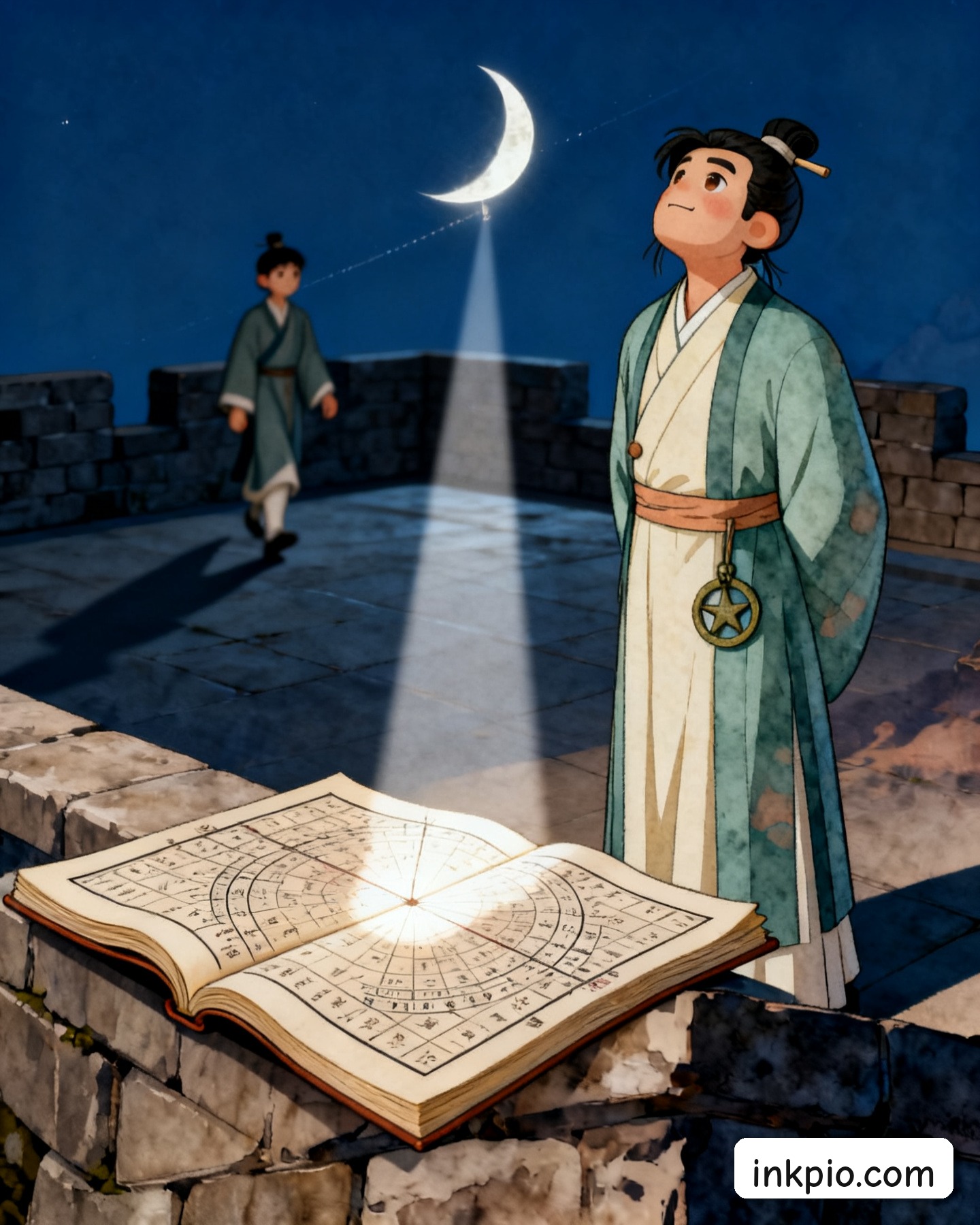

The calendar scroll predicted the moon would sit exactly on the third grid line. The actual sky placed it two full fingers past that mark.
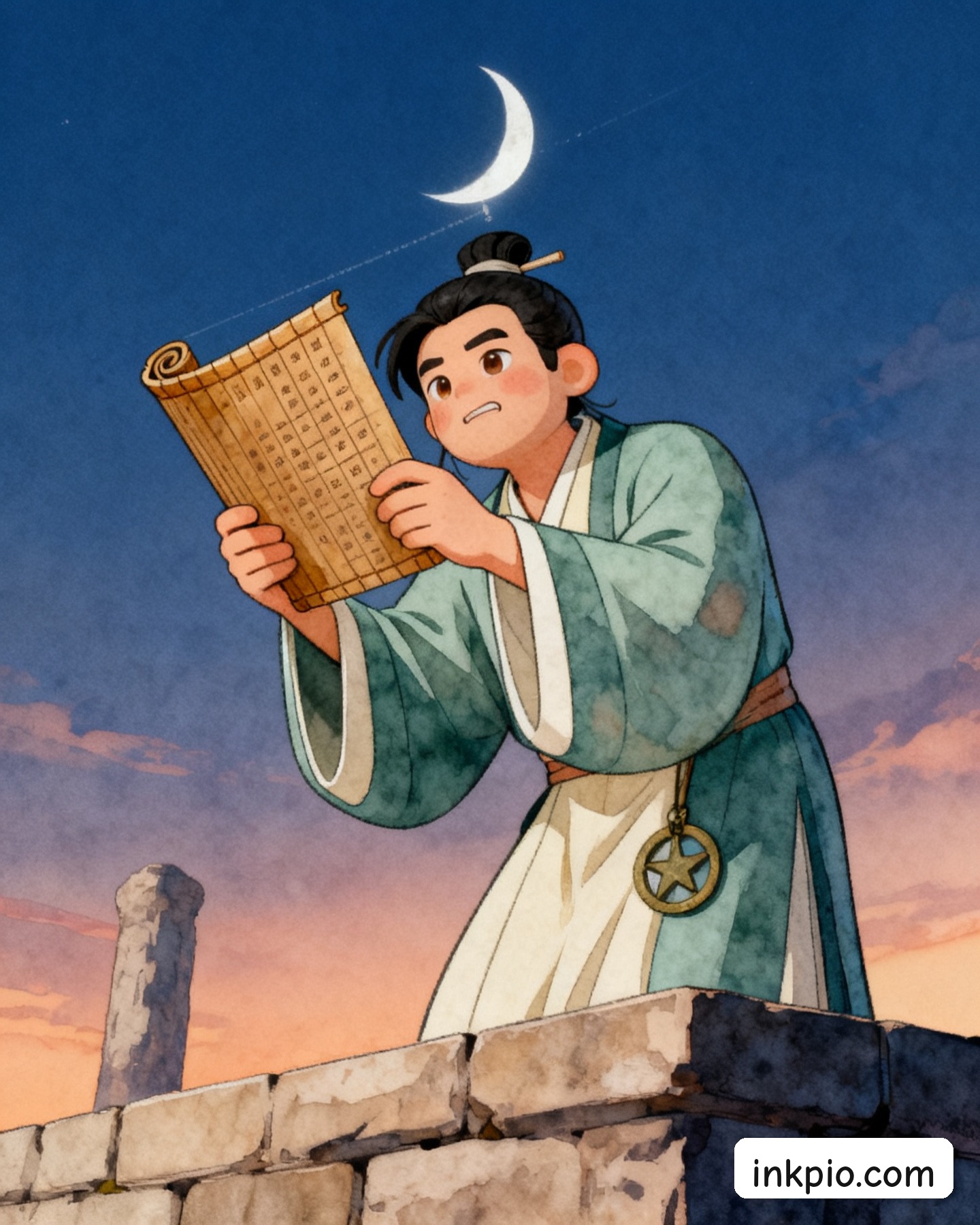
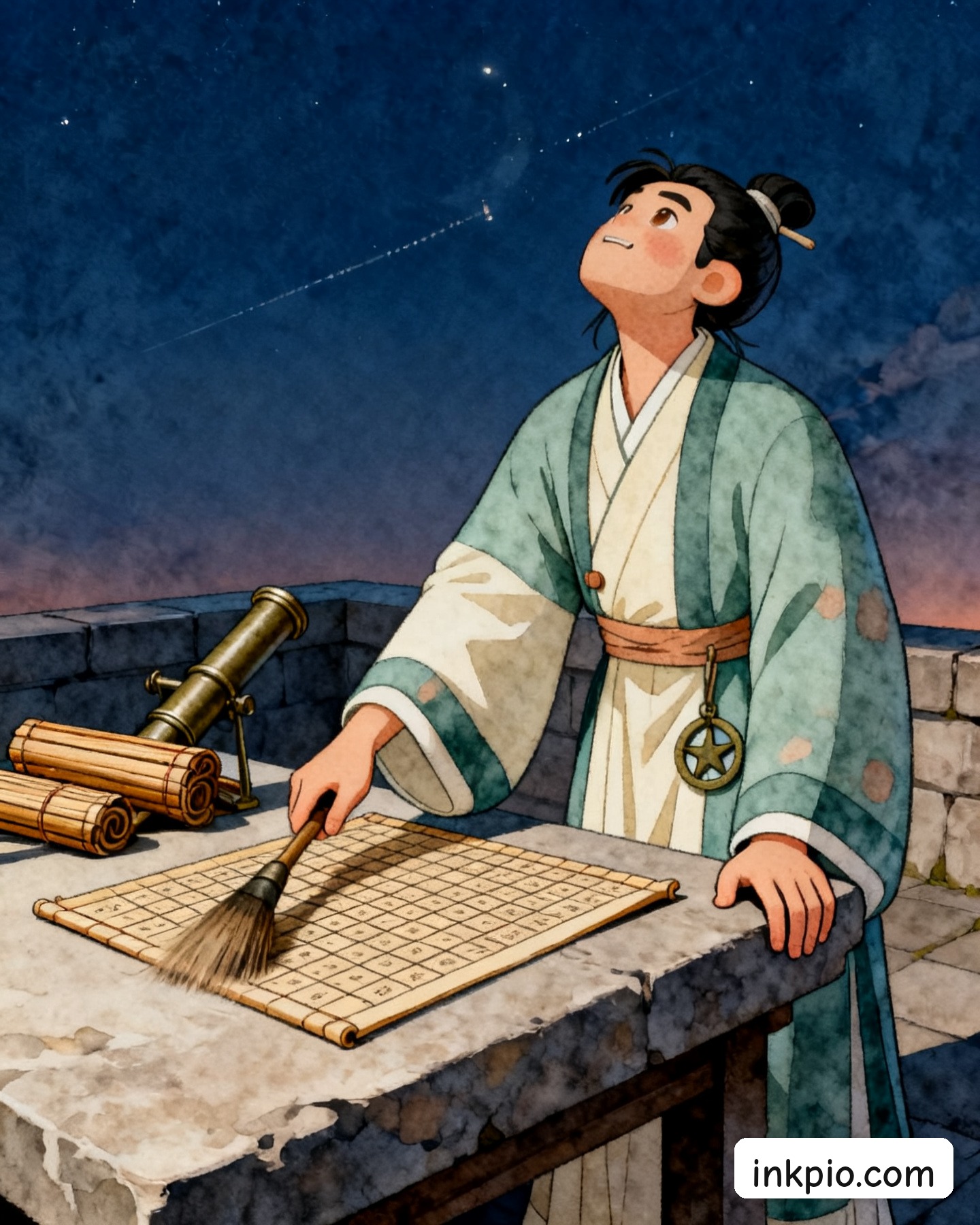
Jia Kui stood on the stone terrace in the chill of 85 AD. Tomorrow, the imperial court would issue the new spring calendar, but the old Taichu model treated the heavens like a rigid printing grid. The real moon clearly never read the layout guidelines. He swept the bamboo scroll off the table, watching it tangle with a heavy bronze sighting tube. A wrong calendar meant missed planting windows and confused state rituals. He needed a tracking method that actually matched the sky before dawn.
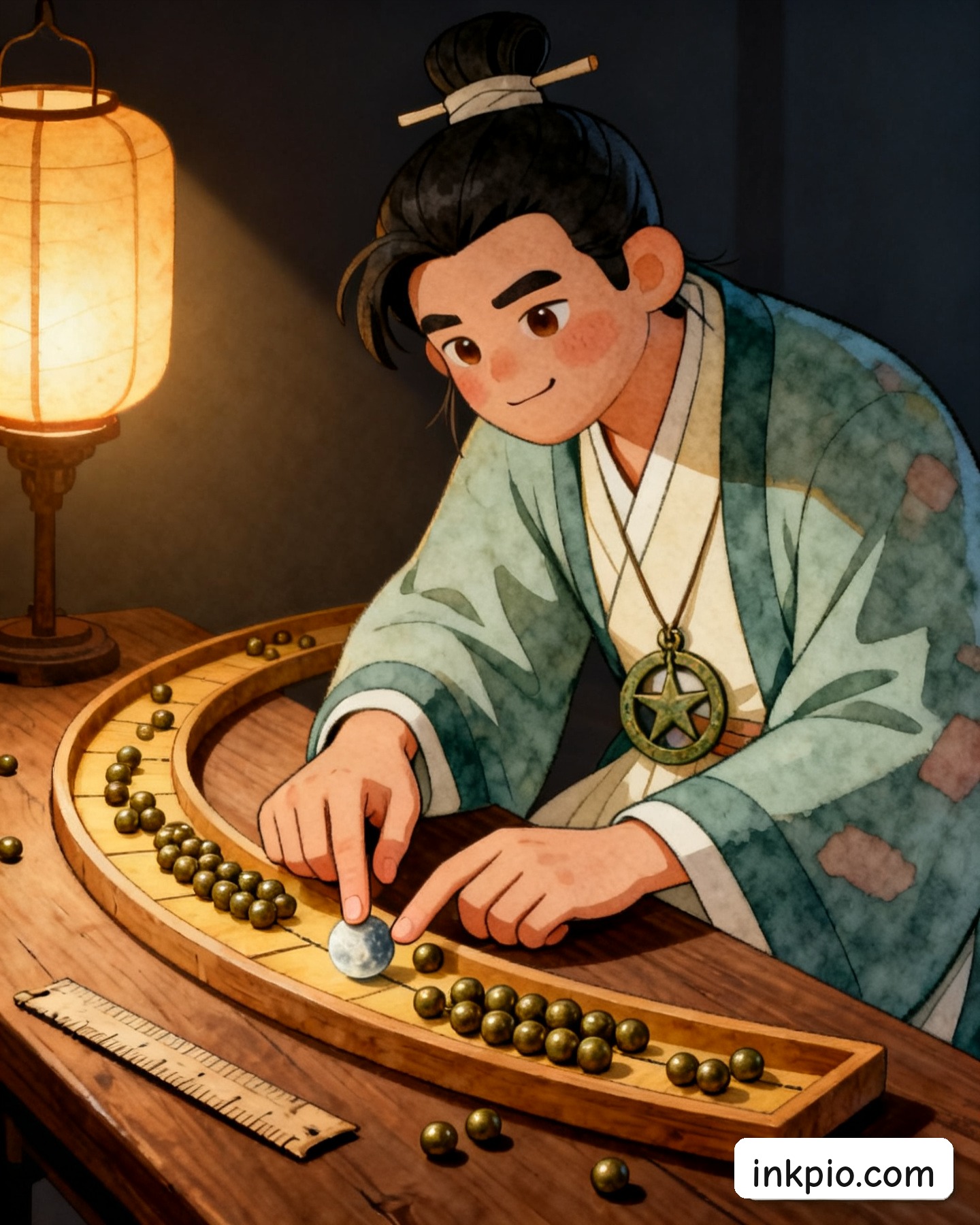
He turned to his modified armillary sphere, now fitted with a newly added ecliptic ring to shift the observational baseline from the celestial equator to the sun’s true path. That adjustment provided raw sighting data instead of theoretical guesses. He pulled a curved wooden track across his desk and scattered loose bronze beads along its groove. The solution rested on an early interpolation technique. Imagine walking a route where you only know the departure, arrival, and three checkpoints. You naturally lengthen your steps on flat stretches and shorten them on inclines to fill the distance accurately. Jia Kui used his nightly moon sightings as those fixed points. He fed the numbers into the track, stretched the bead spacing to cover rapid arcs, and squeezed them tight for sluggish phases. The physical gaps bridged the missing days.
The bureau’s junior official paced in the shadows, shoulders tight. Jia Kui slid the beads forward and back, adjusting the wooden groove like a tactile slide rule. The process avoided simple craftsmanship. The setup functioned as a first-century physical interpolation algorithm running on a desk. He picked up the final bead, designed for the cycle’s slowest point, and pressed it into a deliberately narrow notch. His thumb pushed it flush into the slot. The bronze edge lined up exactly with the crescent reflection in the observation window.
“The moon moves sometimes swiftly and sometimes slowly, following no fixed measure,” Jia Kui murmured. The moon speeds up and slows down. The heavens follow no constant measure. The official halted mid-step. His breathing slowed as the alignment held steady under the lantern light. They quickly marked the fresh scroll with those uneven intervals, abandoning the old straight grid for good.
The beads remained locked in their wooden grooves, mapping out the coming months. Jia Kui tapped the track once and stepped back from the desk. The error converged. The spring planting KPI was secure.