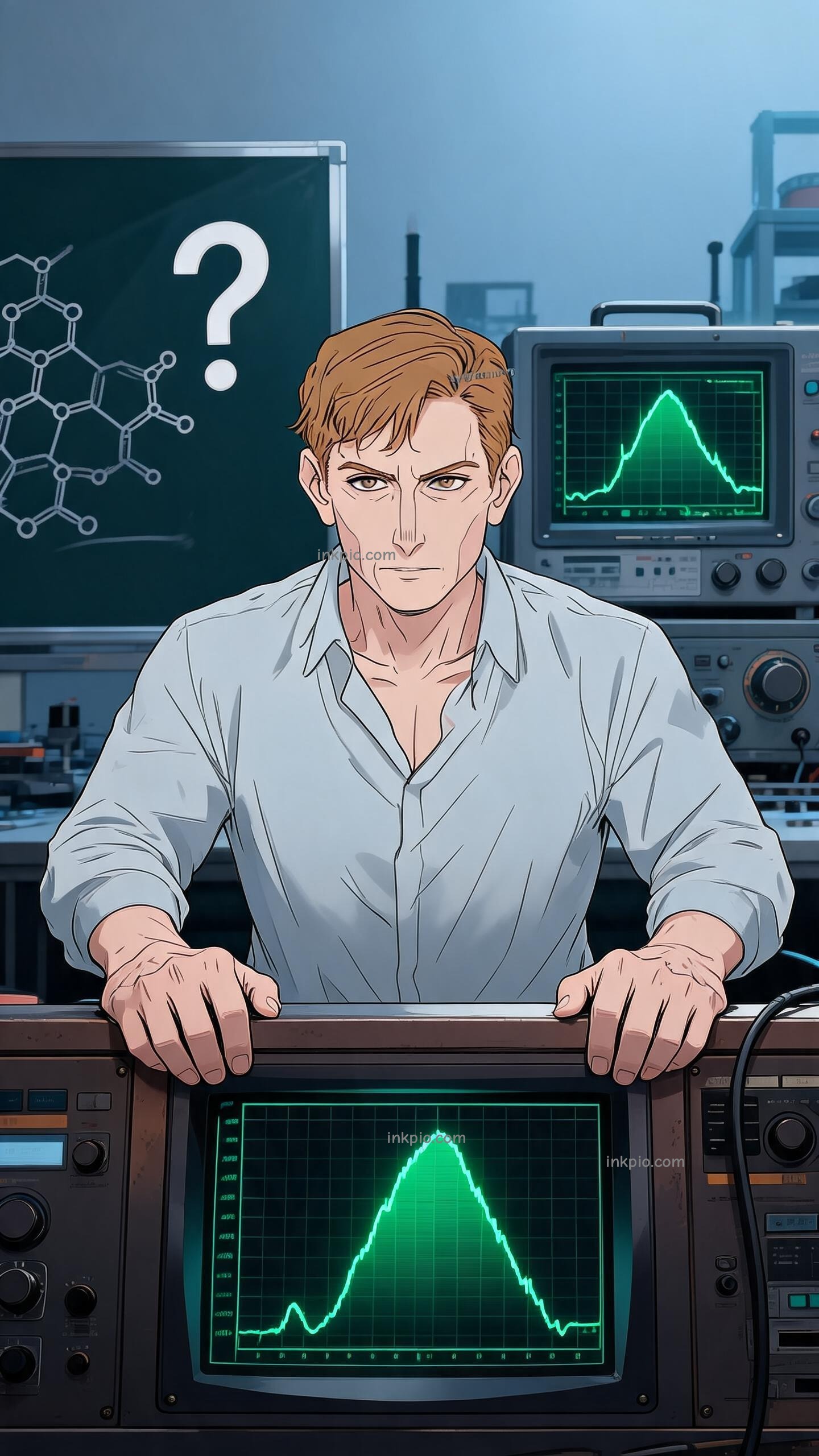



The air in the Bell Labs corridor tasted of ozone and burnt dust. It was 1947, and the building hummed with the nervous energy of machines that refused to behave. Vacuum tubes were the masters of this domain, but they were tyrants. They glowed with an angry orange heat, demanding constant attention. A single shattered glass envelope could silence a room-sized computer, filling the space with acrid black smoke. John Bardeen stood before a wall of these failing giants, watching the filaments flicker and die. He didn't just see broken equipment; he saw a dead end. The future of calculation was suffocating under its own heat.
Bardeen knew semiconductors offered a cooler, quieter path. Theory promised that a small electrical field could control current flow through materials like germanium. But reality had other plans. An invisible barrier called 'surface states' trapped every attempt. Imagine trying to push water through a sponge wrapped in plastic wrap. The charge hit the surface of the crystal and stuck there, never reaching the interior where it needed to work. For months, this static cling of physics held them hostage. The equations were perfect, but the crystals remained stubbornly silent.
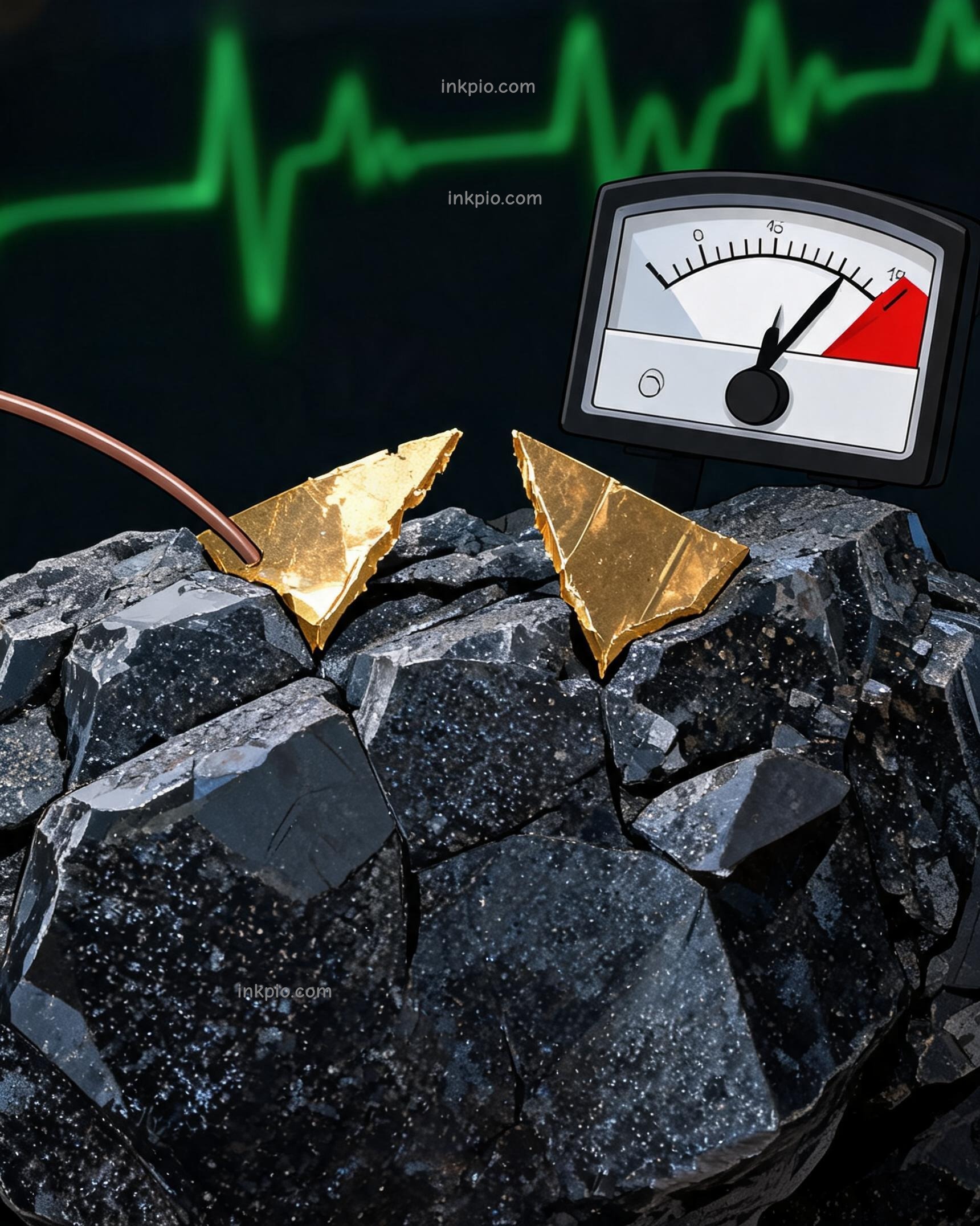
Walter Brattain grew tired of the theoretical stalemate. He was a man who trusted his hands more than his chalkboard. If the surface was the problem, he would bypass it entirely. He didn't reach for complex machinery. Instead, he grabbed a simple plastic wedge and wrapped it in gold foil. With a razor blade, he sliced through the gold at the very tip. The cut was delicate, splitting the foil into two microscopic contacts separated by less than 0.002 inches. It looked like a toy, not a scientific instrument. But in that tiny gap lay their only hope.
The tension in the lab was thick enough to choke on. Bardeen watched as Brattain positioned the wedge over a block of dark gray germanium. This was no longer about abstract fields; it was about physical contact. Brattain pressed the two hair-thin gold points into the crystal. The goal was to inject the signal past the trapping surface, straight into the heart of the material. If the theory held, the electrons would jump the gap. If it failed, they were back to square one, surrounded by smoking glass monsters.
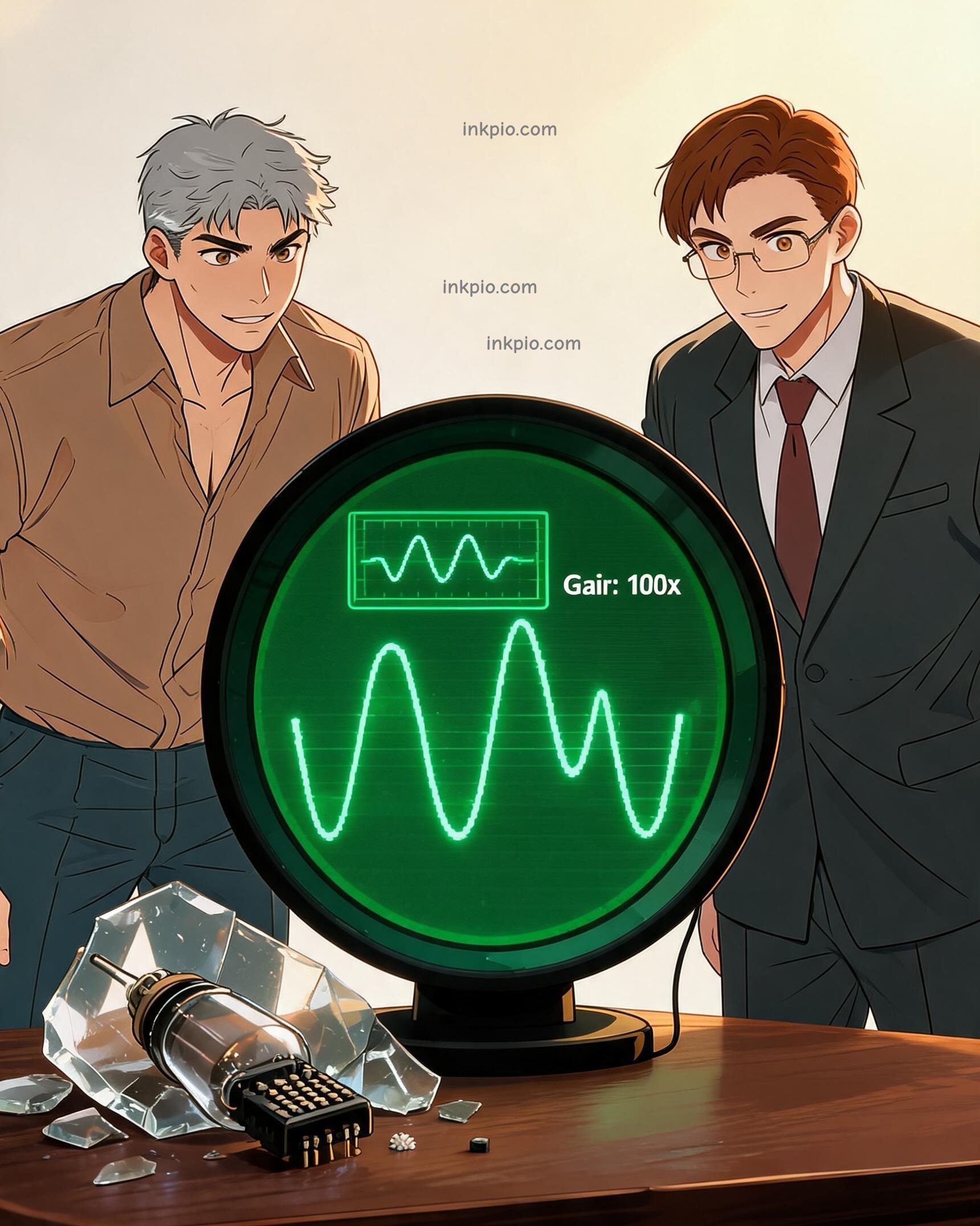
December 16, 1947, arrived with typical winter gloom. They connected the crude device to their test circuit. Brattain’s hand hovered near the switch, steady despite the weight of the moment. They flipped it. A tiny input current flowed into one gold point. Everyone held their breath, waiting for the usual failure. Instead, the needle on the ammeter swung violently to the maximum. It didn't just move; it slammed against the stop. The output was over 100 times stronger than the input. The silence in the room broke not with cheers, but with a stunned realization. The barrier was gone.
Bardeen stared at the reading, then at the tiny wedge. The massive glass giants that dominated the room suddenly seemed archaic, bulky relics of a heavier age. They had shrunk the future of electronics to the size of a fingernail. There was no fanfare, no immediate parade. Just two men standing in a quiet lab, looking at a piece of plastic and gold that had just rewritten the rules of reality. They packed up the germanium and the wedge. Outside, the vacuum tubes continued to glow and burn, unaware that their reign had ended in a whisper.