


Telegraph wires only spoke in clicks. Bell wanted them to carry a human voice, but the silence between the clicks felt like a wall he couldn't climb.
Back in early 1876, Boston inventors kept trying to chop speech into rigid dots and dashes. Their heavy metal reeds clattered and sparked, reducing the nuance of a sob or a laugh to binary noise. Bell knew that approach would never work. He felt a growing panic that he was chasing a ghost with a net made of iron. Real speech flows smoothly, like water pouring from a pitcher, not like a ticking clock. He needed a way to stretch the current instead of snapping it on and off.
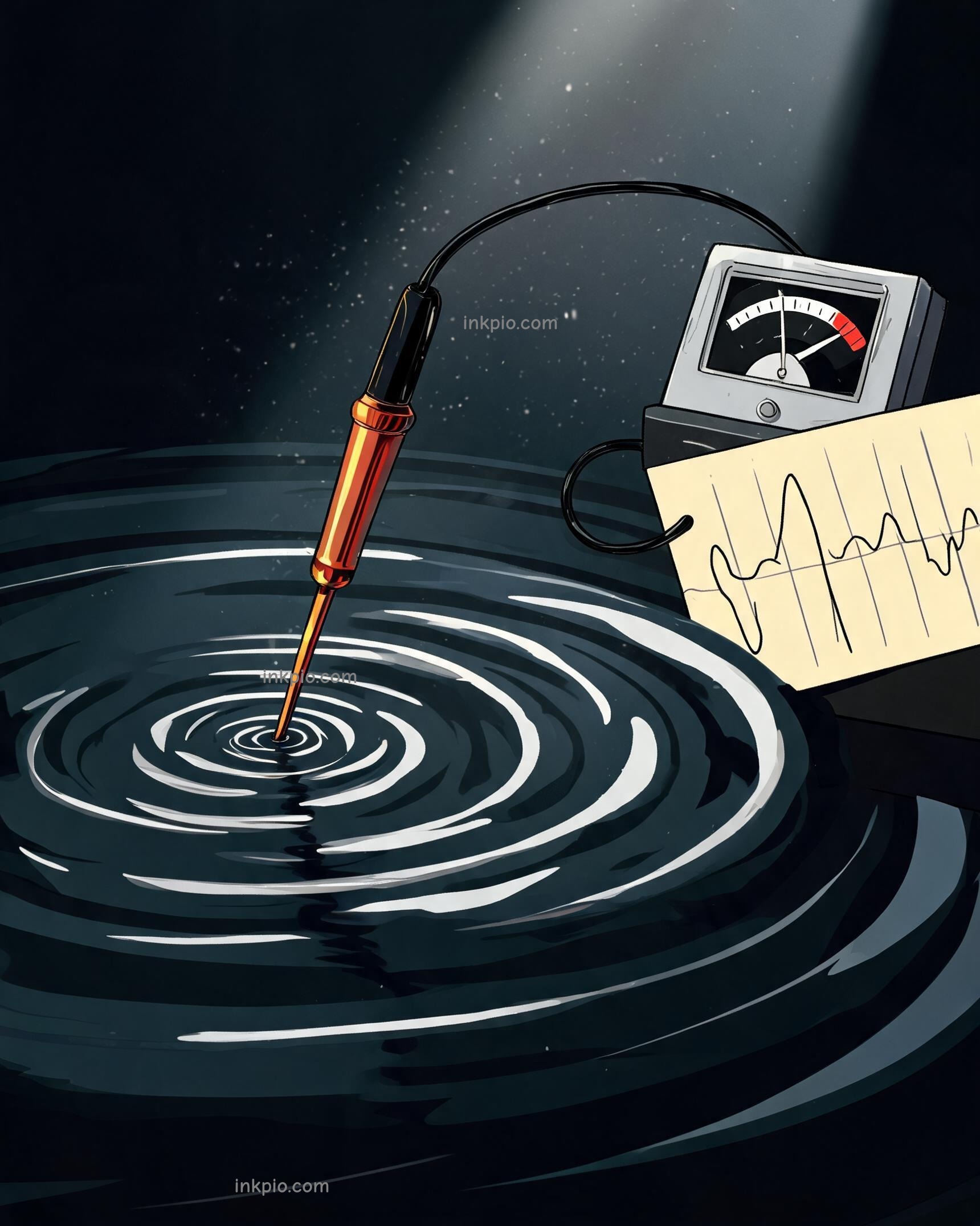
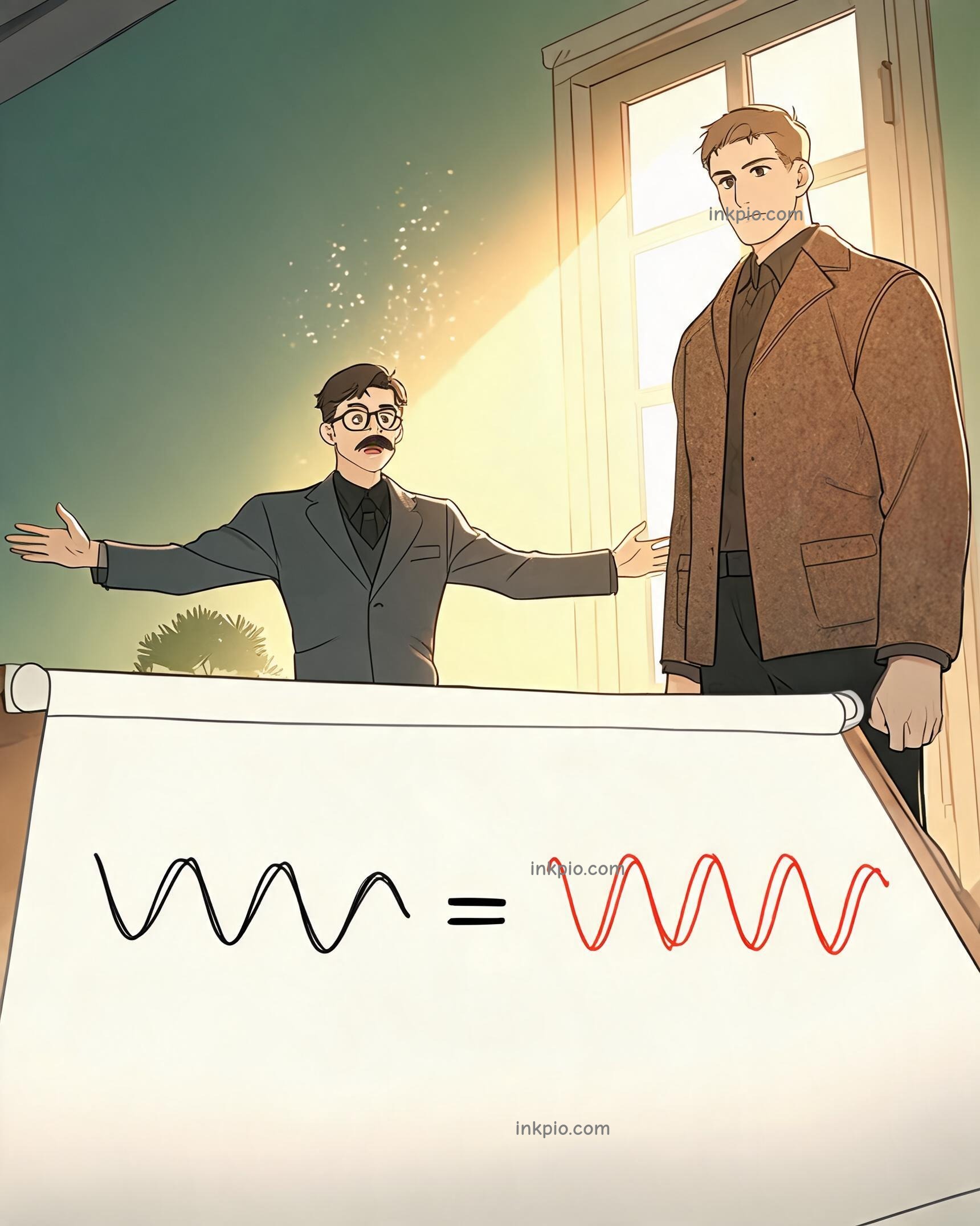
He cleared his workbench, pushing aside the failed prototypes that mocked him with their silence. He set up a shallow bowl of acidulated water. He stretched a thin diaphragm tight across a wooden frame and glued a fine brass needle right to its center. Think of the setup like a water tap you adjust with your breath. When Bell talked, his voice hit the diaphragm and made it shiver. The attached needle dipped deeper or pulled back out of the liquid with every syllable. The deeper the needle sank, the easier the electricity could flow. Pull it back, and the path tightened. Bell was basically letting his voice steer the current, varying electrical resistance to mimic acoustic waveforms.
On March 10, 1876, the Boston lab felt cramped and smelled sharply of vinegar. The air was thick with the scent of failure and sweat. Bell hooked his liquid transmitter to a single copper wire running straight into the next room. Thomas Watson waited at the far end with his ear pressed to a matching receiver. Watson was not just an assistant; he was the only person who still believed Bell wasn't mad. He sat in the dark, staring at the brass horn, wondering if today would be another day of static.
The acid splashed across the desk, soaking Bell’s trousers and stinging his skin. The burn was sharp, immediate, and distracting. He leaned toward the mechanism, ignored the pain, and shouted, “Mr. Watson, come here, I want to see you.” It wasn't a test phrase. It was a plea for help, born from the sting of the acid and the weight of months of isolation. The current didn’t jump or stutter. It simply mirrored the rise and fall of his panic.
Watson’s receiver caught those electrical ripples and pushed them straight back into the air. He heard the plea perfectly clear, not as a broken telegraph code, but as a living voice. The tone was urgent, human, and unmistakably Bell. Watson froze. The static he had expected was gone. In its place was the sound of his friend’s distress, traveling through a wire.
Bell stumbled into the doorway, dripping wet and breathing hard, his face pale from the pain and the exertion. Watson barely glanced at the mess on the floor or the acid burning through Bell's clothes. He looked at Bell’s eyes, searching for the trick, the hidden microphone, the deception. There was none. They had finally caught a ghost in a wire. The copper line didn’t just send a message. It carried a breath.
Watson stood up slowly, his hand still resting on the receiver as if afraid the voice might vanish if he let go. The room was silent except for their breathing. The barrier between two separate spaces had dissolved. For the first time, distance did not mean silence. Bell wiped the acid from his leg, wincing, but neither man spoke of the pain. They just listened to the quiet hum of the wire, knowing it was no longer empty.