

Isaac Newton’s shadow loomed over optics for a century. He declared light traveled as tiny, indestructible bullets, and the scientific world bowed to his authority. To question Newton was to question reason itself. But Thomas Young found himself unable to look away from the edges of things.
Young noticed that shadows never held a sharp line. They bled into fuzzy gray patches, defying the straight-line logic of particles. Bullets do not curve around corners; they strike or miss. This inconsistency gnawed at him. It wasn’t just curiosity; it was a quiet unease that the map of reality he had been given was wrong. He felt isolated in this doubt, standing alone against a fortress of certainty.
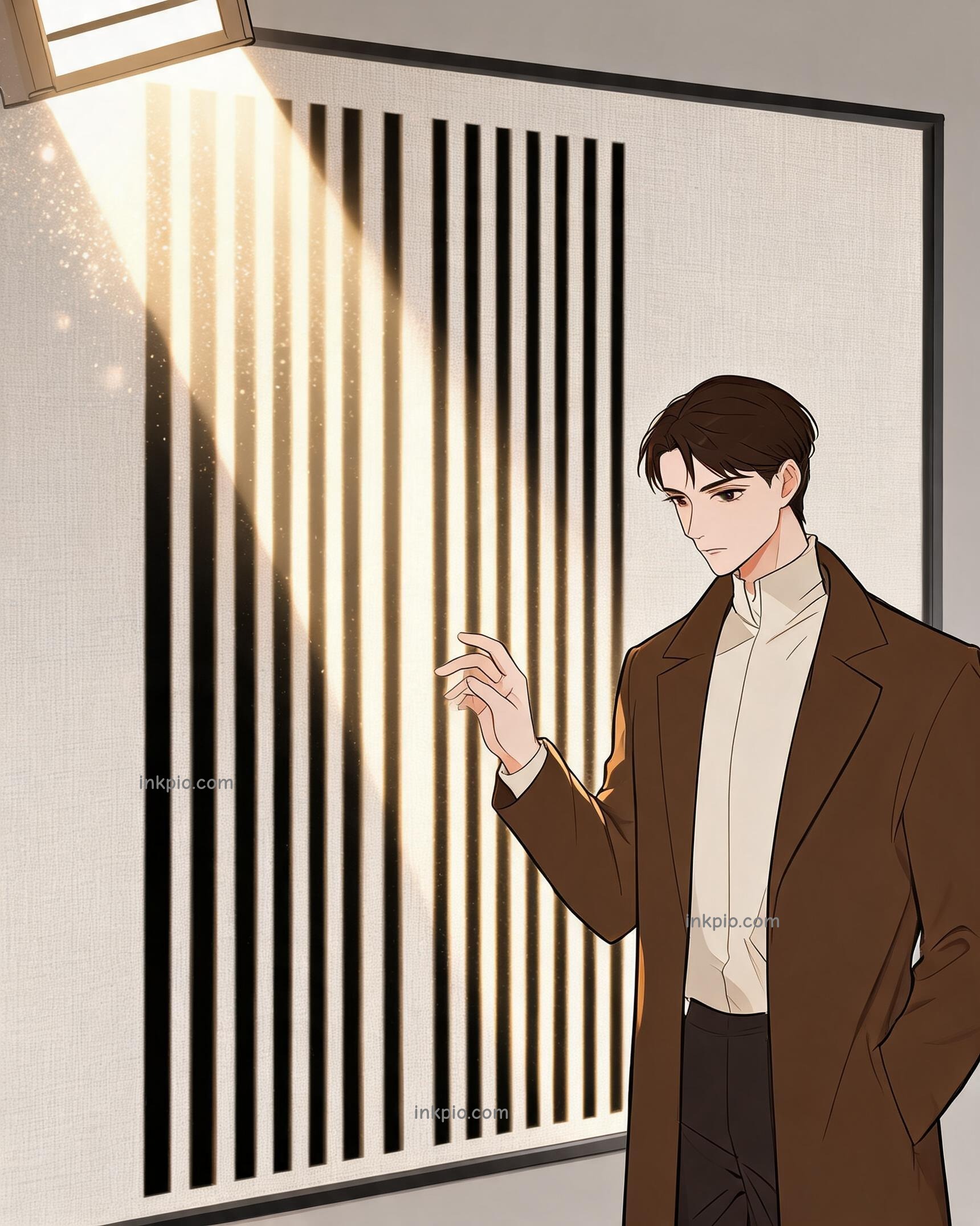
He needed to force the issue. Young took a plain piece of cardboard and sliced two parallel gaps into it with a razor. The action was simple, almost mundane. He propped the card against a bright window, letting the sunlight pour through the narrow slits. Behind it, a blank white screen waited like a judge. According to Newton’s laws, the light should punch two neat, bright dots onto the paper. Young expected this outcome. He wanted to be wrong, but he prepared for the familiar.
The sun hit the screen. The two bright dots never appeared. Instead, a row of glowing stripes stretched across the paper, broken by perfectly dark gaps. The pattern was undeniable. It looked less like projectile impacts and more like ripples crossing a pond. Young stared at the alternating bands, his breath catching in his throat. The light was not just passing through; it was interacting with itself.
He realized what the dark bands meant. Where two wave peaks met, they pushed higher, creating bright bands of constructive interference. But where a peak crashed into a trough, the upward and downward motions canceled out completely. That quiet cancellation painted the dark lines. The beam was literally erasing itself where the waves met out of step. It was a visual proof that light behaved like water, shattering the particle paradigm forever. The math was simple, but the implication was terrifyingly vast.
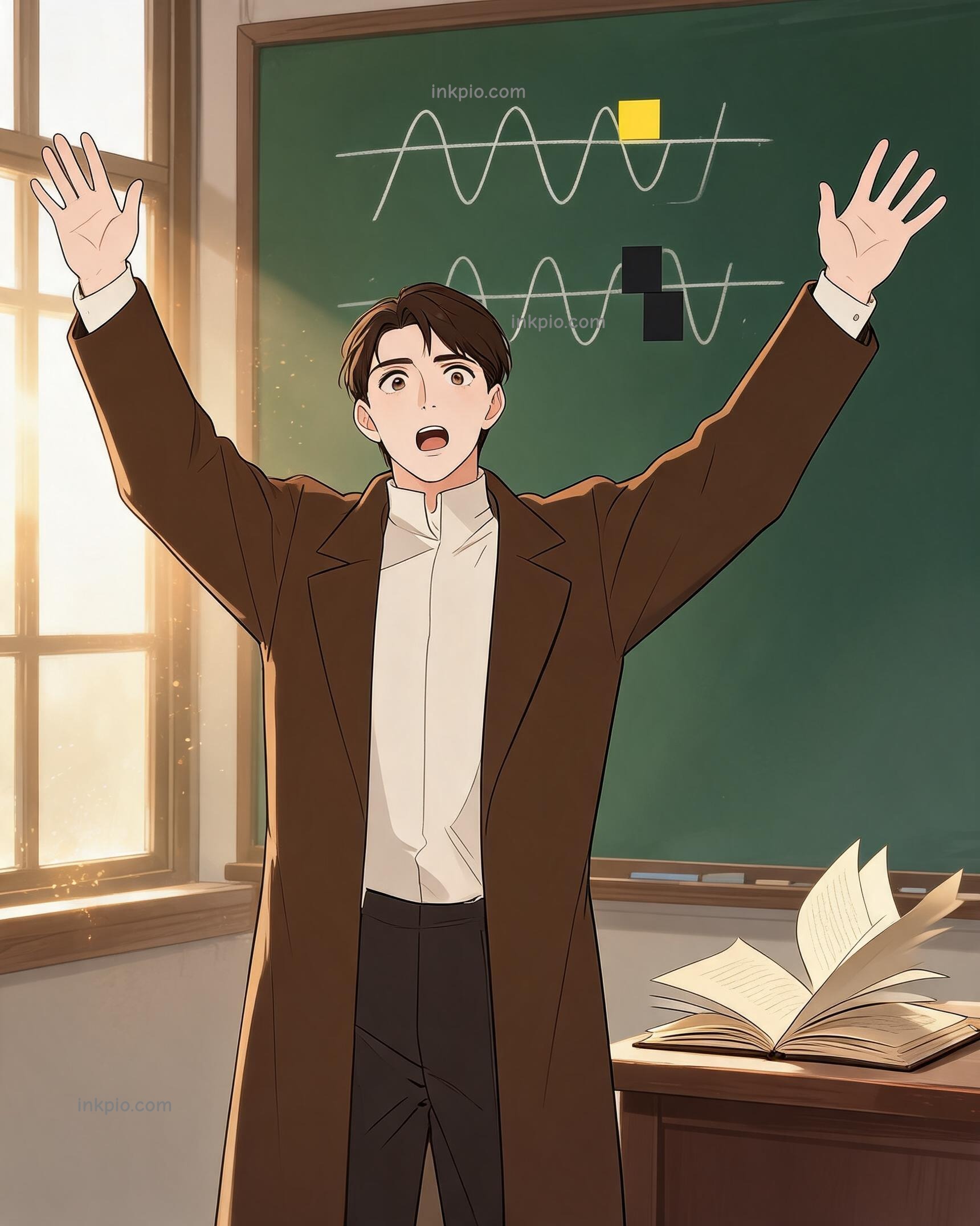
In 1802, Young presented his findings in the Bakerian Lecture to the Royal Society in London. He walked the room through the simple mathematics of wave interference. He showed them the alternating bright and dark fringes, explaining how they proved light’s wave nature. The air in the room grew heavy. These were men who had built their careers on Newton’s absolute certainty. To accept Young’s stripes was to admit that their foundation was cracked.
The skeptics did not cheer. They stared at the wall, silent and stiff. Some shifted in their seats, refusing to meet Young’s eyes. The pattern spoke for itself, but pride spoke louder. Young packed his notes away, his hands steady but his heart sinking. He saw the resistance forming in their crossed arms and averted gazes. He had shown them the truth, but they were not ready to see it.
Leaving the hall, Young felt the weight of the coming decade. He knew this discovery would not bring immediate acclaim. It would bring isolation. The dogma was too strong, and the comfort of the old theory too sweet. Yet, as he stepped into the London fog, he carried the image of those dark bands with him. They were quiet, empty spaces where light had vanished, but they held more truth than all the bright dots in the world. He walked alone, knowing he had changed everything, even if no one else would admit it for a long time.