

The laboratory in Manchester smelled of stale tobacco and cold metal. It was 1909, and the scientific world rested comfortably on J.J. Thomson’s ‘plum pudding’ model. Atoms were thought to be soft, uniform spheres of positive charge, with electrons embedded like raisins in a sweet, dense cake. This was the accepted truth, a comforting map of reality that everyone trusted. Ernest Rutherford did not trust comfort. He watched his young assistants, Hans Geiger and Ernest Marsden, adjust the heavy brass apparatus with a mix of pride and anxiety. If the theory held, this experiment would be a mere formality. If it failed, the foundation of physics would crack.
They aimed a steady beam of heavy alpha particles at a sheet of gold foil so thin it was barely a few atoms thick. The expectation was simple: the particles should punch straight through, slightly deflected by the soft positive cloud, like bullets passing through mist. For hours, the counter clicked rhythmically. Most particles did exactly as predicted. They sailed through the empty spaces of the atoms, uninterrupted and obedient. The data piled up, confirming the old map. Geiger rubbed his tired eyes, ready to pack up. The universe seemed consistent, predictable, and safe.
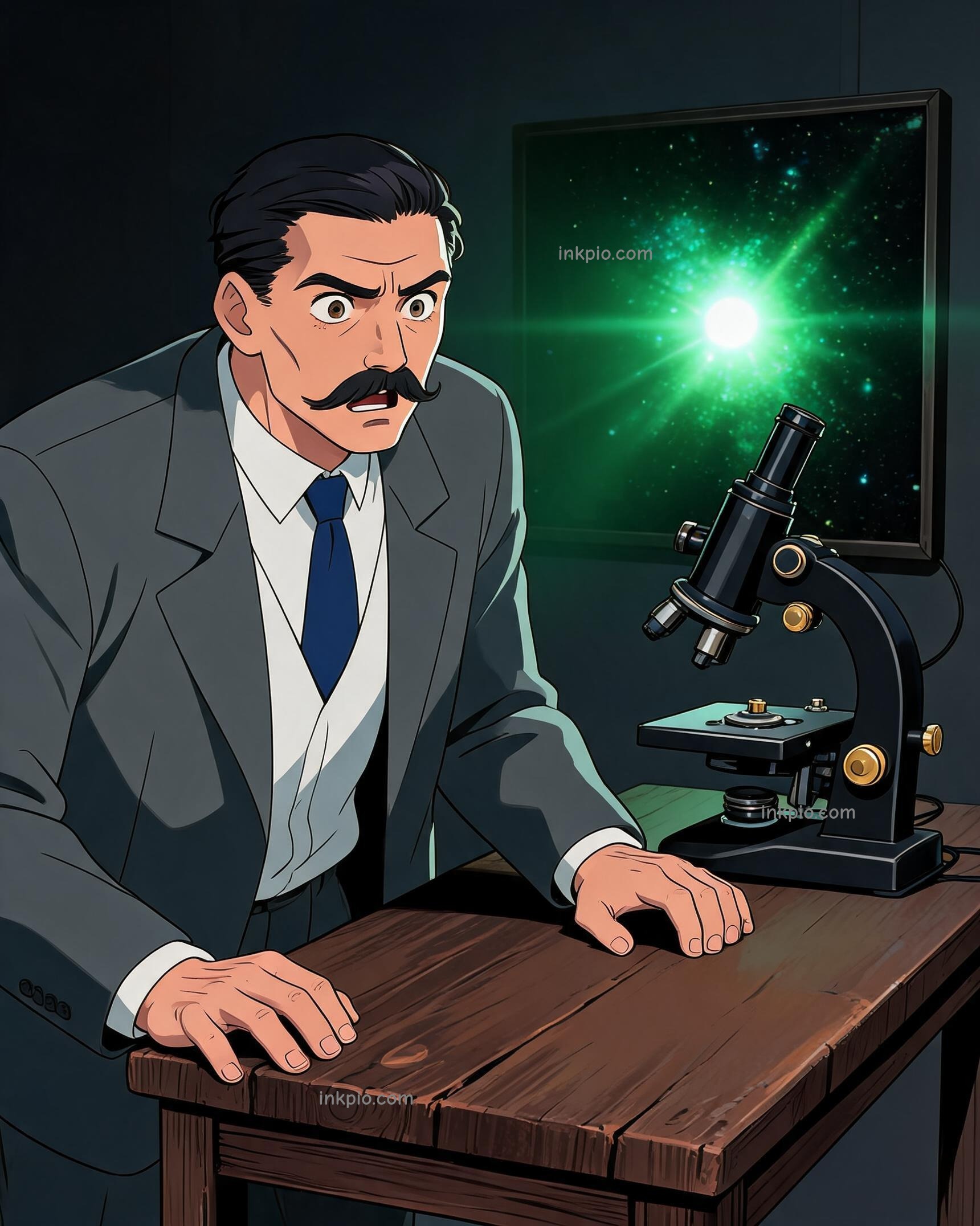
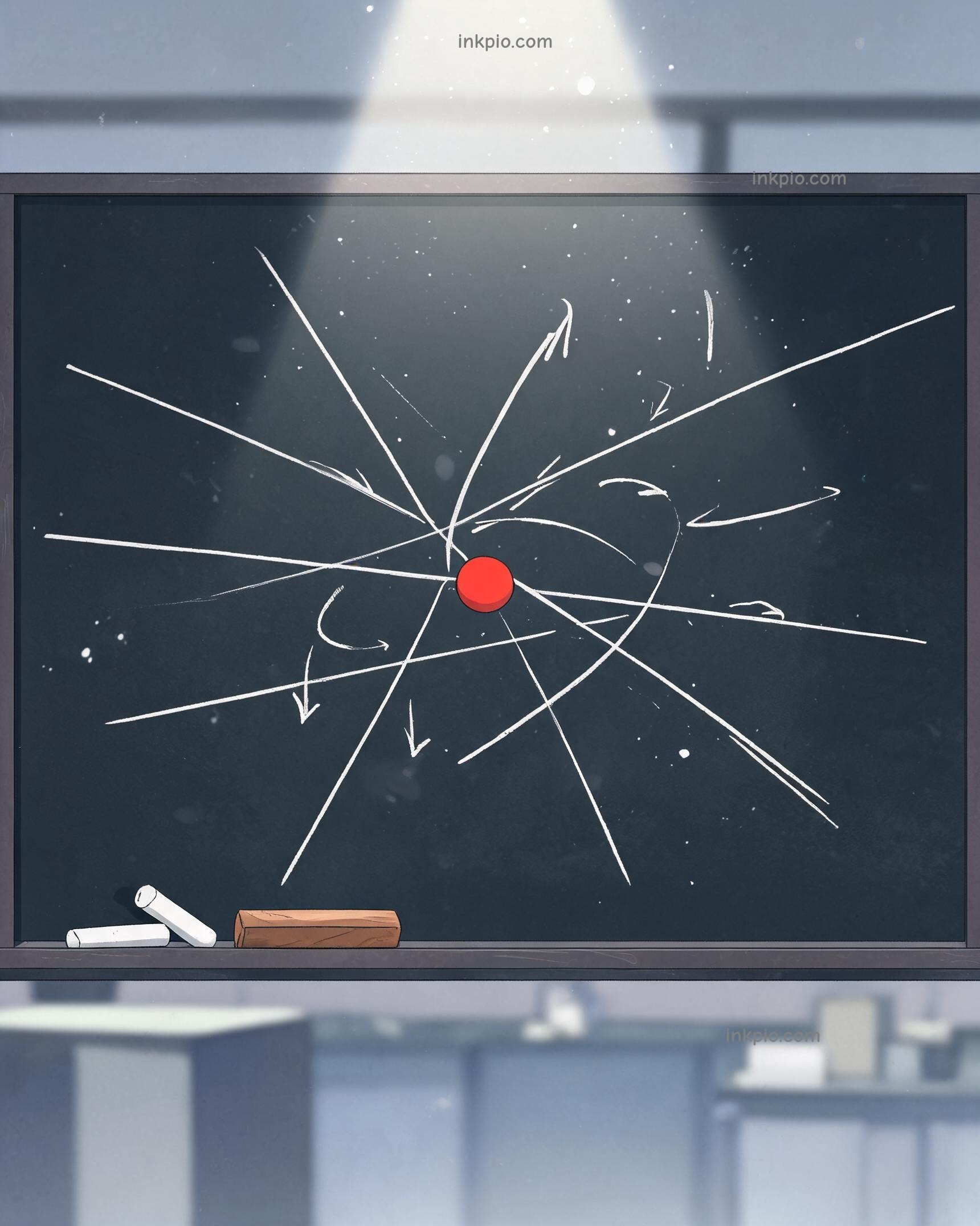
Then the rhythm broke. A flash appeared where no flash should be. Then another. Geiger froze, his hand hovering over the notebook. He called Marsden over, whispering so as not to disturb the delicate instruments. They rotated the detector, moving it away from the expected path, scanning the dark corners of the room. They were looking for stray hits, anomalies they could dismiss as errors. But the flashes kept coming. Some particles were not just deflecting; they were ricocheting at wild angles. A few were bouncing straight back toward the source.
Rutherford entered the room, sensing the shift in atmosphere. He did not speak immediately. He watched the young men stare into the darkness, their faces pale in the faint glow of the scintillation screen. To see an alpha particle bounce back was physically absurd under the old model. It implied a collision with something impossibly dense, something hard enough to stop a heavy, fast-moving projectile dead in its tracks. The soft pudding had vanished. In its place was a mystery that threatened to unravel everything they knew.
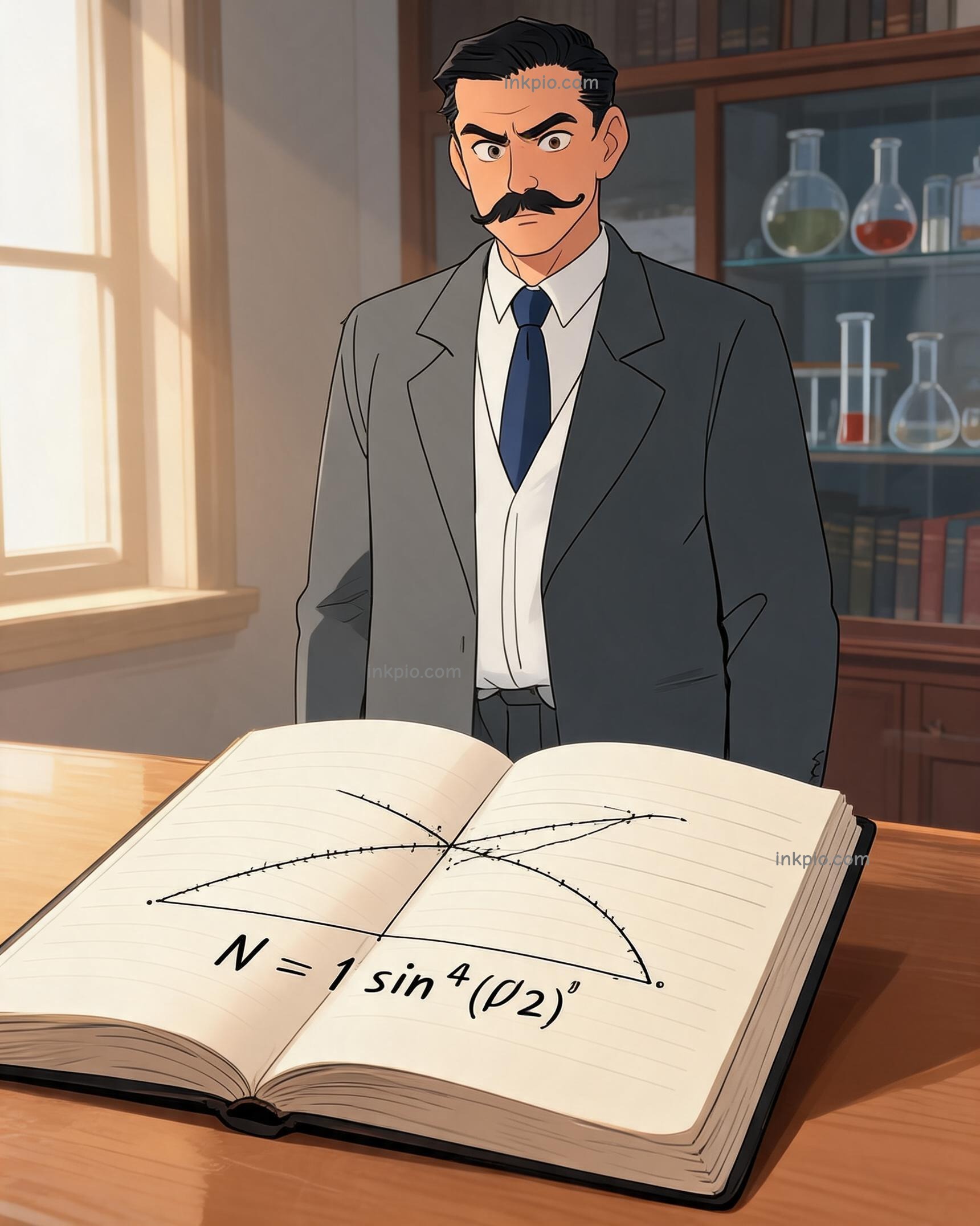
For days, Rutherford sat alone with the numbers. He tracked how many particles bounced at each degree, plotting the data against geometric probabilities. The math was unforgiving. It refused to bend to the old theory. The only way the curve matched the green flashes was if the atom was mostly empty space. All the positive charge and almost all the mass had to be concentrated in a microscopic, dense core. The rest was void. The realization hit him not with joy, but with a profound sense of isolation. The solid world he touched every day was an illusion.
He later described the feeling to a colleague, his voice low. It was almost as incredible as if you fired a 15-inch shell at a piece of tissue paper and it came back and hit you. The image was violent, personal. It suggested that nature was not gentle, but hidden and dangerous. The soft, squishy model vanished overnight, replaced by a universe that was largely nothingness punctuated by tiny, hard kernels of reality. Rutherford capped his fountain pen. The ink was dry. The old theories lay buried under the chalk dust of the lab floor, silent and forgotten.