


The laboratory lights stayed off, but a strange green glow pulsed across the room. On November 8, 1895, at the University of Würzburg, Röntgen observed barium platinocyanide glowing near a shielded Crookes tube. He froze. The thick black cardboard wrapped around the glass should have blocked every stray photon. Something invisible leaked out and traveled straight through the dark air.
He decided to track it down instead of guessing. He lined up everyday materials between the tube and the glowing screen. A stack of textbooks changed nothing, and wood boards barely slowed the light down. Then he dropped a heavy lead block into the gap. The screen went completely black. The invisible beam acted like water flowing through gravel, slipping past light objects until it hit something dense enough to force a stop.
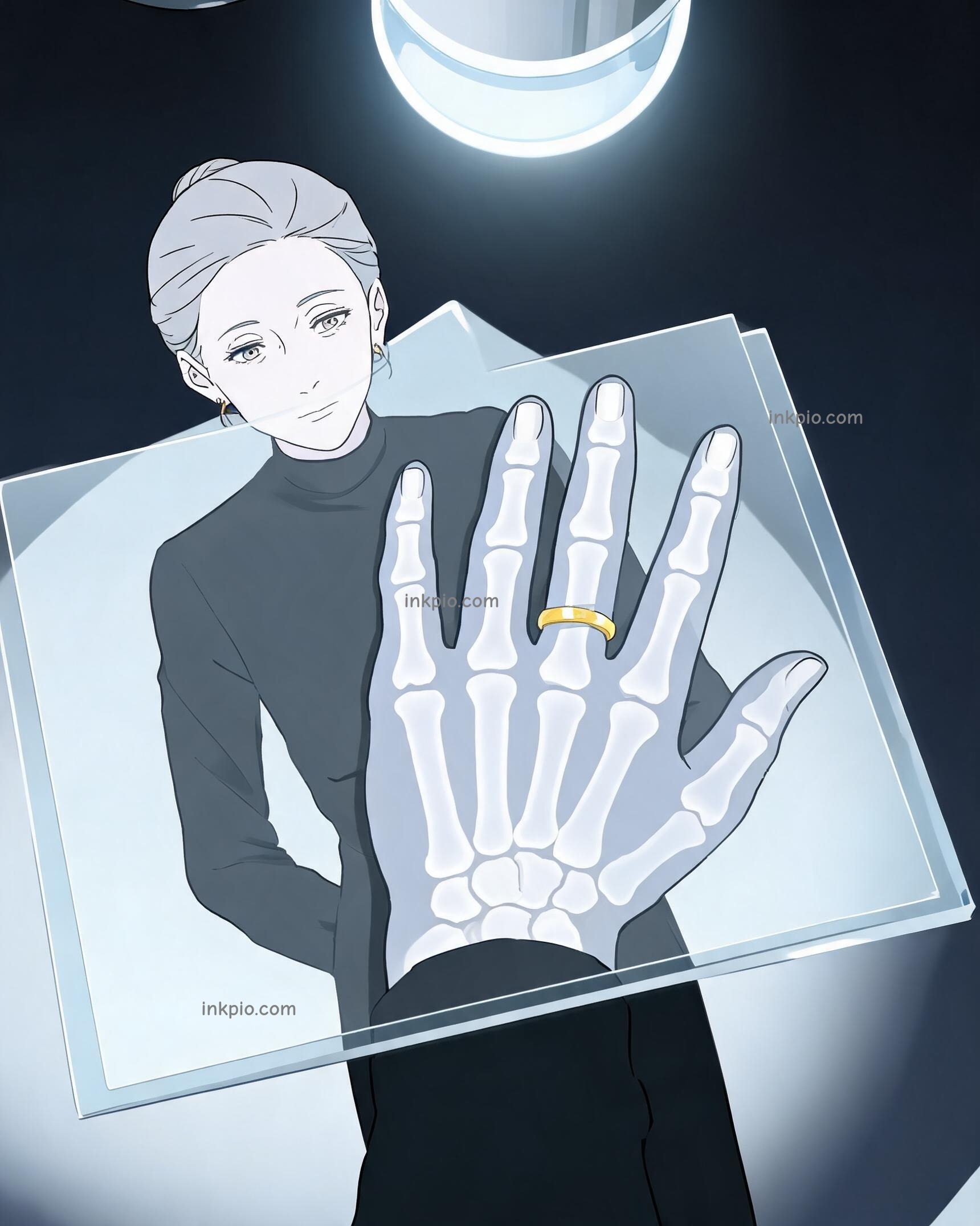
Curiosity pushed him to try something riskier. He grabbed a glass photographic plate and asked his wife, Bertha, to rest her left hand on it. He told her to hold still while he ran the current through the tube. When she asked what he was doing, he simply replied, "I did not think, I investigated." The unseen radiation washed over her skin. Soft tissue offered no resistance, but calcium-rich bones caught the rays like a net.
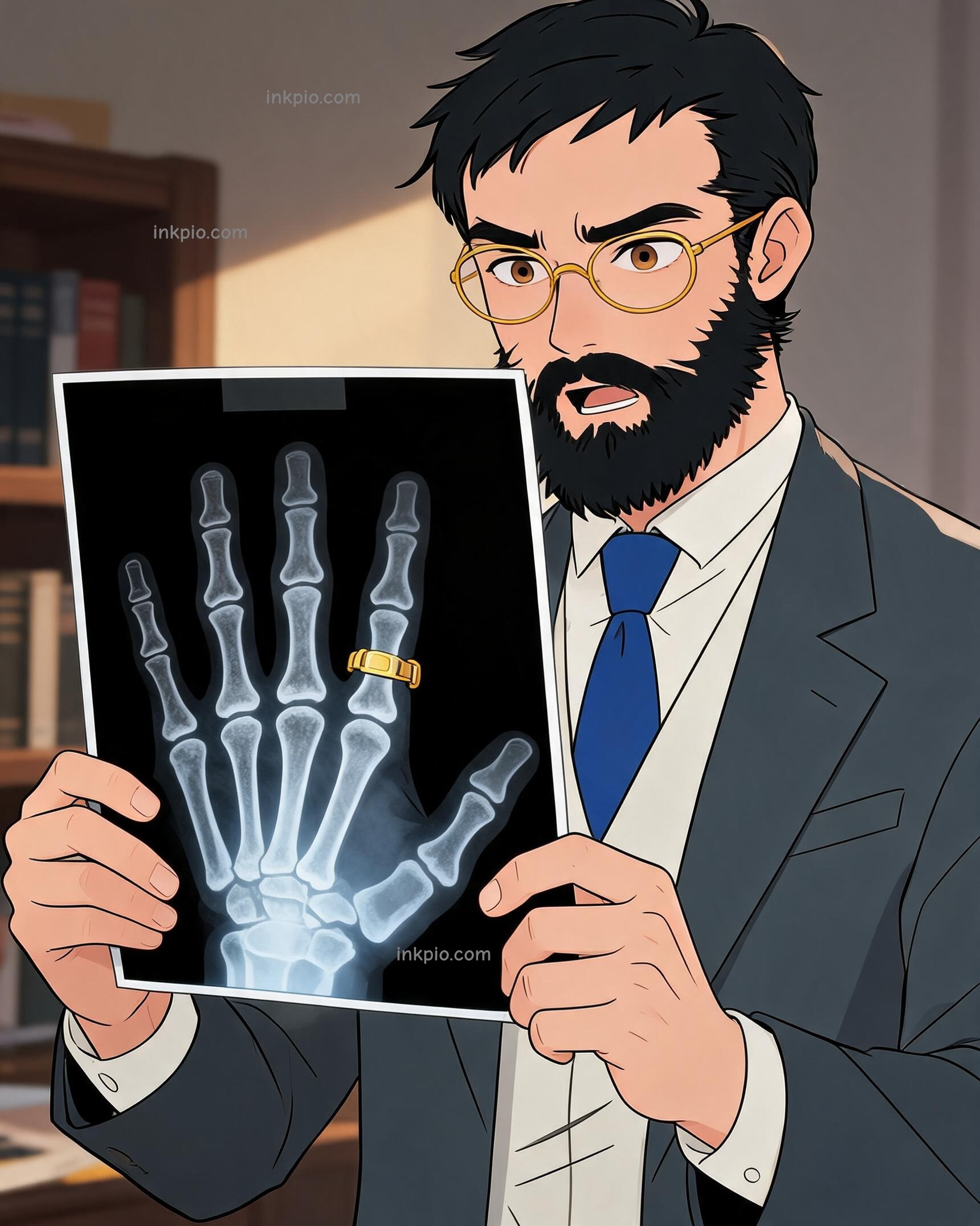
Hours later, he developed the plate in the darkroom chemicals. The first X-ray photograph captured Bertha Röntgen's left hand, clearly showing her bones and wedding ring. Five bright skeletal outlines stood out sharply against a deep black background. The soft flesh had vanished, leaving only the rigid structure beneath. He stared at the glass plate and realized physics had just handed doctors a way to see inside the human body without making a single cut.