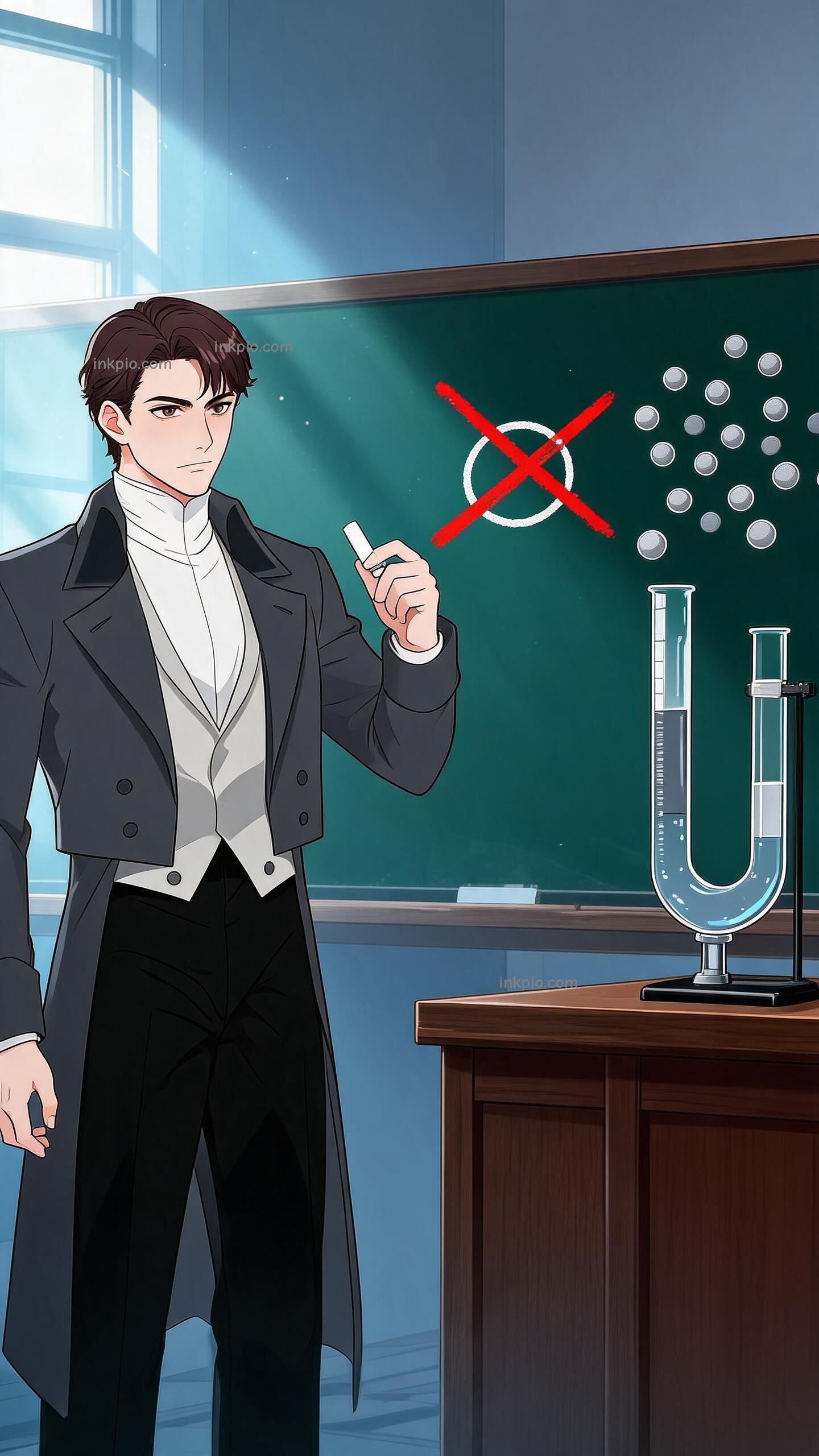
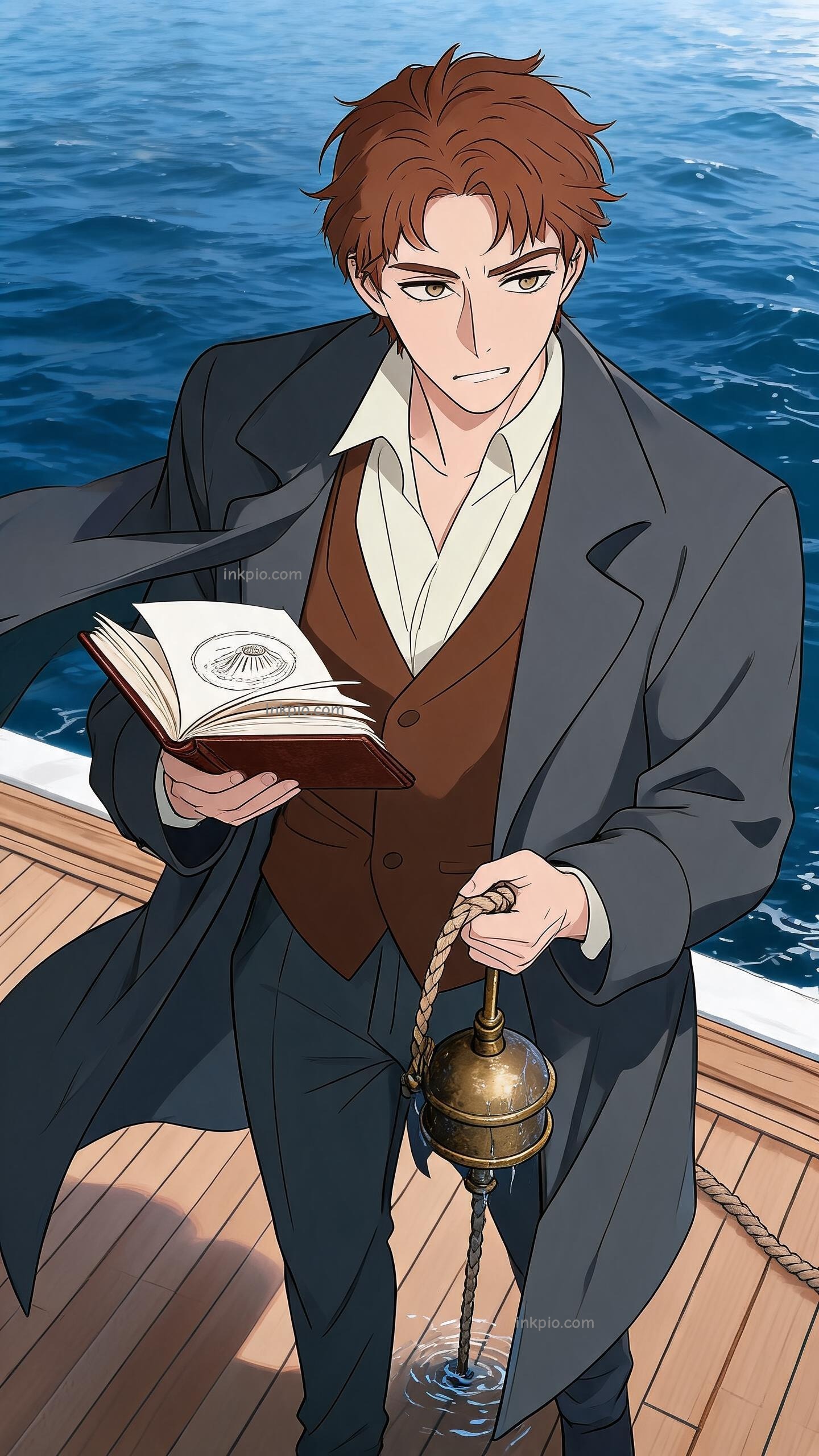
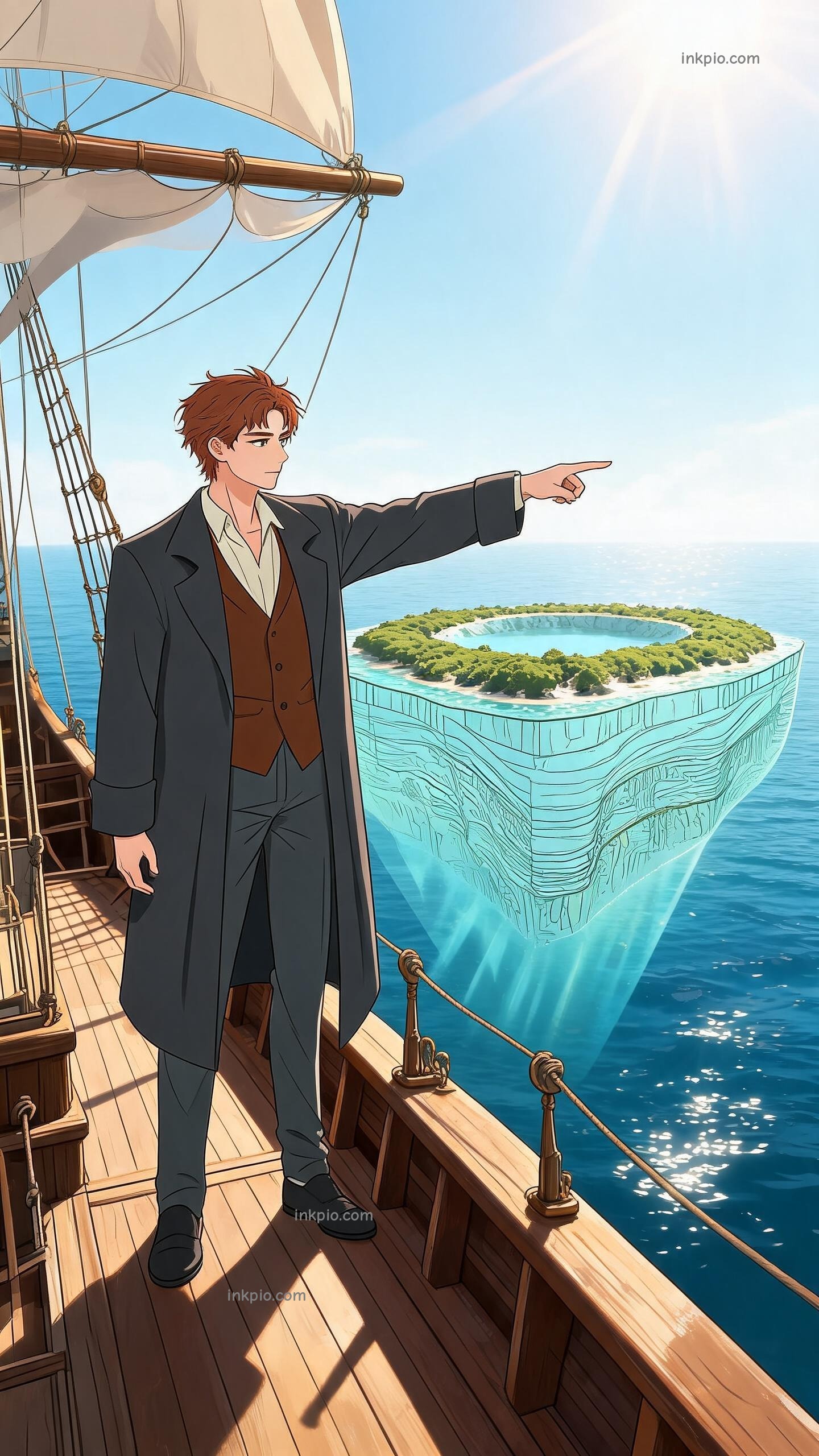

The hemp rope hissed through Darwin’s calloused fingers, burning slightly as it fed into the abyss. He stood alone on the deck of the Beagle, the Pacific wind whipping his coat, watching the brass sounding lead disappear into the dark water. Every authoritative textbook in his trunk insisted that coral atolls sat atop shallow volcanic craters. But the rope kept unspooling. Two thousand fathoms. Three. The accepted science said this depth was impossible for a crater, yet the wet, heavy line in his hand proved otherwise. A cold knot of isolation tightened in his chest. If the books were wrong here, what else had he been taught to believe was true?
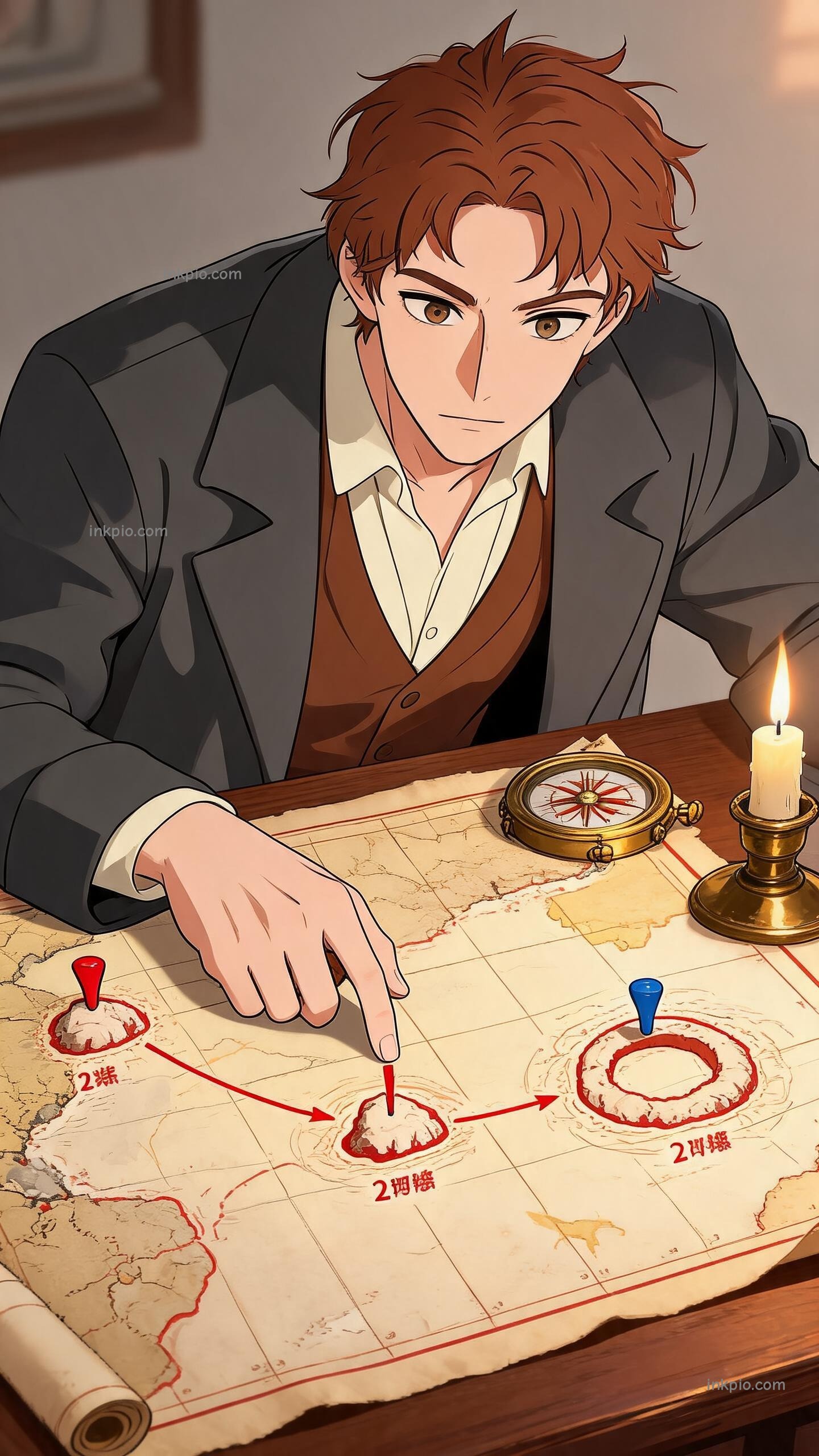
Back in the suffocating heat of his cabin, Darwin spread yellowed charts across his cramped desk. The air smelled of stale tobacco and damp wood. He pinned red dots for reefs clinging to high islands, blue for those separated by lagoons, and black for isolated rings. Most geologists saw three distinct structures. Darwin saw a ghost story. He traced the dots with a trembling finger, realizing they were not separate entities but snapshots of a single, slow tragedy. It was a life cycle played out over millennia, invisible to the naked eye but screamingly obvious on paper.
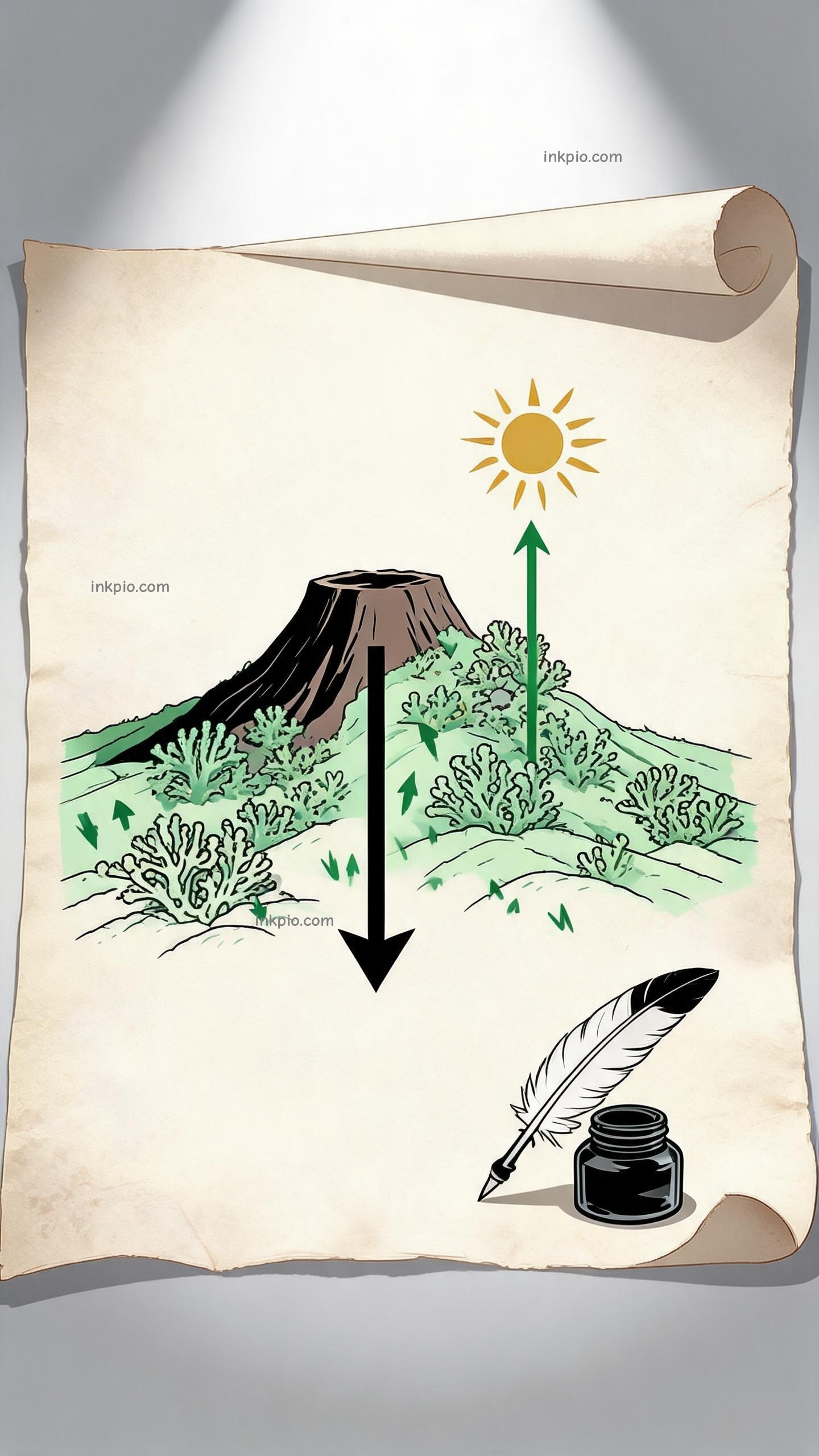
He imagined a ship sinking in slow motion. On its deck, a crew frantically builds a tower of bricks. As the hull drops, the builders add layer after layer, desperate to keep their heads above the rising waterline. They do not know they are building a tomb; they only know they must reach the light. This was the coral. The input was sunlight, strictly limited to shallow, bright waters where polyps could survive. The operation was vertical growth, an inch-by-inch struggle against gravity. As the volcanic island subsided, the tiny organisms built their limestone skeletons higher, chasing the sun.
The realization hit him not with a shout, but with a quiet, terrifying clarity. The upward growth of the coral kept pace with the subsidence of the island. The output was a perfect ring of rock, a monument left behind when the island finally vanished beneath the waves. For the first time, the chaotic Pacific made sense. It was not static rock; it was a dynamic, breathing crust, constantly moving and changing. The earth itself was alive, shifting under his feet while he slept.
Darwin grabbed a fresh sheet of parchment. His hand moved quickly, ink bleeding into the fiber as he drew a bold cross-section. A thick black arrow pointed down into the earth’s core, representing the sinking land. Opposing it, tiny lines pushed upward toward a drawn sun. The diagram was elegant, simple, and devastatingly correct. It unified every reef he had seen into one geological law. He rolled up the parchment, the paper crackling like dry bones.
Outside, the ocean continued its indifferent work. Darwin stepped back onto the deck, listening to the wet hemp rope still dripping salt water onto the floorboards. The sound was rhythmic, like a heartbeat. He looked out at the horizon, where the real reefs lay hidden beneath the surface. He no longer saw just water and rock. He saw a race against time, a silent battle between sinking stone and living light. The sea was deep, but his understanding was deeper. He leaned against the rail, waiting for the next measurement, knowing the world would never look the same again.