
Newton’s equations were elegant, but they held a silent void. Without the gravitational constant, the mass of the Earth remained a phantom, a number scientists could only guess at with shrinking confidence. Henry Cavendish did not seek fame. He sought silence. In 1798, inside a drafty English estate, he decided to trap the invisible pull of the planet itself.
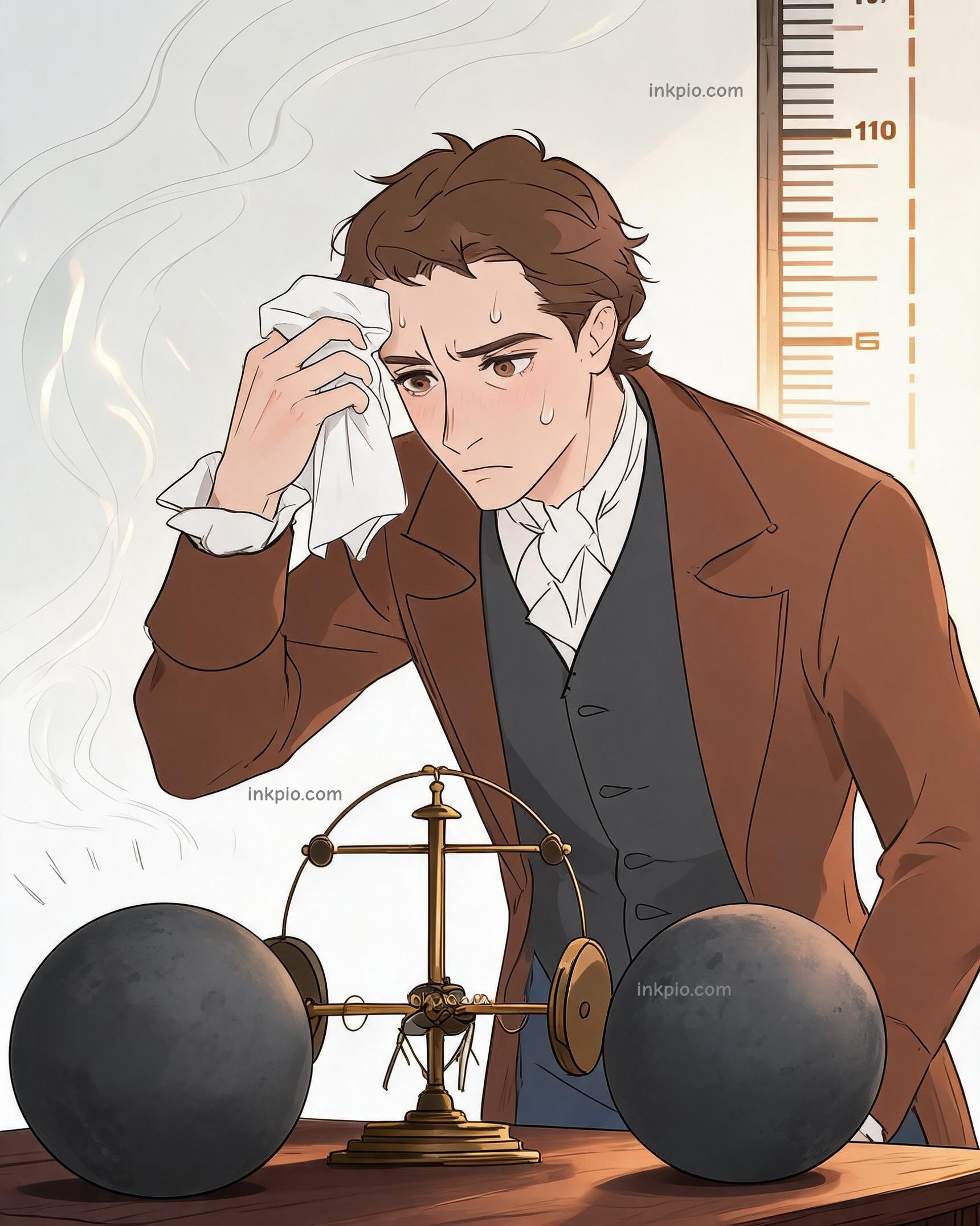
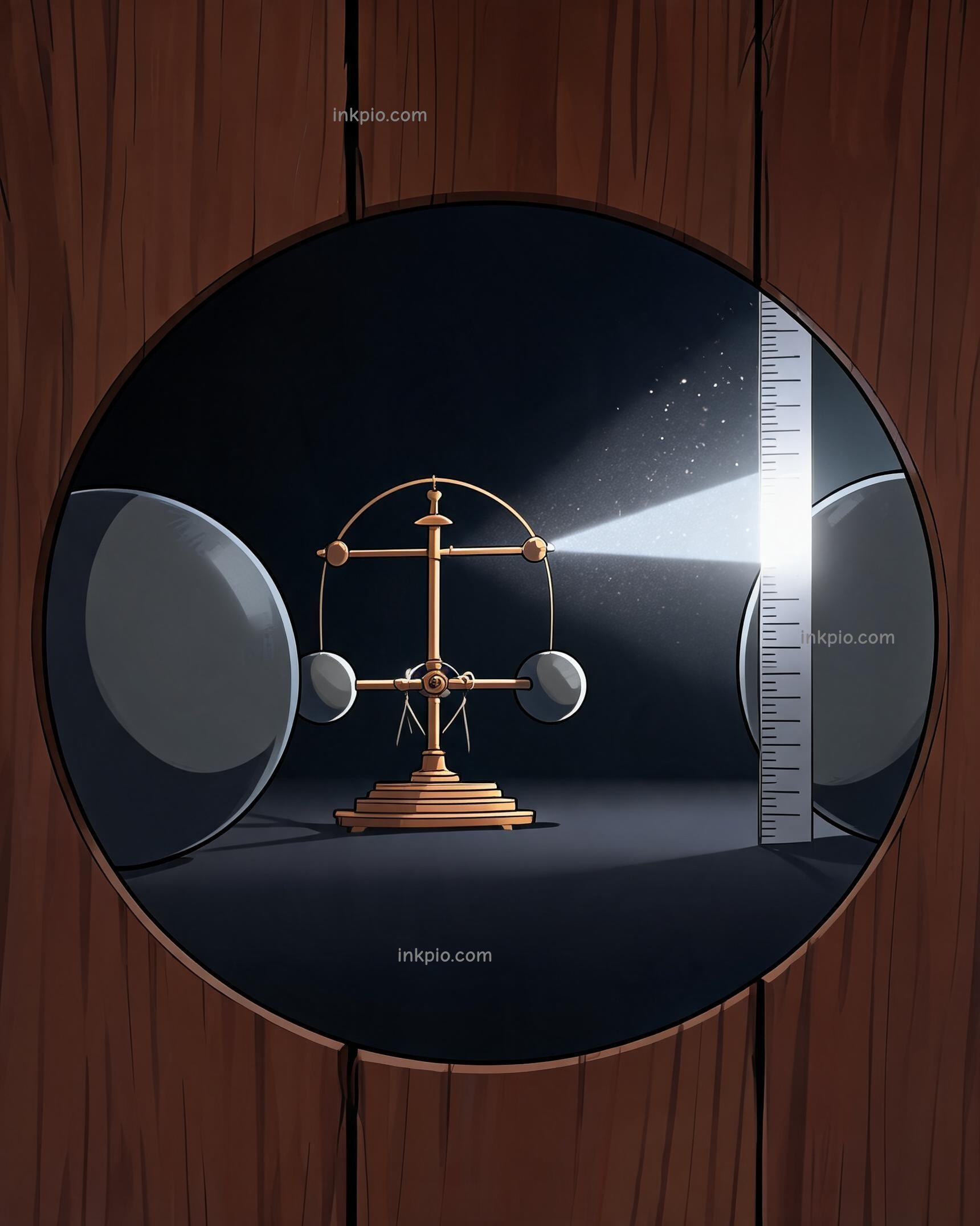
The apparatus was deceptively simple. A thin wire suspended a wooden rod, holding two small lead balls like fragile ornaments. Two massive lead spheres waited nearby, heavy and cold. The plan relied on a whisper of force: the large balls would tug the small ones, twisting the wire by a fraction of a degree. That microscopic twist was the key. It would unlock the gravitational constant, and with it, the true weight of the world.
But the universe is noisy. Gravity between lead balls is so weak that a human breath acts like a gale. Cavendish leaned in to check the mirror reflecting a light beam onto a distant scale. The spot of light danced violently. It jittered and spun, refusing to settle. He pulled back, frustrated. The air currents from his own body heat were shaking the instrument. His presence was the enemy. To measure the earth, he had to remove himself from it.
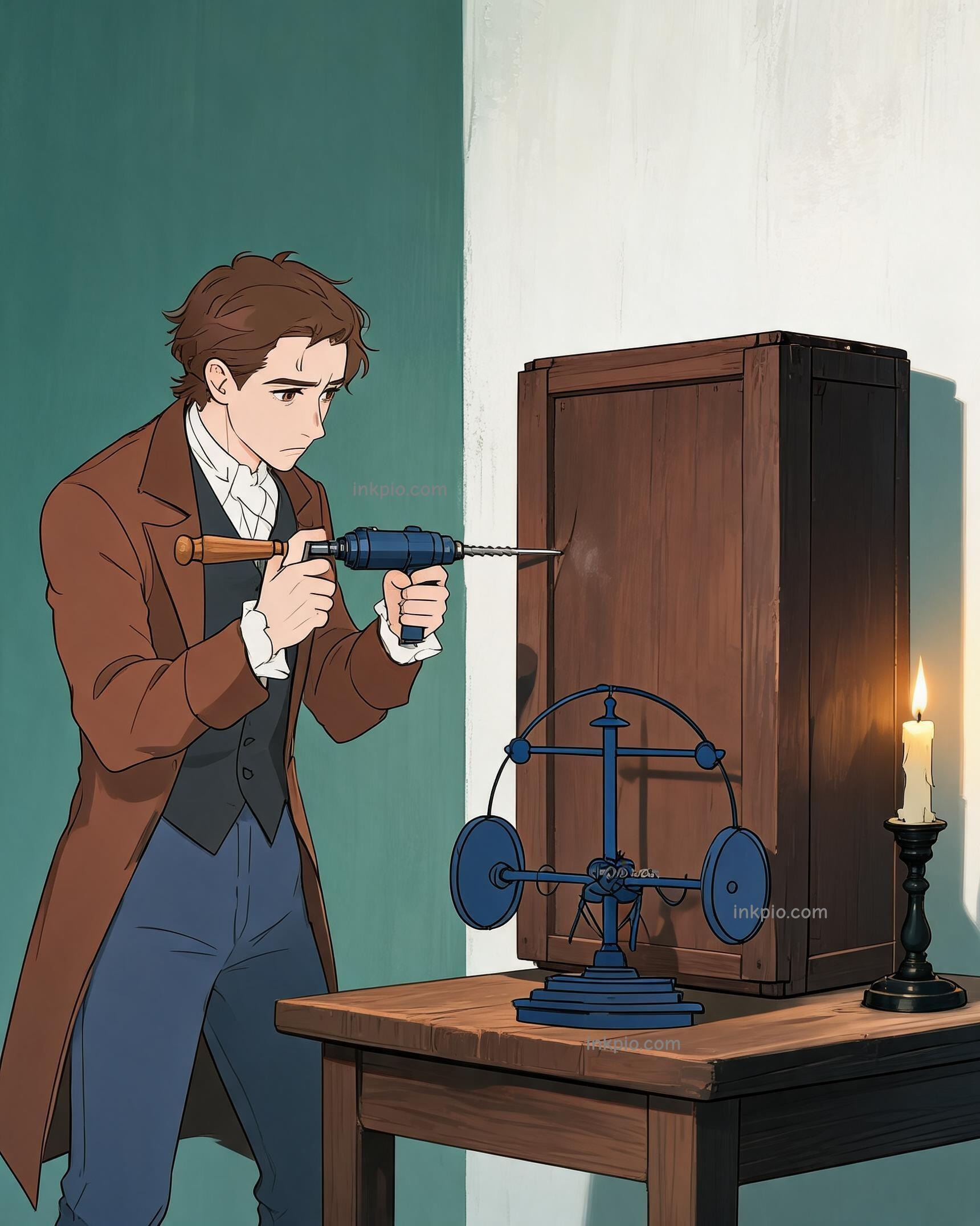
He built a wooden box around the torsion balance, sealing it tight against the world. Then he took a drill and bored a single, tiny peephole through the wood. He retreated to the next room, leaving the lead balls alone in the dark. Through that small hole, he watched. No breath. No heat. Just the steady, slow creep of light across the scale.
Hours passed in that adjacent room. Cavendish sat in the dimness, eyes fixed on the speck of light. The isolation was absolute. He was a man measuring the weight of everything while hiding from it. The light spot finally stopped its chaotic dance. It shifted, imperceptibly slow, marking a tiny, measurable deflection. In that stillness, the math became real.
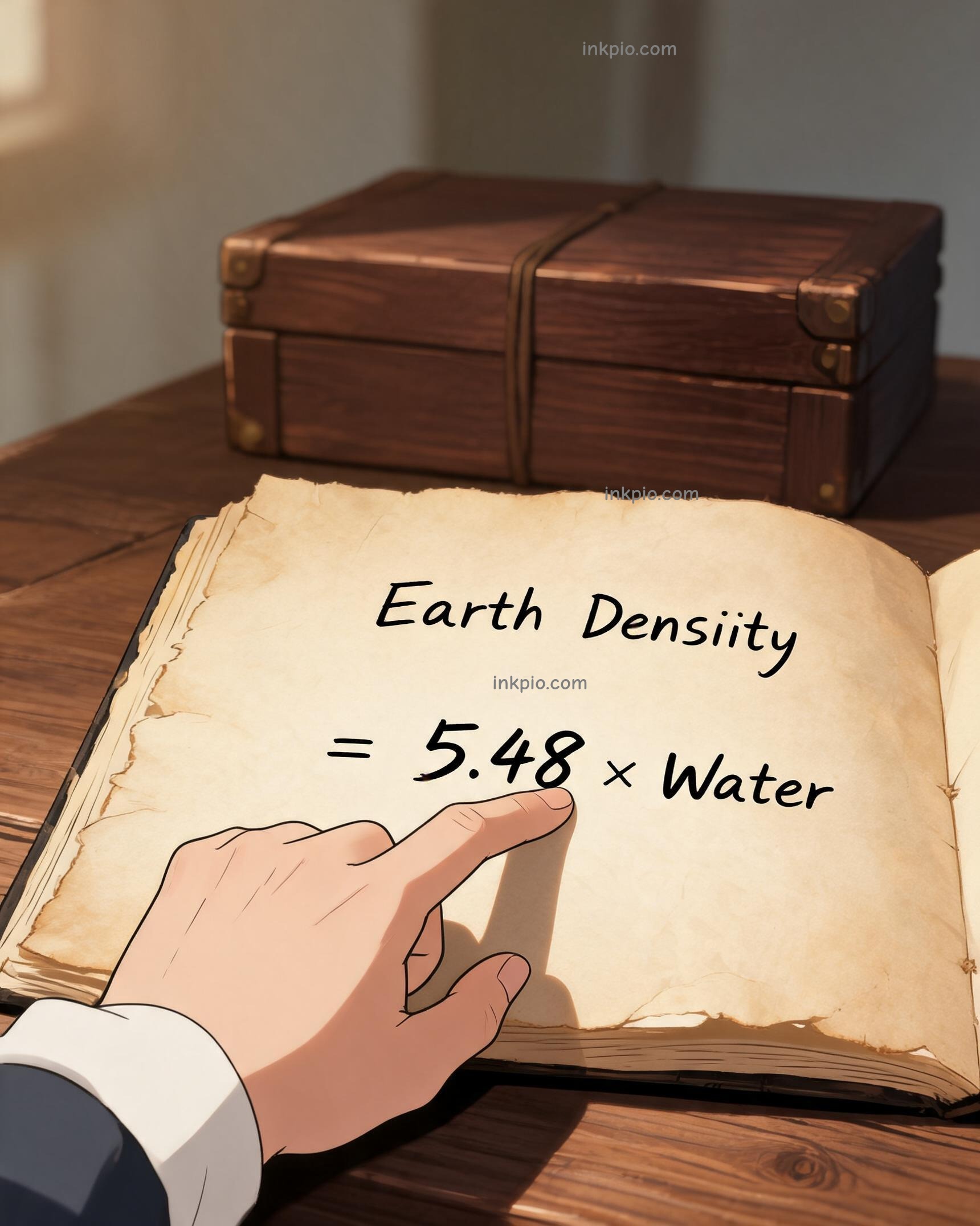
He returned to the box only when the data was secure. The numbers flowed from his pen: the Earth’s density was 5.48 times that of water. Later scientists would refine this to 5.51, but Cavendish had already touched the truth. He closed his notebook. The heavy lead spheres sat quietly in their wooden prison, no longer just metal, but anchors to reality.
Outside, the world continued its busy, ignorant turn. People walked on ground they thought they understood, unaware that its weight had just been defined by a man watching a dot of light through a hole in a wall. Cavendish left the room. He did not celebrate. He simply walked away, leaving the earth weighed, and himself unseen.