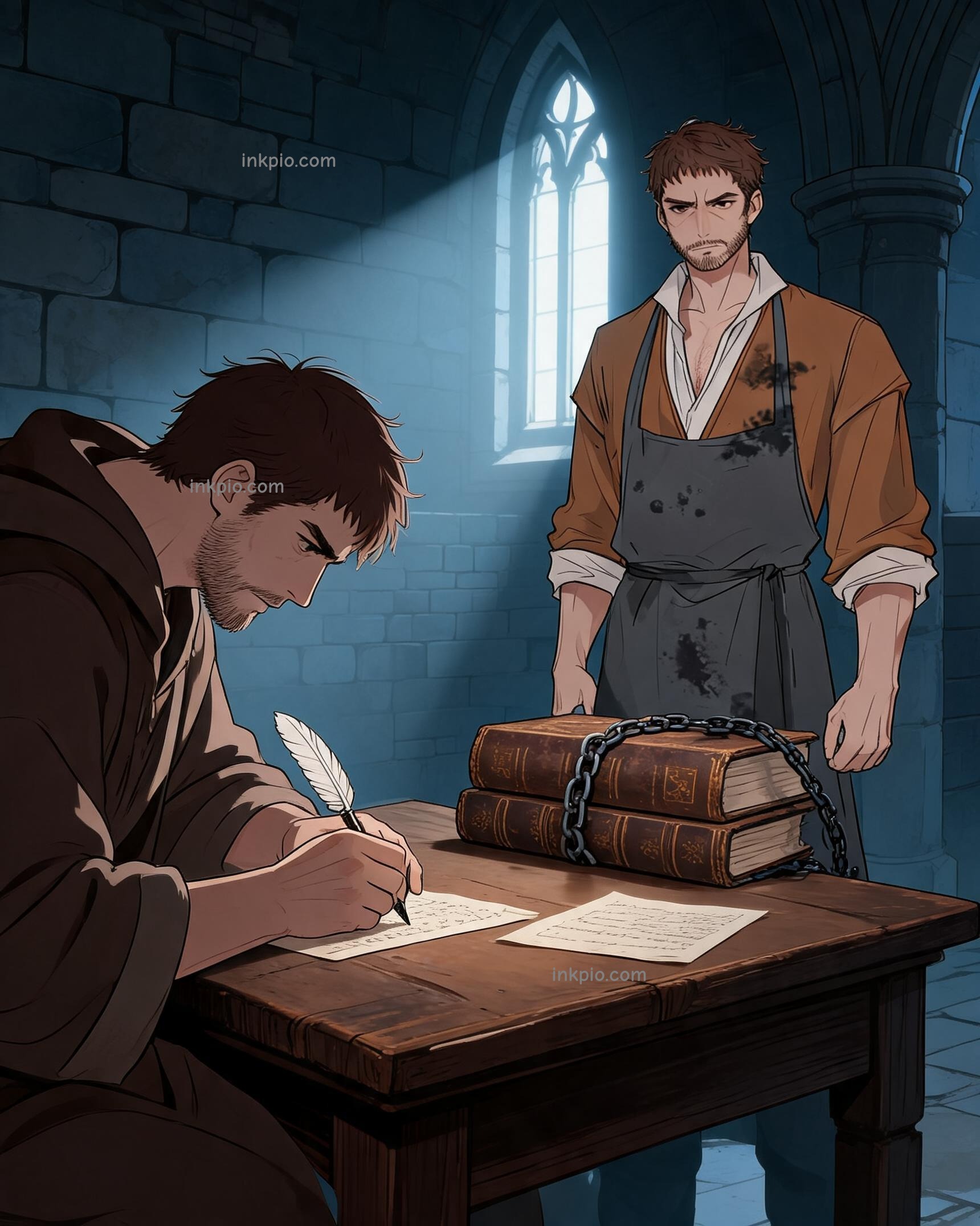


The candlelight flickered against the stone walls of the monastery, illuminating a young scribe’s trembling hand. His knuckles were white from gripping the quill too tightly, his eyes red and swollen from hours of staring at parchment. One slip, one drop of ink in the wrong place, and weeks of labor vanished. The book on his desk was not just paper; it was a mortgage on his life, priced higher than a family farm. Johannes Gutenberg watched from the shadows of the doorway, feeling a cold knot tighten in his stomach. He saw not just slow work, but a prison. Knowledge was being hoarded behind these thick walls, guarded by exhaustion and scarcity. If he couldn't break this cycle, the world outside would remain in darkness.
Gutenberg retreated to his workshop, where the air smelled of turpentine and failure. His first attempt at speed had been a disaster. He had carved entire pages into wooden blocks, mimicking the old masters. But wood was alive; it breathed with humidity and cracked under stress. The heavy press shattered the grain, and the watery ink bled into the fibers, turning crisp letters into blurry smudges. Piles of ruined paper grew in the corner, a silent testament to his wasted months. He ran his fingers over the splintered edges of a broken block, feeling the frustration rise like bile. He was running out of money, and more importantly, out of time.
Then, his gaze drifted to the corner of the shop, landing on an idle iron wine press. It stood heavy and silent, a relic of harvests past. Gutenberg approached it, running his hand along the cold metal screw. He remembered how it worked: the steady, calibrated descent of the platen, squeezing grapes with uniform force. It didn't crush the fruit; it extracted the essence without destruction. A spark ignited in his mind. What if the problem wasn't the pressure, but the surface receiving it? What if he could combine that gentle, even force with something harder than wood?
He began to treat the page not as a single image, but as a puzzle of interchangeable parts. In the heat of his furnace around 1440, he melted lead, tin, and antimony. The alloy needed to be fluid enough to fill the mold, yet hard enough to withstand thousands of impressions without losing its edge. He held up a tiny, freshly cast letter to the light. It was sharp, durable, and identical to the last one. This was the key: modularity. If one letter broke, he didn't discard the page; he simply replaced the character.
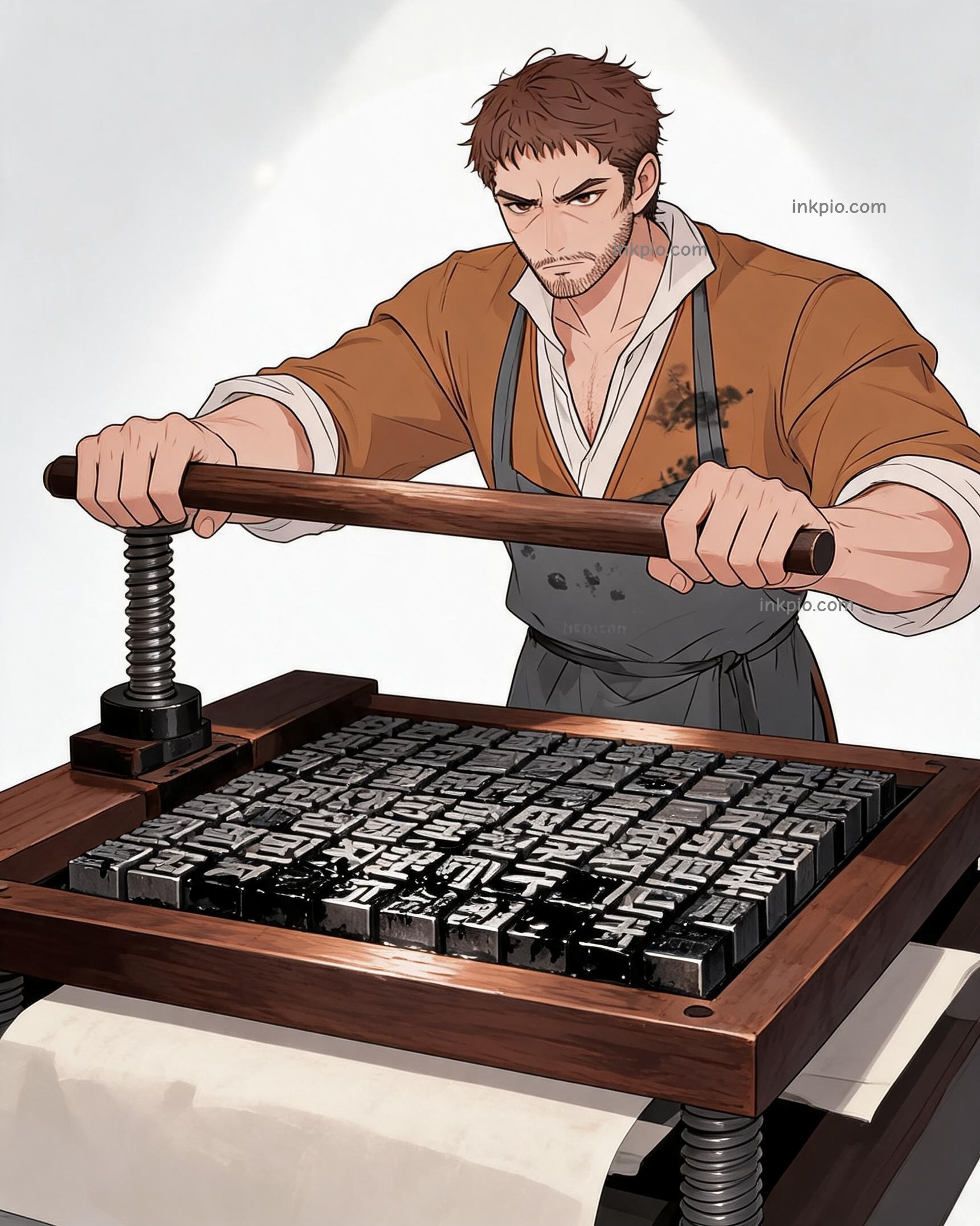
But metal required a different partner. Water-based ink slid off the smooth alloy like rain off glass. Gutenberg spent nights mixing oils and soot, searching for a viscosity that would cling to the metal but release cleanly onto paper. When he finally rolled the thick, black paste over the locked type, it sat perfectly on the surface. He placed a damp sheet over the frame, aligning it with practiced precision. His assistant held their breath, watching the heavy lever descend. The screw turned, the platen pressed, and the silence in the room became deafening.
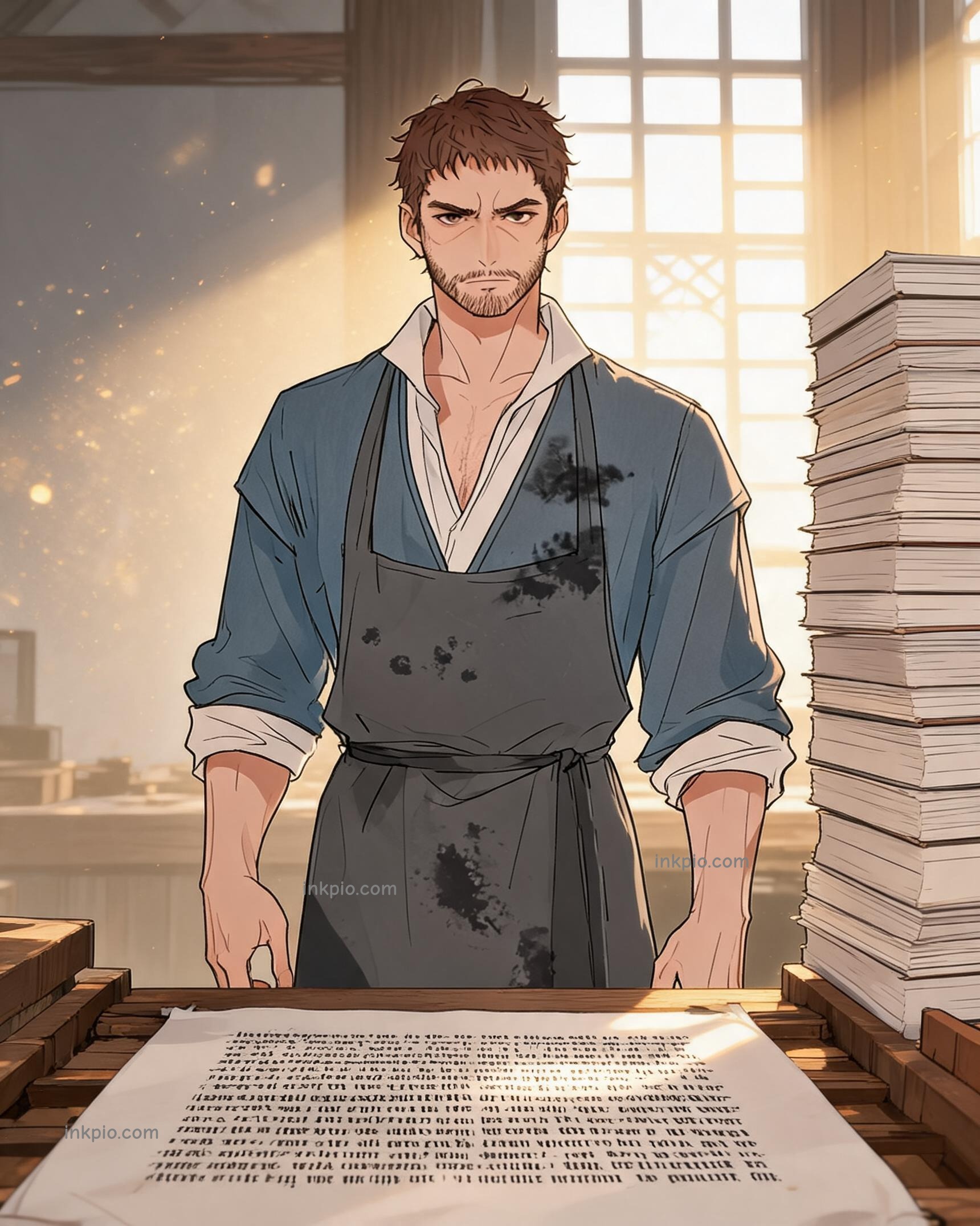
When Gutenberg lifted the paper, the ink had transferred in one clean pass. The letters were crisp, black, and unnervingly uniform. He pulled the type from the frame, ready to be reused for the next page. The frantic scraping of quills was gone, replaced by the rhythmic clank of the press. By 1455, the machine had produced a complete forty-two-line Bible. Hundreds of pages lay stacked on the table, each one a mirror of the other, perfect in their repetition.
In a letter marking the completion, Gutenberg did not boast of mechanical triumph. He simply noted that the long-awaited volume was finally ready to reach ordinary readers. The heavy wooden lever rested against the floor, still warm from the friction. Gutenberg looked at the stack of books, then at his ink-stained hands. The words were no longer chained to a monk’s desk or a rich man’s vault. They sat there, waiting, vulnerable and powerful, for anyone who dared to pick them up.