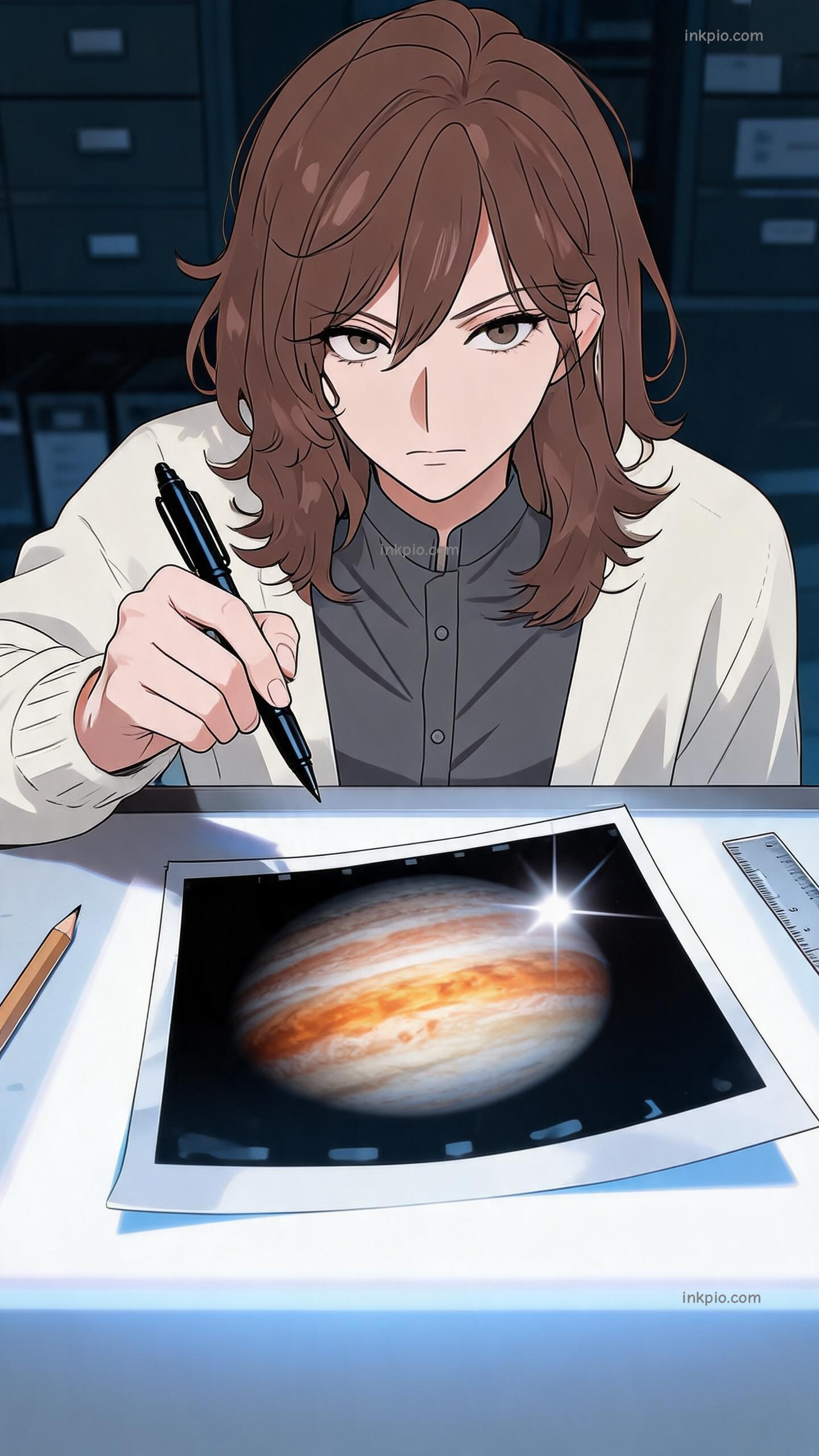
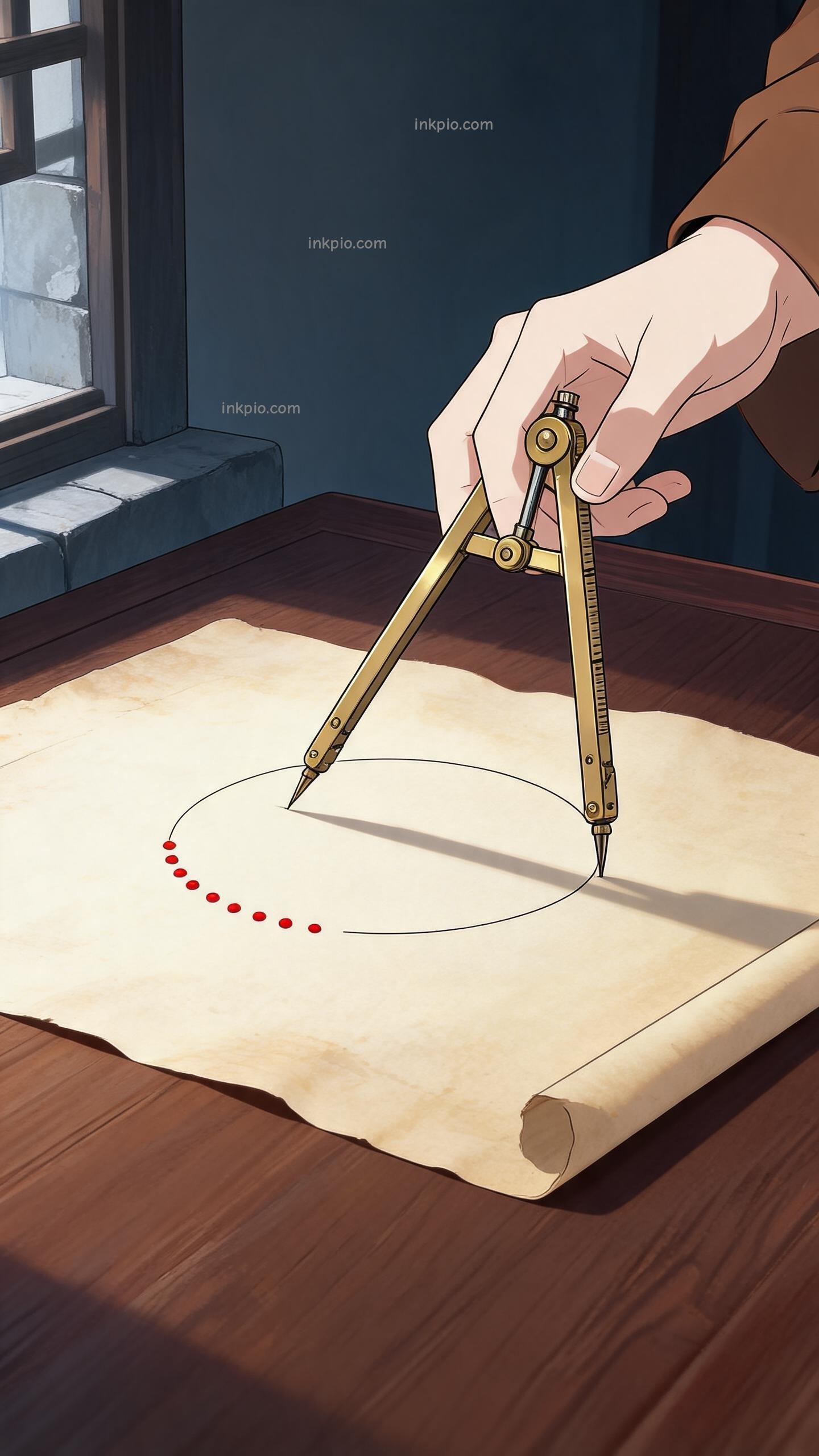

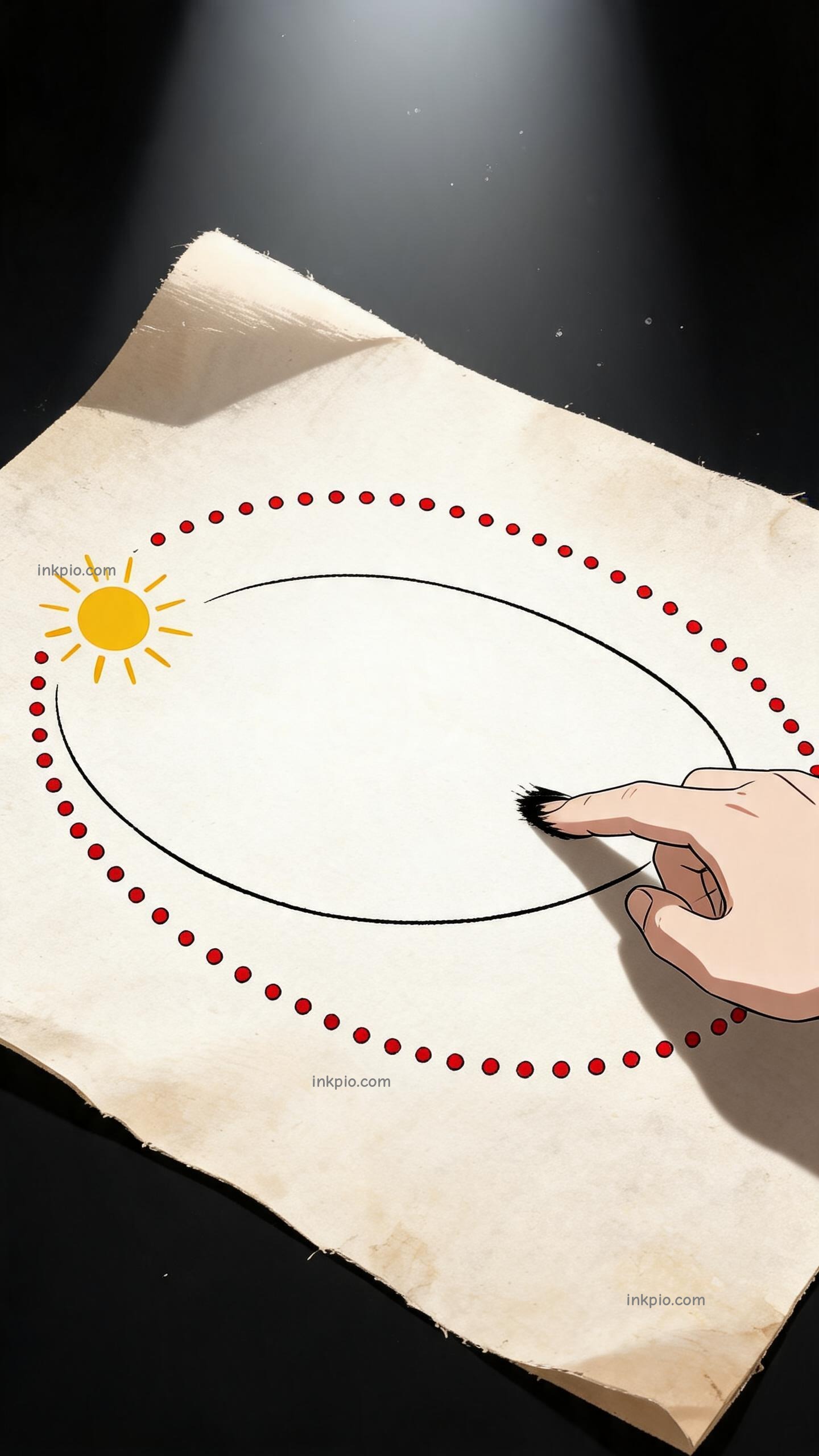
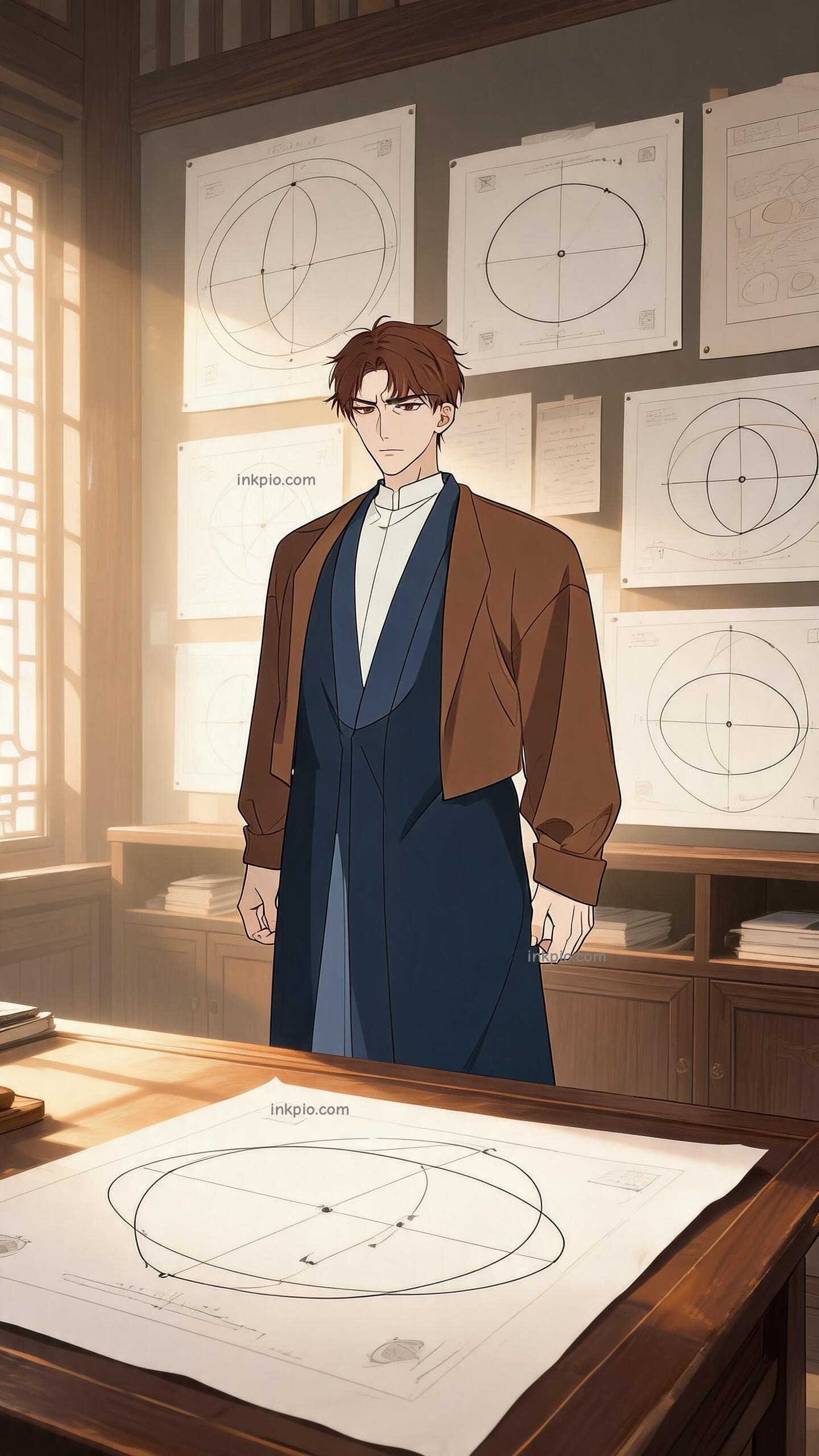

The candle wax had pooled into a hard, cold ridge on the desk. Johannes Kepler rubbed his eyes, but the red ink dots marking Mars’s position remained stubbornly off the black circle. They were separated by exactly eight arcminutes. To a casual observer, this gap was invisible, a speck of dust in the vast cathedral of the sky. But to Kepler, holding the legacy of Tycho Brahe, it was a scream.
Tycho was gone, buried with his gold nose and his pride, leaving behind boxes of data so precise they felt like a curse. Kepler knew that if he ignored this tiny discrepancy, he would be building a house on sand. The entire map of the heavens would be a lie. Yet for two thousand years, scholars had worshipped the circle. It was the shape of God, flawless and eternal. To break the circle was to break the divine order.
Kepler tried to save it. He spent years twisting the geometry, stretching the circular path into odd, egg-like ovals. His hands cramped from writing endless calculations. His wife, Barbara, watched him grow thinner, her silence heavy with worry about their empty pantry. She did not understand the math, but she understood the hunger in his eyes. Each failed calculation was another day without bread, another step toward ruin. The egg shapes refused to align. The red dots stayed away, mocking his desperation.
Frustration turned into a cold, hard resolve. If the circle was a lie, he would kill it. He swept the egg-shaped diagrams off the table and picked up the geometry of the ellipse. Imagine a perfect coin, then press your thumbs into opposite edges until it squishes slightly. That distorted shape is an ellipse. It is imperfect, asymmetrical, and deeply uncomfortable for a mind trained to seek perfection.
The critical shift was not just the shape, but the center. In the old model, the Sun sat dead in the middle, a king on a throne. Kepler moved it. He placed the Sun off-center, at a point called a focus. It was a demotion for the star, a removal from the pedestal of absolute centrality. But as he mapped Tycho’s red dots onto this new, squished curve, something clicked. The planet sped up when swinging close to the off-center Sun and slowed down as it drifted away. The motion felt natural, almost organic.
He ran the numbers one last time. The quill hovered over the paper, trembling slightly. This was the moment of truth. If he was wrong, he was a fool who had wasted years chasing a ghost. If he was right, he had shattered two millennia of philosophy. The red dots did not just get closer. They landed exactly on the line. The eight-arcminute ghost vanished. The error that had haunted him was not an error at all; it was the key.
Kepler dipped his quill into the inkwell. The liquid was dark and thick. He wrote the words that would rewrite the cosmos, not with triumph, but with a quiet, terrifying acceptance: "I acknowledge that the orbit of the planet is a perfect ellipse." The dogma of the perfect circle lay broken on the wooden desk. Outside, the morning sun hit the window, casting a long, slanted shadow across the page. The universe was stranger than the philosophers had guessed, and far more beautiful in its imperfection.