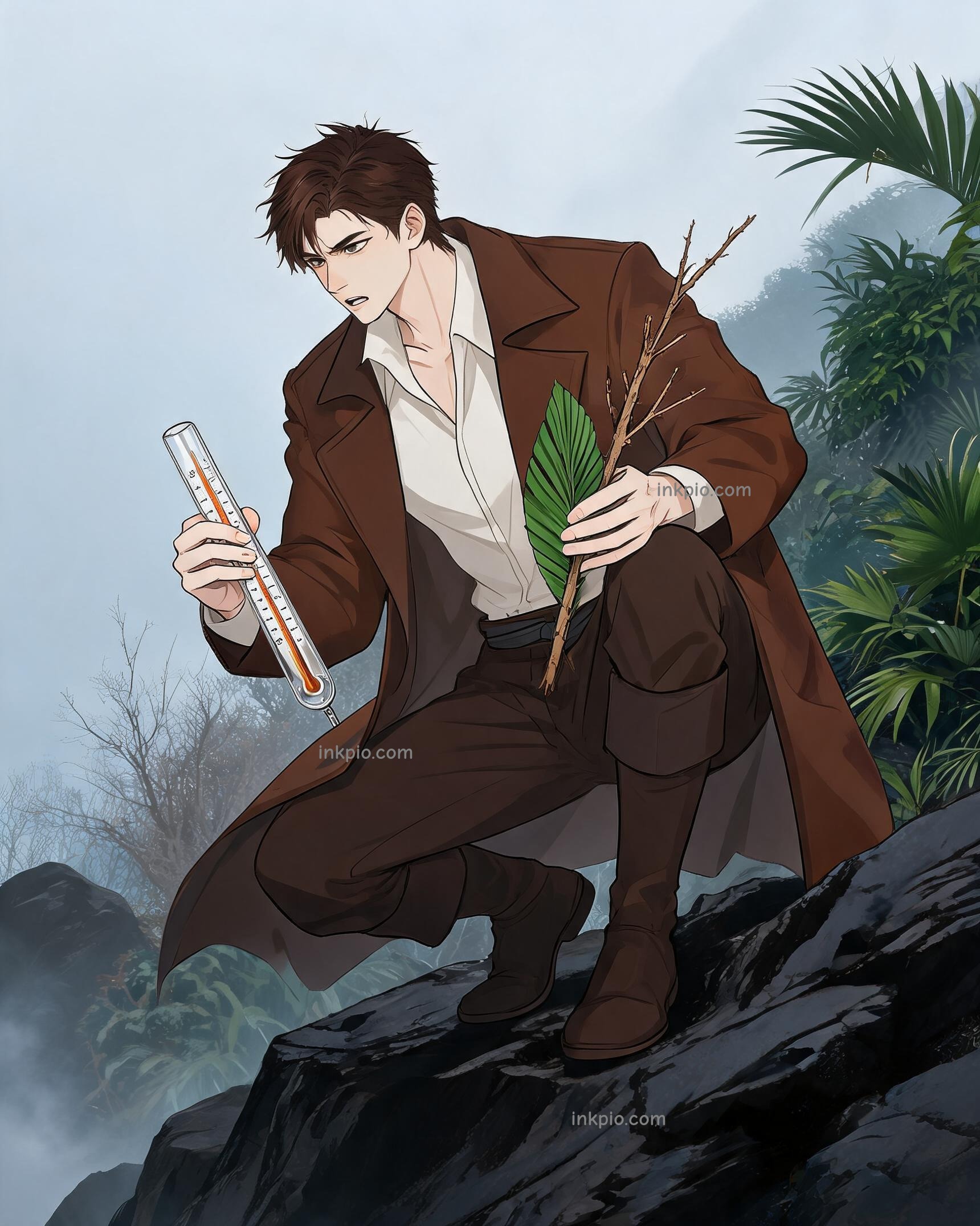

The air at 5,878 meters did not just feel thin; it felt like a theft. Every breath Alexander von Humboldt took was a negotiation with his own lungs, a desperate bargain for oxygen that his body refused to grant. Blood trickled from his nose, warm and metallic against the freezing mist that clung to his eyelashes. It was June 23, 1802. Behind him, Aimé Bonpland stumbled, his boots scraping against loose volcanic rock. They had pushed past the limit of human endurance, setting a record no one asked for, driven by a hunger that terrified them both.
Below them, the world was a chaotic jumble of green. For centuries, botanists had looked at this diversity and seen only divine whim. They believed God placed a palm here and an oak there based on mysterious, unsearchable categories. To suggest otherwise was not just scientific heresy; it was an affront to the order of the universe. But as Alexander gasped, leaning heavily on his walking stick, he didn't see chaos. He saw a pattern emerging from the cold. The leaves changed shape, not randomly, but in response to the biting wind. The higher they climbed, the more the vegetation stripped itself down, shedding luxury for survival.
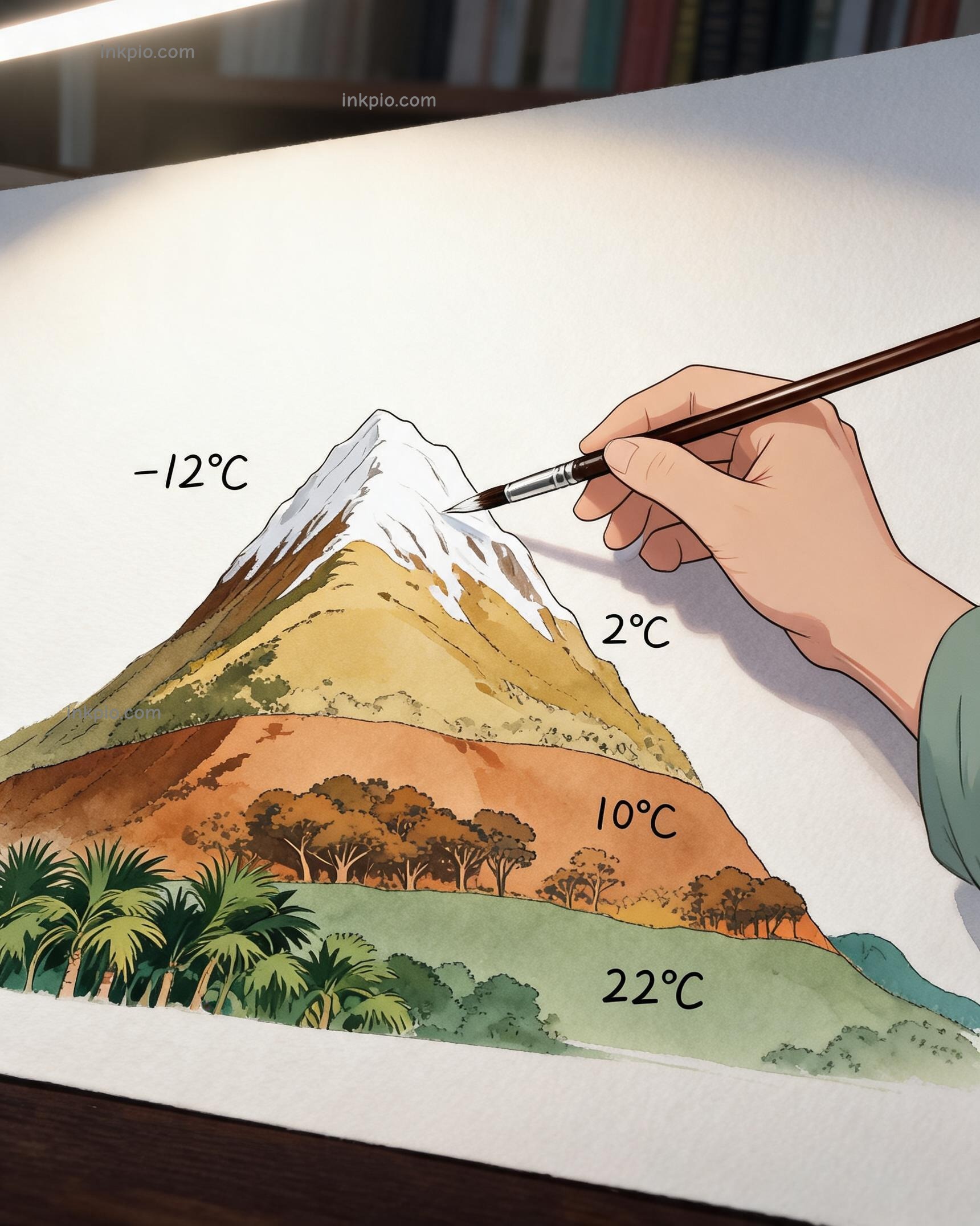
He pulled out his brass thermometer, his fingers numb and clumsy. The mercury dropped with a predictability that felt almost personal. It wasn't just getting colder; the cold was dictating life. At the base, tropical palms thrived in humidity. Higher up, oaks stood firm against the chill. Near the summit, only alpine grasses dared to exist, hugging the earth to escape the gale. This wasn't a collection of species; it was a ladder. A vertical map of existence where temperature was the rung, and biology was the climber.
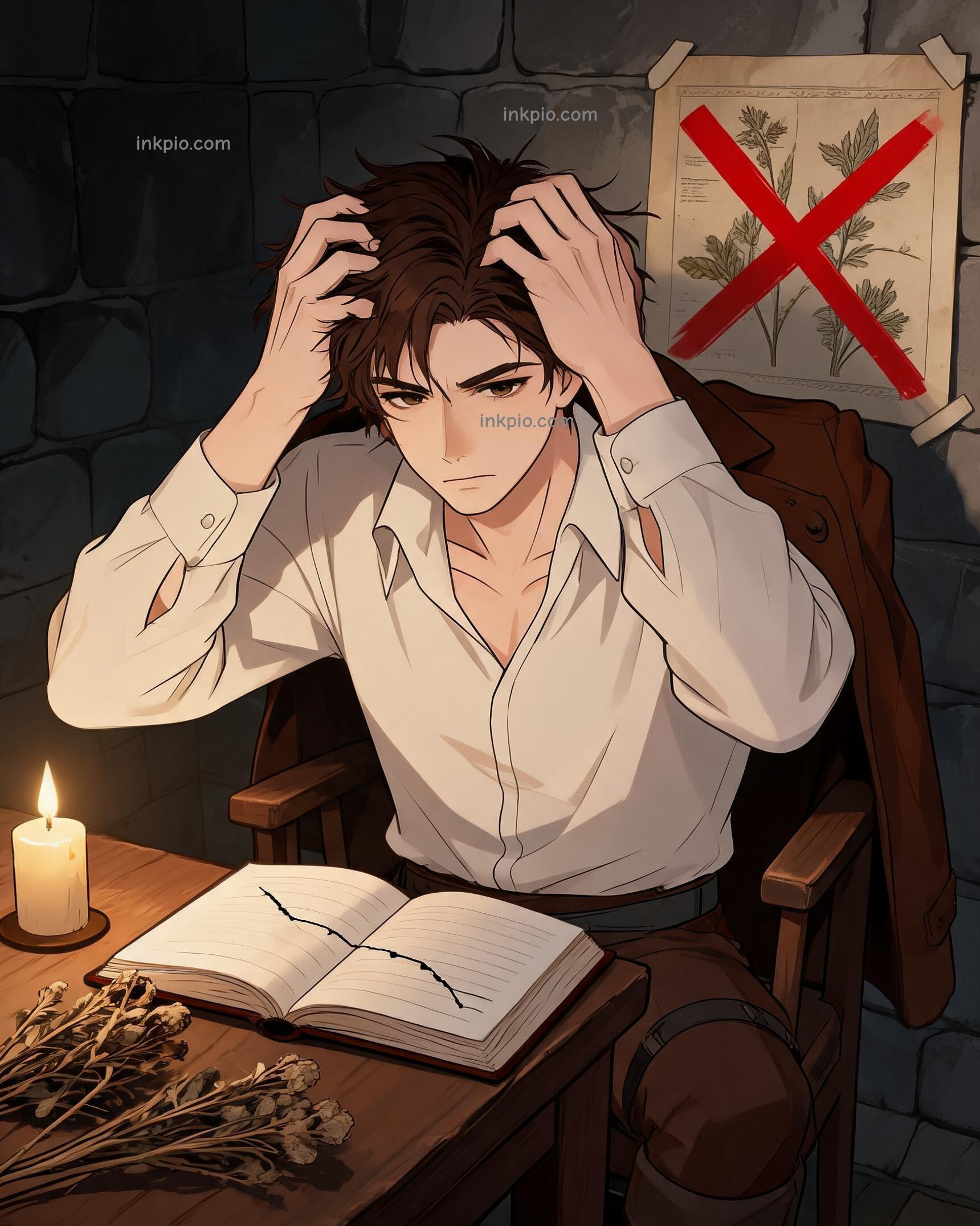
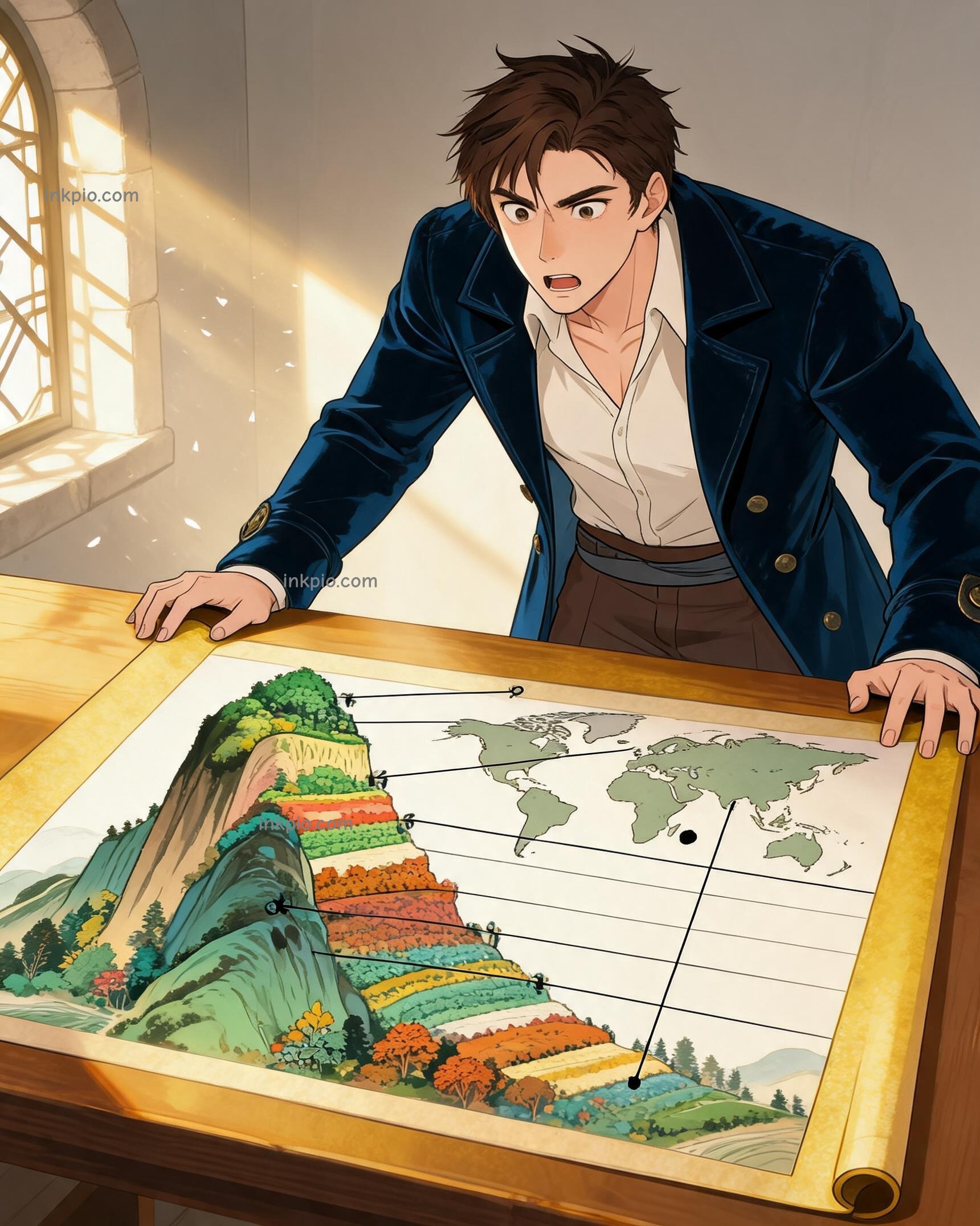
Hours later, huddled in a stone shelter while the Andean wind howled like a wounded animal, the realization hit him with physical force. Alexander stared at his notebook, the candlelight flickering over his scribbled numbers. The temperature curve mirrored the plant distribution perfectly. His mind raced back to the maps he had studied in Europe. The shift from tropical to alpine on this single volcano was identical to the shift from the equator to the North Pole. Climbing Chimborazo was not just ascending a mountain; it was traveling through time and space, compressing the entire planet’s climate into a single afternoon’s climb.
The chaos of creation had a logic. It was not divine caprice, but physical law. The environment shaped the organism. This thought was terrifying in its simplicity. It meant the world was readable, measurable, and connected. He looked at Bonpland, who was rubbing warmth into his frozen hands, unaware that the ground beneath them had just shifted intellectually. Alexander felt a sudden, profound loneliness. He saw a unity in nature that no one else could see yet, a web connecting air, soil, and leaf.
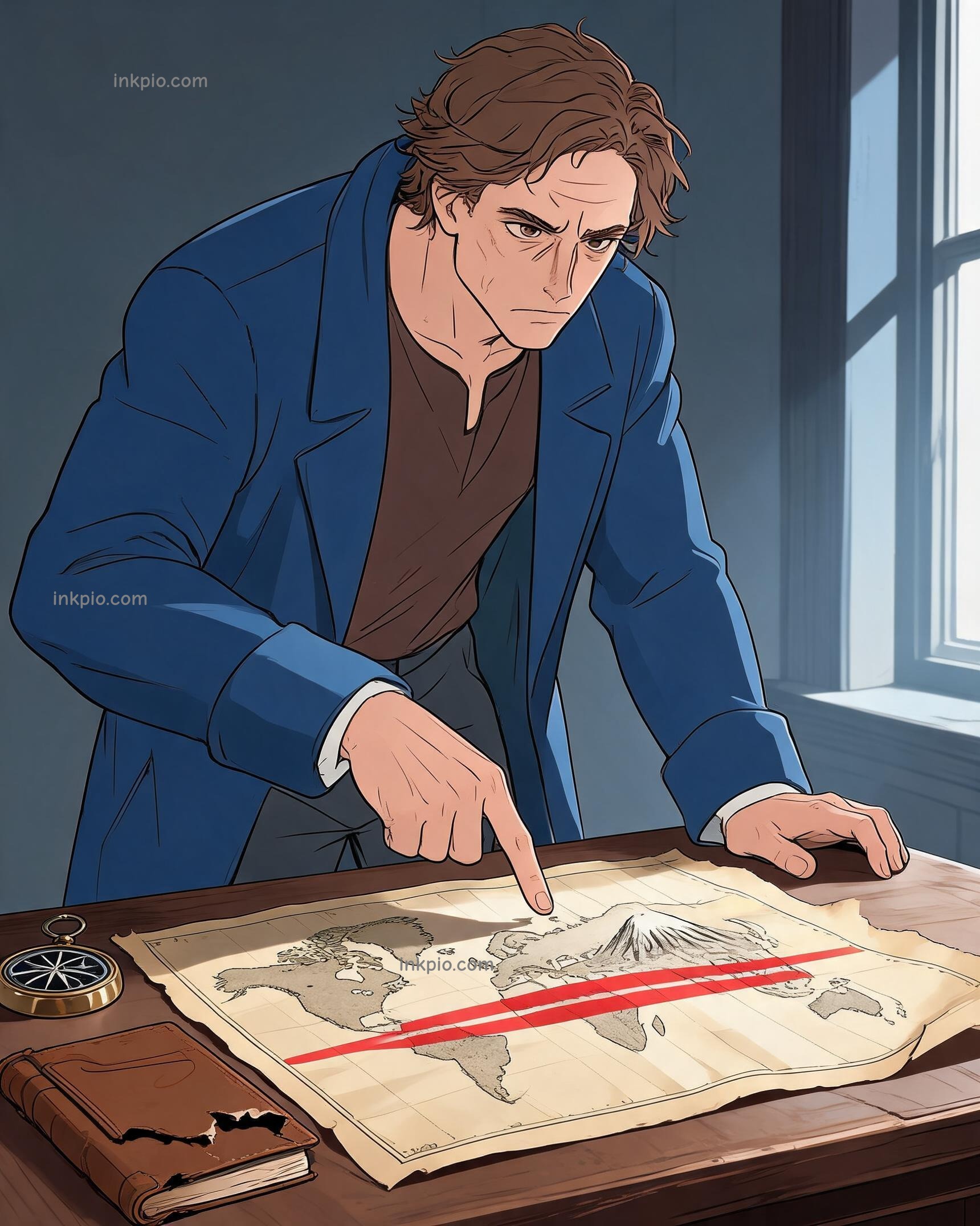
Back in the safety of their camp, a massive sheet of watercolor paper covered the table. Alexander worked in silence, his brush moving with urgent precision. He painted the cross-section of Chimborazo, layering bands of color from deep green to stark white. Beside the mountain, he drew a horizontal strip representing the globe. The alignment was flawless. The vertical zones of the mountain locked into the horizontal zones of the Earth. He called it the 'Naturgemälde'—a portrait of nature.
He pinned the painting to the wall. Outside, the cold wind continued to batter the shutters, indifferent to his breakthrough. Sunlight filtered through the cracks, hitting the colored bands on the paper. Alexander sat back, exhausted, watching the dust motes dance in the light. He had captured the heartbeat of the planet on a piece of paper. For now, that was enough. The world outside remained unchanged, but inside that small room, everything had been rewritten.