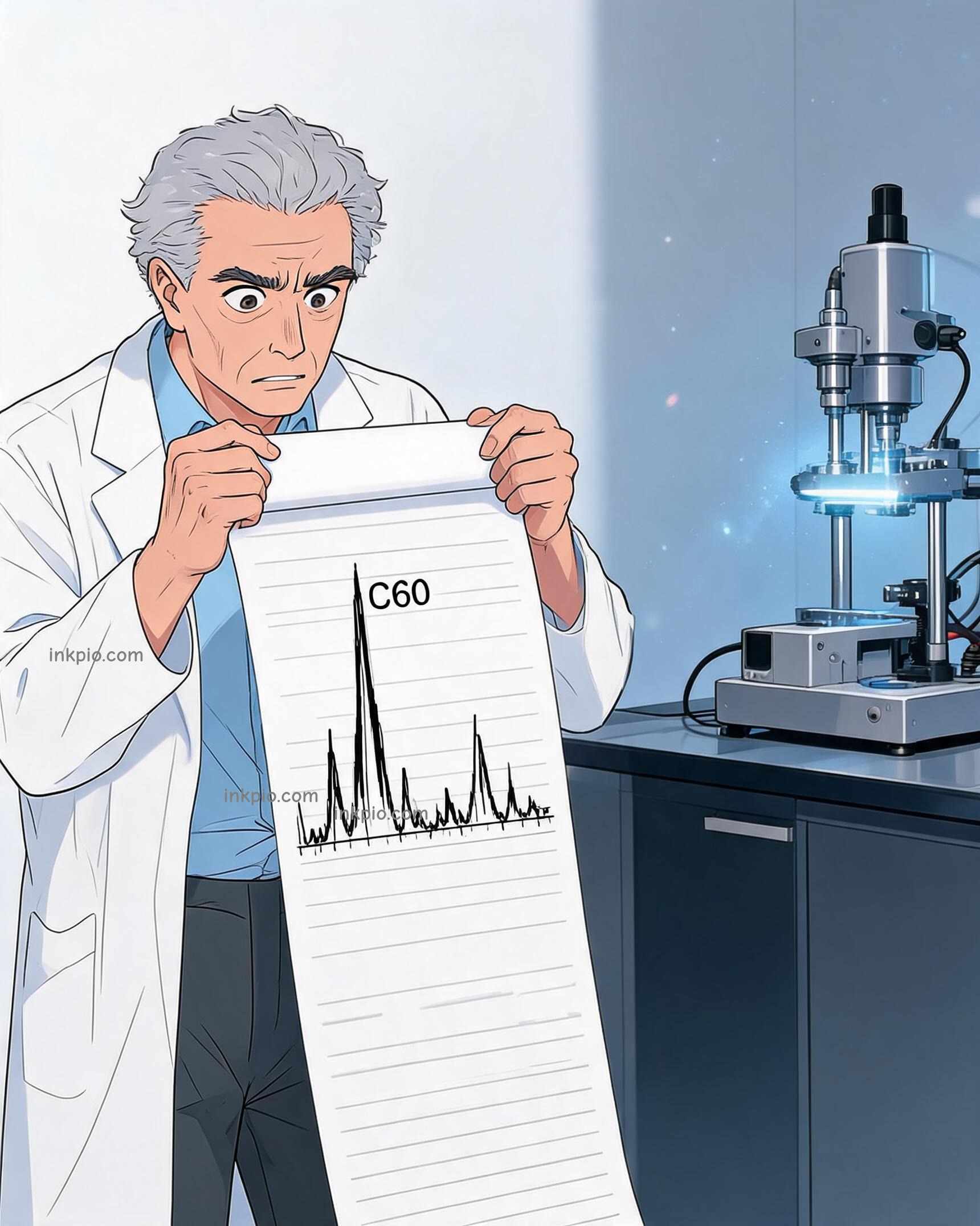


Harold Kroto stared at the mass spectrometry printout until his eyes burned. The paper strip lay on the lab bench, a long white ribbon of data that refused to behave. A single black peak, labeled C60, rose like a skyscraper from a flat cityscape. It towered over every other signal, its intensity at least one hundred times greater than its neighbors. This was not just noise. This was a scream of stability in a vacuum where nothing should survive.
Kroto, Robert Curl, and Richard Smalley had come to Rice University with a simple, almost romantic goal. They wanted to understand the chemistry of carbon chains drifting around red giant stars. They vaporized graphite with a laser, expecting to see linear strings of atoms, the cosmic dust of creation. Instead, the machine gave them a mystery that mocked their expertise. The C60 peak at m/z 720 was too strong, too perfect. Flat sheets of carbon had dangling edges that would react instantly in space. Linear chains were fragile. Neither could explain why this specific cluster of sixty atoms stood so defiantly alone.
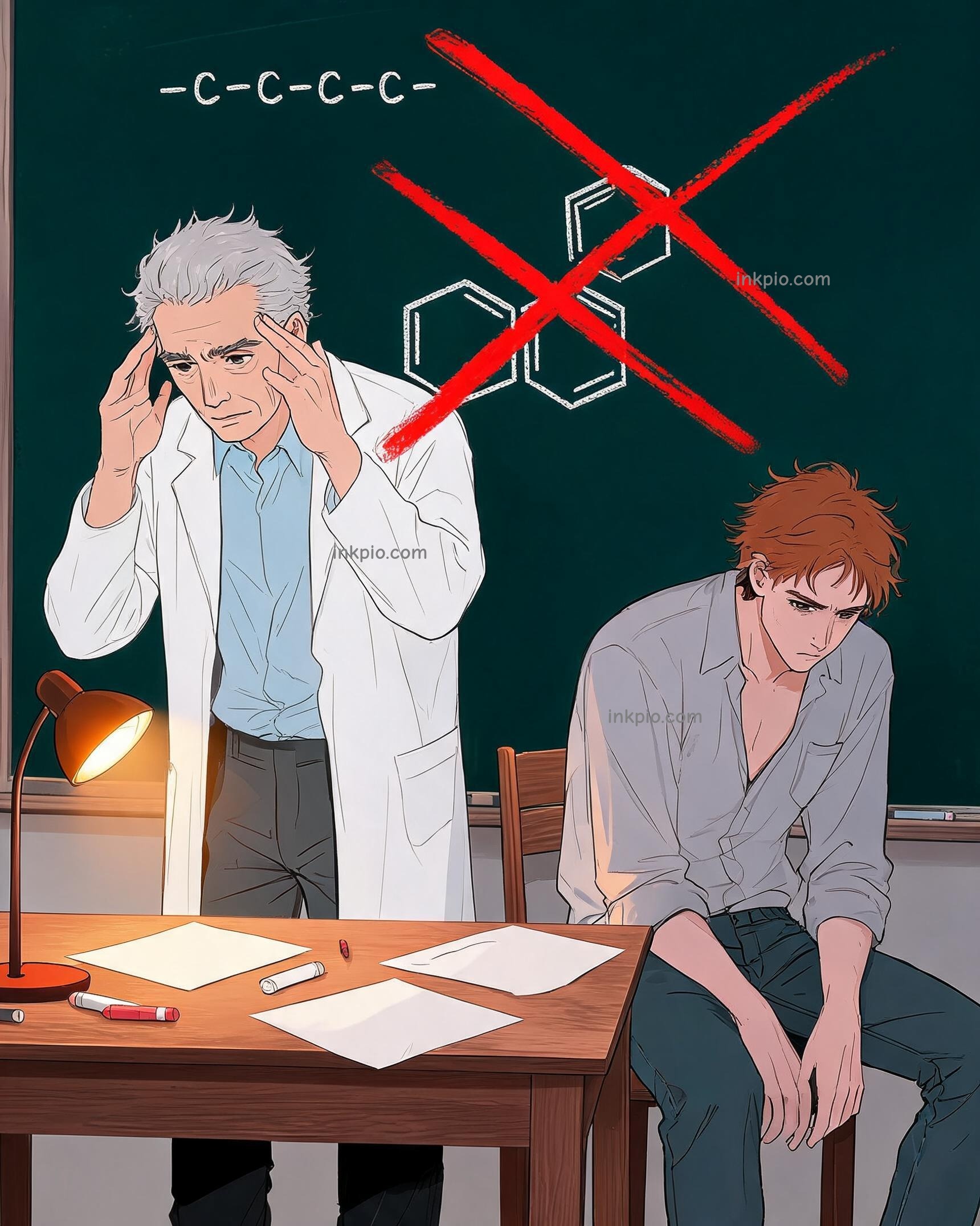
For days, the air in the lab grew thick with frustration. Models were drawn on chalkboards and erased before the dust settled. Each proposed structure failed catastrophically. Curl paced the room, rubbing his temples, while Smalley scrutinized the raw data for errors that weren't there. They felt the weight of professional embarrassment creeping in. Were they missing something obvious? Was the machine broken? Or was nature playing a trick on them? The silence between them was heavy, filled with the unspoken fear that they were chasing a ghost.
Kroto retreated to a corner of the room, his mind drifting away from the equations. He needed a shape that had no edges. No loose ends. No vulnerable atoms waiting to bond with the void. His gaze landed on a soccer ball sitting on a shelf, a mundane object in a room full of high-tech instruments. He picked it up, turning it over in his hands. The pattern of black pentagons and white hexagons seemed familiar, yet he had never truly looked at it. He traced the seams with his thumb. Twelve pentagons. Twenty hexagons. They tiled the sphere perfectly.
A sudden clarity struck him, sharp and cold. If he placed a carbon atom at every vertex where these shapes met, the math aligned with terrifying precision. Exactly sixty vertices. Each atom connected to three neighbors, locking into a closed cage. There were no edges. No dangling bonds. It was a fortress against the chaos of space. He called out to Curl and Smalley, his voice trembling not with fear, but with the shock of recognition. They gathered around the table, the tension in the room shifting from despair to electric anticipation.
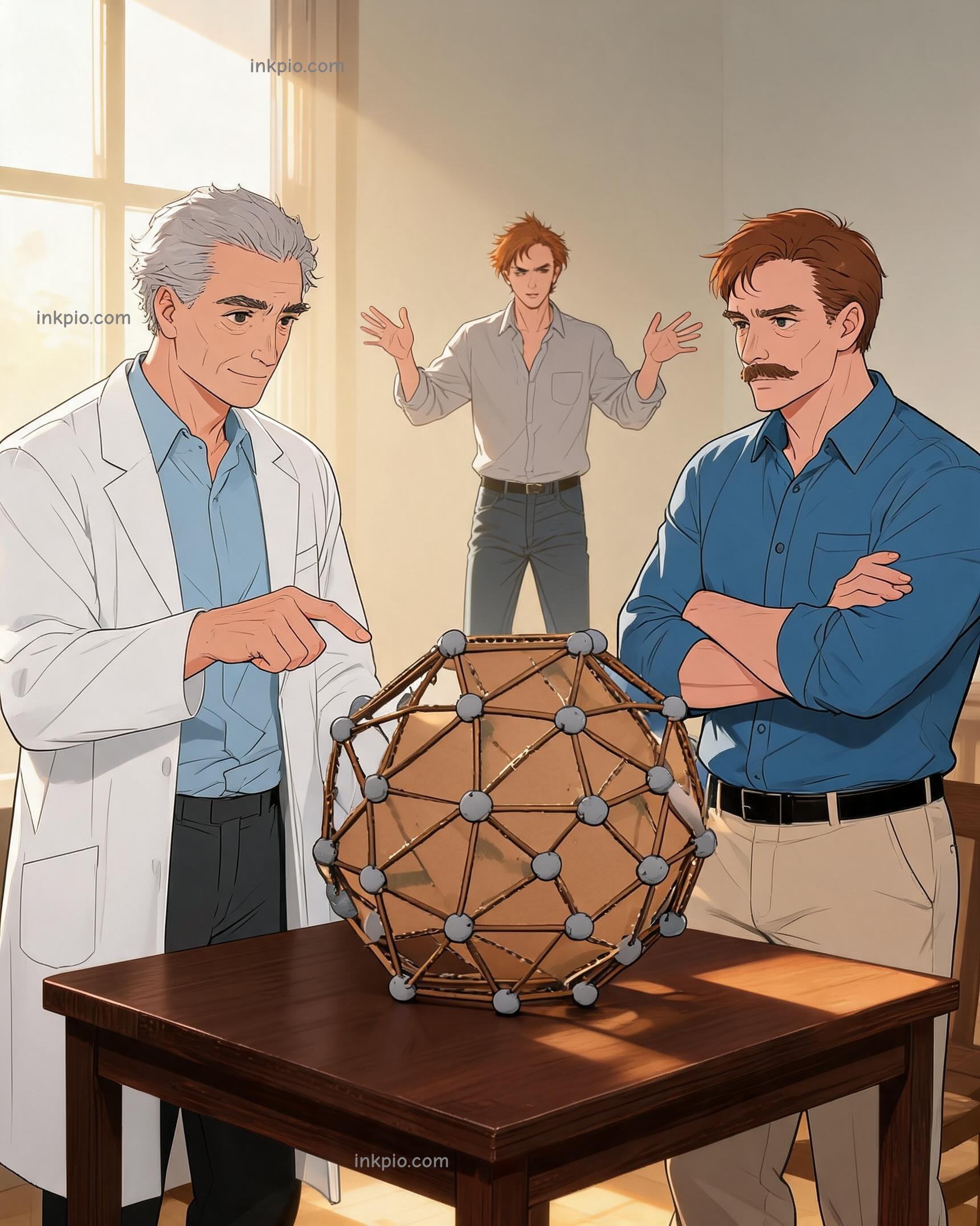
They did not reach for computers. They reached for cardboard and clay. Hands shaking slightly, they cut out polygons and stuck clay balls at the corners. The physical act of building grounded the abstract theory. As the final piece clicked into place, forming a truncated icosahedron, the model sat on the table, silent and perfect. It was no longer just data on a strip of paper. It was a thing. A molecule that looked like a child's toy but held the secrets of the stars.
In September 1985, they published their findings in Nature. The scientific world would later call it the birth of nanotechnology. The Nobel Prize would follow in 1996. But in that quiet lab, the victory was smaller and more personal. They had walked in looking for stardust, for the faint echoes of dead stars. They had stumbled instead upon a perfect geometric truth hidden in plain sight. Kroto later reflected, "We were simply trying to understand the chemistry of carbon in space, and we stumbled on something extraordinary." The soccer ball remained on the shelf, no longer just a game, but a key to a new universe.