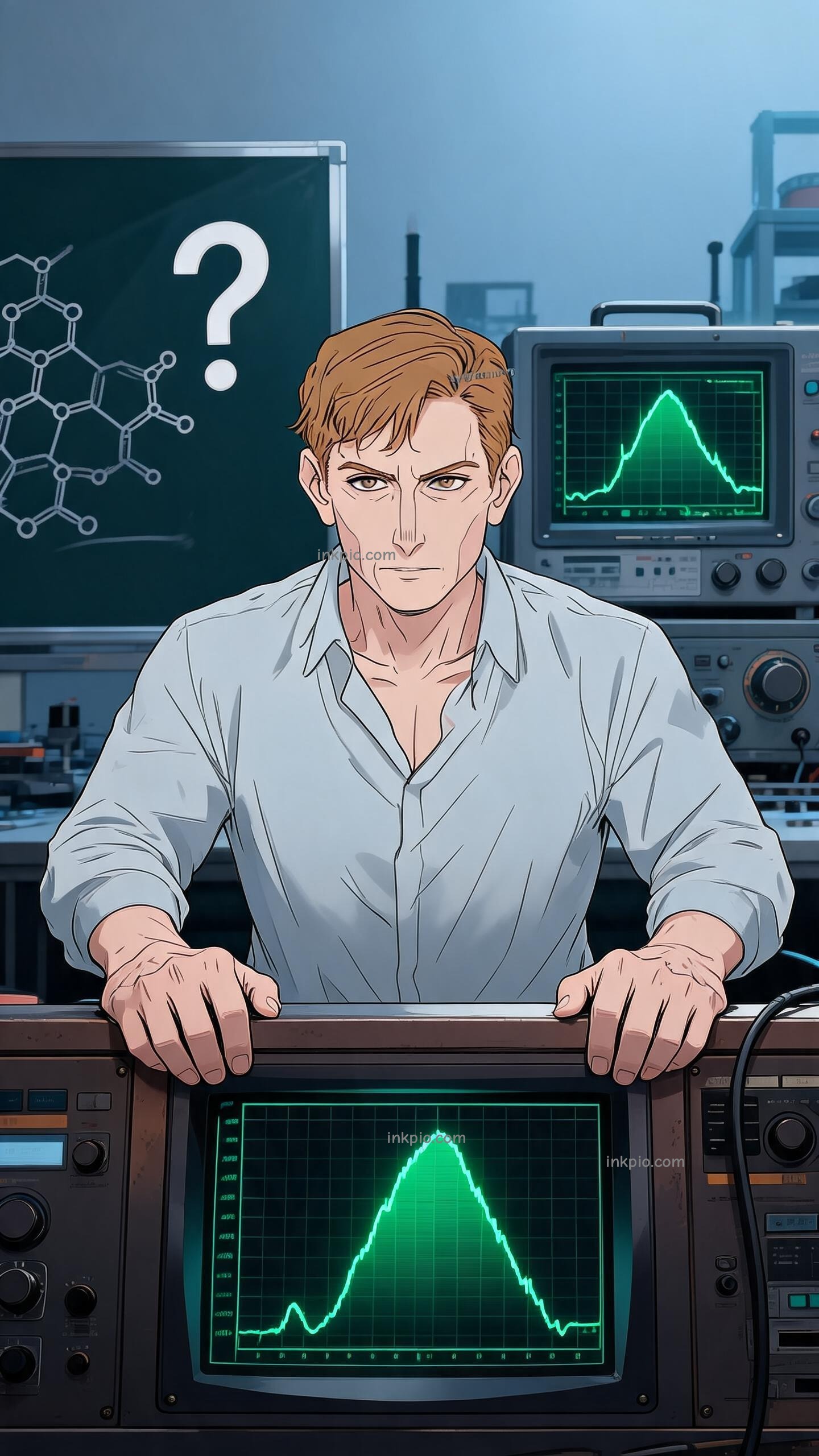



The oscilloscope’s green line sat flat and mocking. It was a single, fat spike that screamed existence but whispered nothing of location. Paul Lauterbur stared at it until his eyes burned. For years, Nuclear Magnetic Resonance had been the chemist’s darling, capable of identifying molecular structures with terrifying precision. But inside the machine, space was dead. A tumor, a bone, a drop of water—they all merged into one indistinguishable roar. The machine knew what was there, but it was blind to where.
Paul felt a growing claustrophobia in that blindness. He wasn't just looking for better data; he was fighting against a fundamental limitation of physics that felt personal. If he couldn't map the interior of a living thing without cutting it open, then the technology was a beautiful toy, not a tool for healing. He needed to break the symmetry. He needed to make the uniform magnetic field lie.
He imagined a choir standing in pitch blackness. If every singer held the same note, the sound was a wall—impenetrable and directionless. You heard the volume, but you lost the individual. But what if the air itself changed? What if the left side of the room forced voices lower, and the right side pulled them higher? Then, pitch would become position. Listening would become seeing.
This analogy haunted him. It wasn't enough to think it; he had to force the protons to obey. He adjusted the magnets, intentionally tilting the field. He introduced a gradient, a deliberate unevenness. Now, protons on one side of the sample would spin faster than those on the other. Their physical location was no longer hidden; it was encoded in their frequency. Space had become sound.
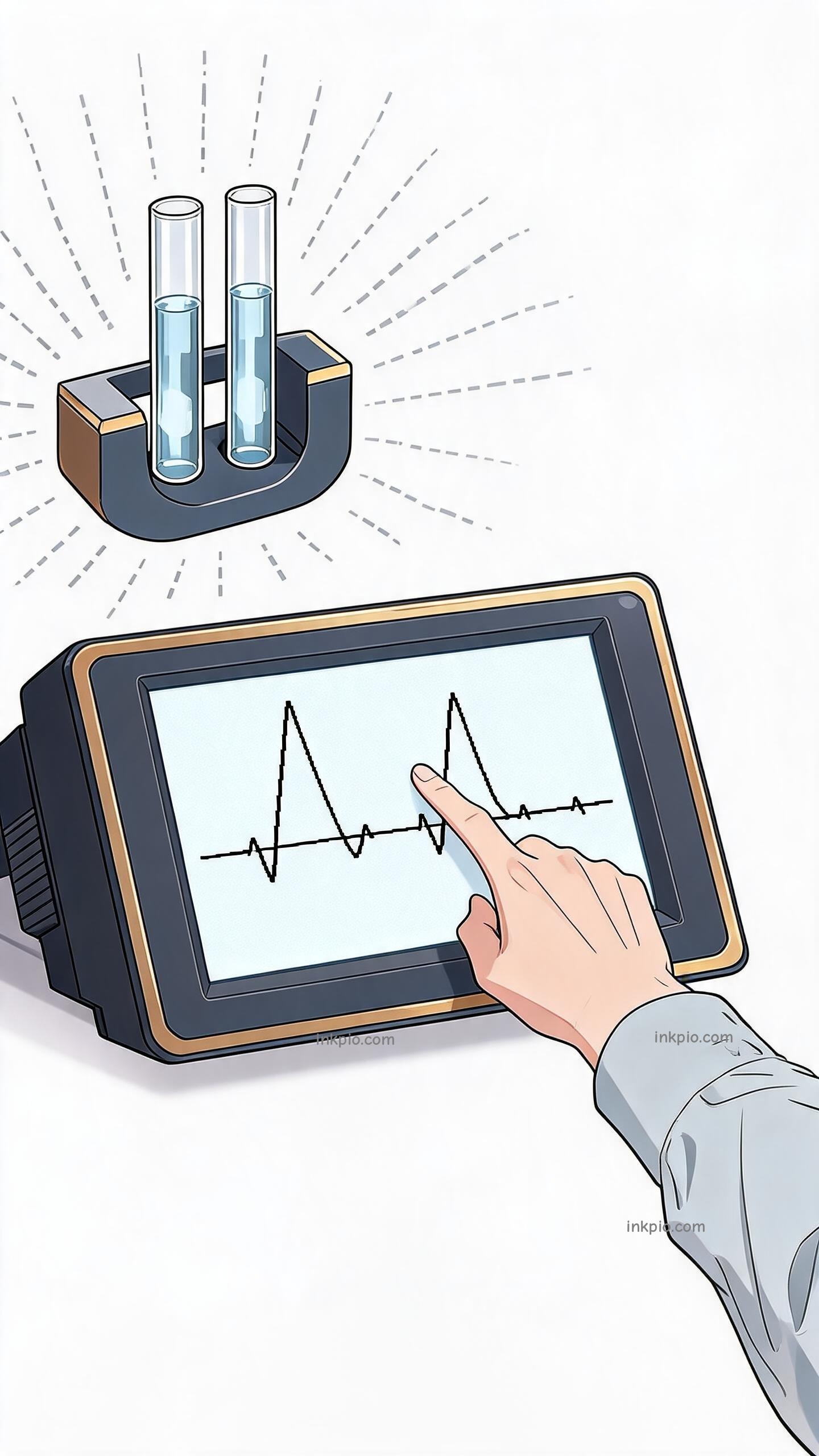
His hands shook slightly as he prepared the test. It wasn't a human body yet—just two thin glass capillary tubes filled with water, placed side by side. They looked fragile, insignificant against the heavy iron of the magnet. He flipped the switch. The hum of the machine deepened. On the screen, the single, jumbled spike vanished. In its place, two sharp, distinct peaks rose like twin mountains. The signal had split. The chaos had ordered itself.
Paul didn't cheer. He leaned closer, breath held, tracing the separation with his eyes. The machine had finally distinguished left from right. He fed the data into the primitive computer printer. The needle scratched across the continuous paper, a rhythmic, mechanical sound that filled the quiet lab. Slowly, an image emerged. Not a photograph, but a map. Two small black dots stared back from the white void.
It was 1973. The image was crude, barely more than a suggestion of form. But in those two dots, Paul saw the end of invasive surgery for diagnosis. He saw a future where doctors could look inside a mother’s womb or a veteran’s brain without making a single incision. The blind tool had learned to see.
He pinned the printout to the wall. It looked lonely there, a tiny artifact of a massive shift. Outside, the world continued its noisy, uncharted course. Inside, the silence of the lab felt different now. It wasn't empty. It was waiting to be mapped.