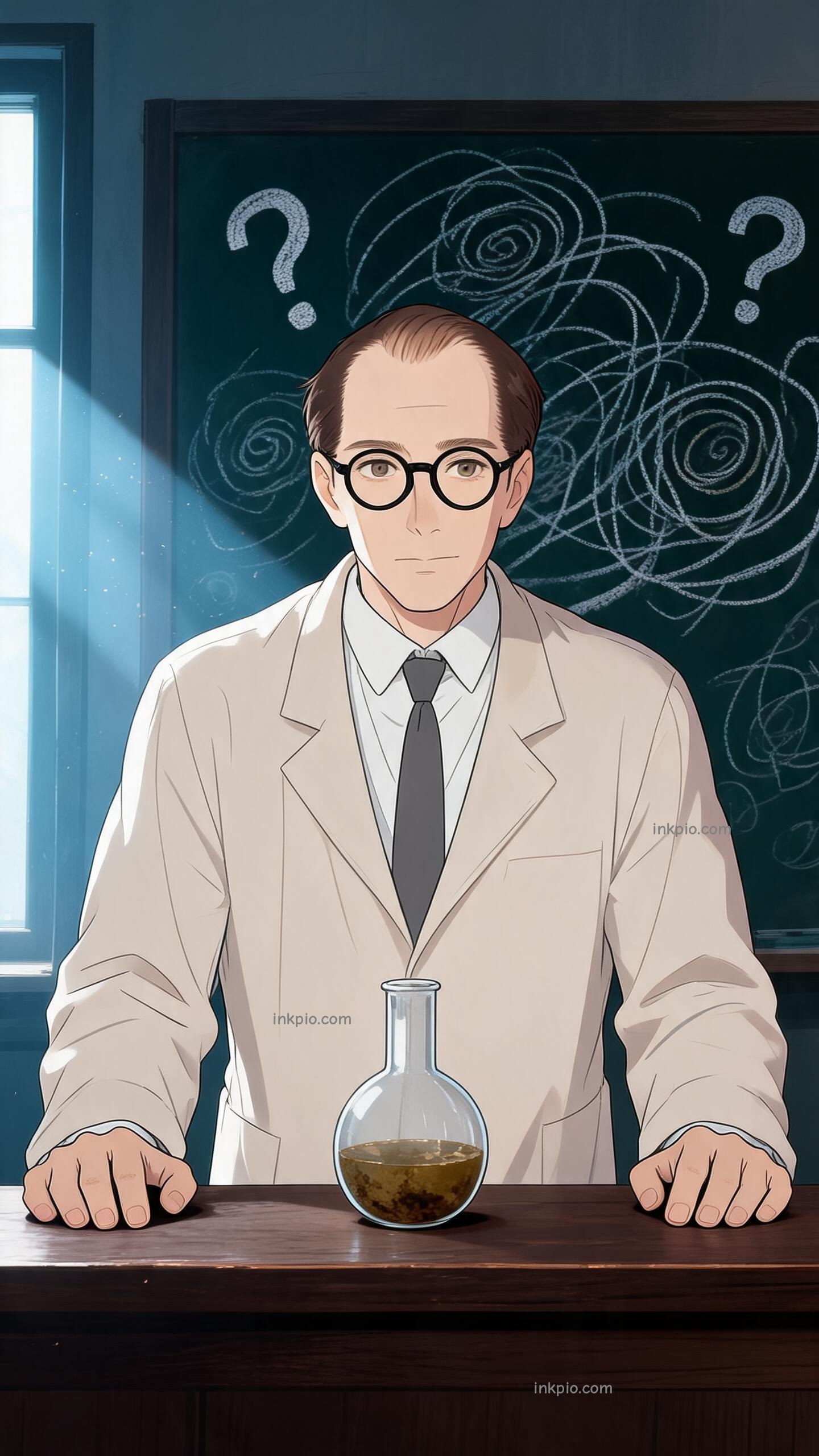
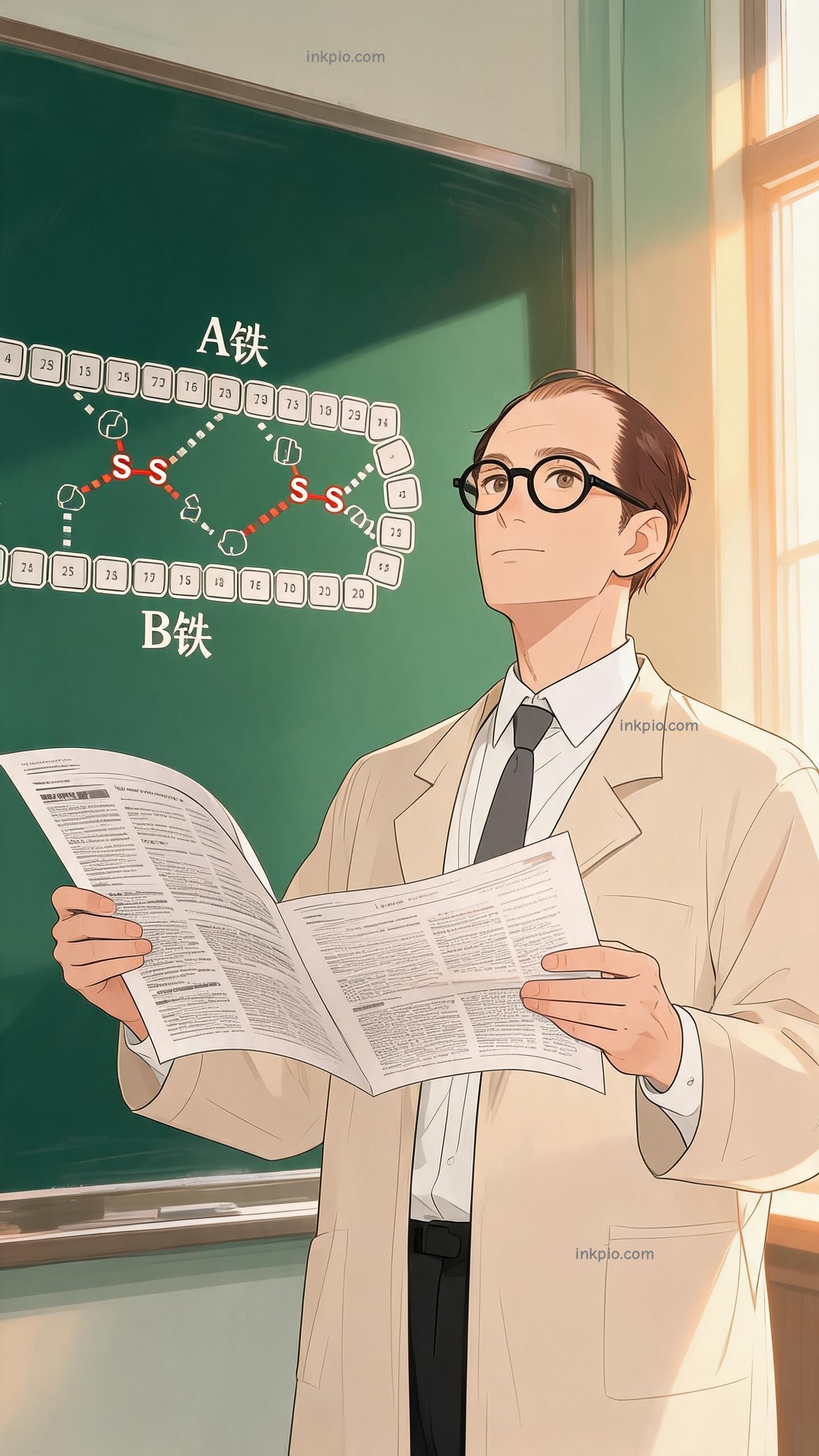

The lab air in Cambridge smelled of stale tobacco and damp stone. It was the late 1940s, and outside, the world was rebuilding from war. Inside, Frederick Sanger sat alone with a problem that most of his colleagues had already dismissed as unsolvable. To them, proteins were chaotic 'colloids'—amorphous blobs of matter without rhyme or reason. Trying to find order in them was like trying to map the shape of smoke.
Sanger didn't see smoke. He saw a code. He focused on bovine insulin, a small molecule by protein standards, yet complex enough to defy conventional analysis. It contained exactly 51 amino acids. The prevailing method for studying such molecules was brutal: boil them in strong acid until they shattered. But acid is indiscriminate. It breaks the chain, yes, but it scrambles the sequence. You are left with a bowl of chemical alphabet soup, knowing what letters exist but having no idea which came first. For Sanger, this randomness was an insult to nature’s precision.
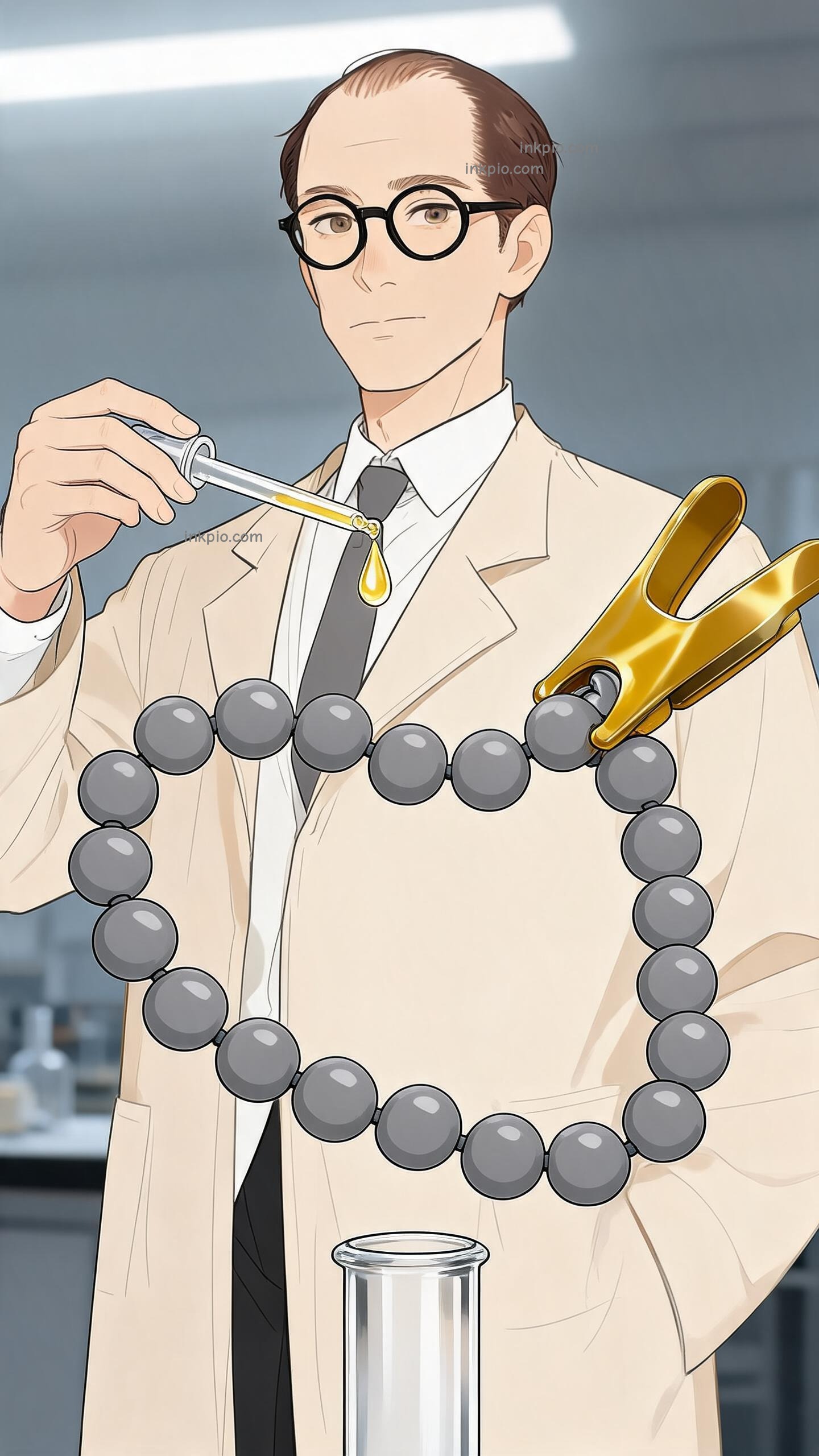
He needed a way to freeze time, or at least freeze the starting point, before the destruction began. The analogy that kept him awake at night was a shredded book. If you tear a novel into confetti, the story is lost. But if you could stamp the first word of every page with indelible ink before tearing, you could always reconstruct the narrative’s beginning. Sanger synthesized a chemical called FDNB, a pale yellow liquid that would become known as Sanger’s reagent. It wasn't just a tool; it was a promise. It sought out the N-terminal amino acid—the very first letter of the protein sentence—and locked onto it with a bond that acid could not break.
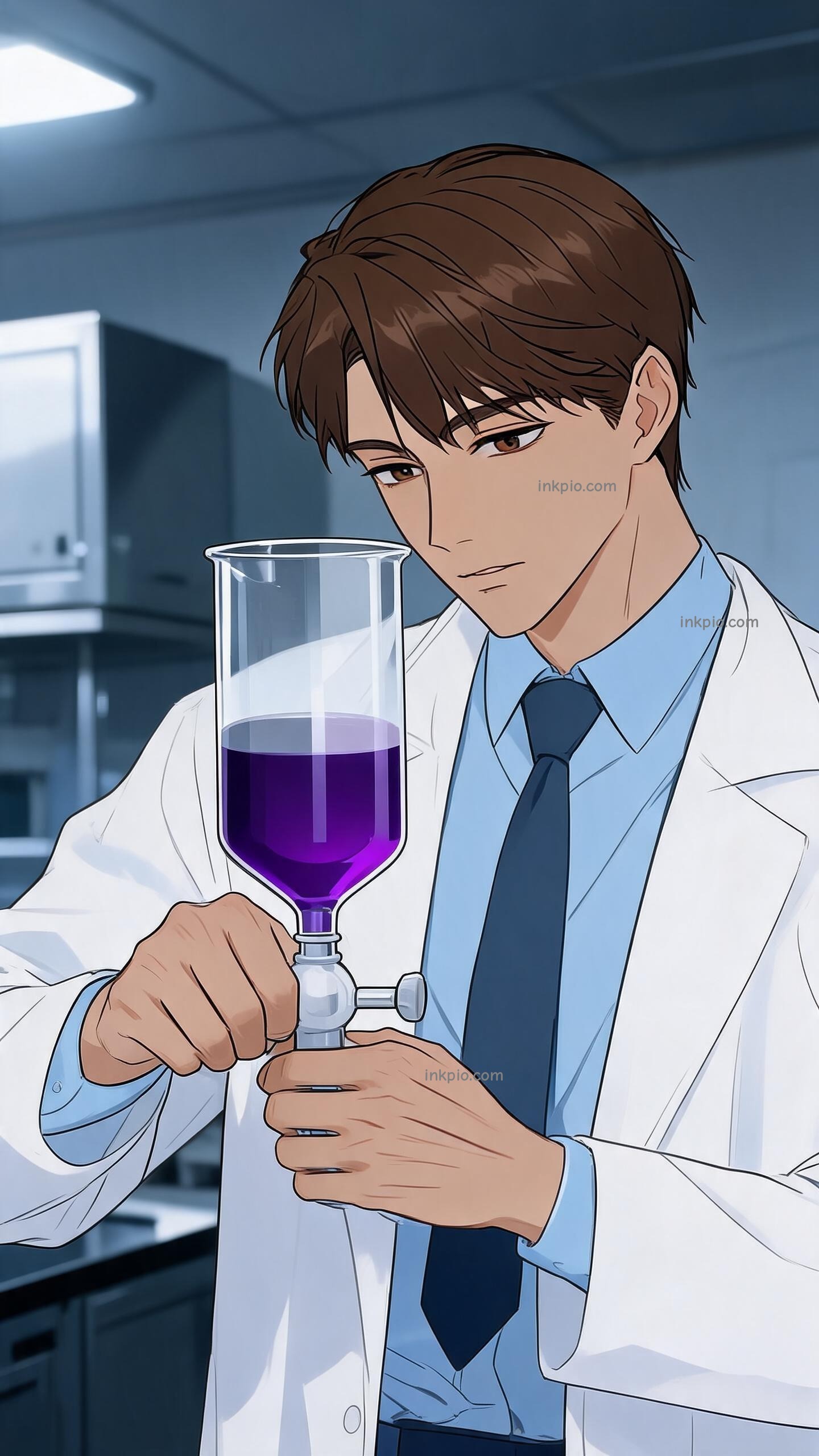
The experiment itself was quiet, almost mundane. Sanger added the yellow reagent to his insulin sample. He waited, watching the invisible chemistry take hold. Then, he introduced the acid. The heat rose. The protein chains snapped under the thermal stress, fragmenting into thousands of pieces. In any other experiment, this would be the moment of failure. Here, it was the moment of truth. The yellow tags survived the violence, holding fast to their respective starting points.
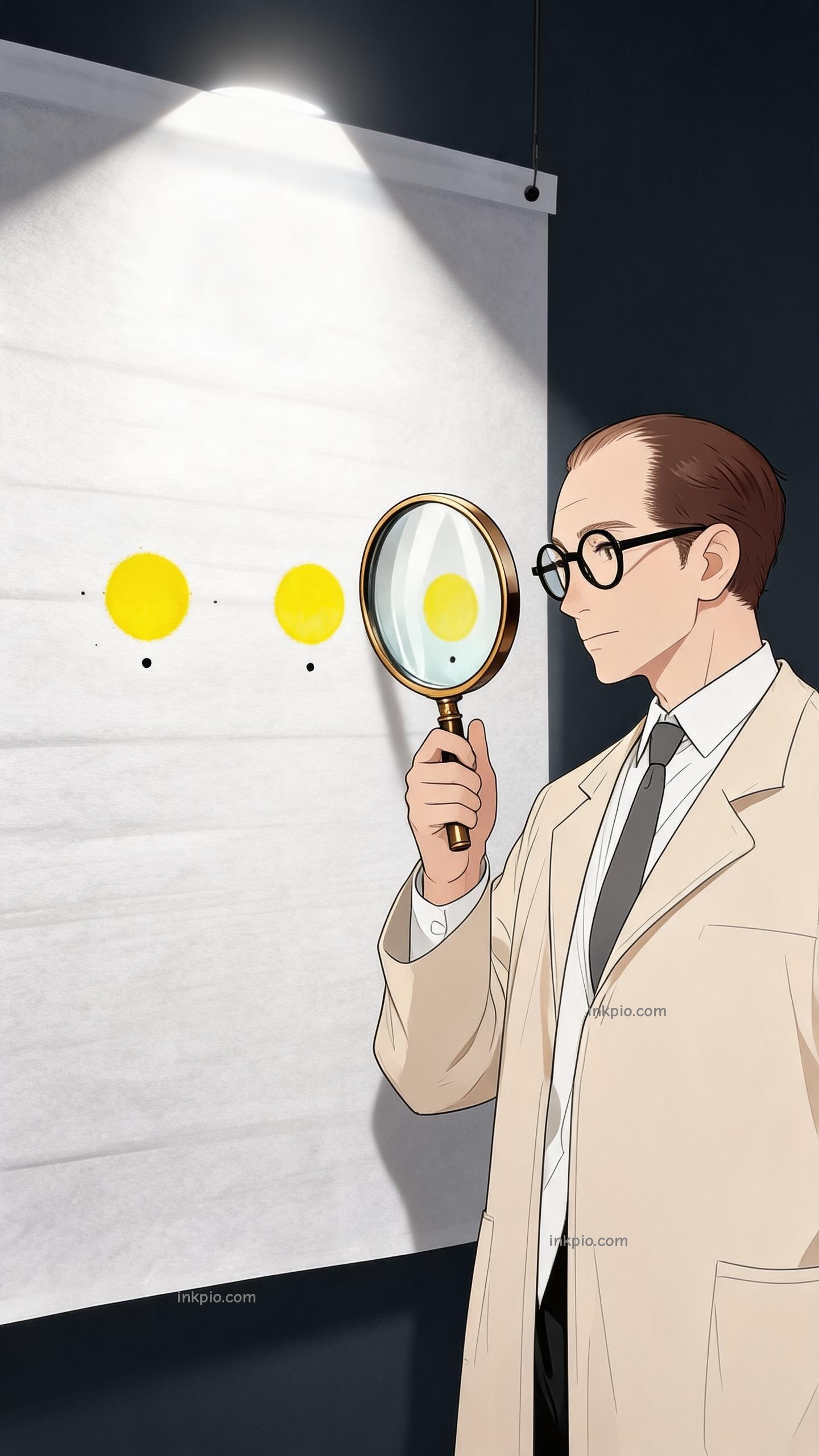
He transferred the mixture to a sheet of chromatography paper. As the solvent climbed the fiber, carrying the fragments with it, the yellow spots separated from the chaos. They formed distinct, isolated islands of color against the white background. Sanger leaned in, his eyes tracing the positions. He compared them to known standards. Glycine. Phenylalanine. The first two words of the sentence were clear. A shiver of recognition passed through him—not excitement, but relief. The chaos had a face.
But identifying the start was only the breach in the wall. The rest of the sequence remained hidden in the remaining fragments. What followed was a period of grinding, solitary labor. Sanger used different enzymes to chop the remaining chains at specific points, tagged the new ends, and ran the chromatography again. And again. And again. There were no assistants cheering him on, no dramatic eureka moments in front of an audience. Just Sanger, the yellow spots, and the growing stack of data sheets.
Months bled into years. Each cycle revealed another few letters. He pieced them together like a man assembling a message from broken tiles. Doubt crept in during the long nights. Was he forcing a pattern where none existed? Was the colloid theory right after all? He pushed the fear down and looked at the data. The patterns held. The spelling was consistent.
Finally, the last gap closed. The 51st amino acid fell into place. Sanger stood back from his bench. The old idea of proteins as random, muddy colloids lay in ruins. In its place stood a structure of exquisite specificity. He took the final sequence, written in neat handwriting on a strip of paper, and pinned it to the laboratory wall. The room was silent. The chalk scribbles of failed hypotheses faded into the background. On the wall, the yellow bookmark had done its job. It had turned a soup into a sentence. Sanger stared at the chain, not as a conqueror, but as someone who had finally learned how to read.