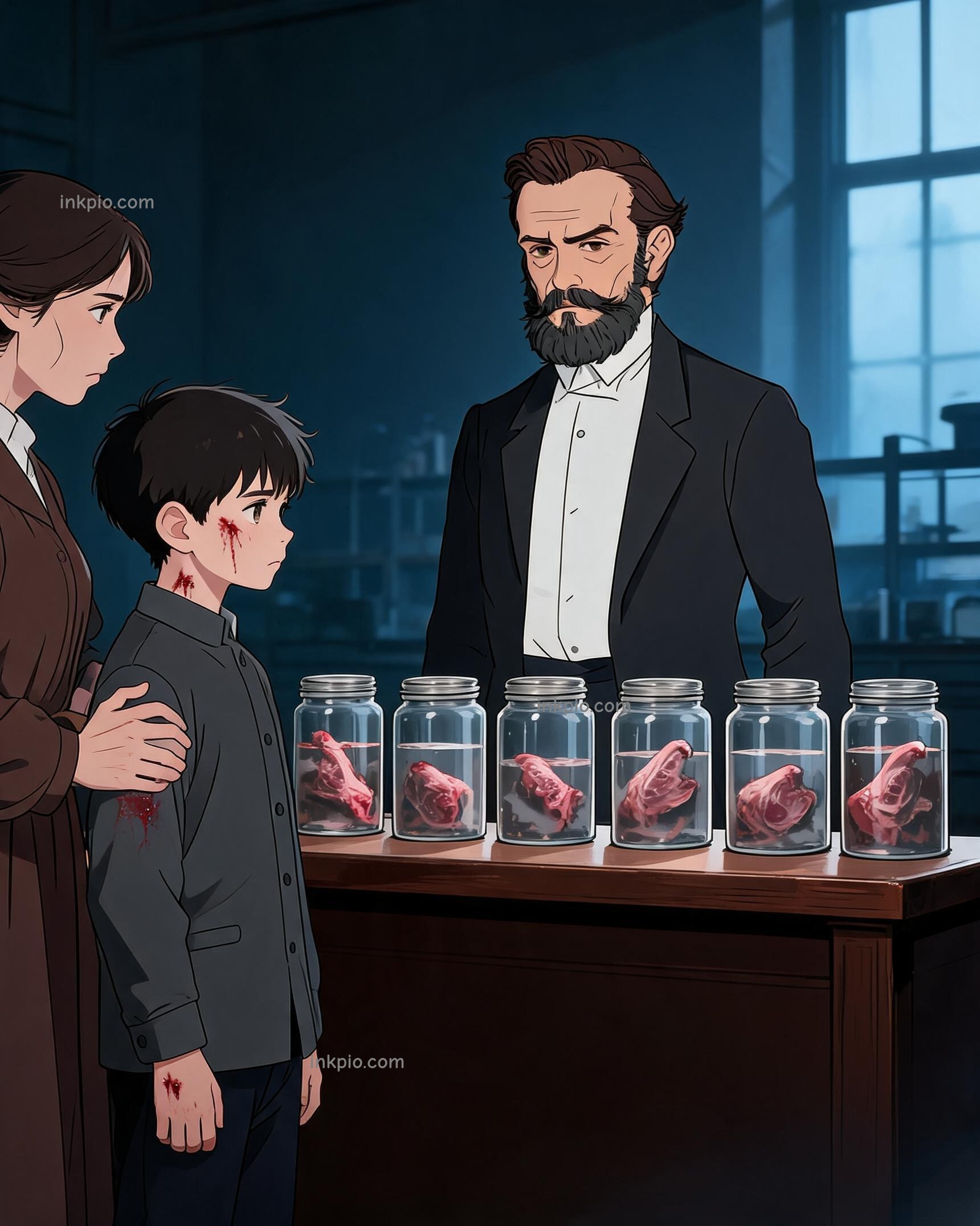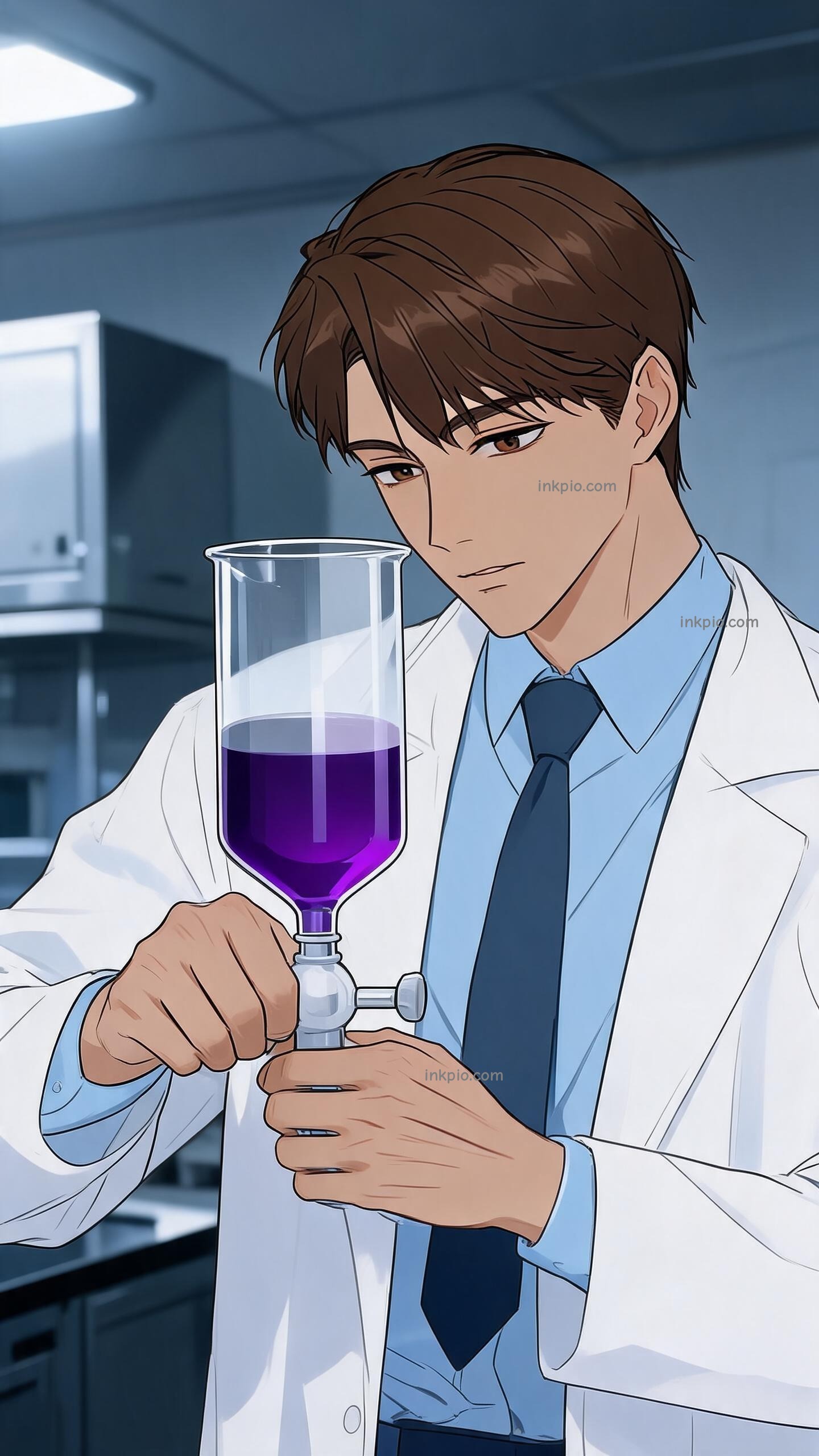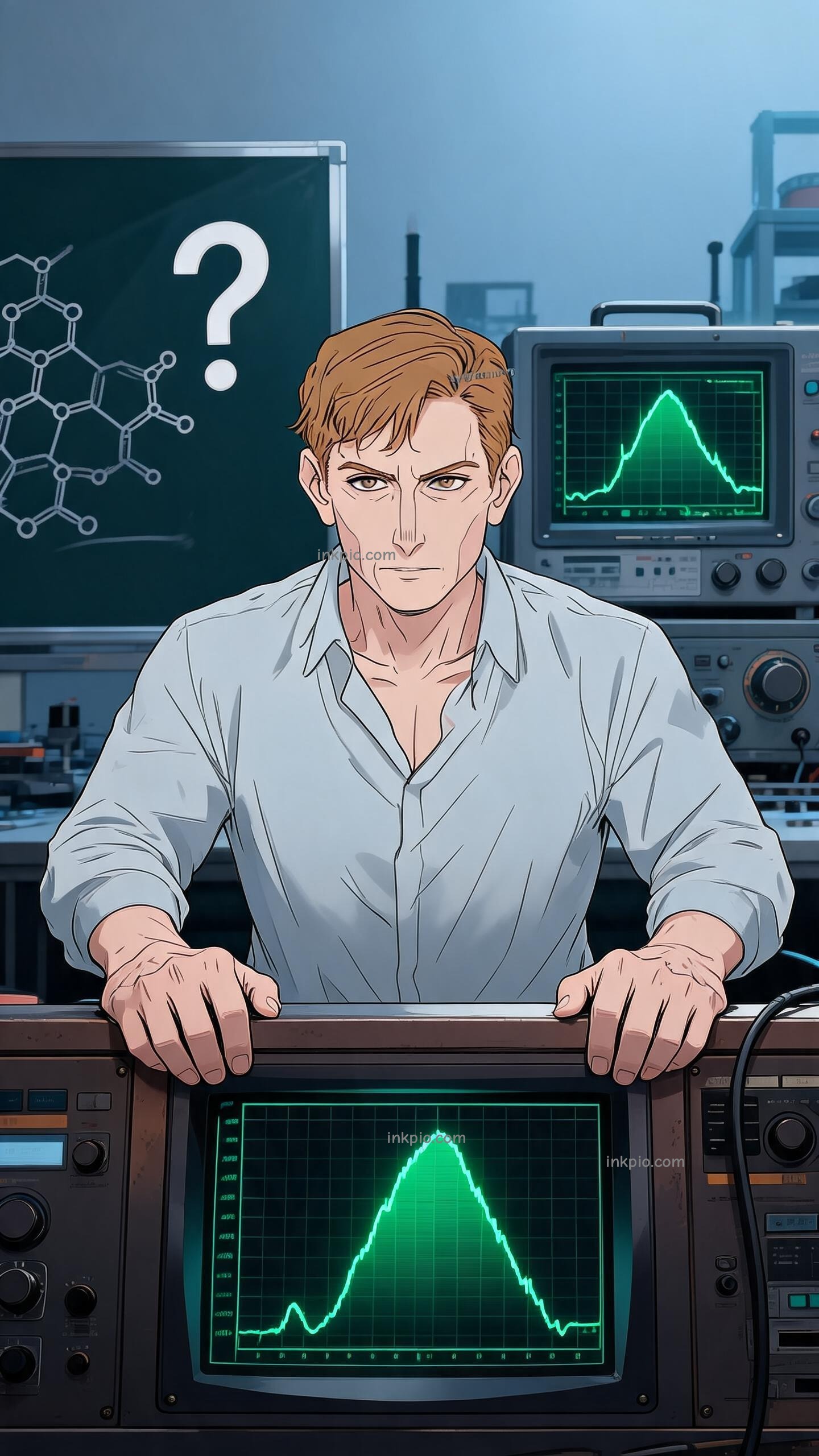
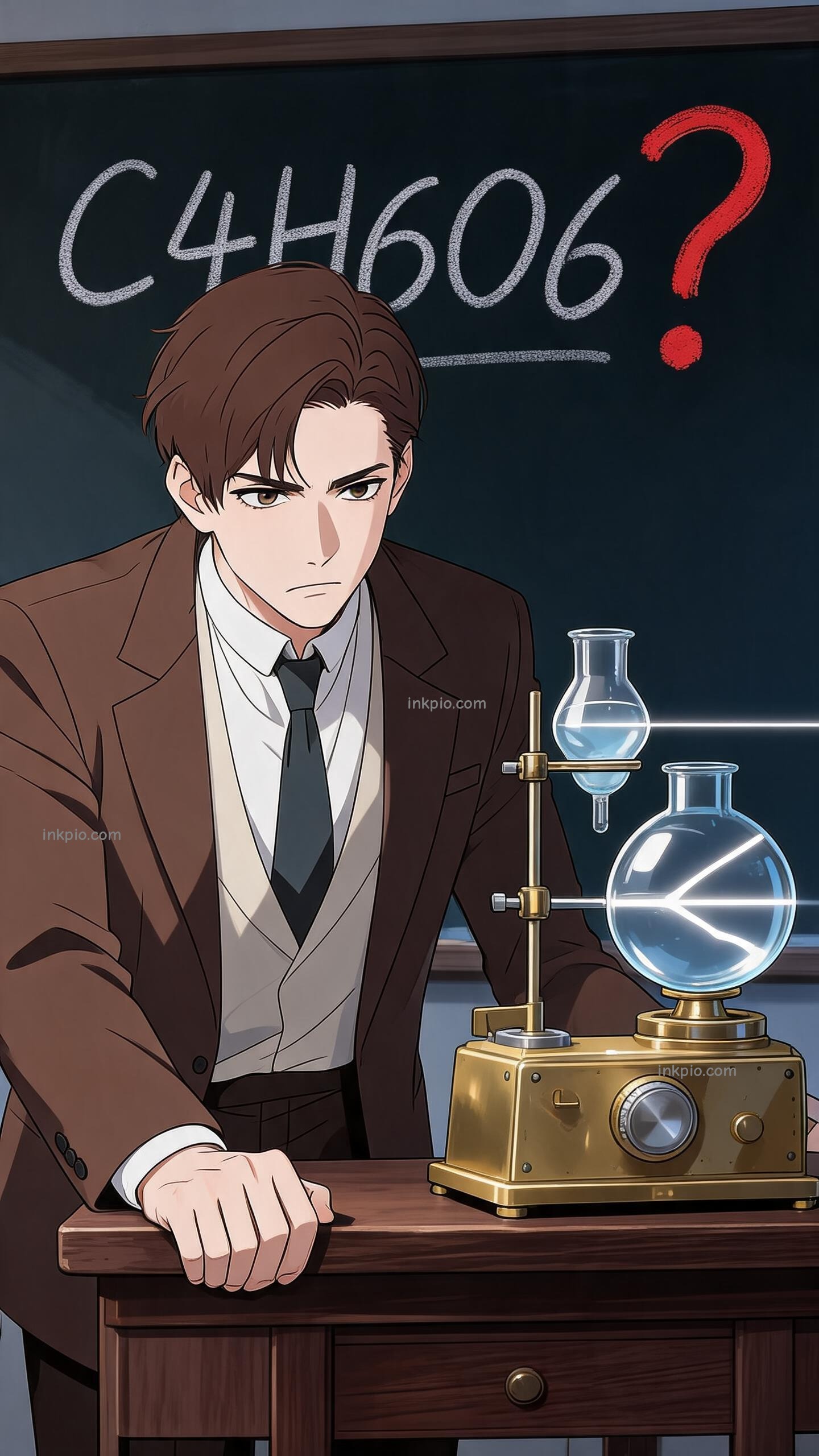
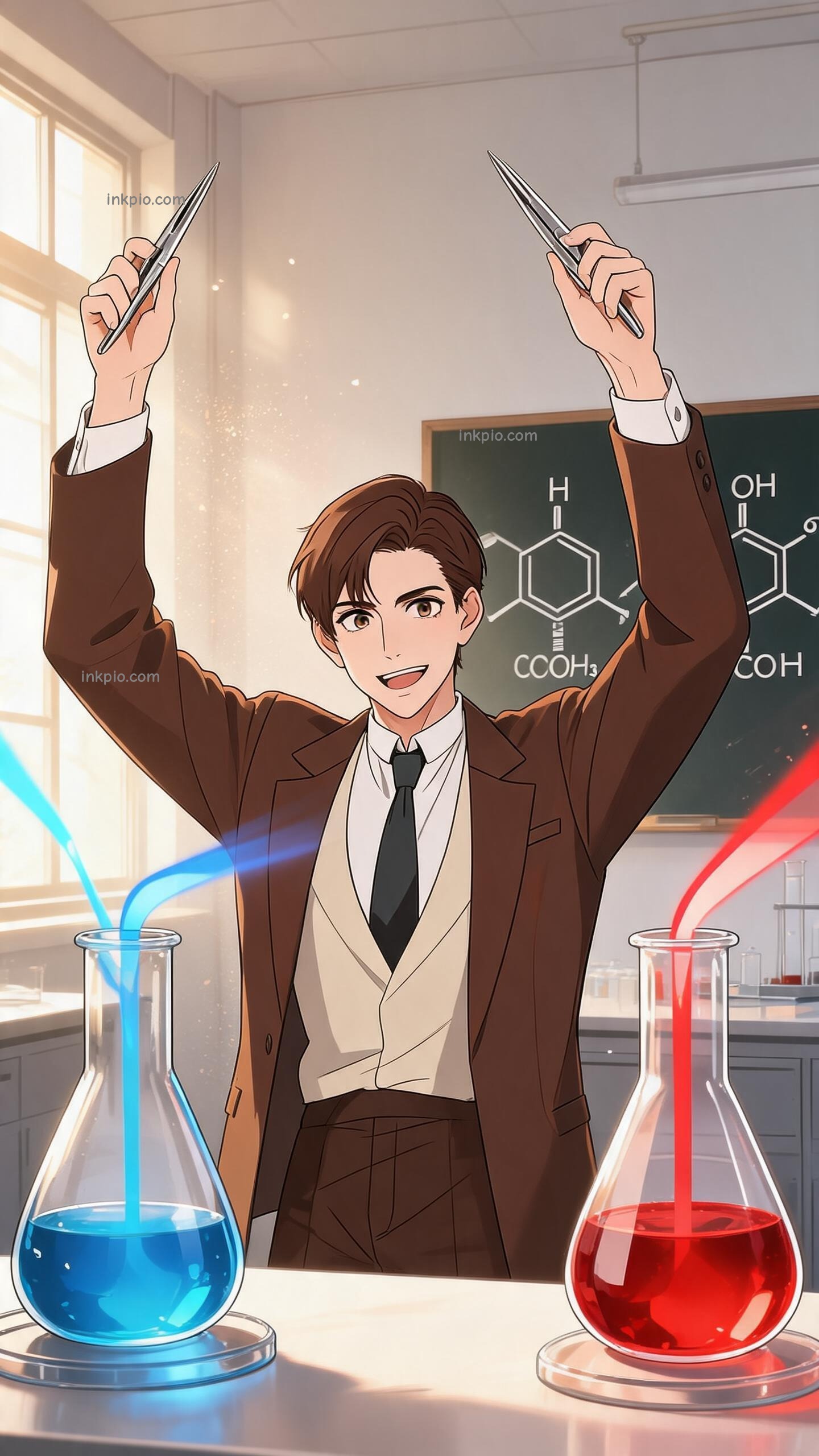

The silence in the Paris laboratory was heavy, broken only by the scratch of a pen and the ticking of a clock. It was 1848, and Louis Pasteur stared at two flasks that should have been identical. They held the same chemical formula, the same clear liquid, yet they behaved like strangers. When polarized light passed through the first flask, the beam twisted obediently. Through the second, it marched straight, indifferent to the laws that governed its twin.
Chemistry’s rulebook offered no explanation. Identical ingredients meant identical crystals. This anomaly wasn't just a puzzle; it was an insult to the order scientists clung to. If the rules failed here, where else were they lying? Pasteur felt a familiar tightness in his chest, the anxiety of standing on the edge of a cliff while everyone else insisted the ground was solid. He couldn't let it go. The discrepancy gnawed at him, turning every meal into a distraction and every night into a restless search for answers.
He began to see the world in mirrors. Look at your hands. Same fingers, same nails, yet a left glove refuses to fit the right hand. They occupy the same space but refuse to overlap. What if the molecules inside that silent flask were doing the same? What if they were a chaotic mix of left-handed and right-handed shapes, their opposing forces canceling each other out into perfect, deceptive stillness?
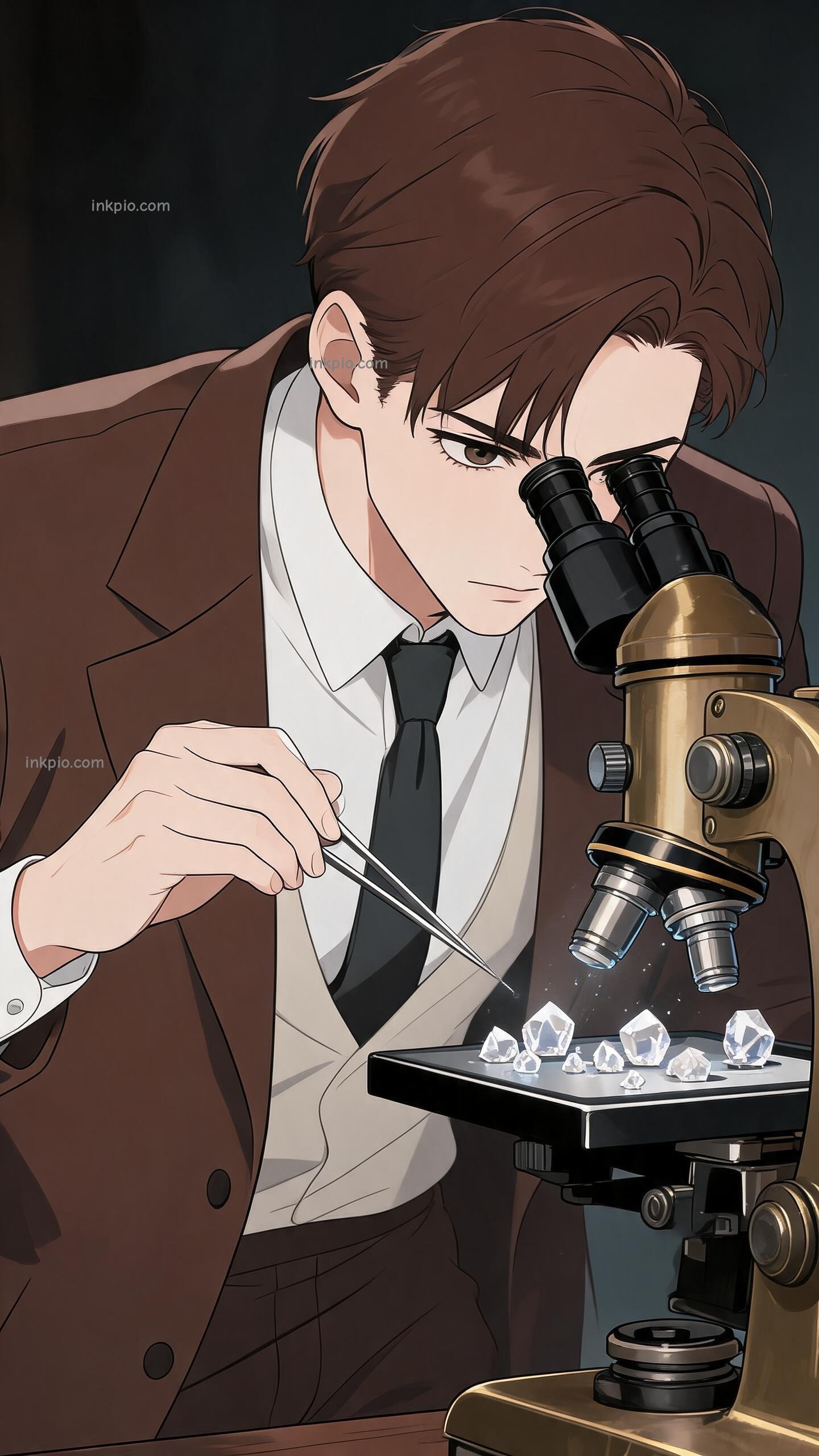
The hypothesis was dangerous. It suggested that matter had a hidden geometry, a secret life in three dimensions that chemistry had ignored. To prove it, he would have to do something absurdly manual. He sat before his brass microscope, the cold metal biting into his forehead as he leaned in. The sodium ammonium tartrate crystals lay scattered like jagged debris. To the naked eye, they were dust. Under the lens, they revealed their bias. Some slanted left, others right.
Pasteur picked up a pair of silver tweezers. His hands, usually steady, trembled slightly. This was not grand science; it was tedious, maddening labor. He had to separate microscopic shards by hand, one by one. The room grew dark as hours bled into evening. His eyes burned. His back ached. Every time a crystal slipped or shattered, a small piece of his confidence broke with it. He wondered if he was chasing a ghost, wasting his youth on a whim of light.
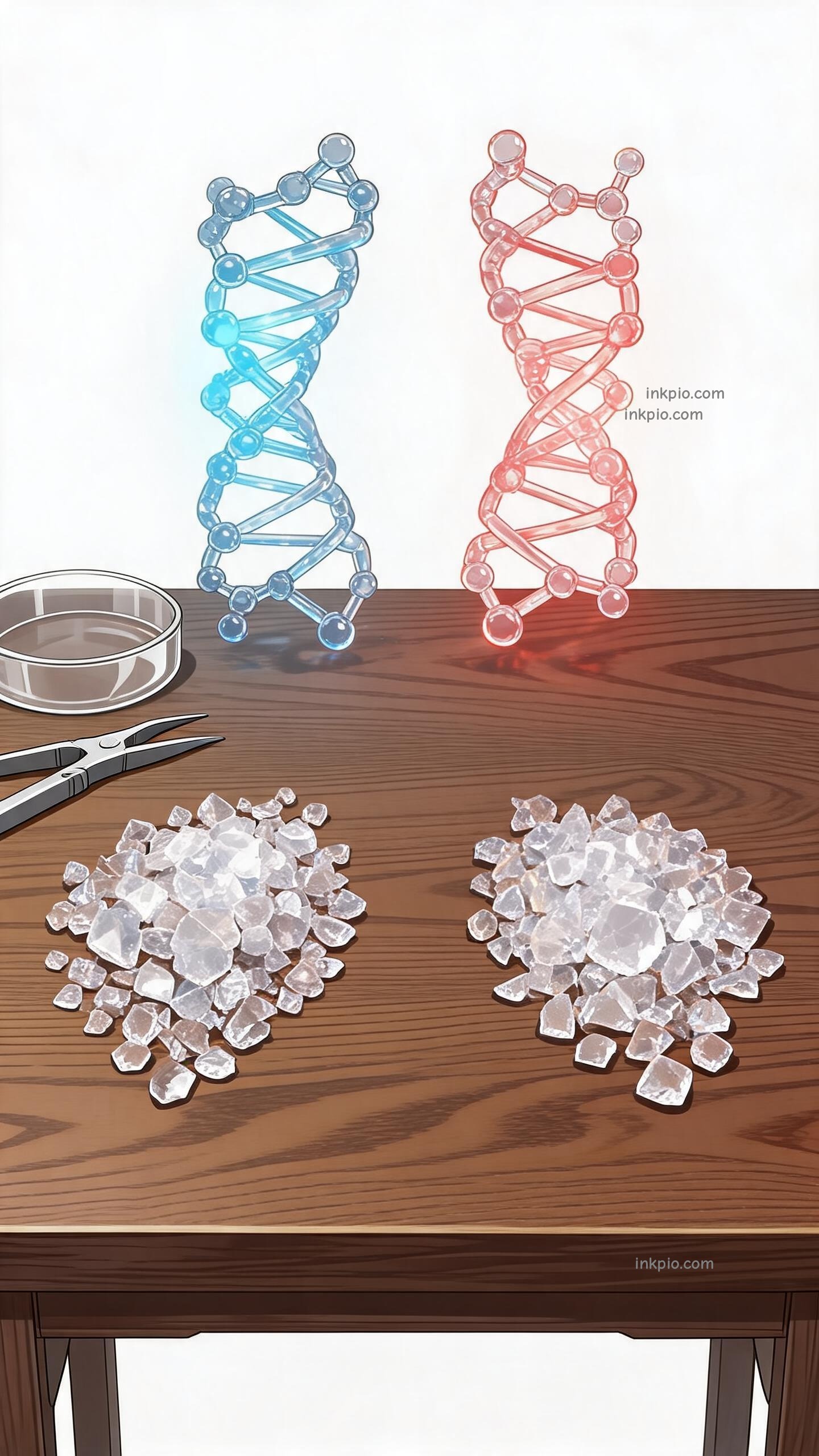
But he kept sorting. Left pile. Right pile. The separation was physical, tactile proof of his theory. Finally, two tiny mounds sat on the desk. He dissolved the left-leaning crystals in water. The light swung left. He dissolved the right-leaning ones. The light swung right, mirroring the first with eerie precision. The cancellation was gone. The truth was exposed.
Pasteur set down the tweezers. His fingers were stiff, cramped from the tension. He looked at the two flasks, now distinct in their behavior, no longer identical twins but mirror images. The air in the lab felt different, thinner, charged with the weight of a new reality. Molecules had shape. They had direction. They had handedness. He didn't cheer. He simply breathed, the tightness in his chest loosening as the chaos of the universe snapped back into a fragile, beautiful order. The wooden desk held the birth of stereochemistry, not with a bang, but with the quiet click of metal on glass.