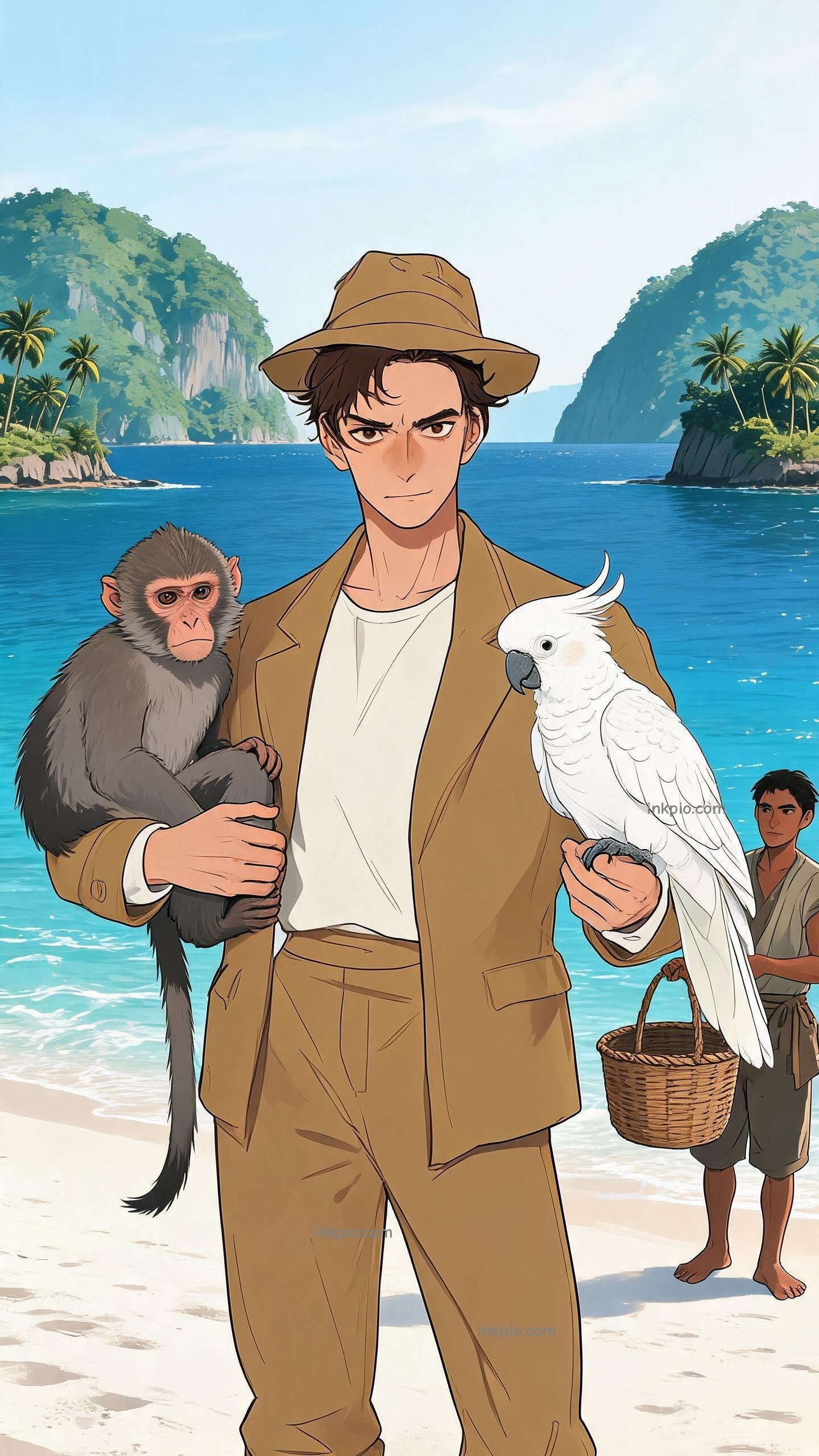
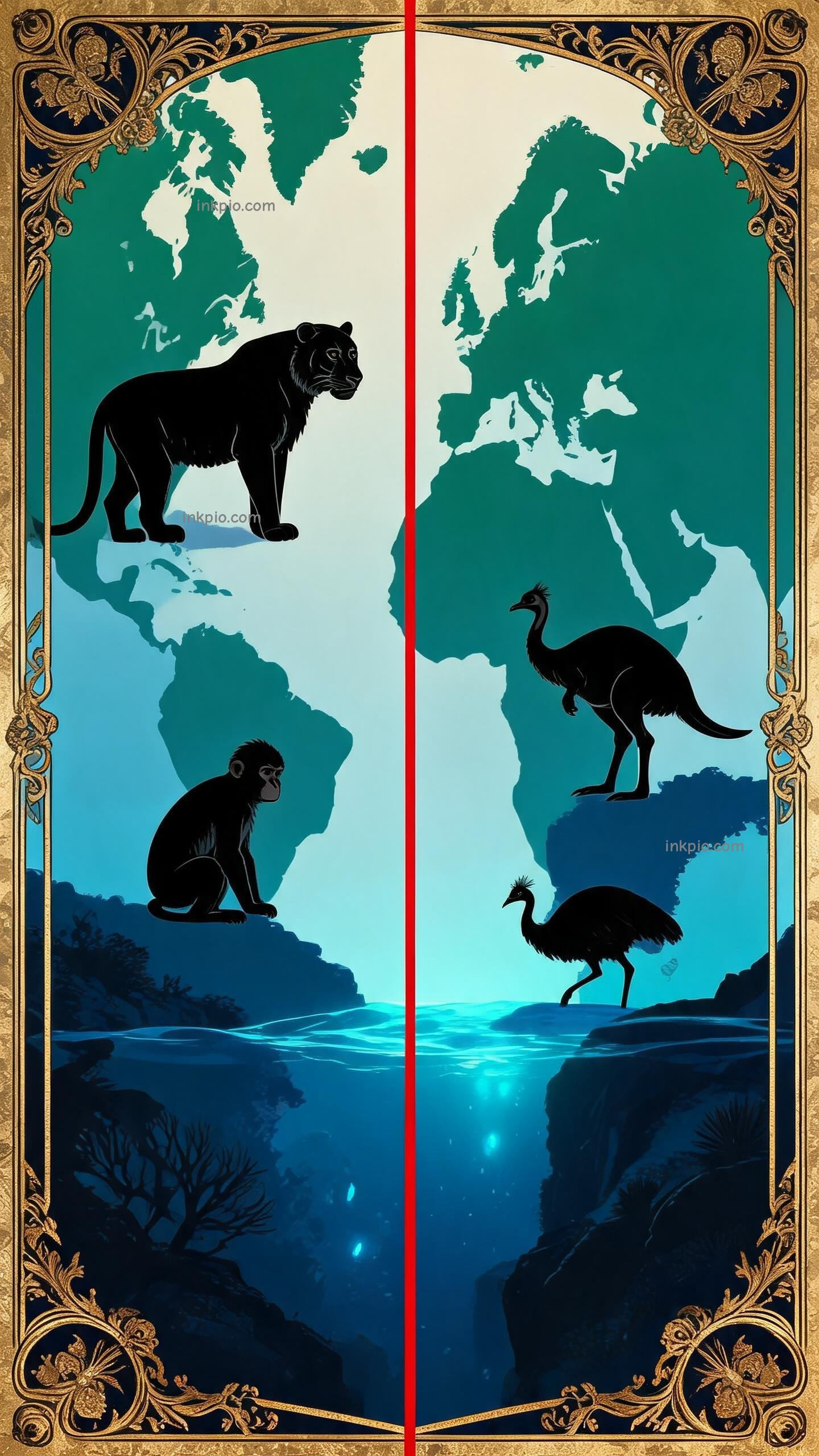

The humidity in the Malay Archipelago didn't just hang in the air; it pressed against Alfred Russel Wallace’s skin like a wet wool blanket. It was 1859, and he stood on a beach that felt less like a discovery site and more like a trap. In his left hand, a macaque squirmed, its dark eyes wide with panic. In his right, a white cockatoo shrieked, its feathers ruffled by the salt wind.
His local guide, barefoot and silent, pointed across the shimmering water to the next island. The gesture was casual, but the implication was violent. Just miles away, the rules of nature had snapped. Bali teemed with monkeys and tigers, creatures of Asia. Lombok, visible on the horizon, belonged to cockatoos and marsupials, spirits of Australia.
Wallace felt a cold knot tighten in his stomach. The prevailing scientific dogma claimed climate dictated life. Yet here, under the same blistering sun and humid sky, two entirely different worlds stared at each other across a narrow strip of sea. The theory wasn't just wrong; it was blind. He looked at the guide, who shrugged, indifferent to the crisis unfolding in Wallace’s mind. To the guide, this was just home. To Wallace, it was a crack in the foundation of everything he knew.
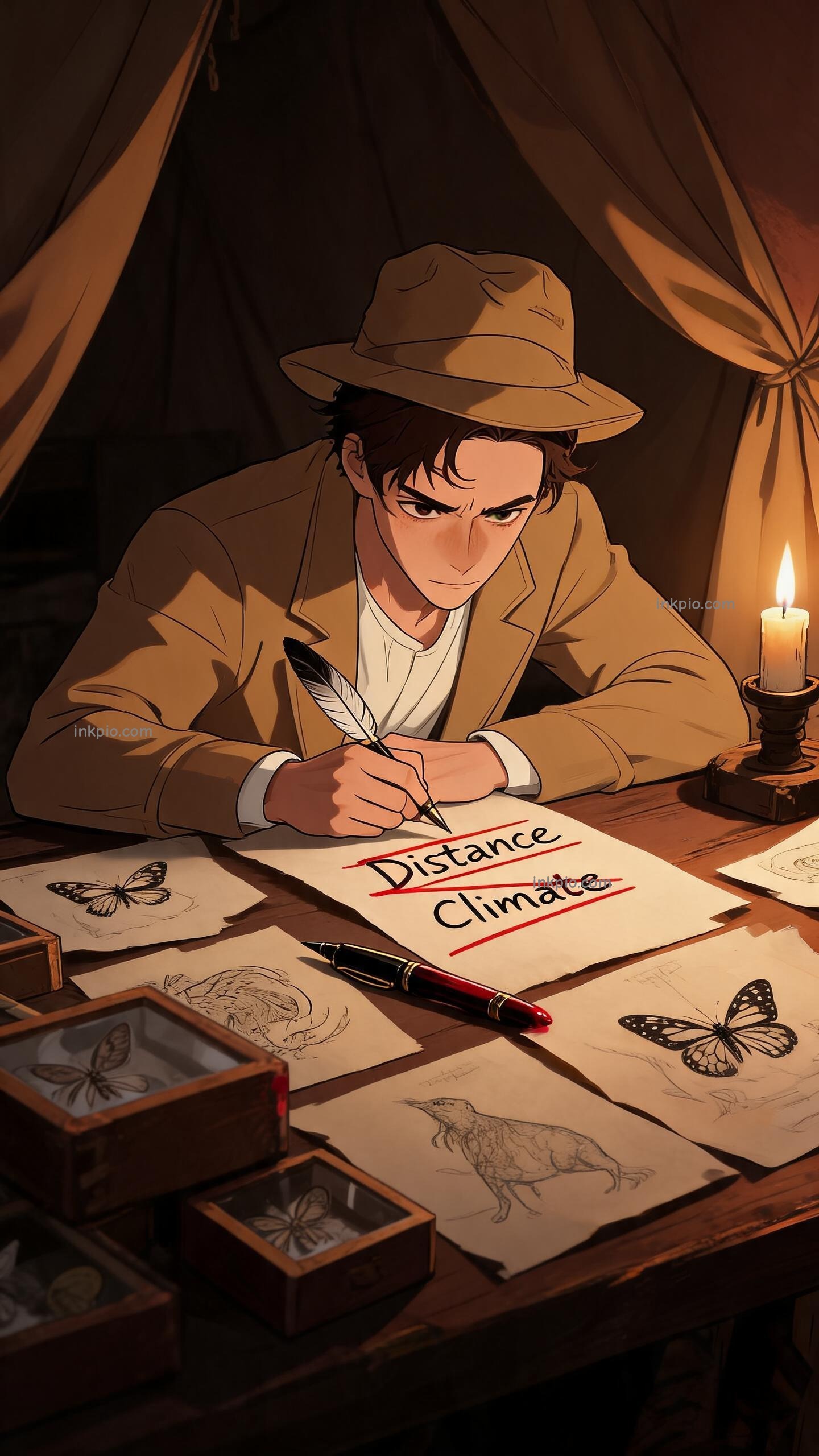
Back in his canvas tent, the air grew stifling. Wallace spread his sketches across a rough wooden table. His hands trembled slightly as he picked up a red pen. He didn't just cross out "distance" and "climate"; he slashed through them, frustrated by their inadequacy. If the weather and the short gap between islands couldn't explain this split, an invisible wall had to exist. But walls are made of stone, not water.
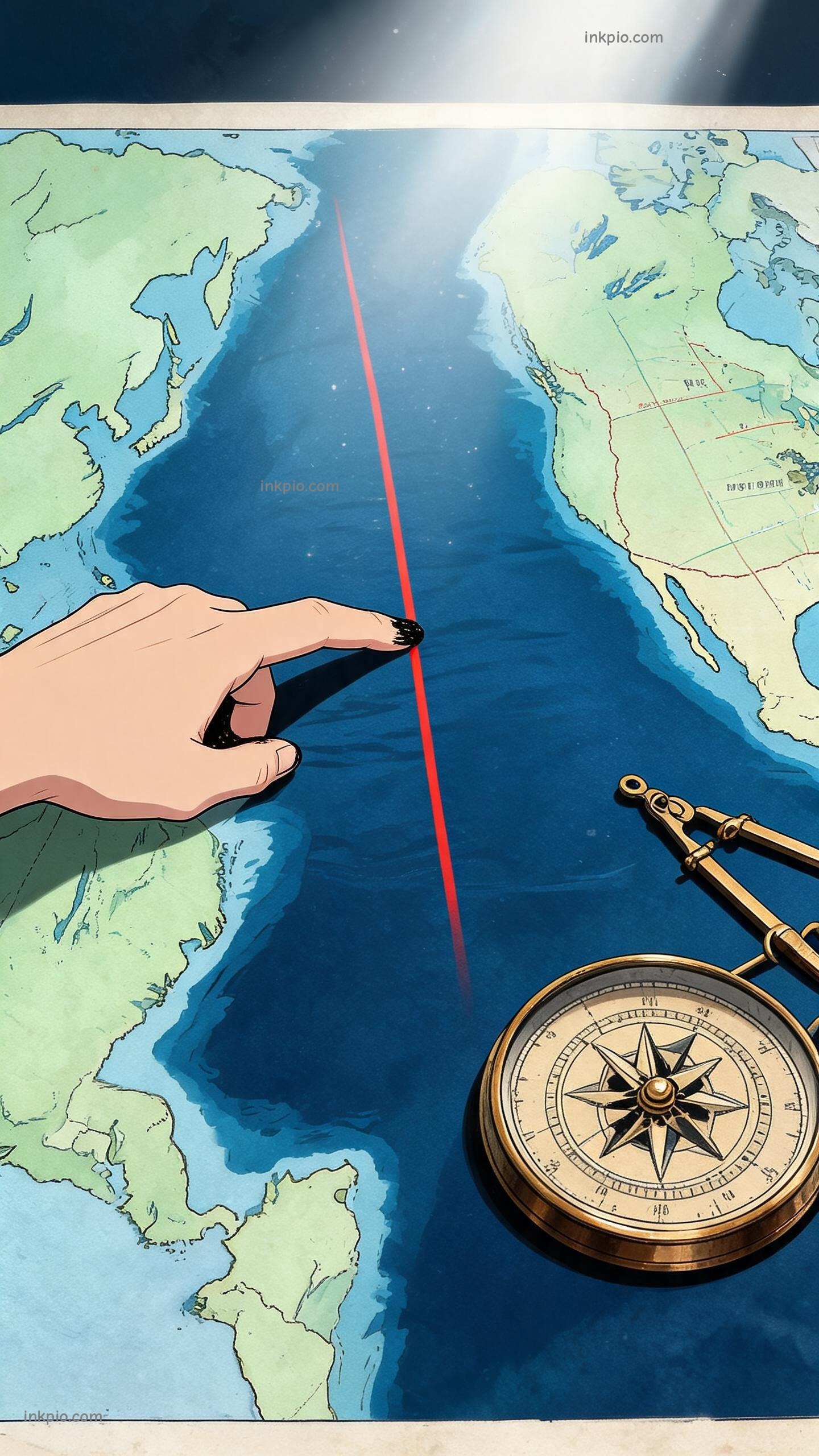
He pulled out a nautical map, his eyes scanning the contour lines. He imagined the ocean during the ice ages not as a vast expanse, but as a draining puddle. When the water level dropped, shallow seas would dry up, turning into land bridges where animals could wander freely. That explained the mixing elsewhere. But here? He traced the line between Bali and Lombok.
The numbers on the map told a story of isolation. The surrounding seas were shallow, mere shelves exposed by receding tides. But the Lombok Strait dropped over 1,000 meters straight down. This wasn't just water; it was a trench. No matter how much the sea level fell during the Pleistocene ice ages, this deep scar held onto the ocean. The water never receded enough to build a bridge.
A realization hit him, quiet and heavy. Animals on either side could look right across the water. They could smell each other, hear each other, but they could never touch. The deep blue trench was a prison guard that never slept. Wallace took his pen and drew a thick red line through that deep water. It wasn't just a mark on paper; it was a boundary drawn in time.
This single stroke separated the Asian continental shelf from the Australian one. Geological depth, not just physical distance, shaped the tree of life. He stepped back out into the jungle air, the heat now feeling different—sharper, more defined. He watched the narrow strait, no longer seeing just water, but a history of separation.
"On the west of Lombok we have Asia," he wrote in his journal, the ink still wet, "on the east, within sight of its shores, we have Australia." The deep water kept its ancient secret. Two worlds remained apart, divided not by choice, but by the unyielding geometry of the earth beneath the waves.