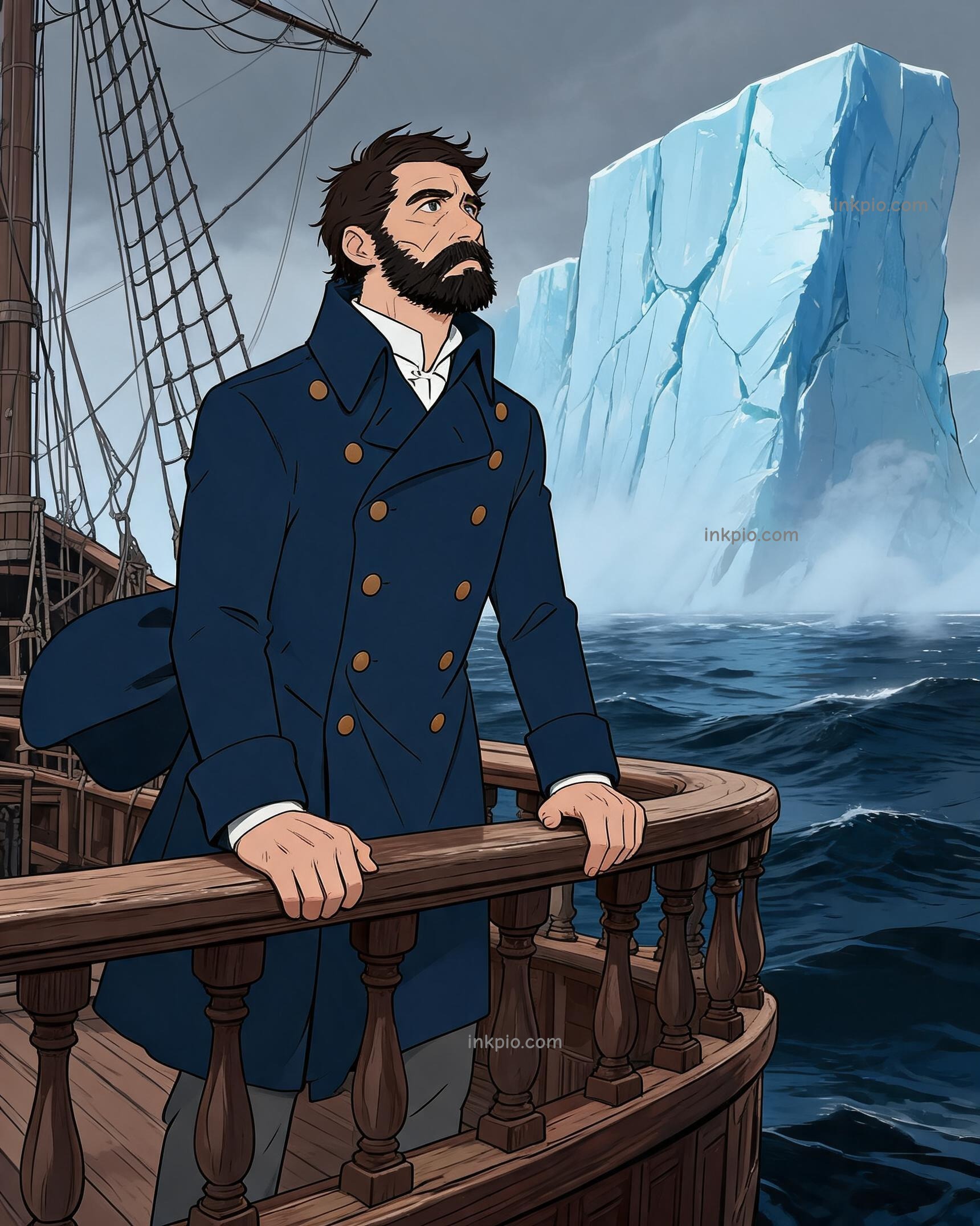

The air at 78°S didn't just feel cold; it felt heavy, pressing against James Clark Ross’s chest like a physical weight. He stood on the deck of HMS Erebus, his knuckles white as he gripped the railing. Before him, the ocean had simply ceased to exist. In its place rose a cliff of blue-white ice, sheer and vertical, stretching east and west until it blurred into the gray horizon.
For decades, Victorian cartographers had treated the bottom of the globe as a blank canvas. Some guessed at scattered rocks; others imagined frozen shores. But no one had predicted this. It was January 1841. Ross had pushed his ships, Erebus and Terror, further south than any man before him, driven by a stubborn need to solve the puzzle of the southern continent. Now, that ambition faced a wall five hundred miles long.
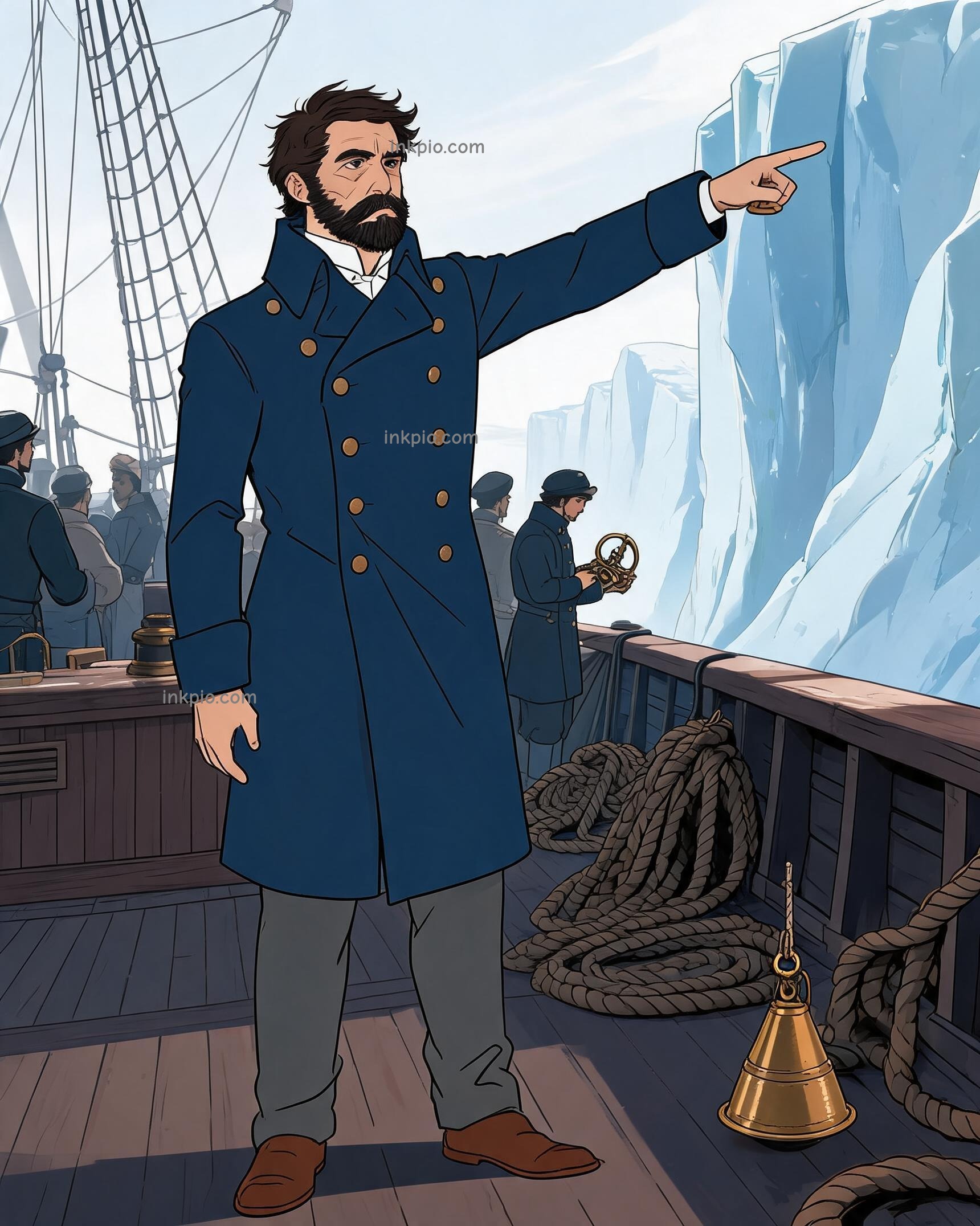
The silence on deck was unnerving. The crew looked to their captain, waiting for the order to turn back. To retreat would be safe. It would mean preserving the ships and the men. But it would also mean admitting defeat against the most elusive mystery on Earth. Ross could feel the eyes of his officers on his back. He knew that if he turned now, the map would remain blank forever. He chose not to look at them. He looked only at the ice.
"Soundings," Ross said. His voice was quiet, but it cut through the wind.
He wasn't interested in the coastline anymore. He needed to know what lay beneath the surface. If this was land, the ice was rooted in rock. If it was something else, the rules of geography would break. Sailors moved with practiced urgency, hauling up heavy hemp ropes and bolting brass lead weights to the ends. The metal clinked against the wood, a sharp sound in the muffled cold.
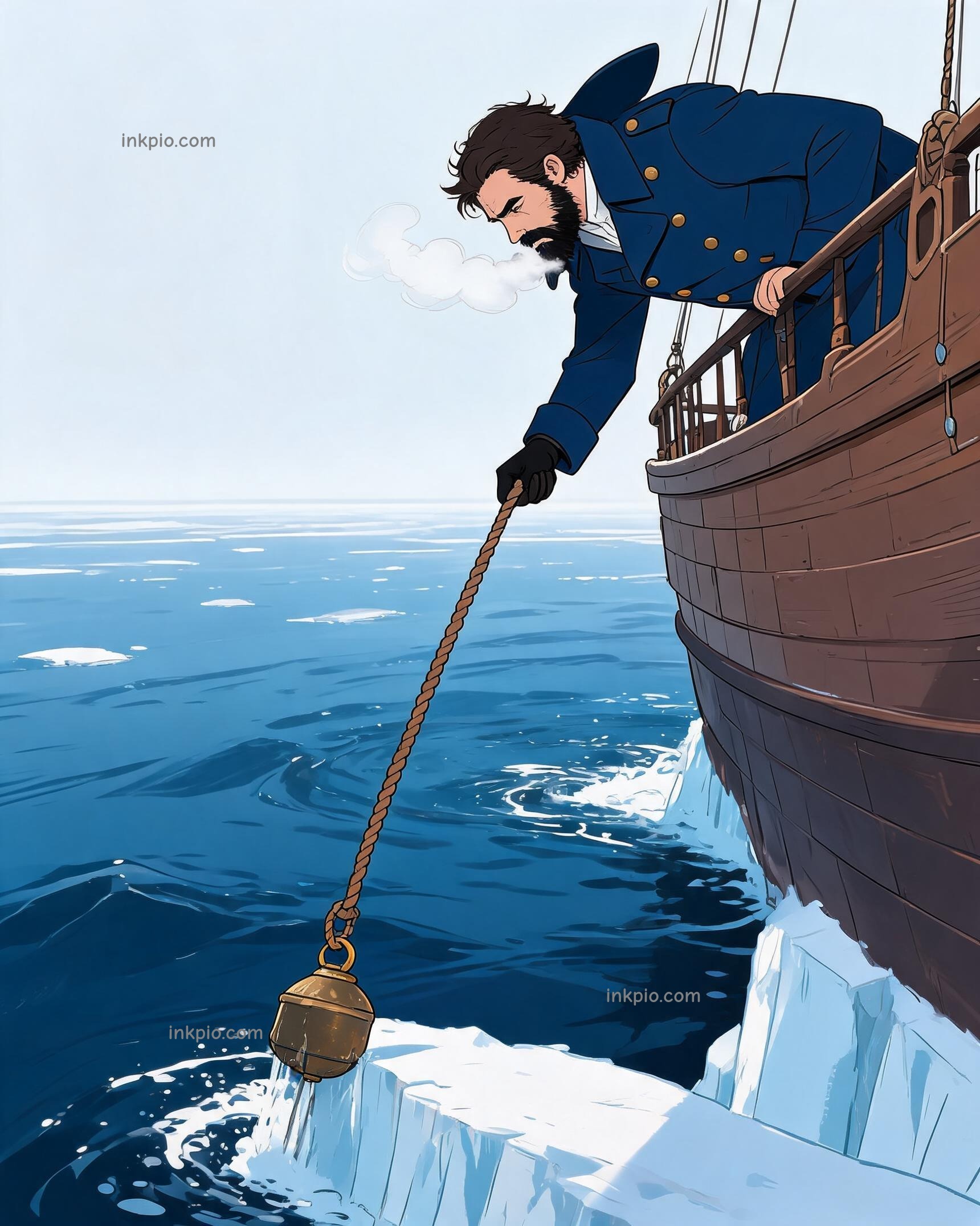
They dropped the line into the dark water, right against the face of the glacier. The rope paid out smoothly through the men’s rough hands, foot after foot disappearing into the black. Everyone waited for the familiar jerk that signaled the seabed. They expected the weight to scrape against stone or sand.
Instead, the rope went taut. It didn't hit the bottom. It stopped hundreds of feet down, suspended in the deep. The sudden stillness was wrong. The ocean here was known to be thousands of feet deep. For the line to stop so soon meant it had hit something massive, something hidden.
Ross pulled the line back, his fingers numb as he checked the wet knots. He compared the length of the deployed rope to the known depth of the ocean floor. The math was simple, but the implication was terrifyingly new. The lead hadn't touched the earth. It had slammed into a floating ledge. The ice wasn't attached to the land. It was floating.
A murmur ran through the crew. They stared at the wall with new eyes. It wasn't a shore; it was a raft. A massive, moving plain of ice, held up by the sea itself. Glaciers from the inland mountains were flowing outward, pushing over the water, defying the logic of solid ground.
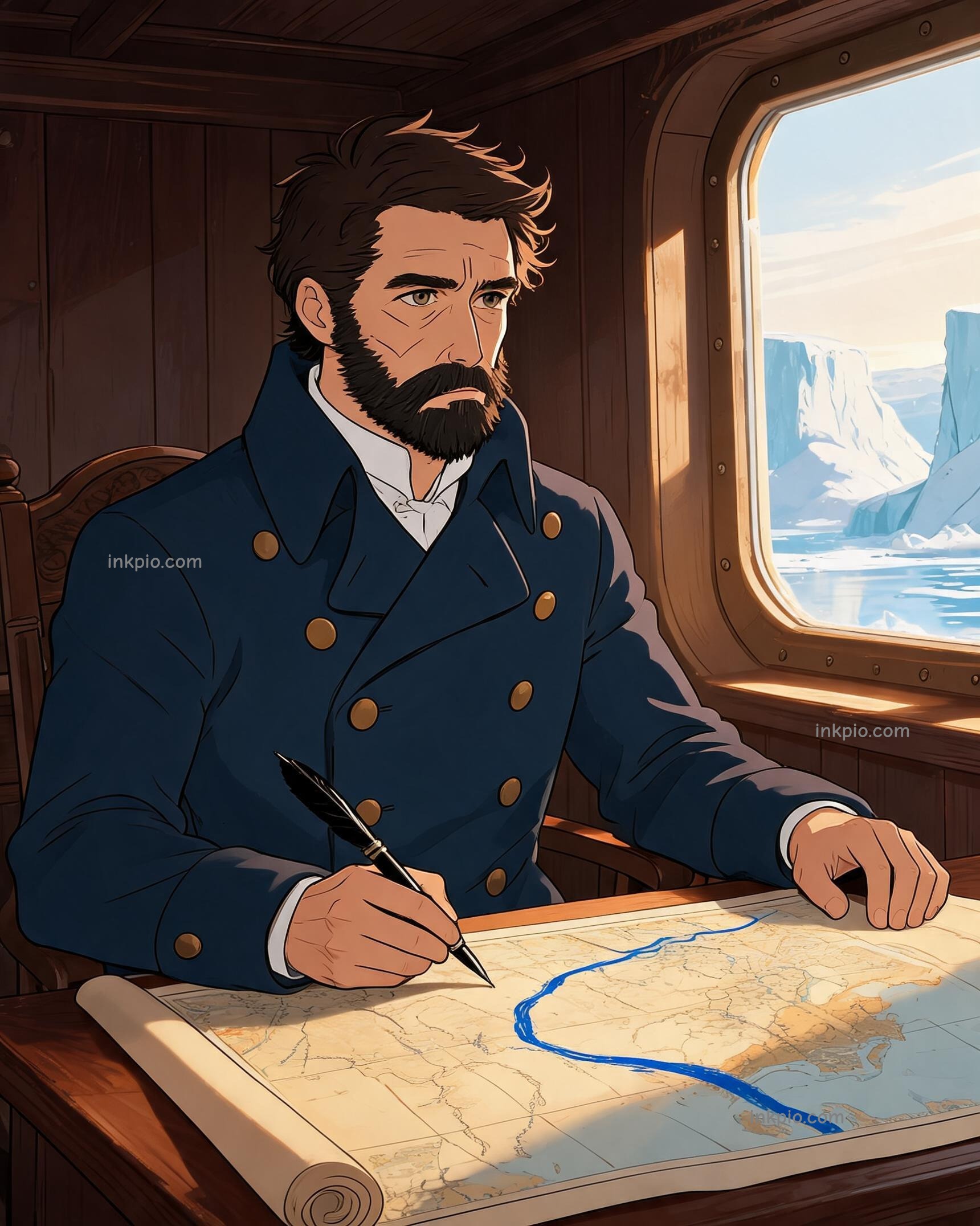
That night, in the cramped warmth of his cabin, Ross unrolled a fresh nautical chart. The paper was crisp, waiting for ink. He dipped his pen, the nib hovering over the vast empty space where an open ocean had been guessed. With a steady hand, he drew a long blue line across the void. He wasn't just marking a barrier; he was erasing centuries of assumption.
The ships sailed on, gliding parallel to the endless curve where ice met dark water. The proof of this new reality sat coiled on the wet deck, smelling of brine and hemp. London would need to redraw its maps, but that felt distant. Here, in the freezing quiet, Ross watched the ice drift. It had kept its secret for millennia, yielding only to a captain who trusted a knotted rope more than a blank page.