

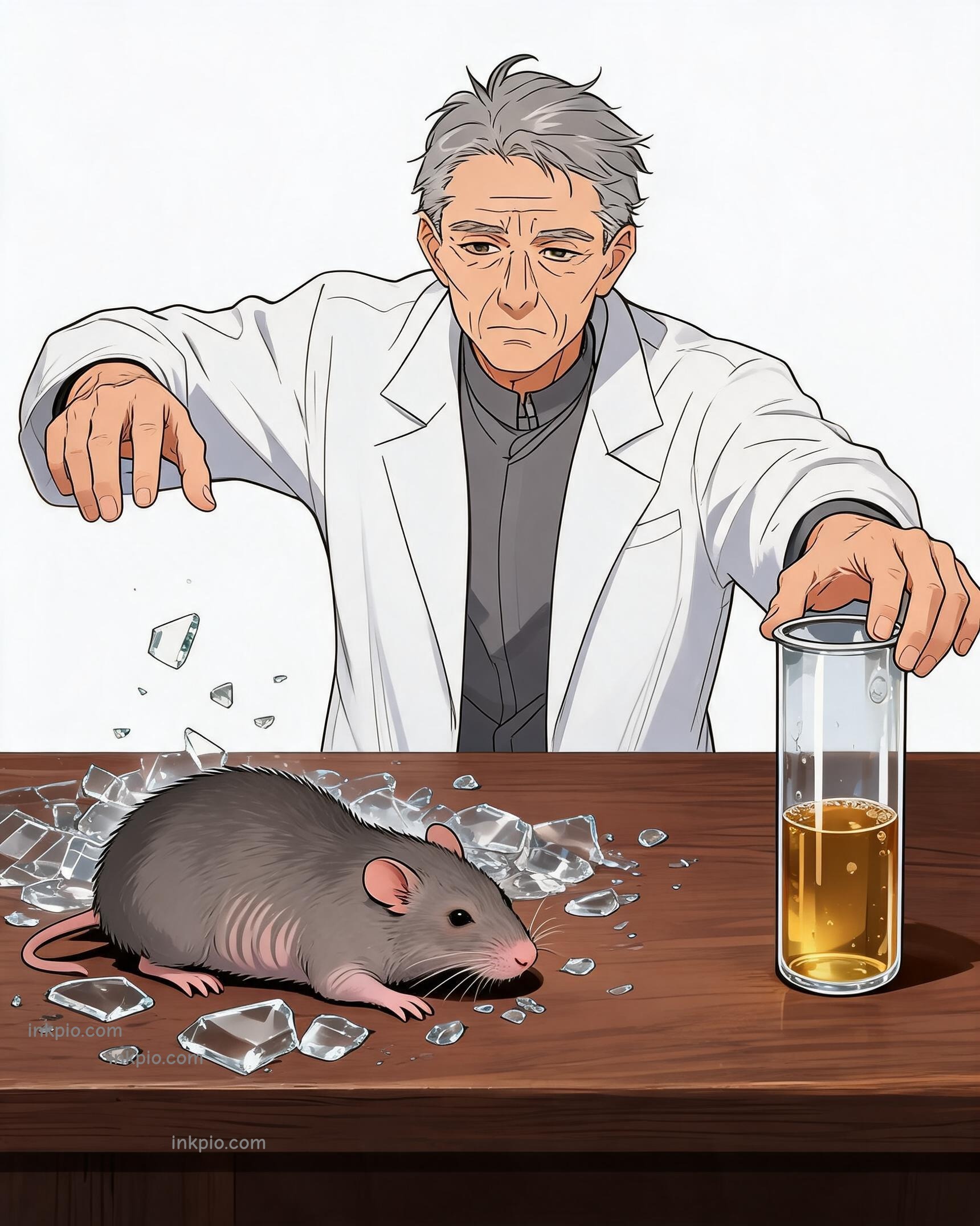



Injecting live tuberculosis bacteria into a patient was not medicine; it was murder. The white plague swept through cities, leaving hollow cheeks and blood-stained handkerchiefs in its wake. Doctors stood helpless, trapped between two failures. A needle full of live bacilli guaranteed a slow, suffocating death. But boiling the germs to kill them also melted their physical structure. Without that specific shape, the immune system remained blind, unable to recognize the enemy or build a defense. The medical community was stuck, holding a lethal weapon in one hand and a useless one in the other.
Albert Calmette and Camille Guérin refused to accept this stalemate at the Pasteur Institute in Lille. They proposed a radical idea: starve the bacteria of its natural hunting ground. Imagine taking a fierce wolf and locking it in a concrete cage, feeding it only vegetables. The wolf survives. It keeps its teeth. But over time, it forgets how to hunt. Calmette and Guérin applied this logic to the bovine tubercle bacillus. They created a bizarre diet of bile and potato, an artificial world hostile to the germ’s nature. The bacteria were forced to adapt or die.
The process was not a sudden breakthrough but a grind of thirteen years. Starting in 1908, the two scientists performed a tedious ritual every three weeks. They manually transferred the culture to a fresh slice of potato. There were no automated machines, no assistants to share the burden. Just Calmette and Guérin, watching the clock, knowing that missing a single transfer could ruin years of work. Each move forced the next generation of bacteria to rely less on human tissue and more on the bitter bile mixture. They were slowly stripping the germ of its virulence, layer by layer.
Doubt was a constant companion in the lab. Colleagues whispered that the project was a waste of time. Why spend over a decade tending to potato slices when other diseases demanded attention? Calmette and Guérin did not argue. They simply returned to the incubator. They watched their guinea pigs with a mix of hope and dread, waiting for the moment the bacteria would finally surrender. Every negative result was a small victory. Every healthy animal was proof that the wolf was losing its teeth. The silence in the lab was heavy, filled only by the scratching of pens in their logbooks.
By 1921, they had reached the 231st generation. The bacillus had changed. It retained the physical shape needed to trigger an immune response, but it had dropped its deadly spikes. It looked like the killer, but it had forgotten how to kill. The real test, however, was not in a petri dish. It was in a human life. They chose an infant whose mother had died of tuberculosis, a child already standing in the shadow of the plague. Injecting this weakened strain was a gamble with the highest possible stakes. If they were wrong, they would be killing a child instead of saving one.
They fed the baby the weakened strain. Days turned into weeks. The doctors held their breath, checking for fever, for coughing, for the familiar signs of decline. Nothing happened. The child did not get sick. Instead, the little body recognized the shape of the enemy and built a shield. The medical ledger for that first batch showed zero tuberculosis infections. The gamble had paid off.
Calmette and Guérin walked away from the clinic that day, the winter air biting at their faces. They did not celebrate. There was no applause, no immediate fame. They just knew that the endless cycle of potato transfers had finally ended. They had forged an invisible shield, not with steel, but with patience and bile. The white plague still roamed the streets, but for the first time, humanity had a way to walk through it unharmed. The 231st generation had done what millions of humans could not: it had learned to survive without destroying.