


The Paris street outside his window looked perfect on the polished metal, a mirror of reality that Louis Daguerre desperately wanted to keep. But as the light faded, the image dissolved into blank silver within minutes, mocking his efforts. He gripped another bottle of chemical wash, his knuckles white, hoping this batch would finally lock the scene in place. Every salt solution just turned the copper sheet black or washed the details right off the surface. The metal seemed to have a will of its own, rejecting every trick he tried to trap light permanently.
Years of failure had carved deep lines into his face. It was not just about science; it was about the terror of being forgotten. If he could not fix the image, his life’s work would vanish like breath on glass. He felt a heavy isolation, surrounded by tools that refused to cooperate. The silence in the laboratory was not peaceful; it was accusatory. Each failed plate was a reminder that time was winning, erasing both the view outside and his chance at immortality.
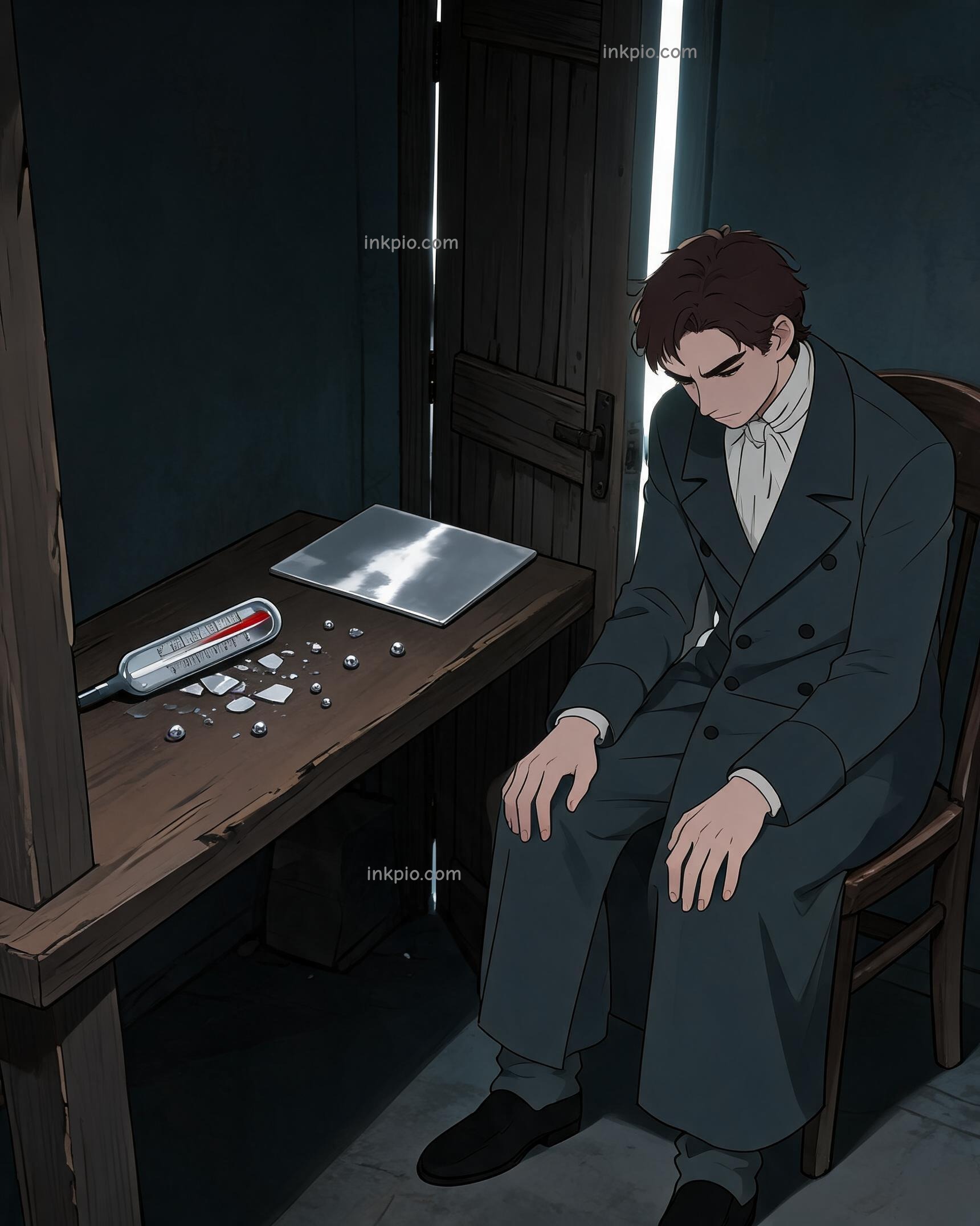
Out of ideas and exhausted, he tossed a freshly exposed plate into a dark wooden cabinet and shut the door. He did not care where it landed. A cracked thermometer sat on the bottom shelf, quietly spilling liquid droplets that pooled near a stack of old glassware. Mercury vapor began to rise, invisible and toxic, filling the small space. Daguerre walked away, leaving the experiment to rot in the dark. He expected nothing but ruin.
Days passed before he finally pulled the door open. He braced himself for the sight of tarnished, useless metal. Instead, a sharp, permanent cityscape stared back at him from the sheet, untouched by time. His breath caught in his throat. The image was not fading. It was solid. He picked up the plate with trembling hands, turning it over as if expecting the picture to slide off. It held firm. The ghost had been caught.
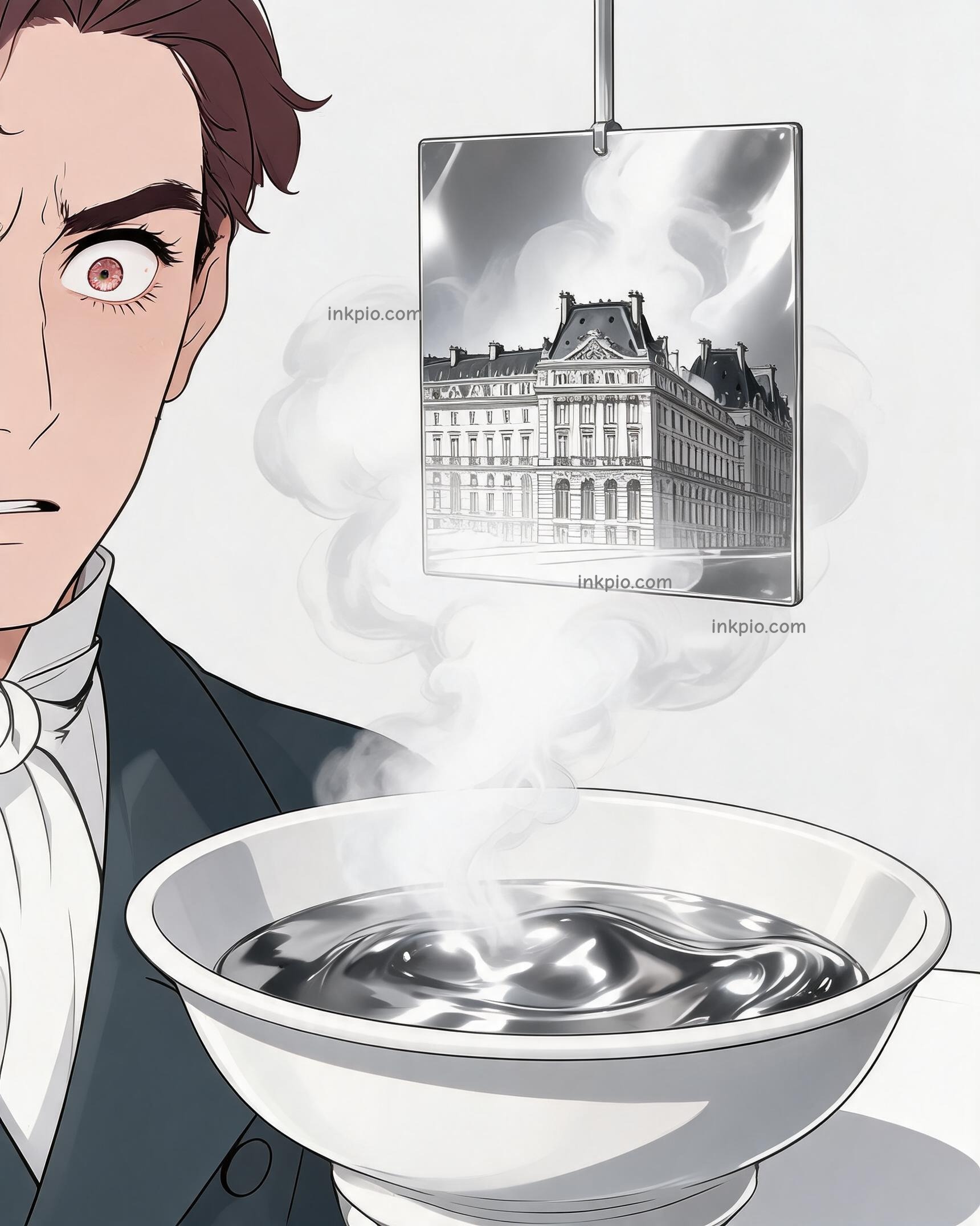
He realized sunlight had left an invisible mark on the silver, a hidden chemical shift too faint for the naked eye to catch. Warm vapor acted like a selective developer, clinging only to those light-struck patches and building them up into solid white highlights. It was like breathing on a cold mirror; the moisture gathers exactly where your skin touched the surface, leaving the rest clear and dry. The first permanent photograph used a silver-plated copper sheet developed by mercury vapor at approximately 60°C, letting the invisible exposure bloom into a fixed, mirror-like image.
Obsession replaced despair. He refined the steps into a repeatable routine, sealing the vapor in a wooden trough to keep the temperature steady and predictable. He worked with a frantic precision, knowing he was holding something fragile and dangerous. The mercury was poisonous, a silent threat in the air, but he ignored the risk. The need to control the process outweighed the fear for his health. He had to prove it could be done again.
In July 1839, the Daguerreotype process was publicly announced by the French Academy of Sciences. The hall was packed with curious minds, skeptics who had heard rumors of magic rather than chemistry. Daguerre stood before them, the weight of years pressing on his shoulders. He placed the heavy board on the mahogany desk. The vanishing ghost finally stayed put on the demonstration table. Silence fell over the room as the scholars leaned in.
They did not cheer immediately. They stared. The image was so detailed, so unnervingly real, that it felt like looking through a window rather than at a plate. Daguerre watched their faces, seeing his own relief reflected in their awe. He had not just captured a street; he had stopped time. The scholars realized they were looking at history, preserved in silver and mercury. Daguerre stepped back, letting the image speak for itself. The struggle was over, but the silence in the room lingered, heavy with the weight of a new reality.