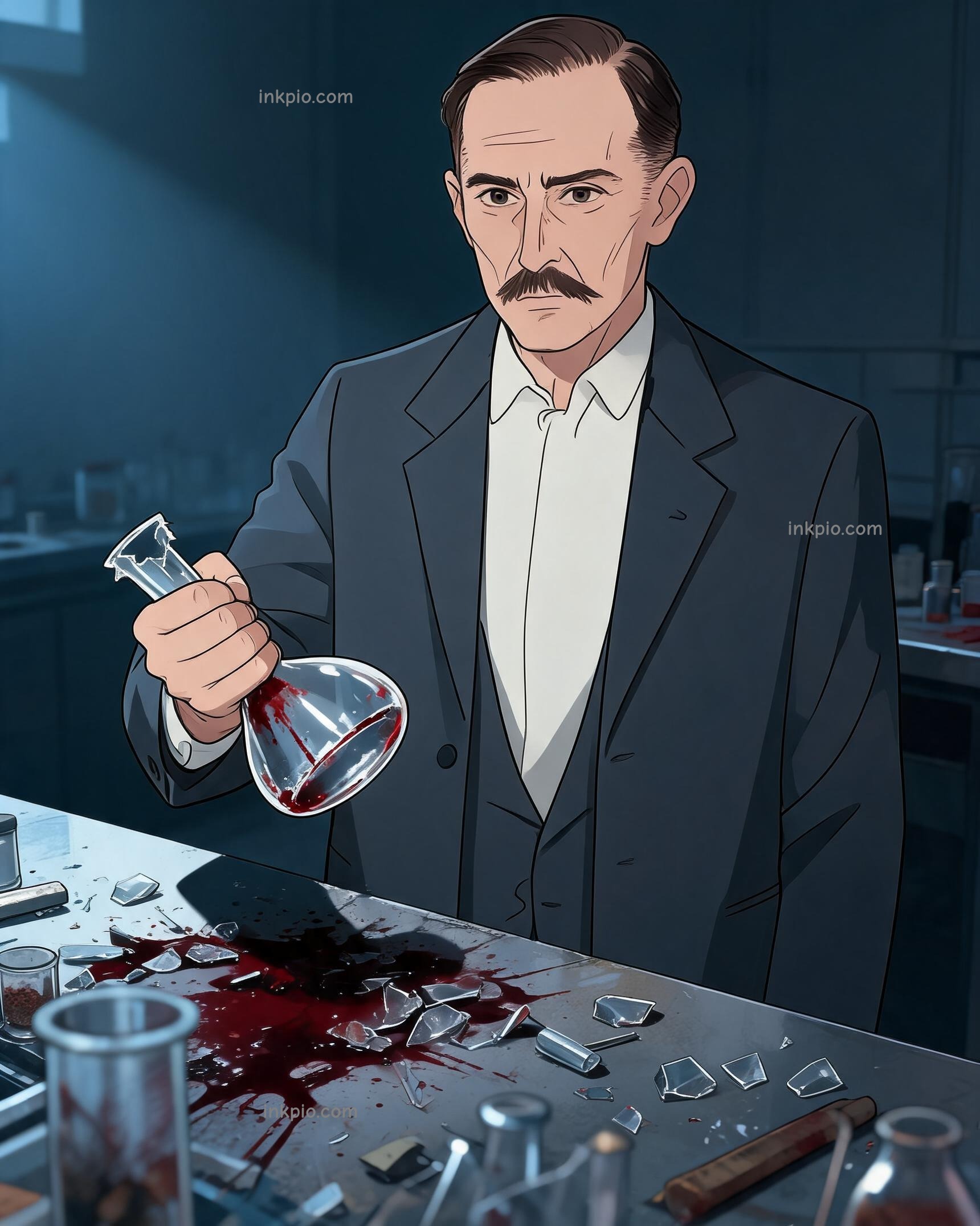

Blood used to kill as often as it saved. For centuries, the operating theater was a place of desperate hope and silent horror. Doctors poured donor fluid straight into a patient’s veins, crossing their fingers against the unknown. Most of the time, the new blood seized up into useless sludge inside the body. The patient grew weaker, their skin turning gray, while the surgeon stood helpless, guessing at invisible forces. Karl Landsteiner watched these failures accumulate in medical journals. He felt a heavy, quiet frustration. It wasn't just scientific curiosity driving him; it was a refusal to accept that healing required luck. He decided to stop looking at patients and start looking at the blood itself.
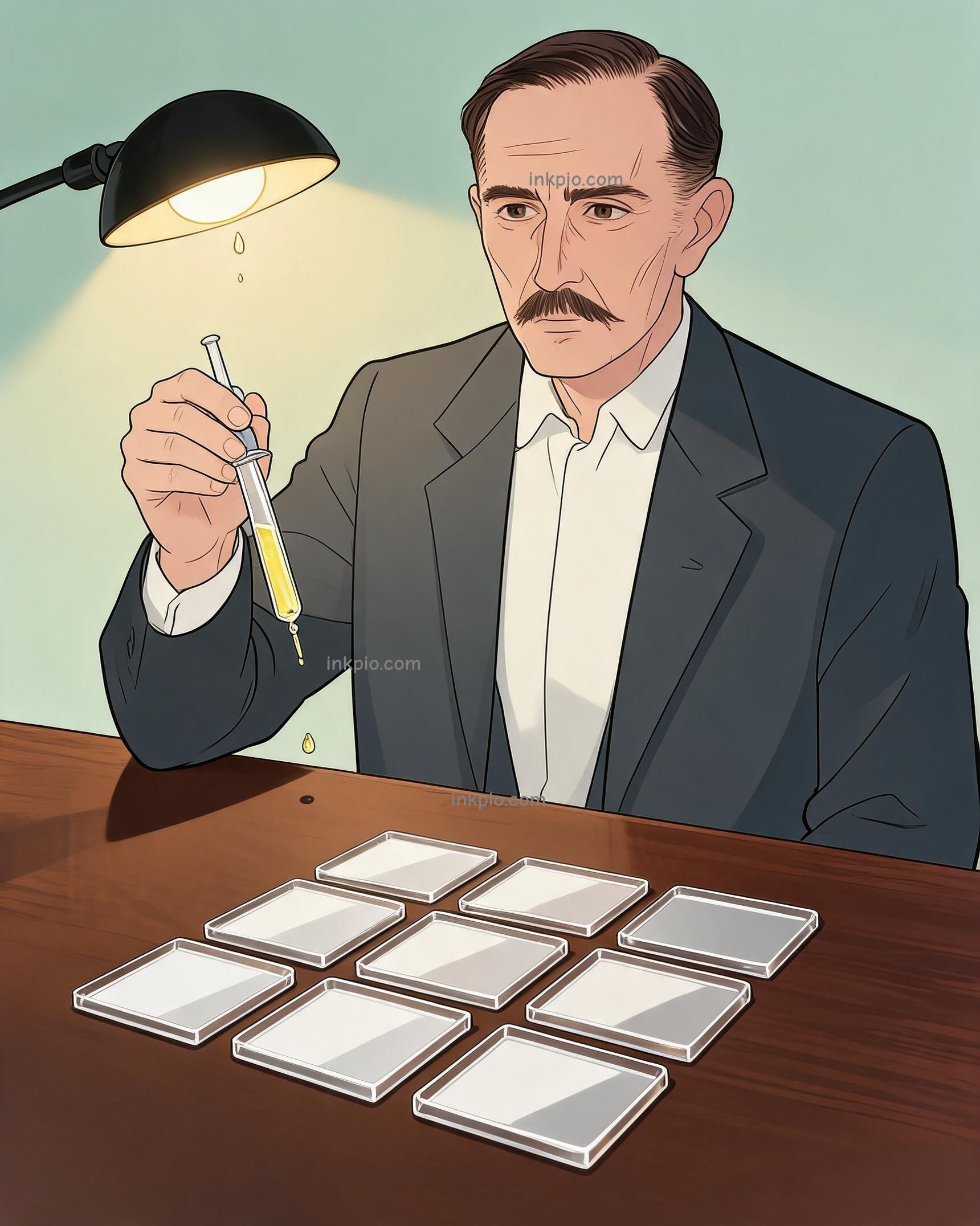
He moved the experiment away from the clinic and onto his own wooden desk. The air in the lab was still, smelling faintly of antiseptic and dust. Landsteiner began collecting small samples from the colleagues who worked right next to him. These were not anonymous subjects; they were friends, assistants, people whose lives depended on the same fragile biology. He pipetted clear serum from one person onto a clean glass slide. Beside it, he placed a drop of red blood cells from another. The routine looked deceptively simple, almost mundane. But under the surface, a violent conversation was taking place.
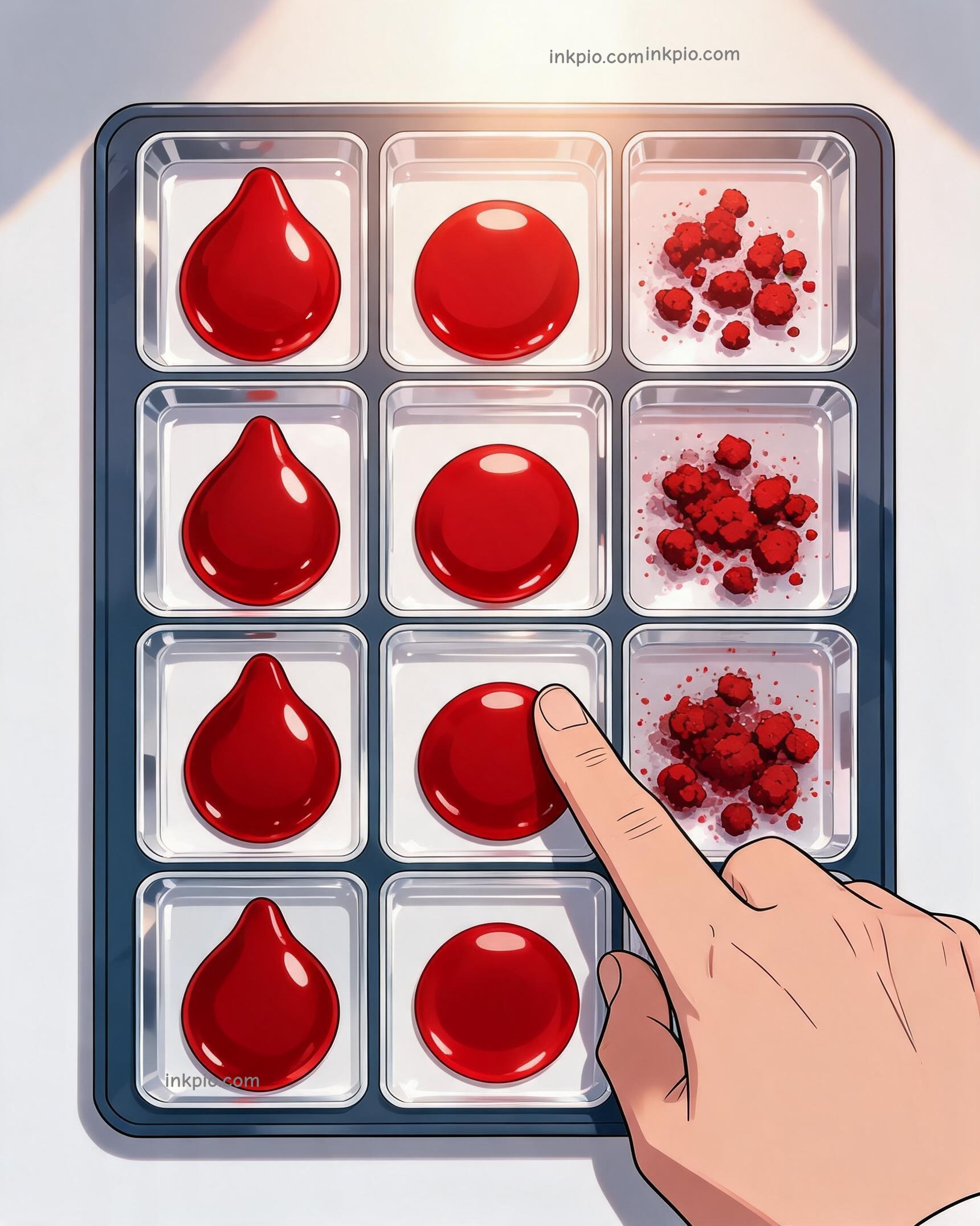
He tilted the glass back and forth, watching the liquid dance under the desk lamp. Compatible pairs stayed perfectly smooth, sliding around like water. They ignored each other, peaceful and indifferent. Incompatible pairs, however, turned rough instantly. Tiny granular clumps rose through the clear fluid, locking together in a microscopic embrace of rejection. Landsteiner noted exactly what he saw, his hand steady but his mind racing. "The serum of one individual often agglutinates the red cells of another," he wrote. This was not random chaos. It was a language.
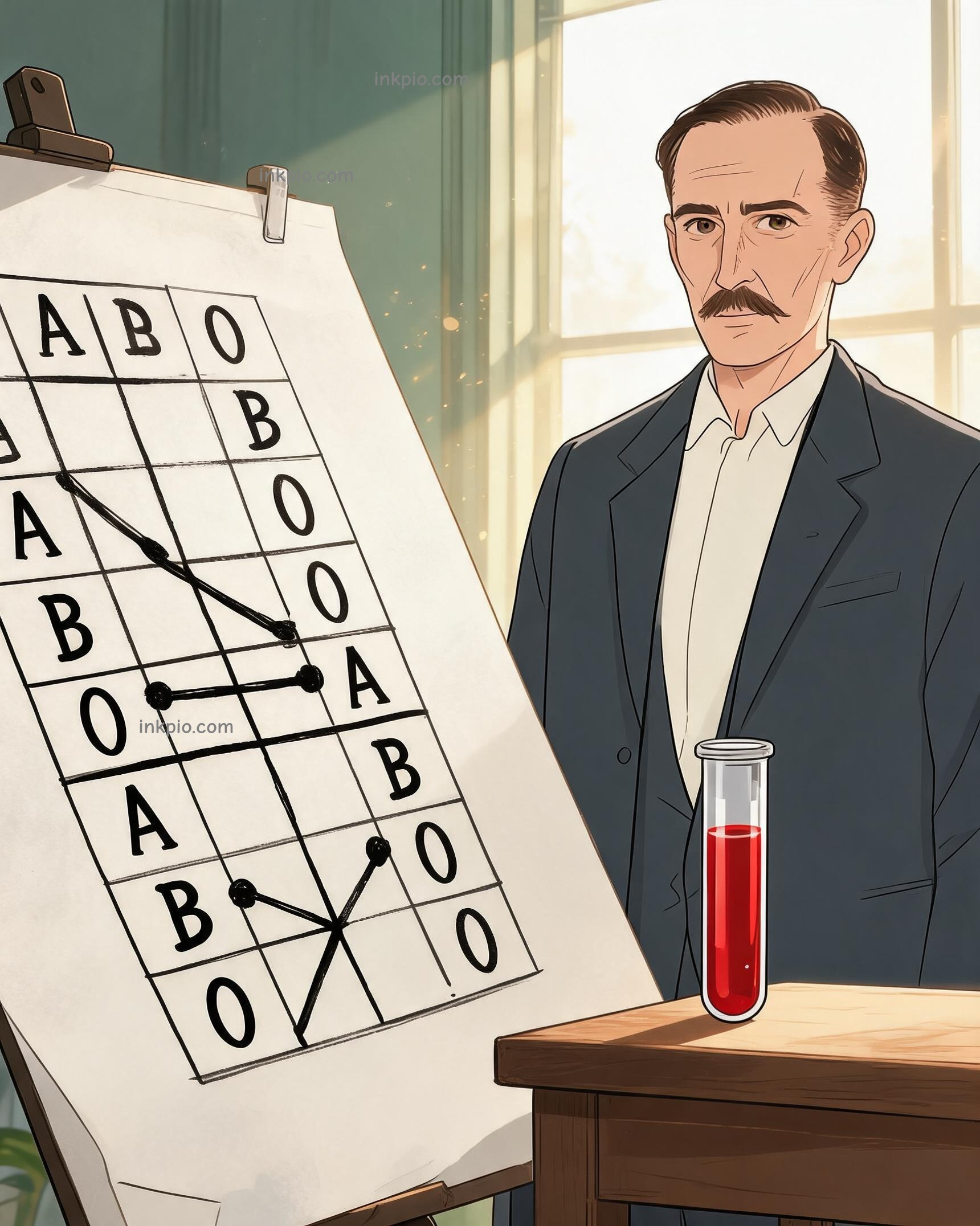
Night after night, he mapped every combination on a grid. The scattered glass slides began to tell a story. Three clear groups fell into place, distinct and unyielding. A fourth group joined them as he expanded the tests, completing the pattern. Those sudden clumps proved that blood carries a distinct immune identity. It was not just a generic red soup flowing through everyone. Certain invisible markers on the cells triggered a reaction only when they met the wrong partner. The matching rule finally stepped out of the shadows, revealing that we are biologically unique even in our most shared fluid.
The realization carried a weight heavier than the data. Landsteiner understood that for centuries, doctors had been trying to mix oil and water, blaming the patient when the mixture failed. The fault lay not in the technique, but in the identity of the blood itself. He published the findings in 1901. He handed surgeons a straightforward compatibility chart instead of a prayer. For the first time, doctors could test pairings before making an incision. The lethal guesswork vanished, replaced by a precise, cold logic that respected the body's boundaries.
Landsteiner set down his pipette. The morning sun warmed the neat vials on his workbench, catching the light in the remaining drops of serum. The lab was quiet, but the silence felt different now. It was no longer the silence of ignorance, but of order. He looked at the grid on his paper, then at the window where the city was waking up. Somewhere out there, a surgeon would pick up a scalpel, confident for the first time. The invisible wall inside our veins finally had a map. And for the first time, someone knew how to walk around it.