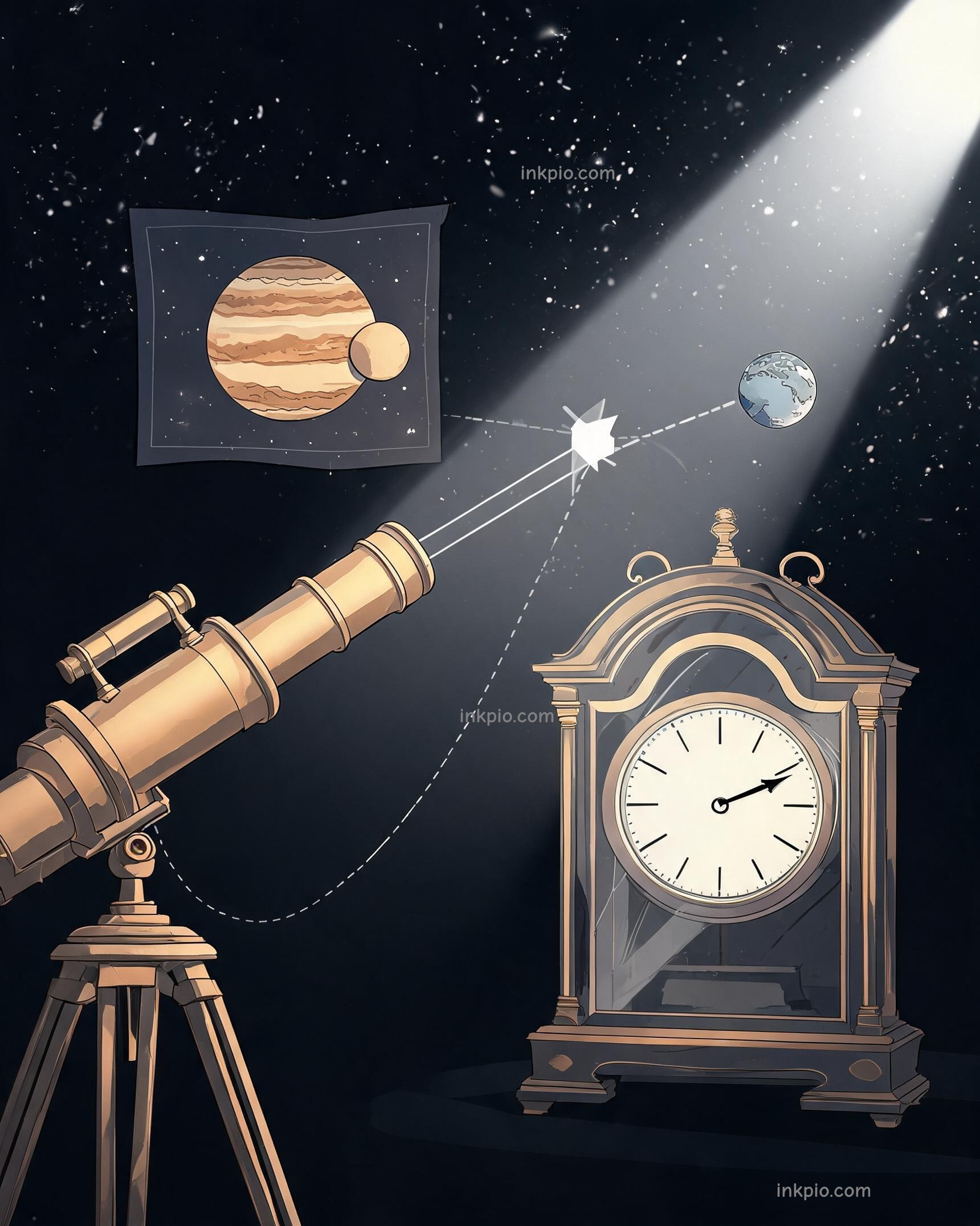

The pendulum clocks at the Paris Observatory kept perfect time, but the sky refused to cooperate. Predicted eclipses of Jupiter’s moon Io kept slipping later and later. Astronomers blamed faulty lenses or tired eyes, since everyone knew light traveled instantly. Ole Rømer ignored the complaints and stared at the observation logs. He noticed a steady drift that grew exactly as Earth pulled away from Jupiter on its yearly path. The moon wasn't late; the light just had farther to travel.
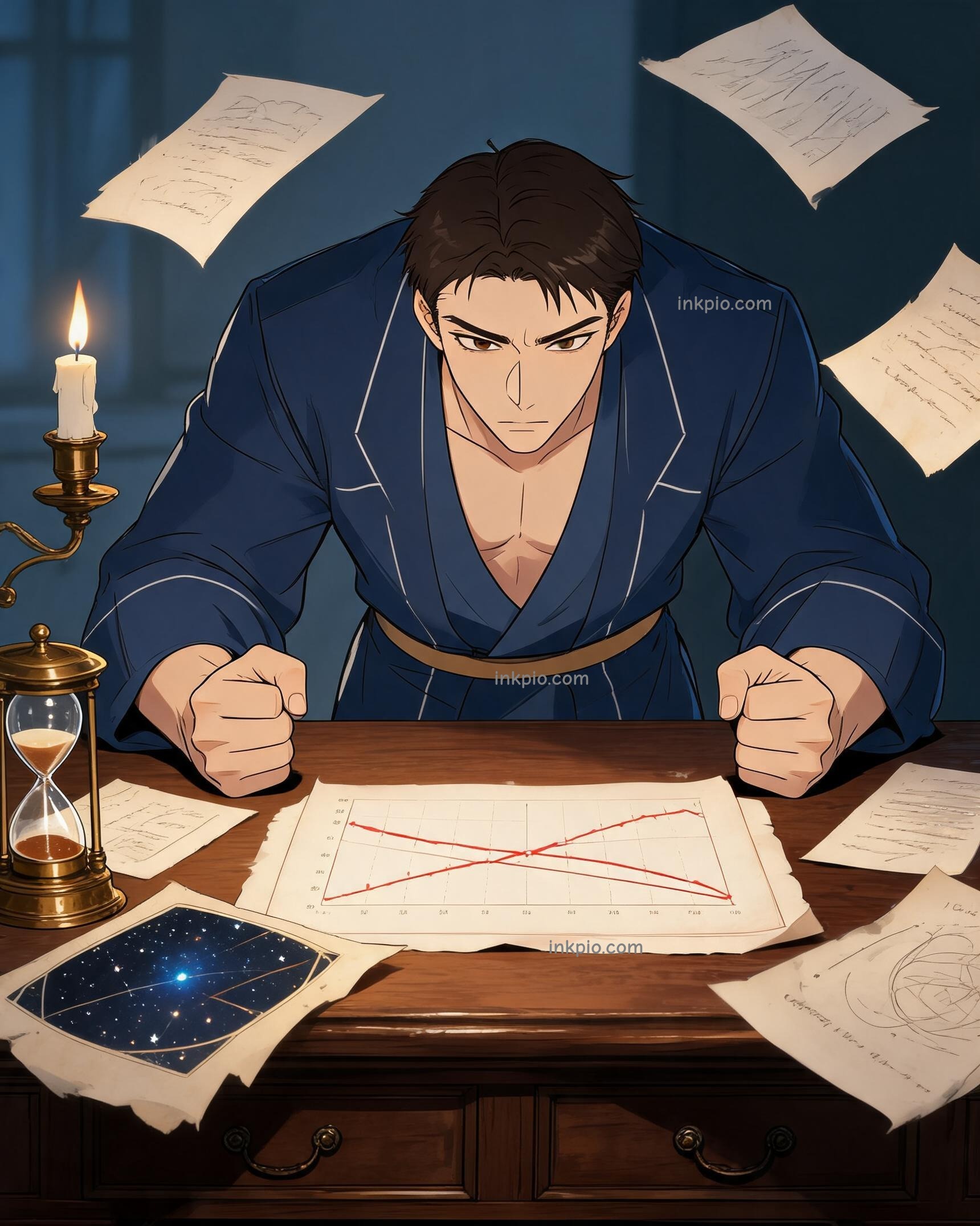
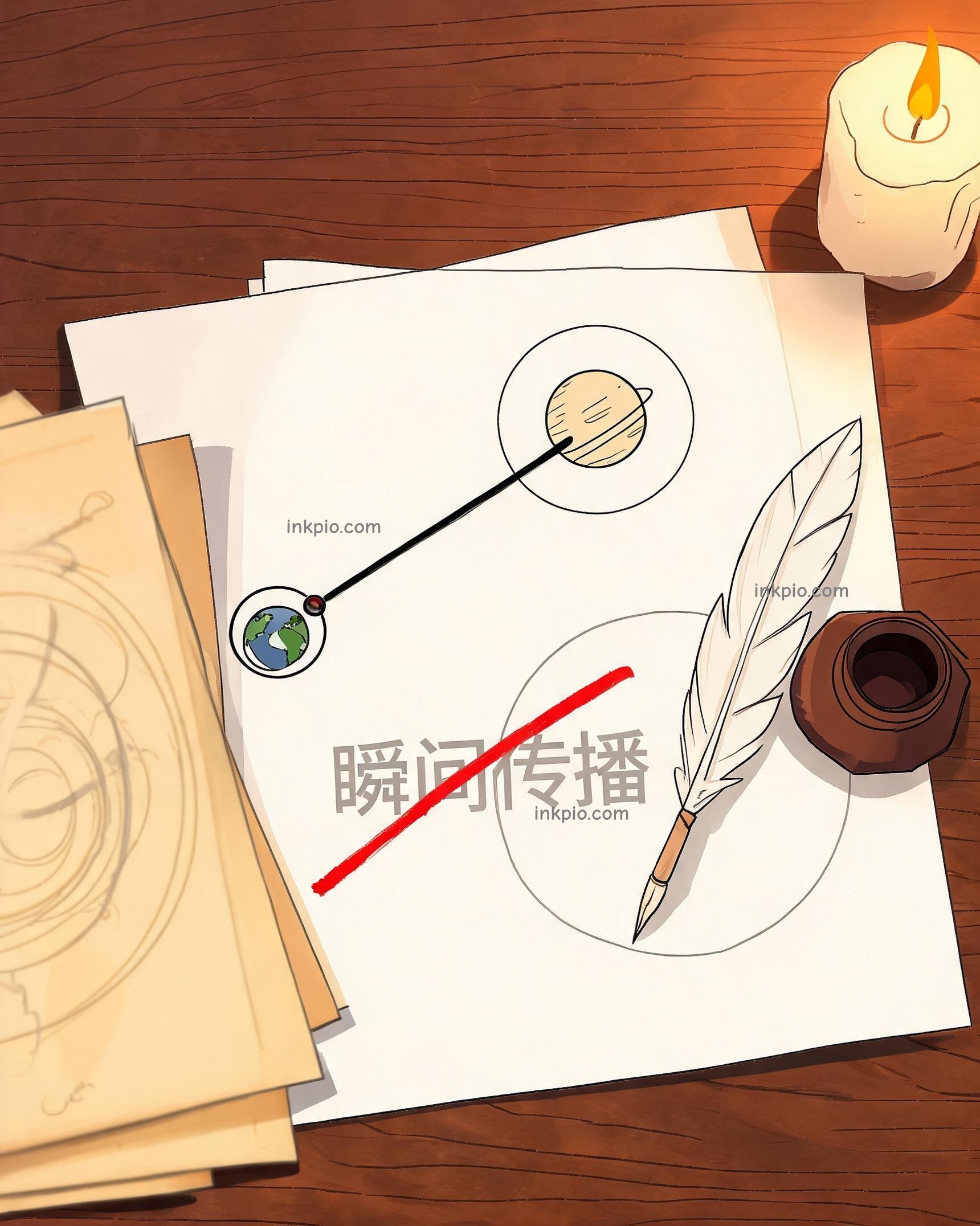
Rømer tossed the old star charts and treated the delay like a simple distance problem. He started with the raw timestamps from months of careful night watches. He lined those missing minutes against the steady increase in Earth’s distance from Jupiter. Think of it like waiting for a carriage to arrive. The horses keep a steady pace, but if they leave from a farther town, they reach your gate later. The delay simply measures the extra ground covered. He applied that same logic to the sky, turning scattered clock readings into a direct measure of how fast light moved across space.
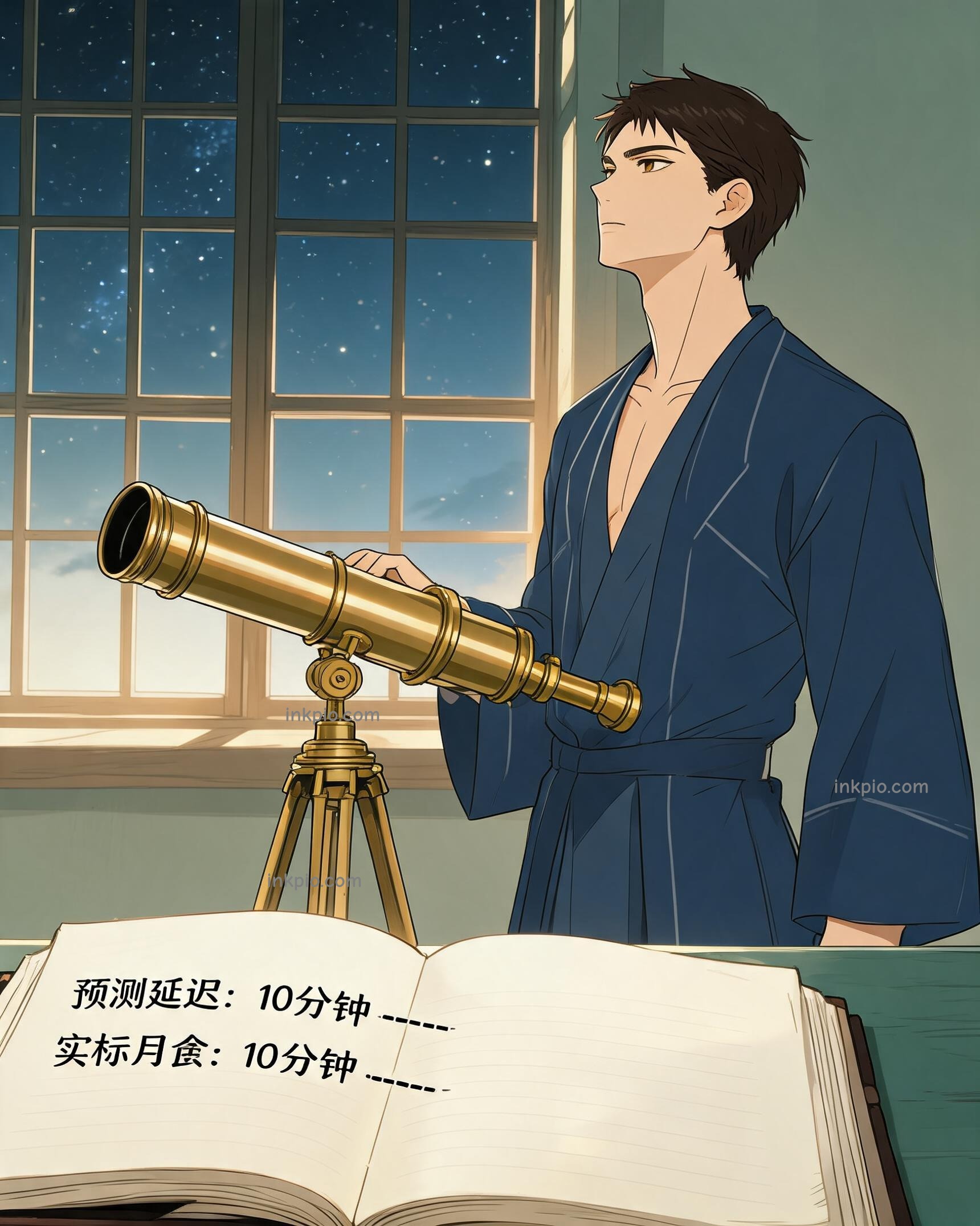
He laid out the timeline at the French Academy of Sciences in September 1676, explaining to the gathered scholars that the consistent lag meant light simply required a measurable stretch of time to cross the orbit. The room stayed quiet. Critics argued that an invisible force could not possibly drag behind a moving planet. Rømer didn't bother with philosophical debates. He simply pointed to the calendar and set a public test. He calculated the exact moment Io would vanish behind Jupiter on November 9, adding a precise ten-minute buffer to the standard schedule. Then he stepped back and let the night do the talking.
Cold November air filled the observatory dome when the test date finally arrived. Telescopes tracked the gas giant, and pendulums swung steadily through the dark. The shadow crept across Io’s face exactly when Rømer’s ledger predicted, right on that delayed minute mark. The old instant-light rule broke in a single observation. Rømer closed the heavy observation book, satisfied that the sky finally told the truth.