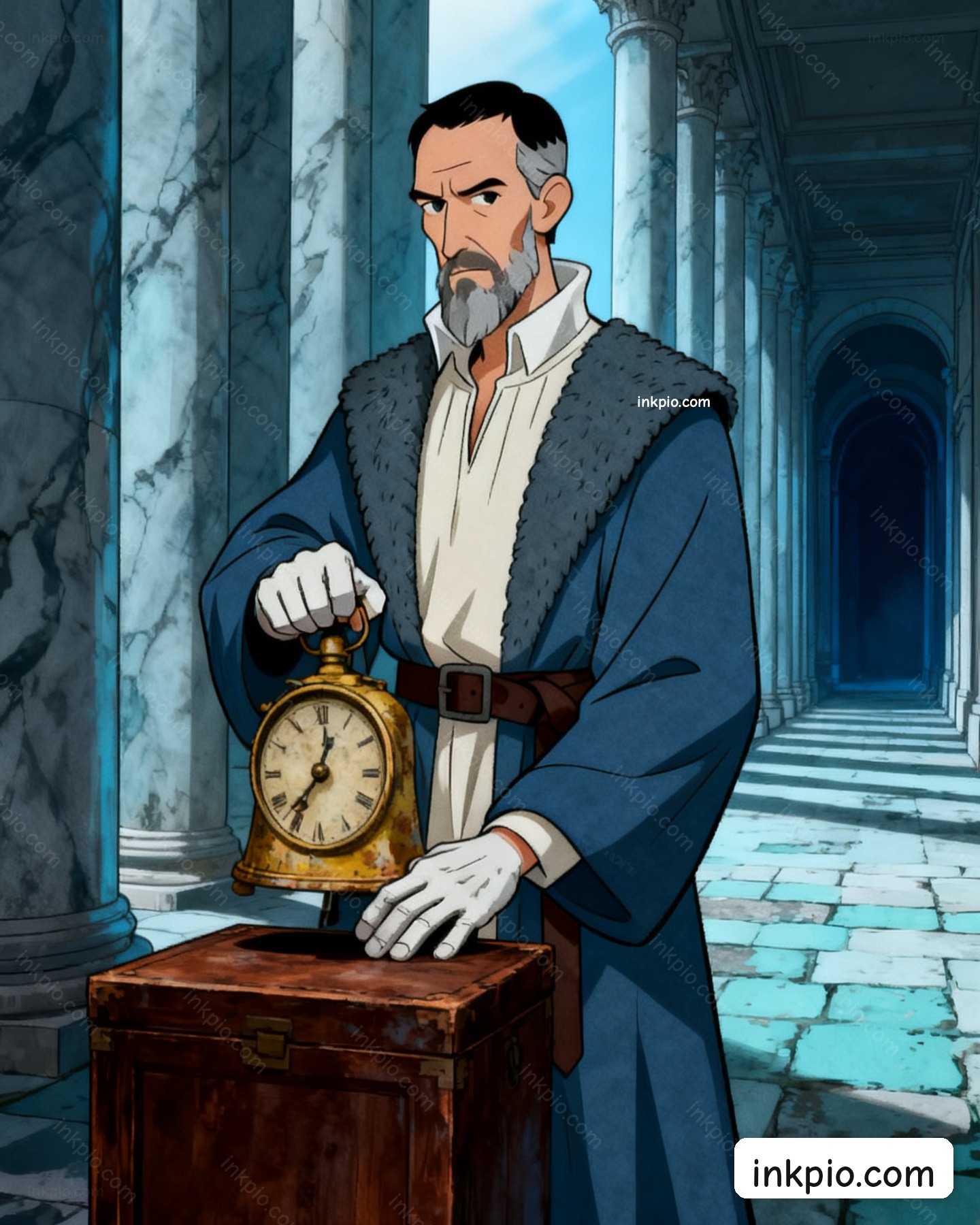
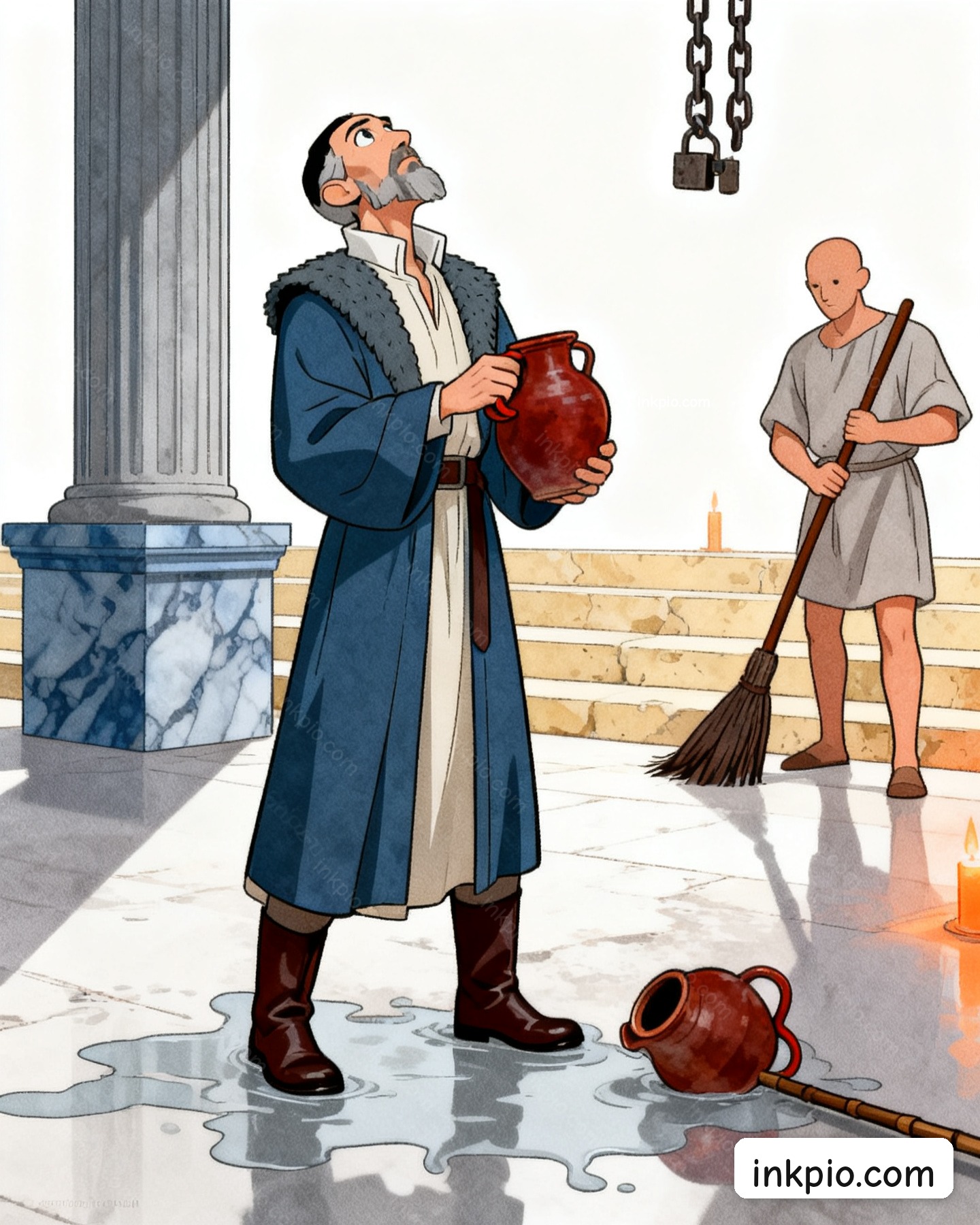

Water dripped unevenly from a cracked brass pot in the damp morning of 1602, and Galileo’s own pulse jumped around every time he tried to count. He needed exact times for falling weights, but his makeshift tools gave him nothing but messy numbers. The falling balls blurred past his eyes, and the data refused to line up with his calculations. If he could not measure time properly, his entire theory on motion would collapse under its own weight.
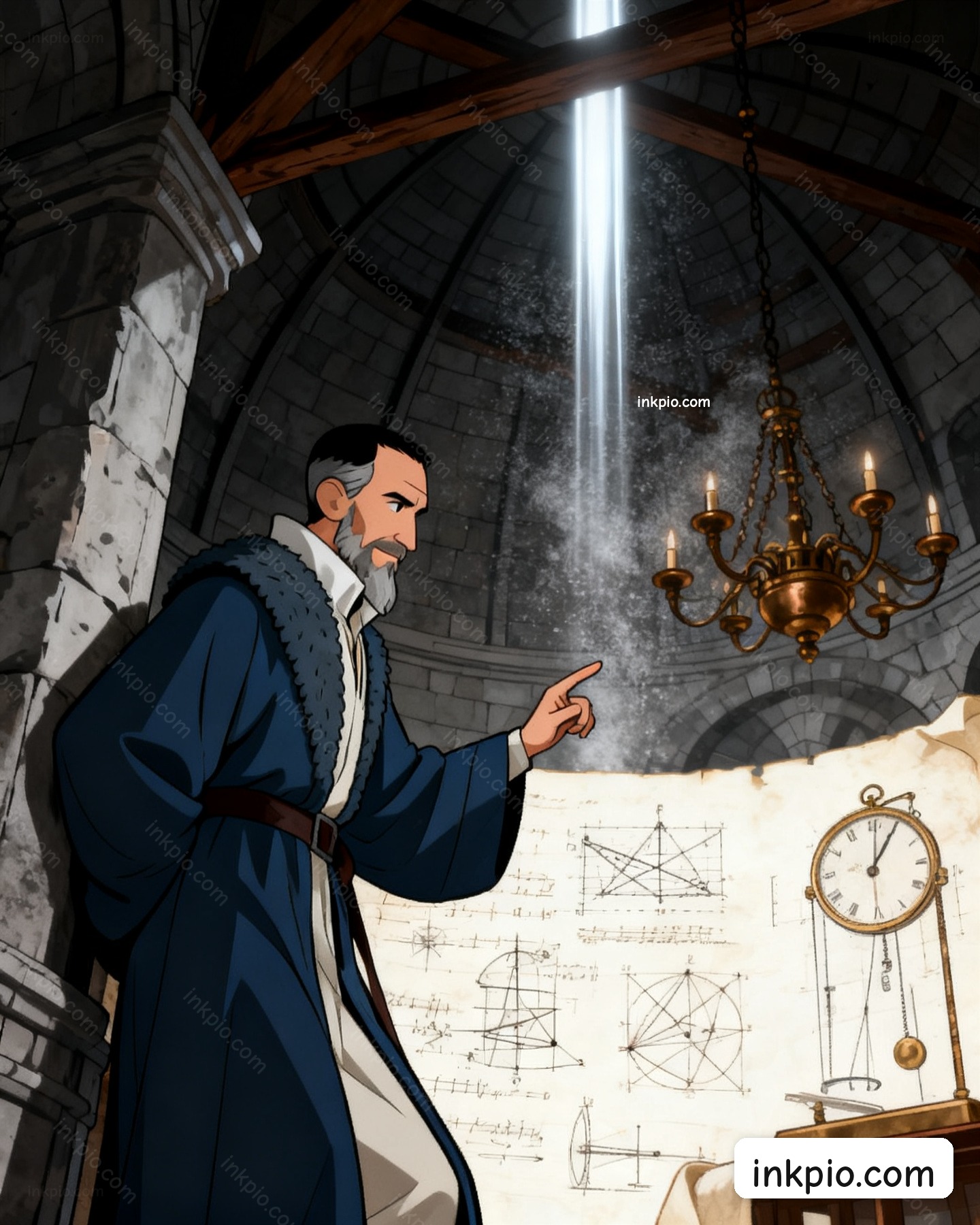
Frustration finally pushed him to drop the leaking vessel. Muddy water pooled near his boots as he leaned back against a cold stone pillar and looked up toward the vaulted ceiling of Pisa Cathedral. A heavy bronze lamp hung from a long chain, nudged into motion by a stray draft in the quiet hall. It swung in wide, sweeping arcs that slowly shrank into tight, lazy circles. He expected the shrinking swings to speed up, but the pattern stubbornly refused to change.
He pressed an ink-stained finger against the rough pillar and started tapping. The beat stayed perfectly steady, even as the lamp’s path narrowed dramatically. Each full trip back to the center took the exact same amount of time. Think of a child on a playground swing, where a hard shove and a light push both take the same time to go forward and back. The chain length locks the tempo, while the push size only changes the distance.
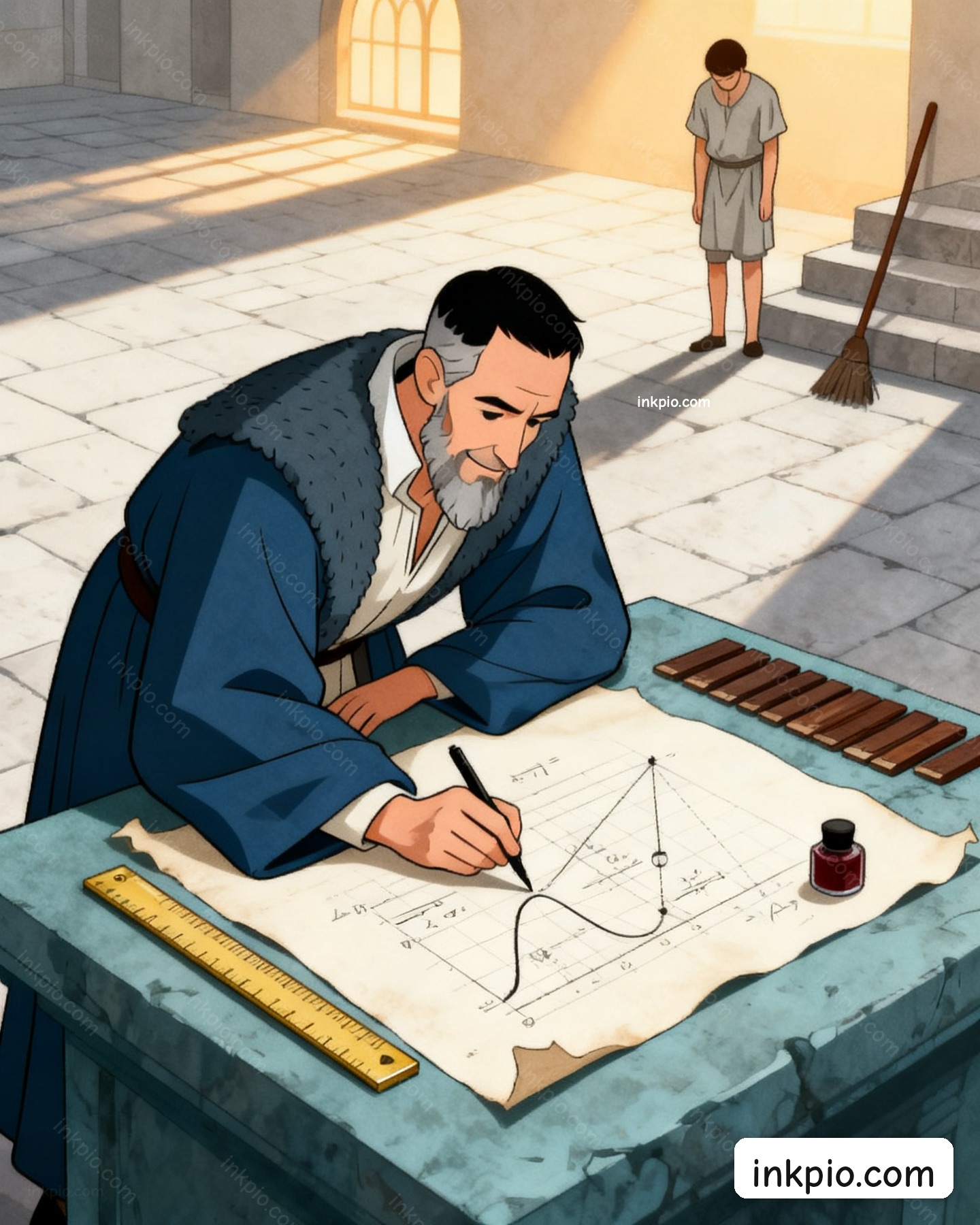
He grabbed a scrap of parchment and pressed charcoal to the paper. Quick lines mapped out a rule that finally made sense of motion, completely bypassing the leaky pots and erratic heartbeats. He wrote down the principle that the swing’s timing depends entirely on the cord’s length, ignoring the height of the drop entirely. The cathedral air grew quiet, leaving only the scratch of charcoal and the steady overhead rhythm. He finally found a way to slice time into equal pieces, turning a wandering draft into a blueprint for centuries of ticking machines.