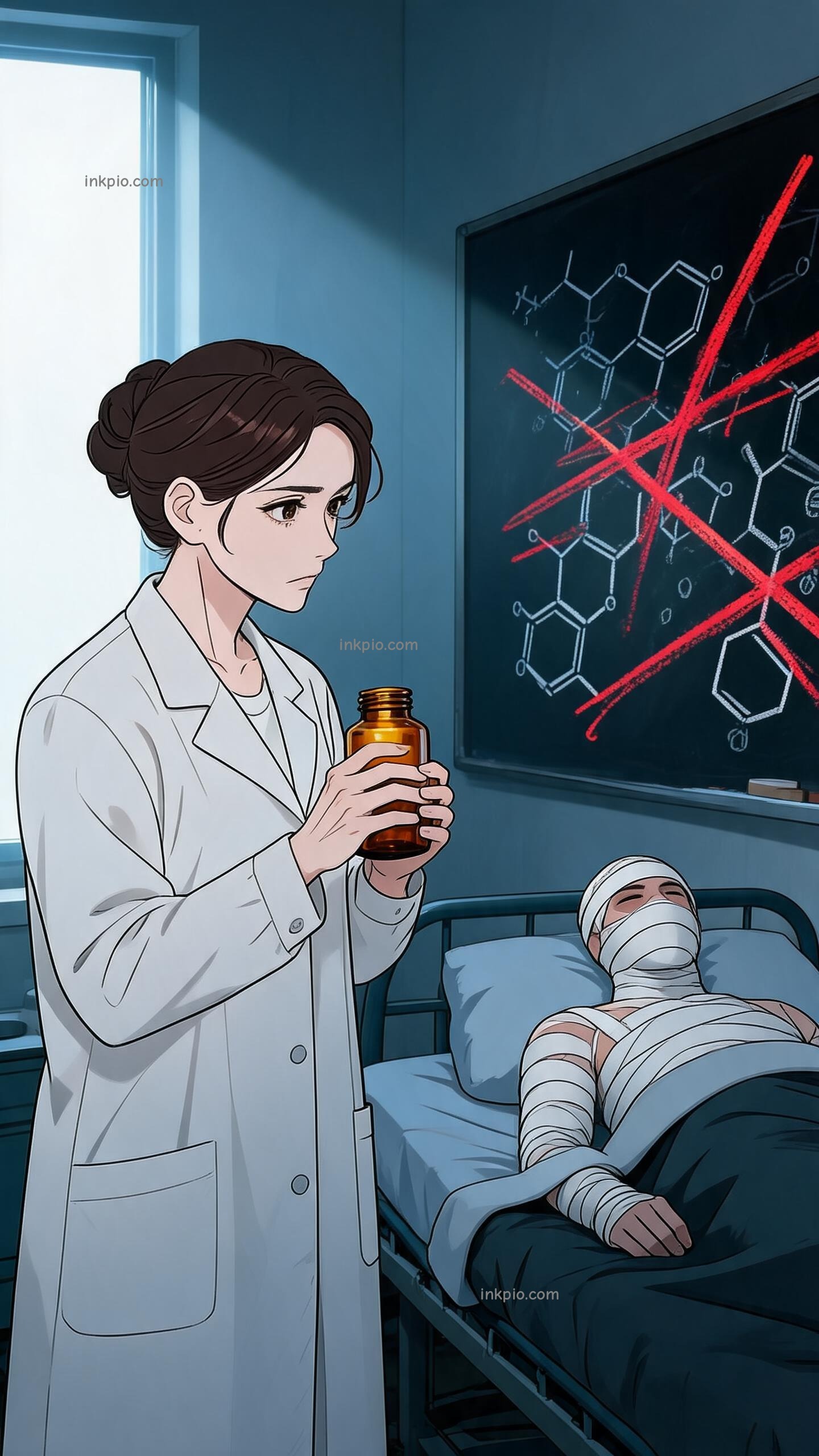

In 1945, the world celebrated a miracle while Dorothy Hodgkin sat in silence. Penicillin was pulling soldiers back from the brink of death, yet its molecular soul remained a ghost. Chemists screamed over chalkboards, their arguments erased by red dust and frustration. Was it a chain? A ring? Without the shape, every attempt to improve the drug was a gamble with human lives. Dorothy stopped listening to the noise. She chose the quiet, lonely path of looking.
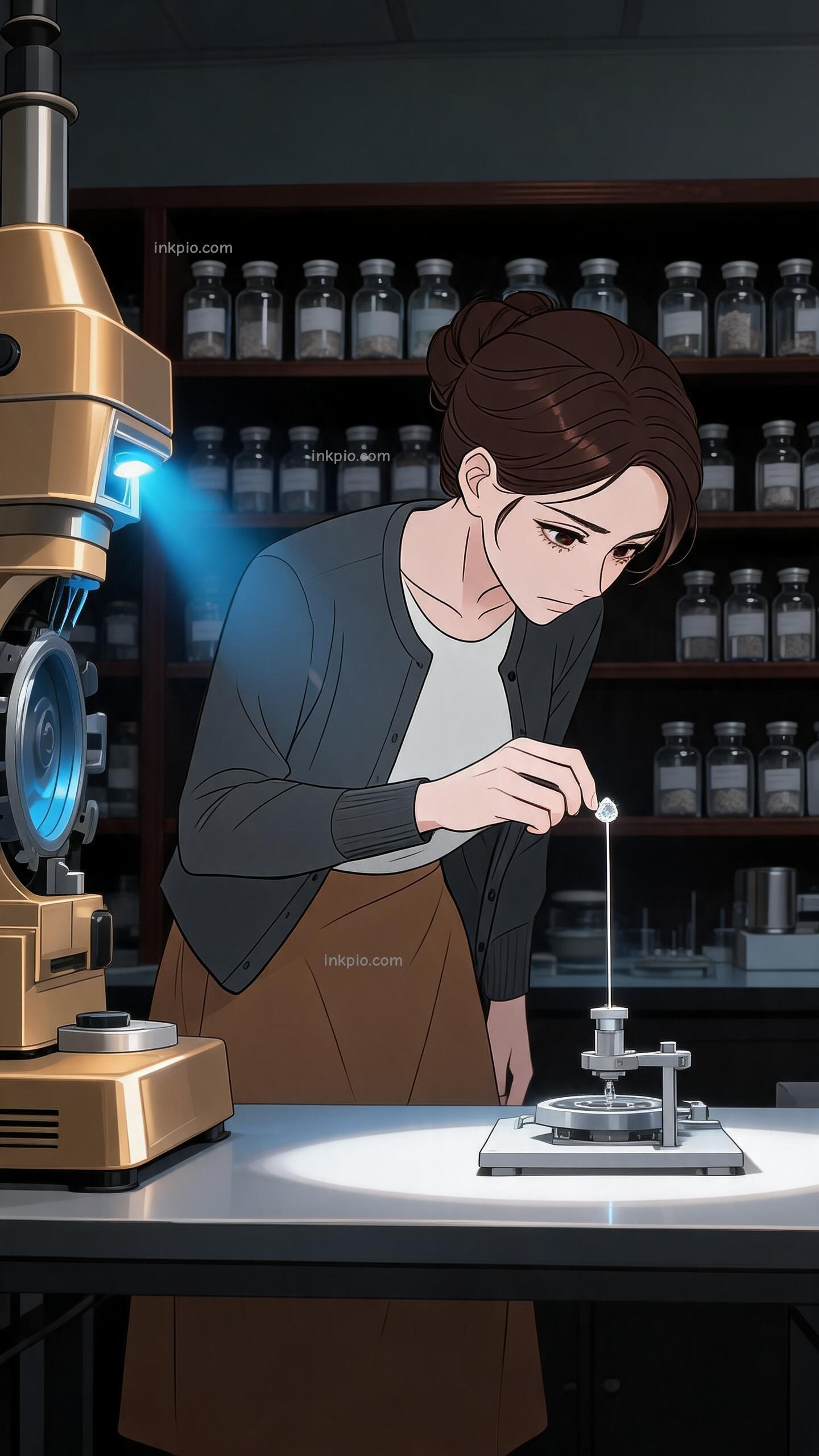
For nearly a decade, she coaxed a fragile molecule into submission. Penicillin crystals were temperamental divas; they refused to form, or they shattered under their own weight. Dorothy’s hands, steady but tired, adjusted humidity and temperature by fractions of a degree. She watched them grow like a gardener watching for a bloom that might never come. When a perfect crystal finally appeared, microscopic and clear, she felt no triumph, only relief. The real work was just beginning.
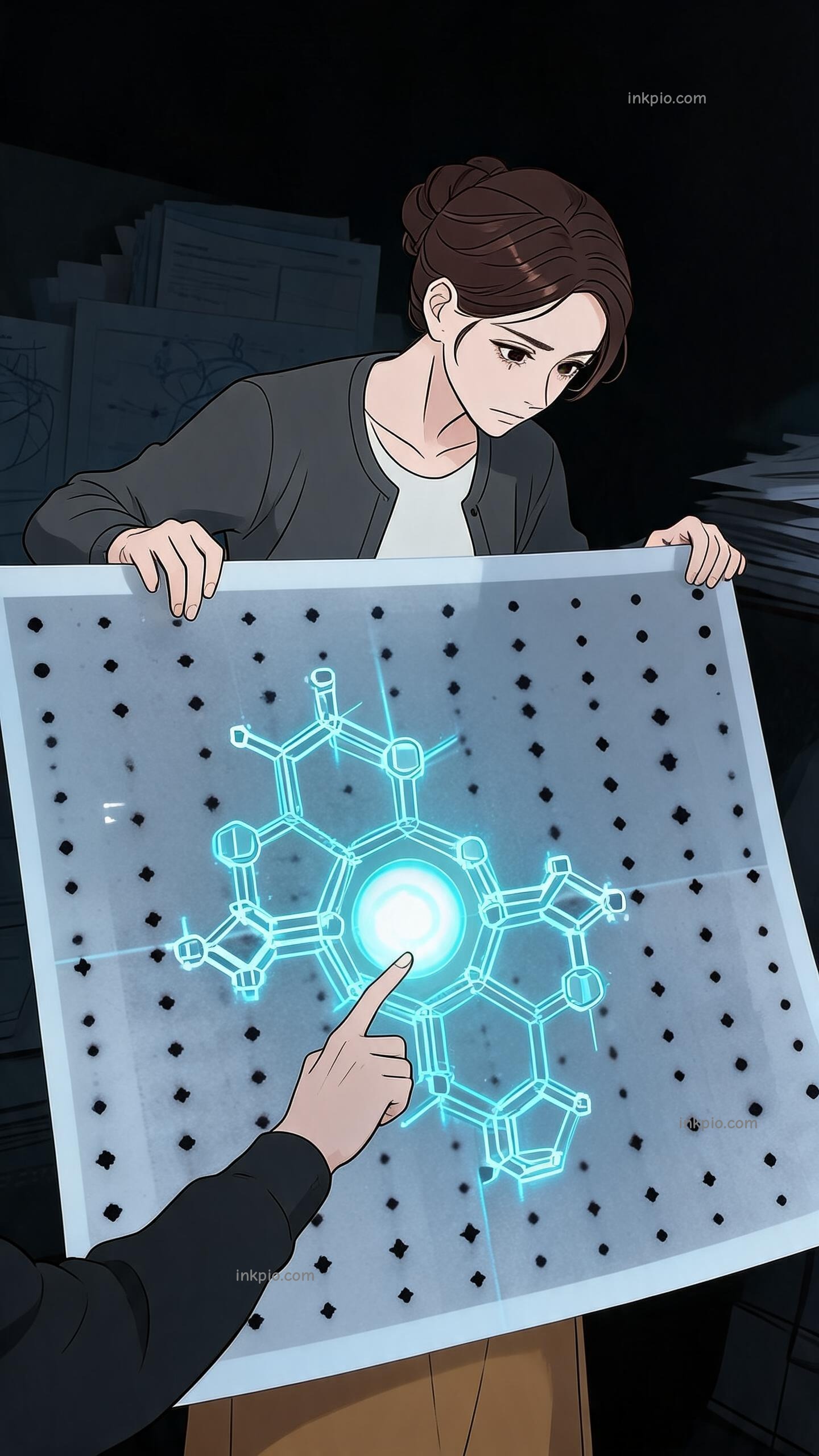
She placed the crystal in the X-ray beam. The rays punched through the atoms, scattering onto photographic film. What emerged was not a picture, but a chaotic cross of dark spots. To anyone else, it was gibberish. To Dorothy, it was a locked door. She knew the key lay in mathematics, specifically Fourier transforms. Imagine hearing a crashing piano chord and needing to identify every single key pressed to create it. That was her task. She took the brightness and position of each scattered spot and fed them into heavy, grinding equations.
The math worked backward, translating light into matter. It turned scattered photons into a map of electron density. Input the chaos, run the calculation, and out came a three-dimensional shadow of the atoms. For days, the numbers crunched. Dorothy waited, aware that her reputation rested on this translation. If the math failed, the decade of patience would vanish into thin air. She feared not just being wrong, but being irrelevant while the world burned.
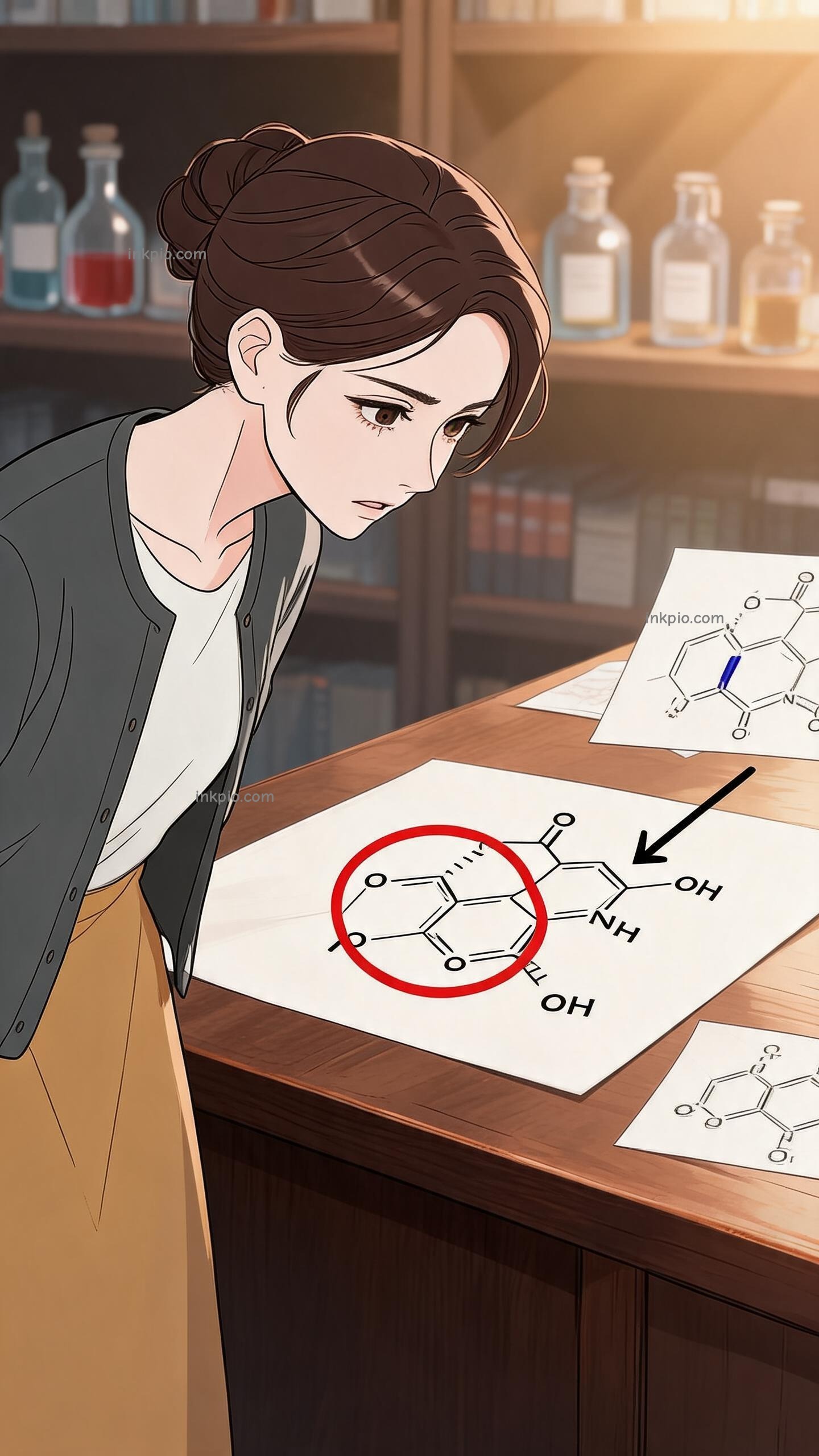
Then, the map resolved. The scientific community had expected a relaxed, standard ring. They wanted comfort. Instead, the electrons revealed a tight, four-membered beta-lactam ring. Four atoms forced into a square. It was chemically absurd, a structure under immense tension, like a spring compressed to its breaking point. This strain explained why penicillin was so reactive, why it killed bacteria so effectively. It was not a stable fortress; it was a loaded trap.
Dorothy stared at the bold red circle on the paper. Her hand hovered over the diagram, trembling slightly. The messy chalkboard debates were silent now. The invisible chemical spring was exposed. She realized she held the blueprint for the future of medicine, but in that moment, she only felt the weight of the truth. The guesswork was over. The molecule had finally spoken, and its voice was sharp, strained, and undeniable.