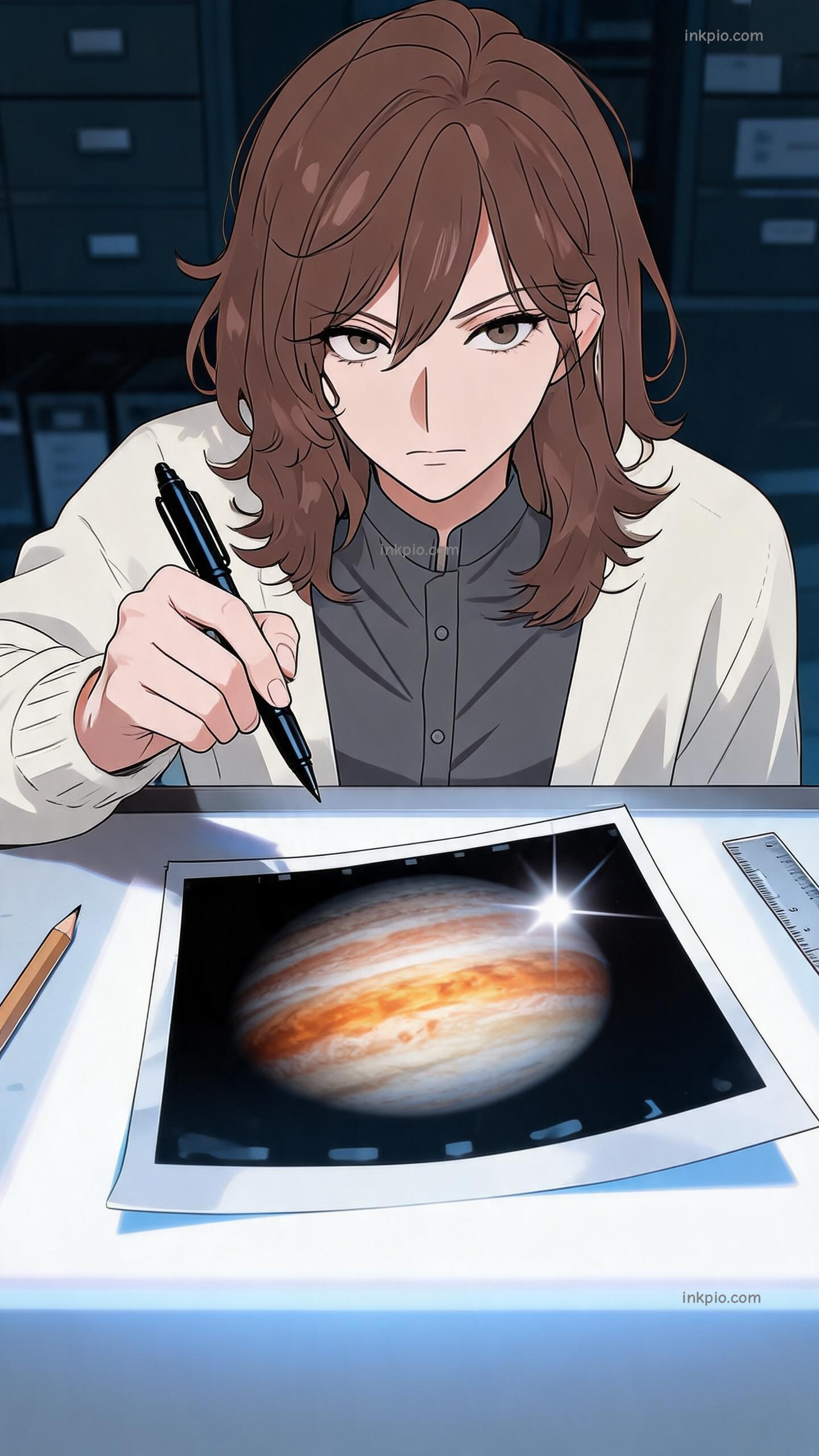


The hum of the optical comparator was the only sound in the JPL lab on March 9, 1979. Linda Morabito rubbed her tired eyes, staring at the glowing light table where a black-and-white image of Io lay pinned. She wasn't looking for discovery; she was hunting for an error. The navigation team needed Io’s precise orbital position to keep Voyager 1 on track, and this photo was supposed to be clean.
A bright, irregular smudge marred the moon’s edge. To Linda, it looked like a nuisance—a lens flare from the sun or a glitch in the camera’s shutter mechanism. If she couldn't subtract this noise, the data would be useless. Her job was to scrub the image, not interpret it. She felt the familiar pressure of a tight deadline pressing against her temples.
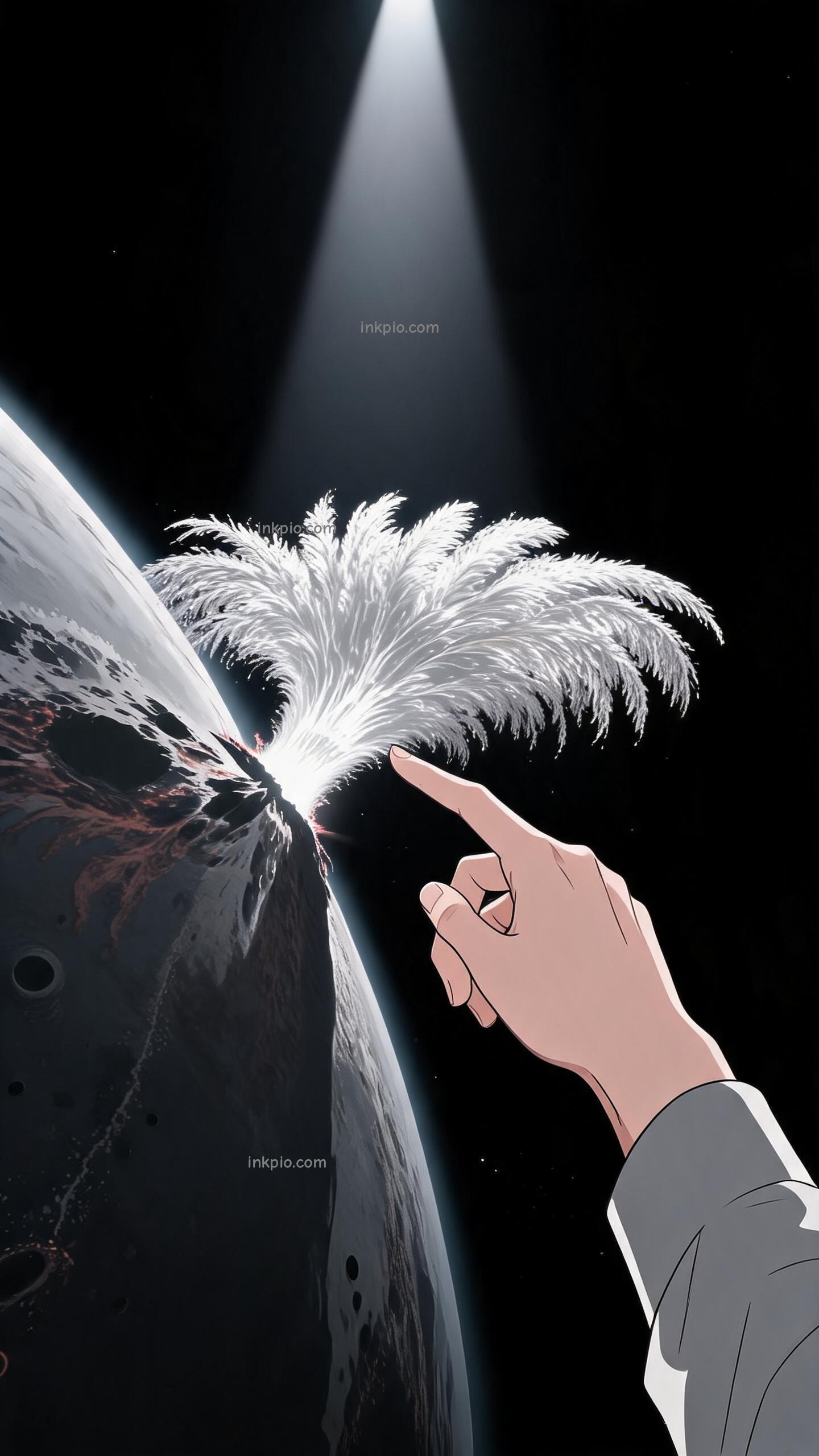
She adjusted the magnification, intending to map the anomaly’s edges so she could digitally erase it. But as the white blob grew larger on the screen, it refused to behave like light. Glare fades; it blurs into the background. This spot held its ground. It had weight. Linda leaned in, her pen hovering over the glass, tracing the boundary between the moon’s dark surface and the bright intrusion.
The shape defied her expectation of a random scratch. A solid, curved base anchored the brightness to the surface, while a distinct shadow stretched out beside it. Shadows require a physical object to block the light. This wasn't a reflection; it was a structure. The realization hit her quietly, without fanfare. She stopped trying to delete it and started trying to understand it.
Linda traced the outline again. It looked like an umbrella opening in slow motion. Gas was erupting vertically from the crust, punching through the vacuum before spreading out at the top. She pulled out her calculator, her hands steady despite the sudden shift in her mindset. Using Io’s known diameter as a reference scale, she crunched the numbers. The plume rose 300 kilometers above the surface.
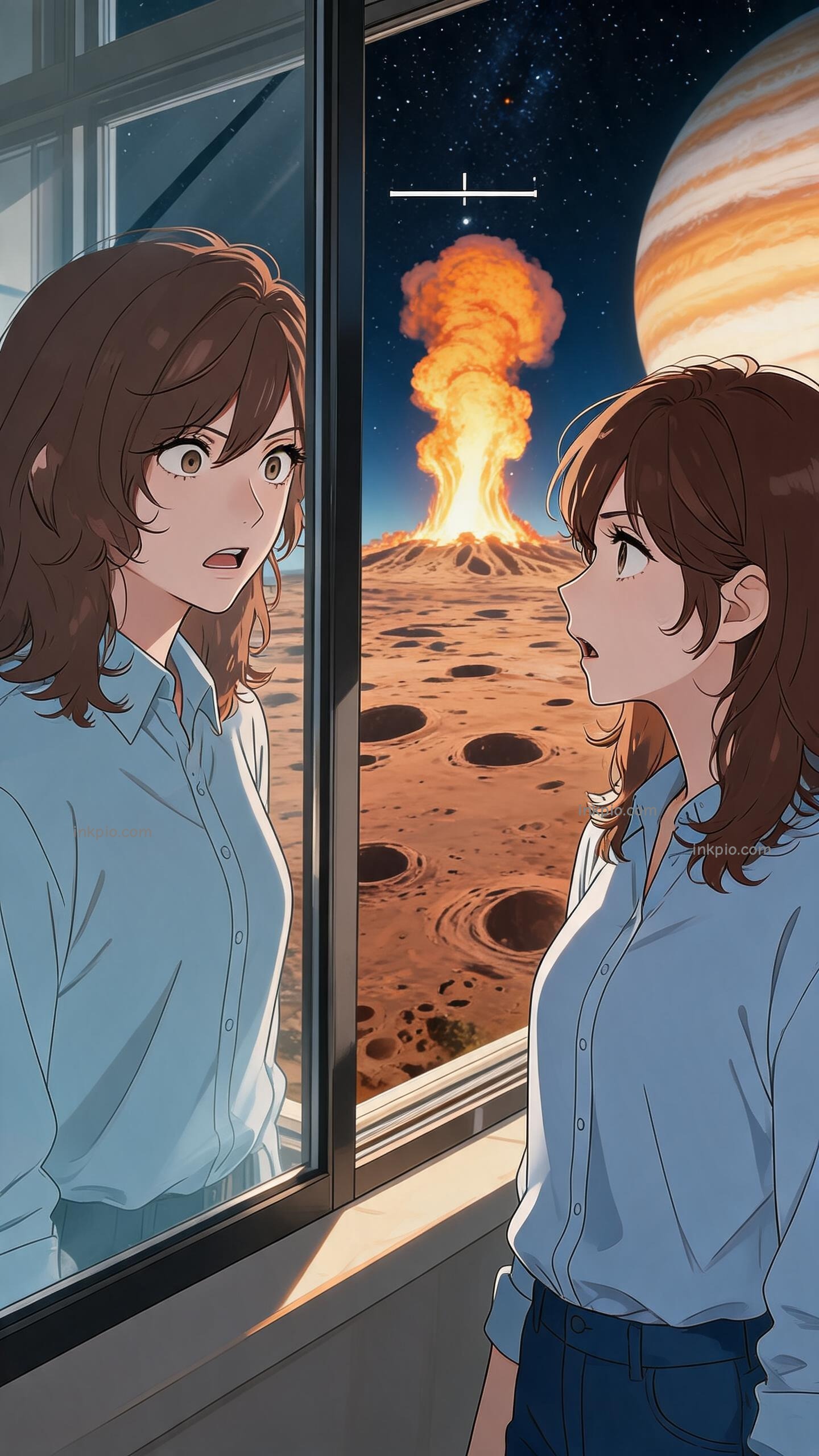
That number sat heavy in the room. Three hundred kilometers of material, ejected by forces no one had accounted for. The prevailing theory held that Io was a dead, cratered rock, frozen in time like the other moons. But here was evidence of violent, ongoing change. Jupiter’s immense gravity was squeezing the moon, generating internal heat that melted rock and forced it skyward.
She looked at the shadow again. It belonged to a volcano, later named Pele. This was the first active volcano ever discovered beyond Earth. The implications rippled outward, challenging everything astronomers thought they knew about geological activity in the solar system. Yet, in that moment, the grand scope of history felt distant. What mattered was the stubborn clarity of that shadow.
Linda pushed her chair back, the wheels squeaking against the linoleum. She didn't call anyone immediately. She just sat there, looking at the print. She had come to fix a blurry picture, to remove a flaw that threatened her calculations. Instead, the moon had revealed its secret. A small smile touched her lips, not of triumph, but of shared intimacy with a world that had finally decided to speak.