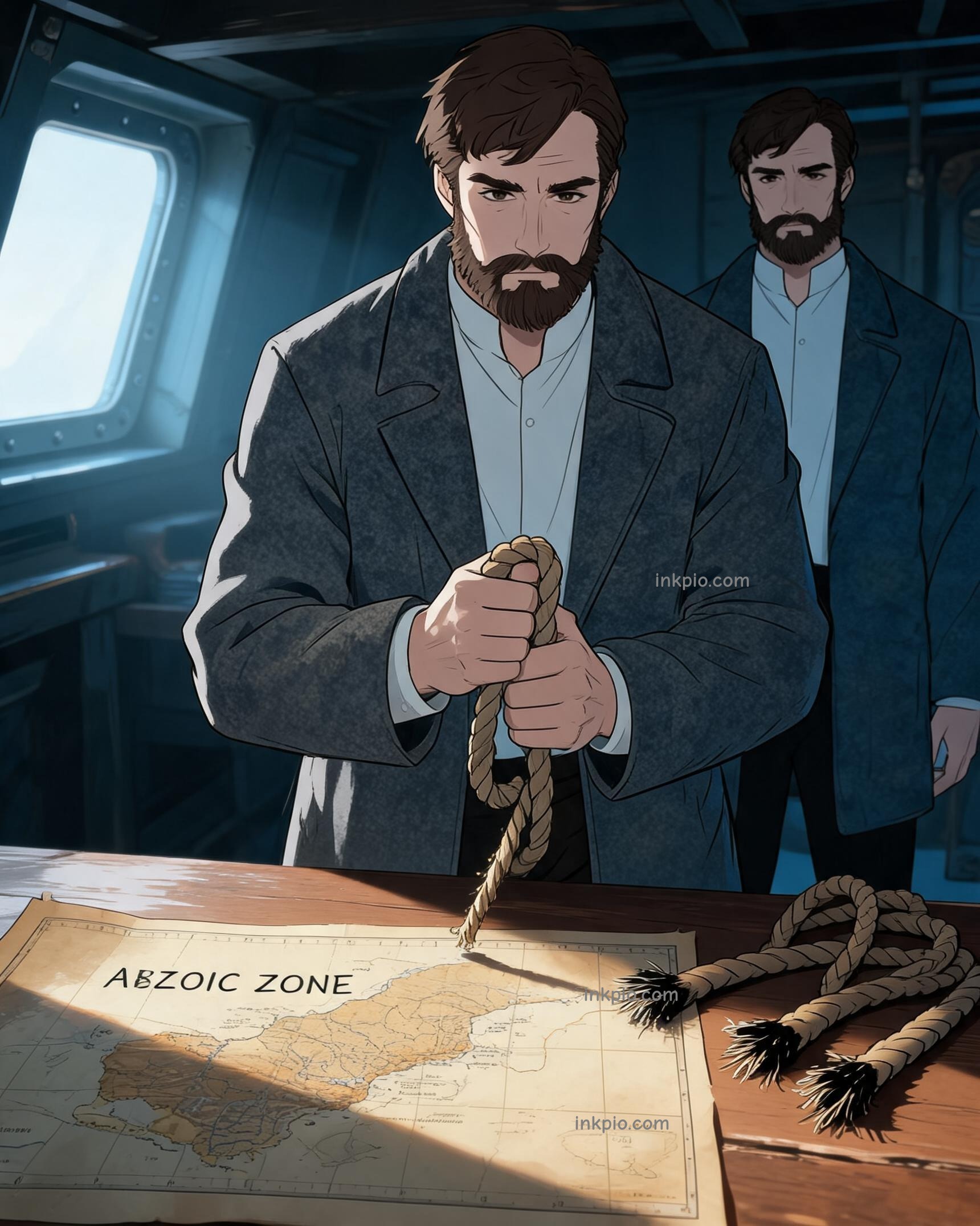
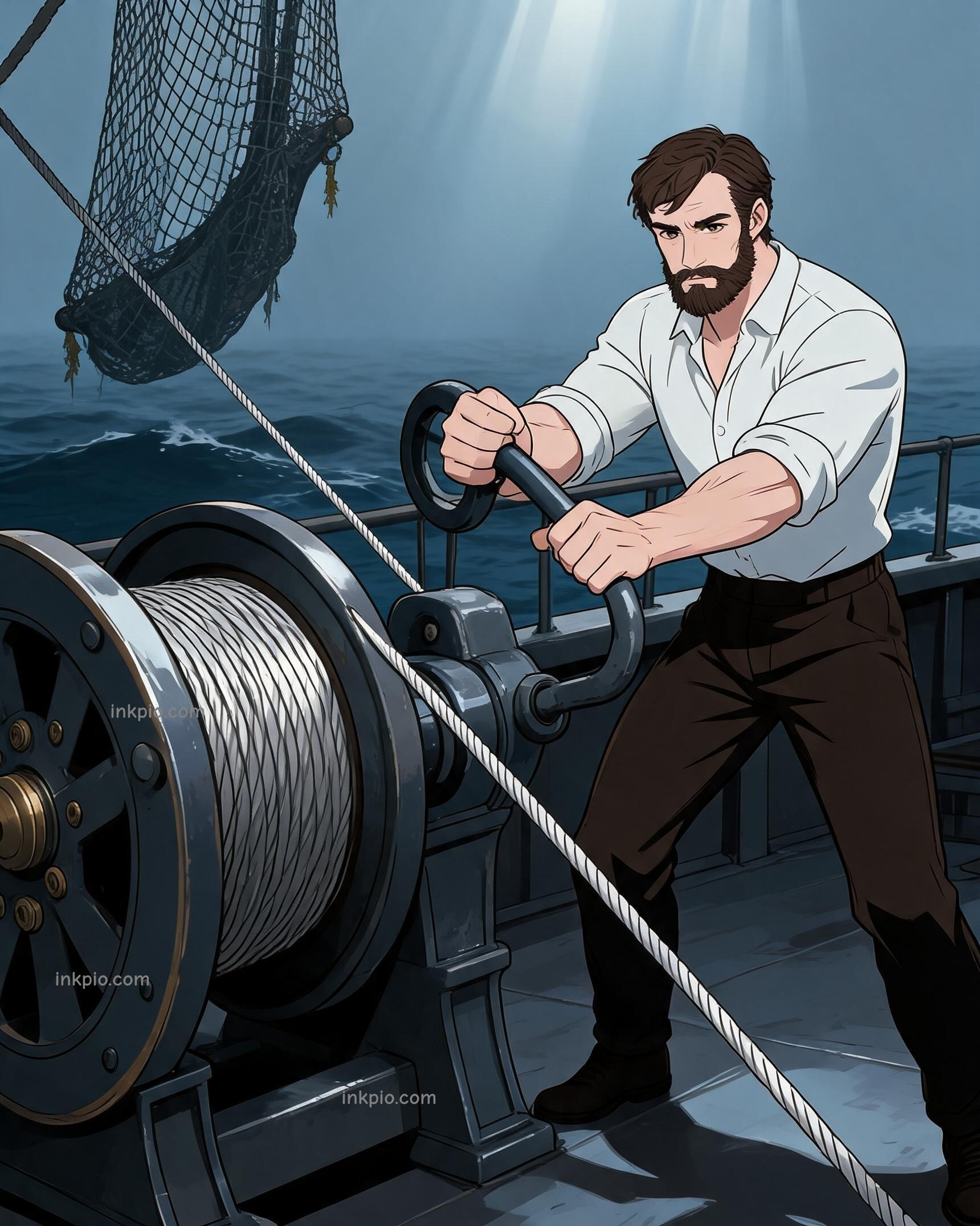

John Murray watched the steel cable vanish into the Atlantic swells, a thin silver thread disappearing into a world that science claimed did not exist. It was December 1872, and the HMS Challenger sat heavy in the water, carrying a crew exhausted by decades of theoretical dead ends. The prevailing wisdom, dictated by Edward Forbes, was absolute: life vanished below three hundred fathoms. Below that line lay the azoic zone, a sterile desert where pressure crushed everything into nothingness. Murray did not just want to disprove a theory; he needed to silence the nagging doubt that humanity was alone in the dark.
The ocean fought back immediately. Traditional hemp ropes, soaked and heavy, snapped under their own weight before reaching the critical depth. Each break felt like a personal rejection, a reminder of human fragility against the abyss. The crew switched tactics, rigging a heavy brass winch with thick steel piano wire. They bolted a cast-iron dredge to the end, a brutal instrument designed to scrape the bottom of the world. Lowering it felt less like fishing and more like sending a probe into a tomb. The wire fed out slowly, tension steady, cutting through cold currents that seemed determined to keep their secrets.
Hours bled into the gray afternoon. The winch gears ground against the silence of the deck, a rhythmic metallic groan that set teeth on edge. Murray paced near the damp railing, his coat stiff with salt spray. He could feel the eyes of the crew on his back. They expected failure. They expected to haul up a basket of crushed shells or empty silt, confirming what they already believed about the limits of life. The crushing pressure should have flattened any soft creature into an unrecognizable smear. Murray gripped the railing, his knuckles white, waiting for the wire to go slack or snap.
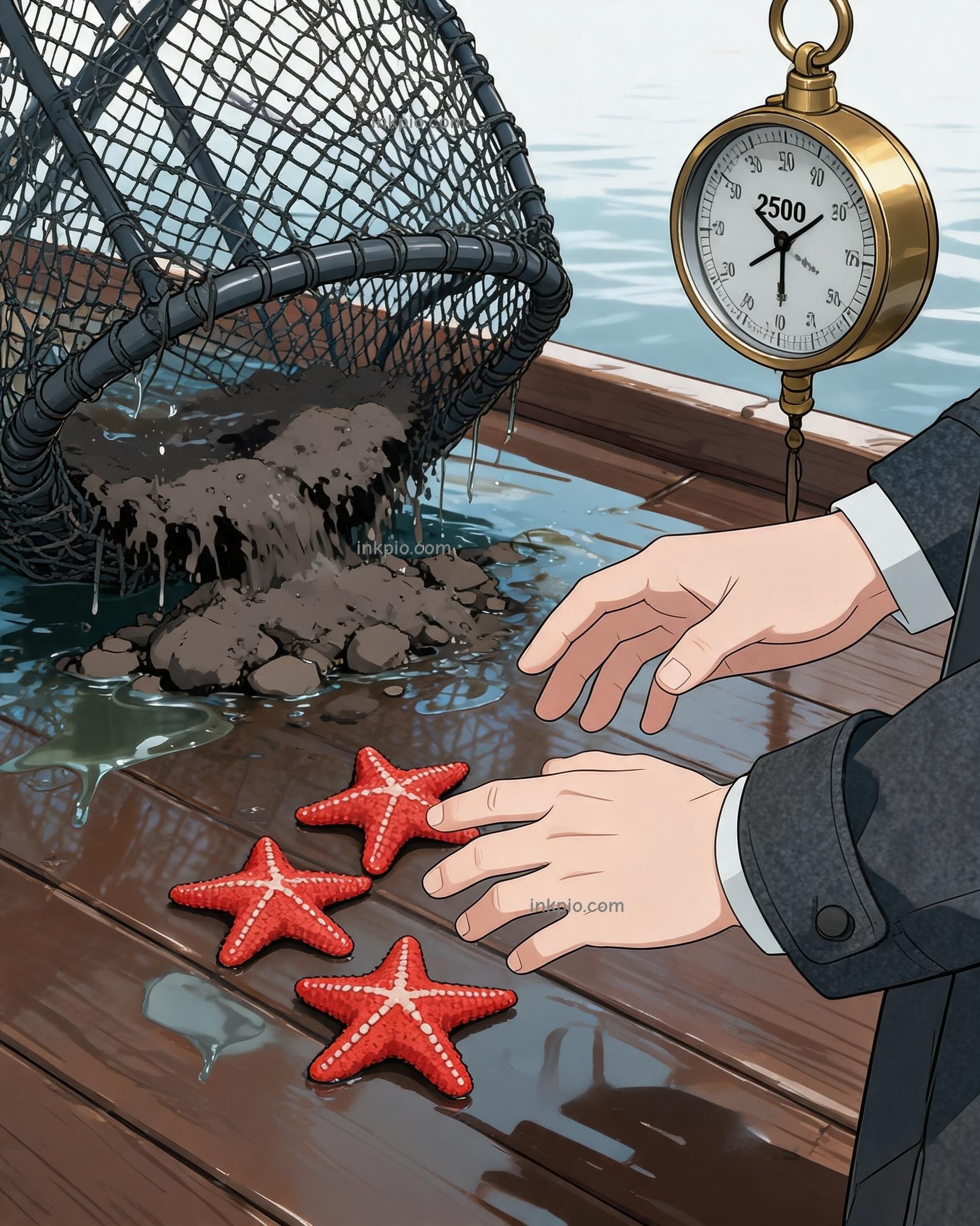
Then, the tension changed. The dredge broke the surface, dripping black mud onto the wooden planks. The smell of ancient sediment rose up, pungent and strange. Murray stepped forward, expecting disappointment. Instead, three bright red starfish tumbled out, their arms twitching violently against the wood. Delicate corals, fragile as glass, still clung to the metal frame, completely unharmed. The crew fell silent. No one moved. The sight was impossible. These creatures had survived depths that should have turned them to dust. They were not just alive; they were thriving.
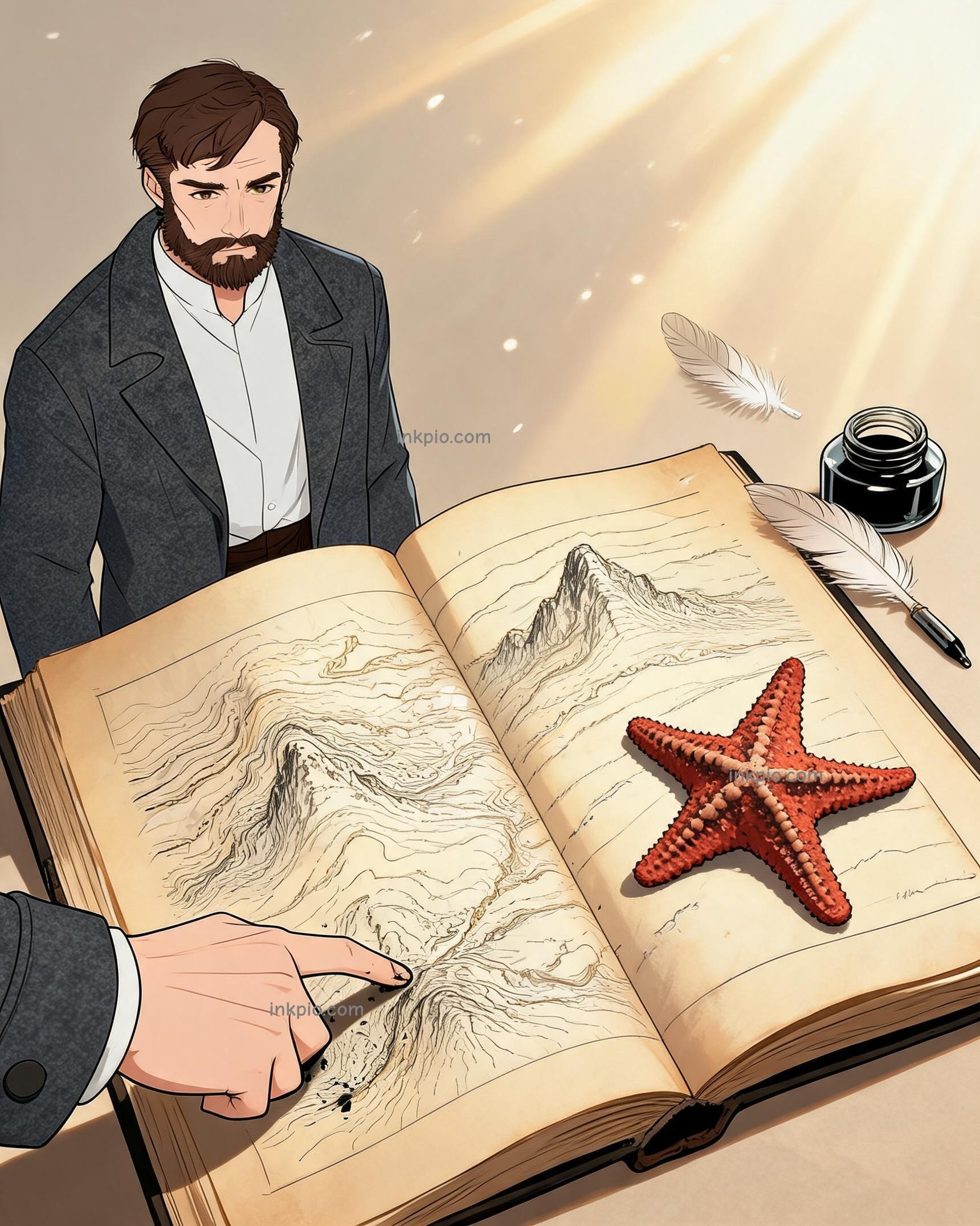
Murray stared at the starfish, watching them struggle for air. The water had not destroyed them. It had held them in a steady, heavy blanket, protecting them from the chaos above. His fear of the unknown evaporated, replaced by a profound sense of humility. He wiped his hands on a rag and pulled out his field log. The paper was damp, the ink likely to bleed, but he had to record this. He marked the depth gauge reading next to a rough sketch of a submerged ridge. The old charts, which painted the ocean floor as a blank void, suddenly looked arrogant and wrong.
He pressed an ink-stained finger to the yellowed page, leaving a smudge that mirrored the dark mud on the deck. The azoic myth was dead. In its place was a map that was finally filling in, not with emptiness, but with life. Murray looked out at the horizon, where the sea met the sky in a seamless gray line. The abyss was no longer a grave. It was a home. He closed the logbook, the sound sharp in the quiet air, and turned back to the winch. There was more ocean to survey, and for the first time, he was not afraid of what lay beneath.