
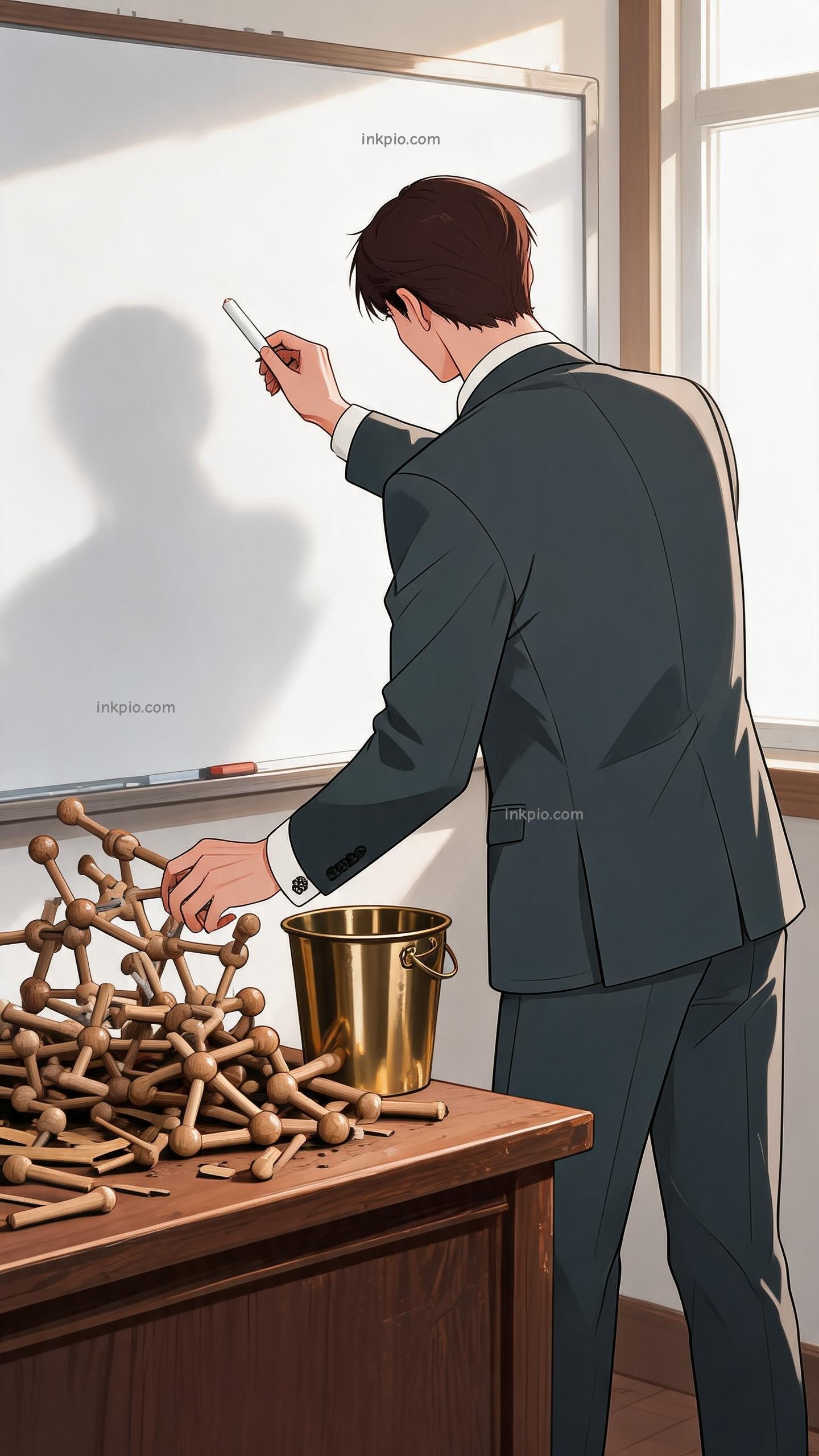

The wooden hooks snapped with a dry crack, splintering under the pressure of Gilbert N. Lewis’s thumb. It was 1916, and his desk looked less like a scientist’s workspace and more like the aftermath of a child’s tantrum. Broken springs, painted spheres, and shattered pegs littered the surface. For years, chemists had treated atoms like mechanical toys, assuming invisible hooks or magnetic clasps held matter together. But methane refused to play along. Carbon grabbed exactly four hydrogen atoms—no more, no less. The physical models offered no reason for this precision, only clumsy approximations that failed under scrutiny.
Lewis felt a creeping isolation. While his peers clung to the comfort of visible mechanics, he sensed they were building castles on sand. The macroscopic world of levers and pulleys could not explain the silent, invisible dance of the micro-world. He picked up a fractured wooden ball, turning it over in his palm. It felt dead. Static. Atoms were not static; they were desperate. They sought completion. This realization brought a sudden, sharp clarity: he had to abandon the tangible to understand the real.
He swept the debris into the trash bin. The sound of wood hitting metal echoed in the quiet lab, marking the end of an era. Lewis reached for a piece of chalk, its dust coating his fingertips. He turned to the blackboard, not as a teacher, but as an architect clearing a site. He imagined chemical bonding not as a mechanical lock, but as a social contract. A card game. Every atom wanted a full hand of eight cards to feel secure. If an atom held only four, it did not sit idle. It reached out, finding another player, and shared its cards right down the middle.
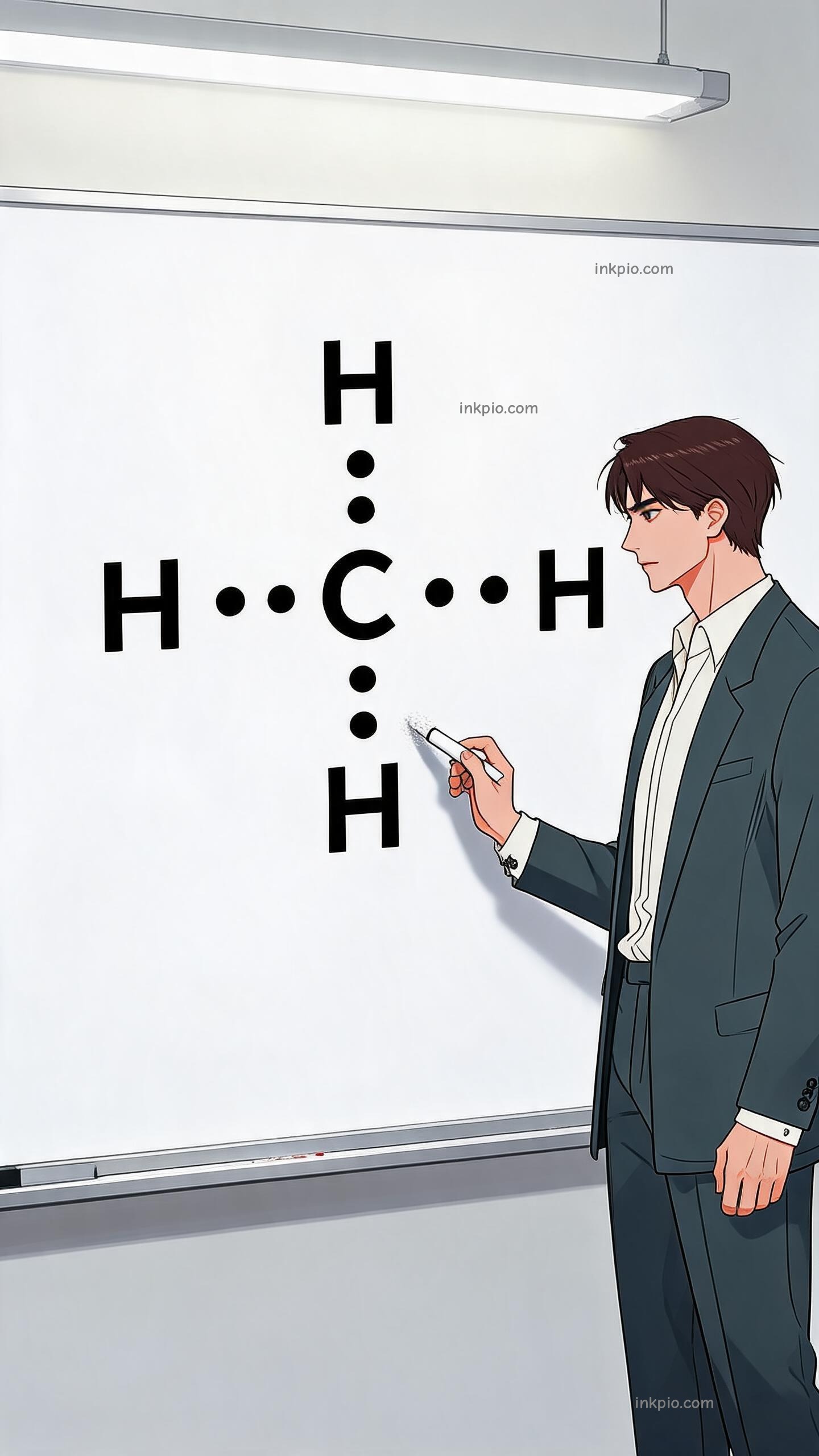
The input was the loose, restless outer electrons. The operation was sharing them in pairs. The output was stability. This simple logic replaced complex, failing mathematics. Lewis wrote a large 'C' for carbon on the slate. Around it, he placed four 'H's for hydrogen. Then came the radical gesture. He did not draw lines or springs. Between the carbon and each hydrogen, he drew two small, precise dots. These dots represented the shared electron pairs, the invisible glue holding the structure together.
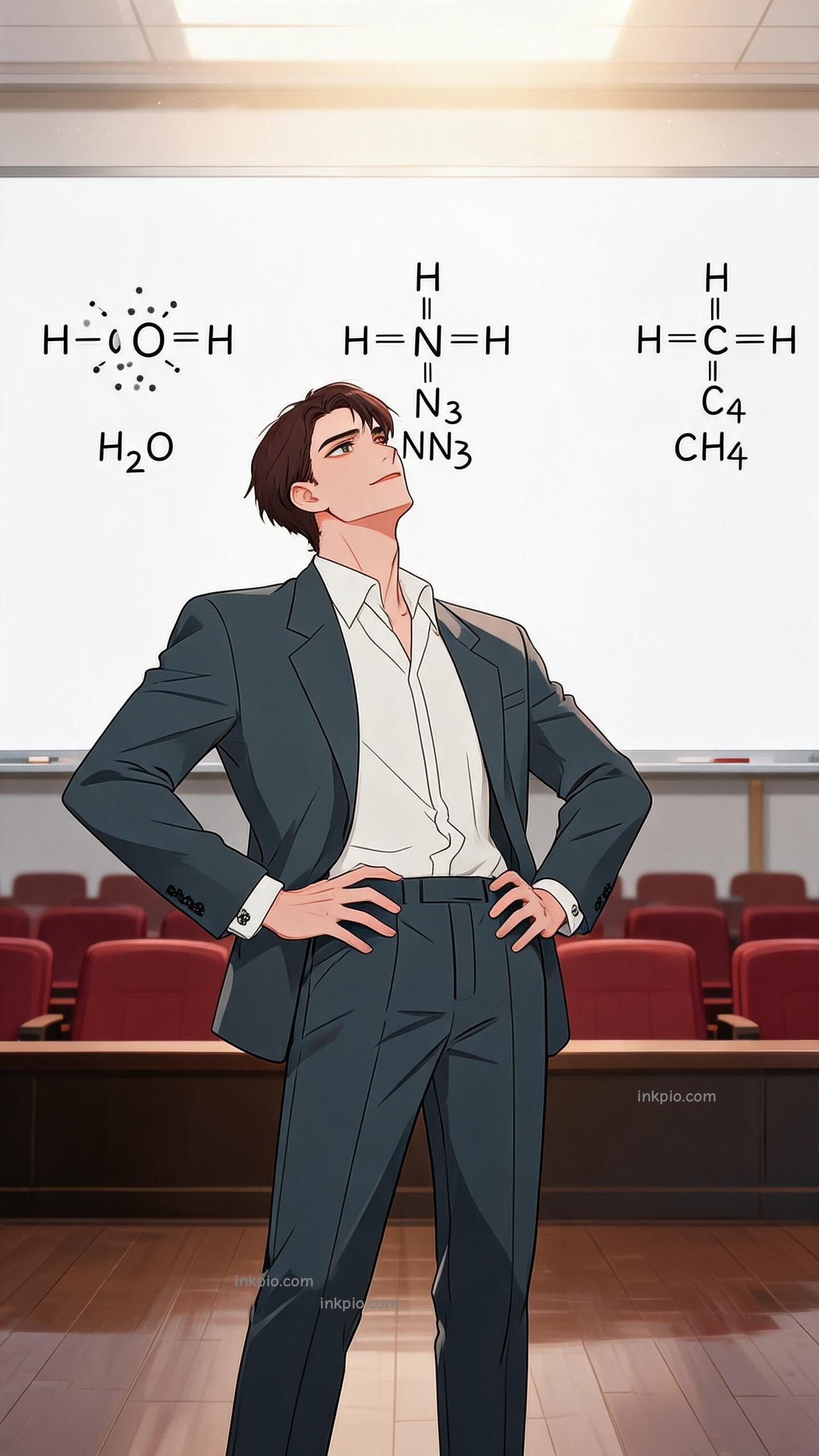
Silence filled the room, but it was no longer heavy with confusion. The chaos of molecular geometry suddenly aligned. The dots explained why carbon bonded with exactly four hydrogens. It boiled down to a single, elegant rule: atoms share until they each possess eight on the outside. The octet rule was born not from a machine, but from a metaphor of human connection. Lewis stepped back, chalk dust settling on his sleeves. He looked at the rows of dots, stark white against the dark board. They were simple, almost childish, yet they held the weight of the universe.
That same year, he published 'The Atom and the Molecule.' The paper did not shout; it whispered a new truth. Colleagues read it with skepticism at first, then with dawning recognition. Lewis had handed chemistry its fundamental architectural blueprint. He sat alone in his office later that evening, the gas lamp flickering. The broken wooden toys were gone, replaced by something far more durable. He traced the air with his finger, drawing invisible dots between his own hands. The world had not changed, but his way of seeing it had. The silence in the lab was no longer empty; it was structured, held together by pairs of unseen points.