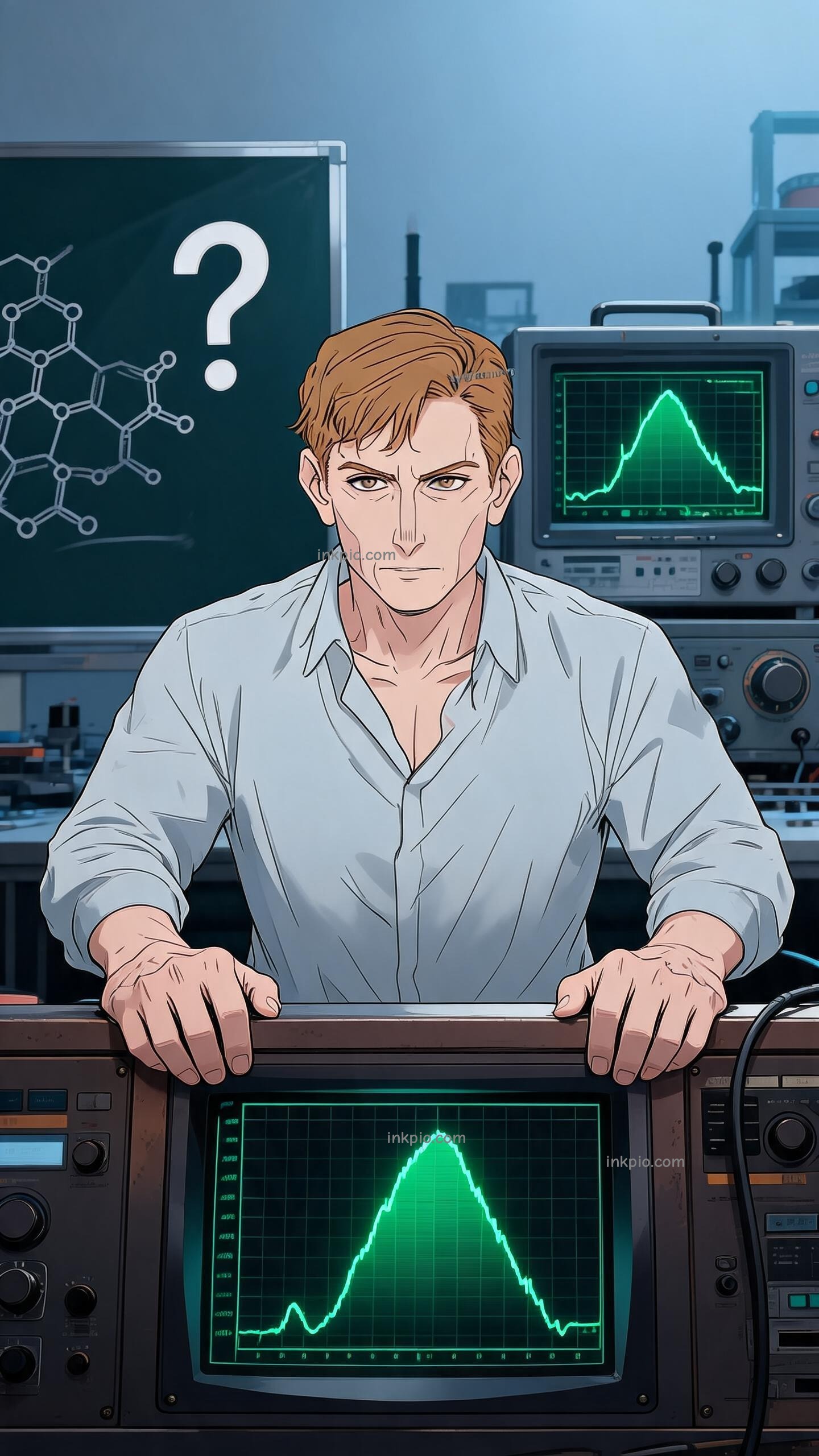




Maxwell’s equations predicted invisible ripples moving through empty air. The heavy brass coils on the oak table stayed completely silent. Everyone in the physics community told Heinrich Hertz to drop the experiment. They thought he was chasing a mathematical ghost. He spent weeks in a drafty Karlsruhe lab, tweaking grounded wires and forcing electricity through heavy direct circuits. The receiver never blinked. If he walked away empty-handed, his standing at the university would vanish.
Frustration finally pushed him to strip the setup down to bare metal. He ripped out the thick copper grounding cables and dragged a simple wire loop to the far end of the room. Think of it like placing two identical tuning forks on opposite ends of a long table. You do not need a string tying them together, and if you strike one, the vibration travels through the air and shakes the second one awake. Hertz just needed his transmitter and receiver to hum at the exact same invisible pitch.
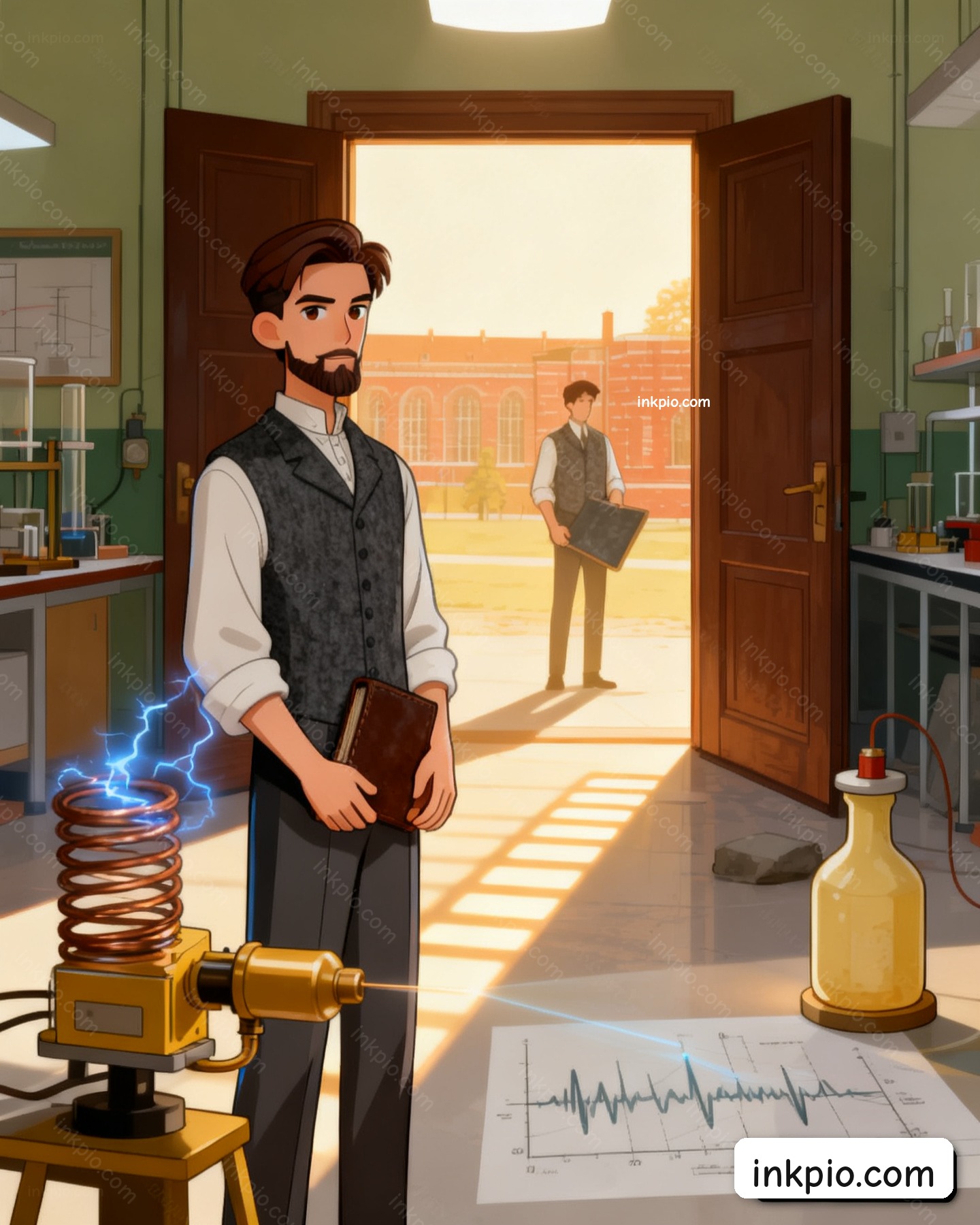
He dimmed the lamps and waited in the dark. A sharp crack echoed from the main induction coil, and Hertz leaned toward the isolated copper ring. A microscopic blue spark leaped across its tiny gap, jumping at the exact same instant the transmitter fired. He rotated the loop slightly, and the flash grew steadier, proving the energy rode a resonant wave straight through empty space instead of crawling along a cable.
He spent the following nights pacing the room with a measuring rod and a slate board. In November 1887, Heinrich Hertz successfully generated and detected radio waves in his Karlsruhe laboratory. Hertz measured the wavelength and velocity of the waves, proving they matched the speed of light predicted by Maxwell's equations. The chalkboard full of crossed-out math suddenly made perfect sense. He finally set his notebook down and let out a slow breath, watching the invisible world walk right into his room.