
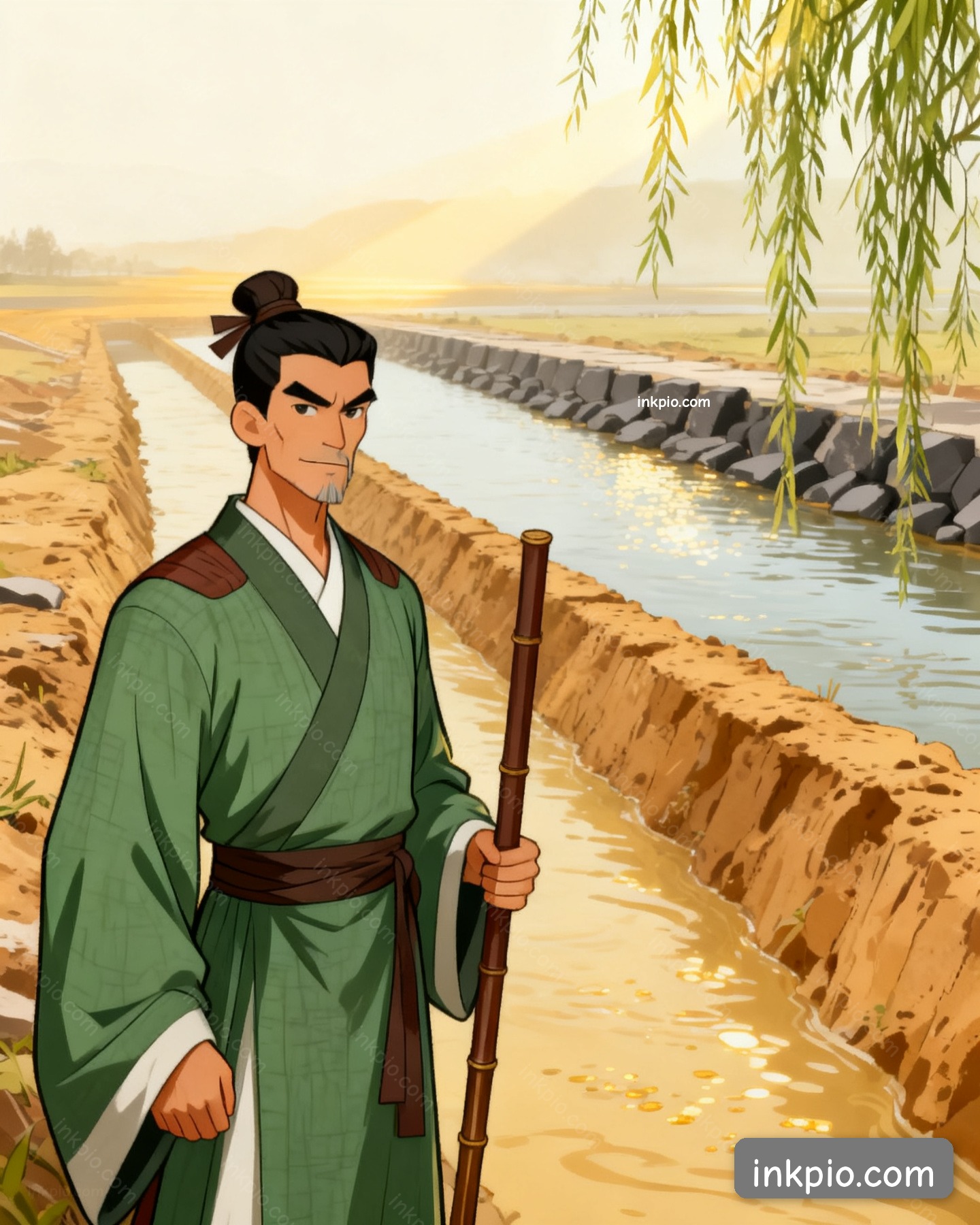

The Yellow River didn’t care about imperial grain shipments. In 1351, it kept pushing against the Grand Canal, turning vital trade routes into mud. The capital needed grain, and the river refused to cooperate.
Engineers kept digging steeper ditches to flush the floodwaters through. The plan backfired every single time. Fast water acted like a blunt chisel, tearing apart the earthen banks and leaving the crews scrambling to patch holes that only grew wider. Jia Lu stood by the collapsing edges, watching the rising water erase hours of work by sunset. The empire’s lifeline was choking, and throwing more dirt at the problem just made the mud pile up faster.
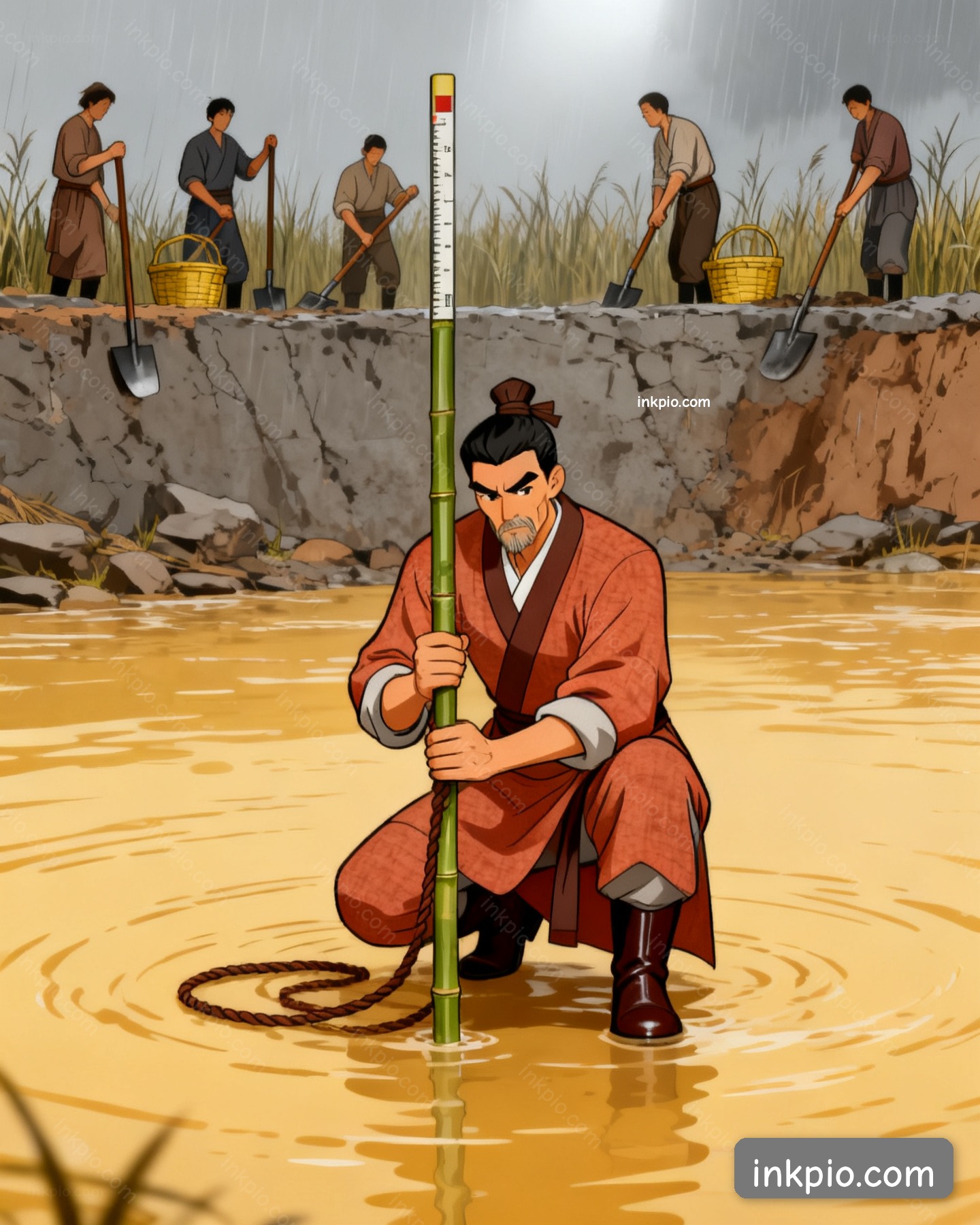
He noticed a simpler answer while pacing the wet riverbank. A fallen leaf drifted smoothly along a natural bend, while a freshly cut straight trench choked on its own silt. Jia Lu drove two wooden stakes into the mud and balanced a clear bamboo tube between them. The water inside settled into a dead-straight line, letting him measure the exact drop needed over a set distance. That one-to-two-hundred ratio worked like a long loading ramp instead of a steep stairway. It told the current how fast to run, keeping the heavy sediment suspended without gouging out the banks.
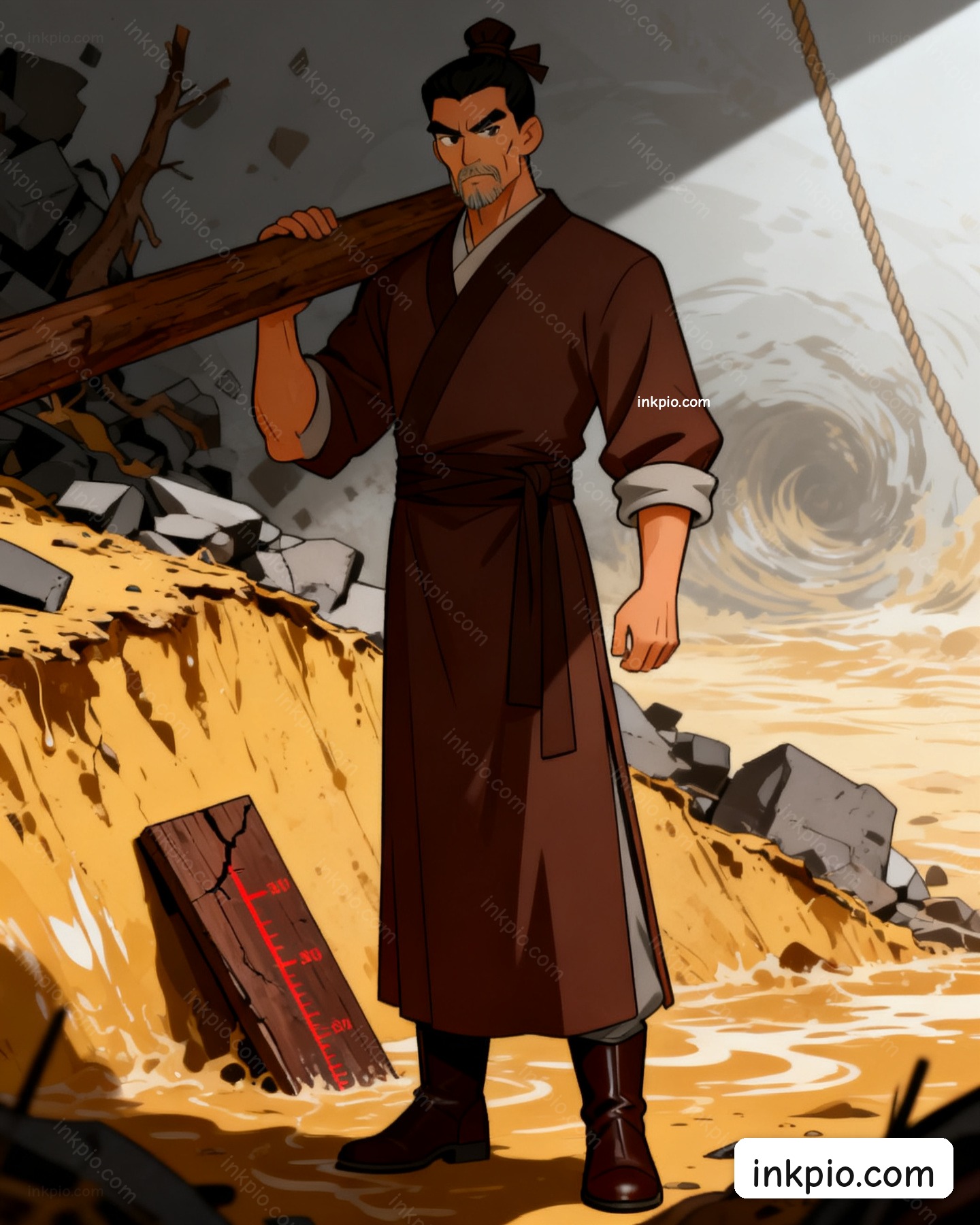
Jia Lu led the diversion project himself, directing one hundred fifty thousand workers to restore the Grand Canal's navigability. They anchored the new route with heavy stone cribs and traded frantic digging for careful grading. The water finally settled into a steady pace. It carried the yellow silt downstream instead of chewing through the sides. Future scribes would copy the numbers into the Yuan Shi, but on that muddy morning, the real proof simply flowed past his boots.
The channel finally breathed easy. The current moved heavy silt downstream without tearing the banks. Grain barges slid through the water, keeping the capital fed.