


The river chewed through limestone piers and spat the pieces downstream. Every summer flood broke the crossing, and the capital’s grain barges sat stranded in the mud. Shen Kuo paced the bank, staring at cracked masonry and soaked ledgers. He had spent months drawing rigid triangles and loading wooden scale models, but the stiff joints always snapped under the current. Straight lines just couldn’t outfight moving water.
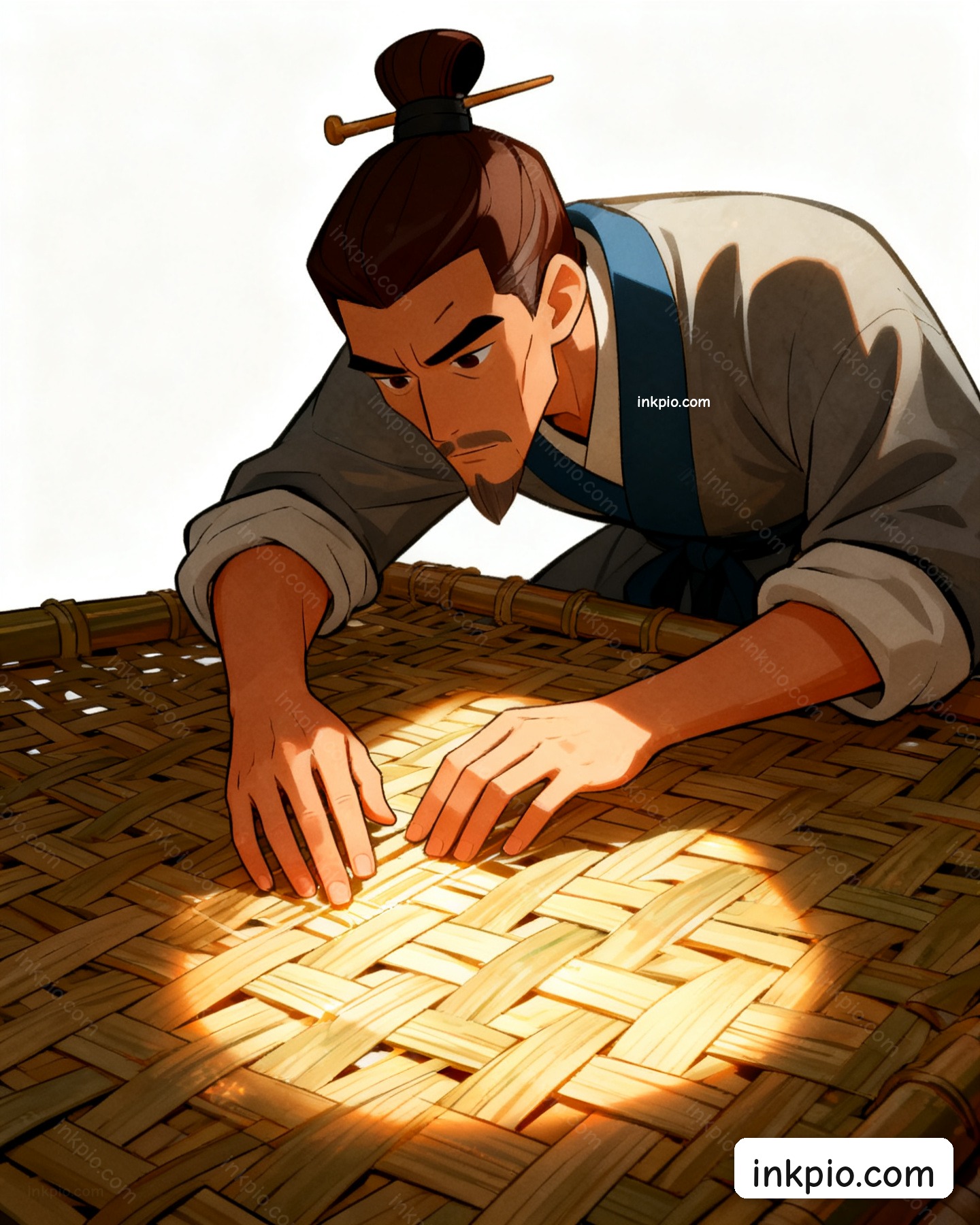
He needed a frame that bent instead of resisting. A local reed weaver handed him the clue. The craftsman laid flexible strips over and under each other, pulling the tension tight. Shen Kuo traced the intersecting pattern with his finger. Pushing straight down on the weave didn’t crush it. The crossing strands simply caught the pressure and shunted it sideways, turning heavy vertical weight into steady horizontal thrust. Rigid timber could copy that exact behavior if he calculated the angles right.
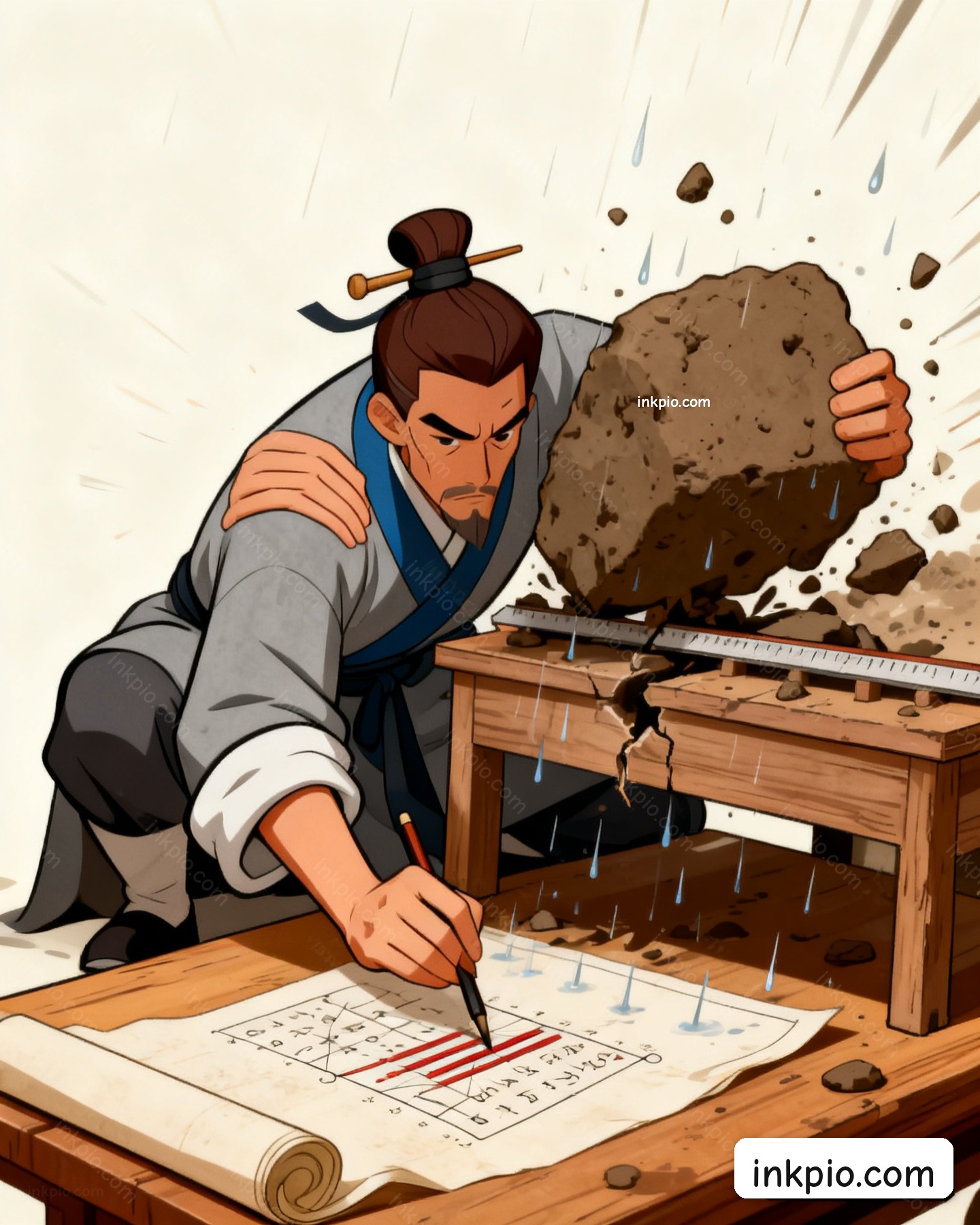
He cleared his drafting table and mapped the weave onto heavy pine logs. The input numbers were straightforward: the crushing weight of a loaded grain barge and the exact distance between the two muddy banks. The operation meant carving each beam to cross at a precise overlap angle, creating just enough surface contact so friction would lock the joints without nails. When the boats rolled over the top, the downward push traveled along the crossed timbers instead of plunging straight down. That friction redirected the force outward, bracing the entire structure against the opposite banks. The calculation turned separate heavy planks into a single, self-locking arch.
Carpenters hoisted the timber skeleton in 1032, slotting the crossing beams together to form the Qingzhou Rainbow Bridge. Not a single stone pier stood in the channel. When the next flood season arrived, the swollen current rushed straight under the clear span. The wood bowed slightly, absorbed the shock, and settled back into place. Shen Kuo later laid out the full mathematical breakdown in volume eighteen of his 1088 Dream Pool Essays, but the river had already tested the design. Grain barges drifted through the open water while the woven timber stood firm against the tide.