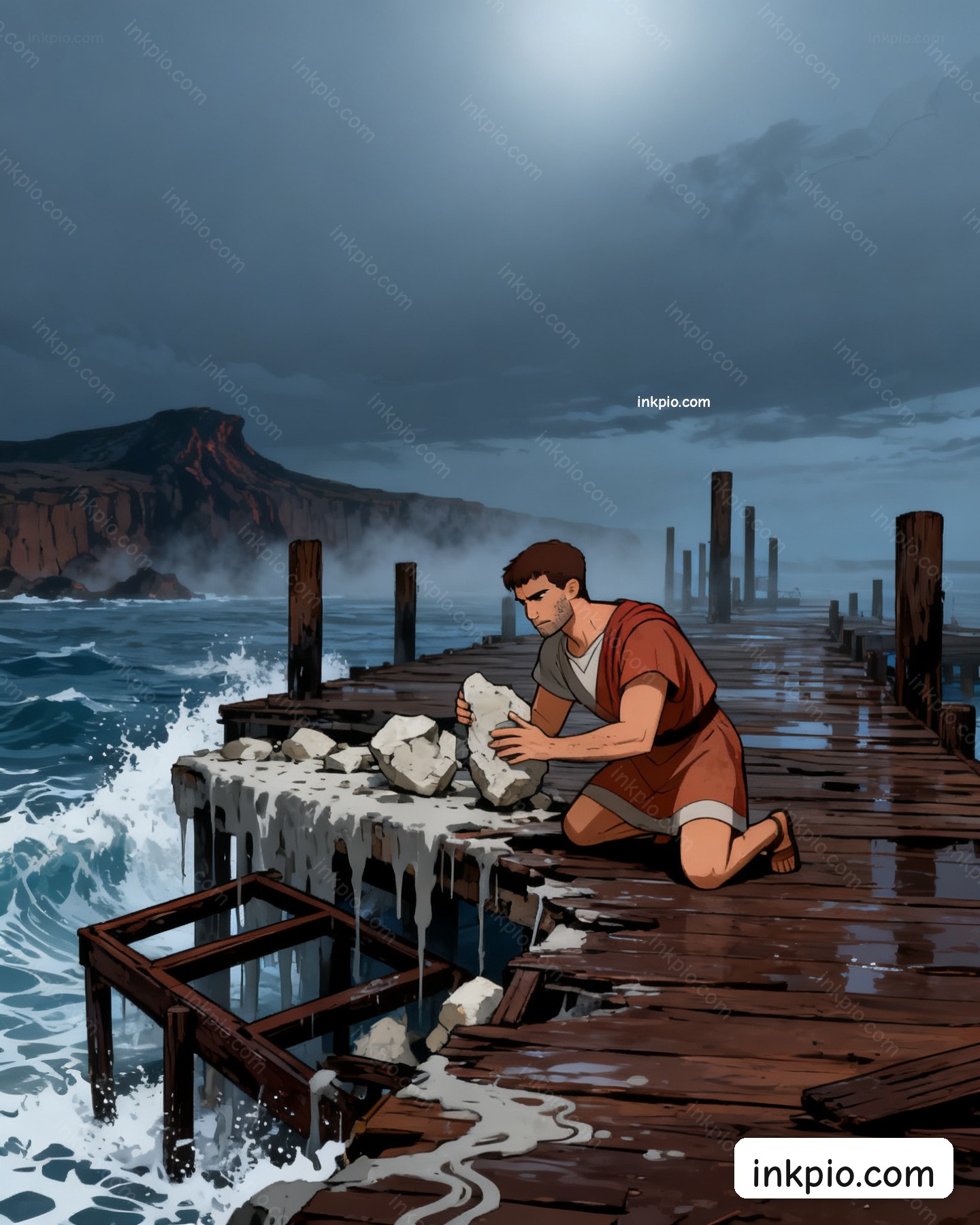
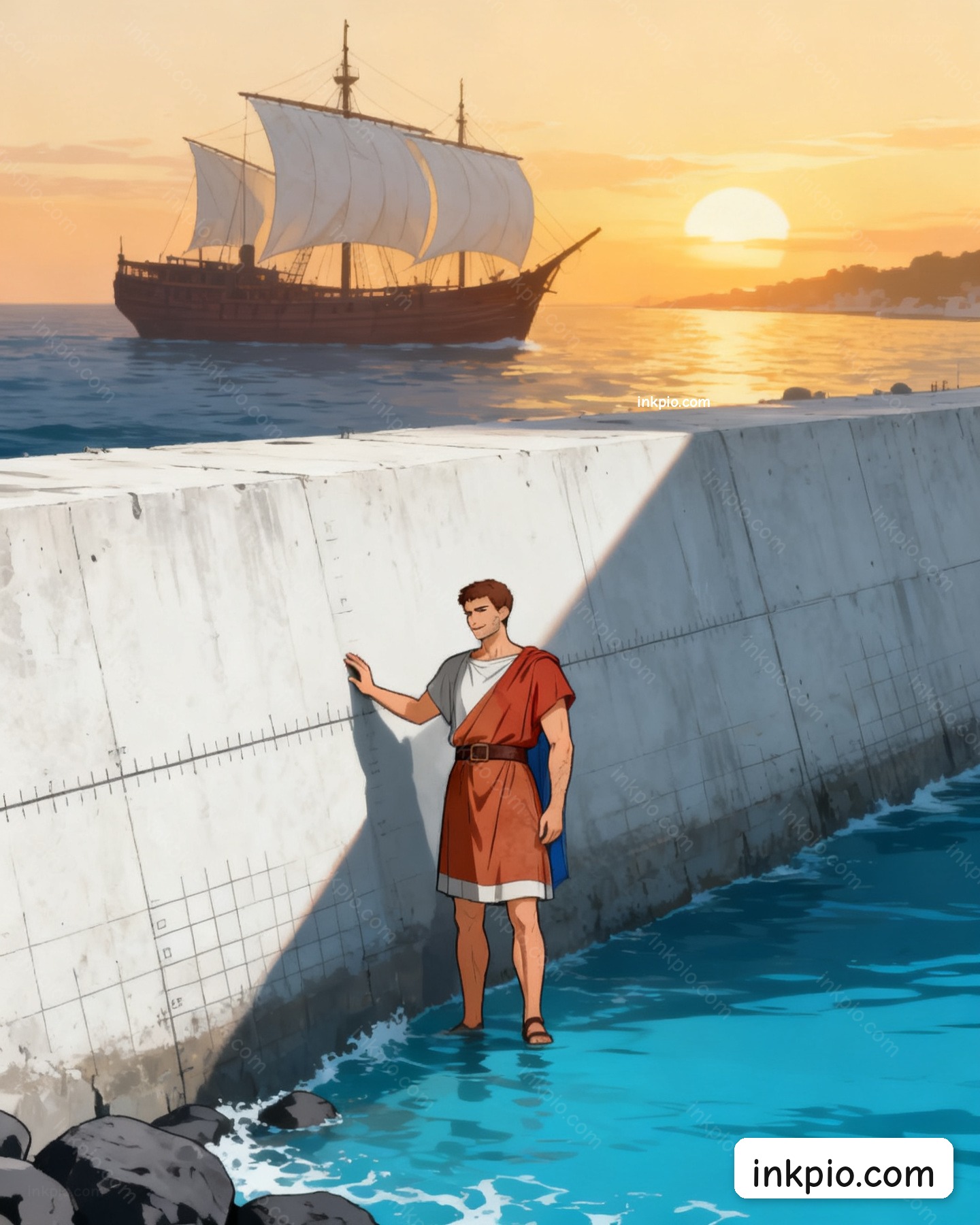

The Bay of Naples kept chewing through their new pier. Workers poured thick lime mortar into timber frames, but the moment the tide rolled in, the gray slurry turned to soup and washed out to sea. Rome needed this harbor to keep the city fed, and every lost batch pushed the grain supply further out of reach. Vitruvius stood on the wet planks, watching another bucket of standard mix vanish before it could set.
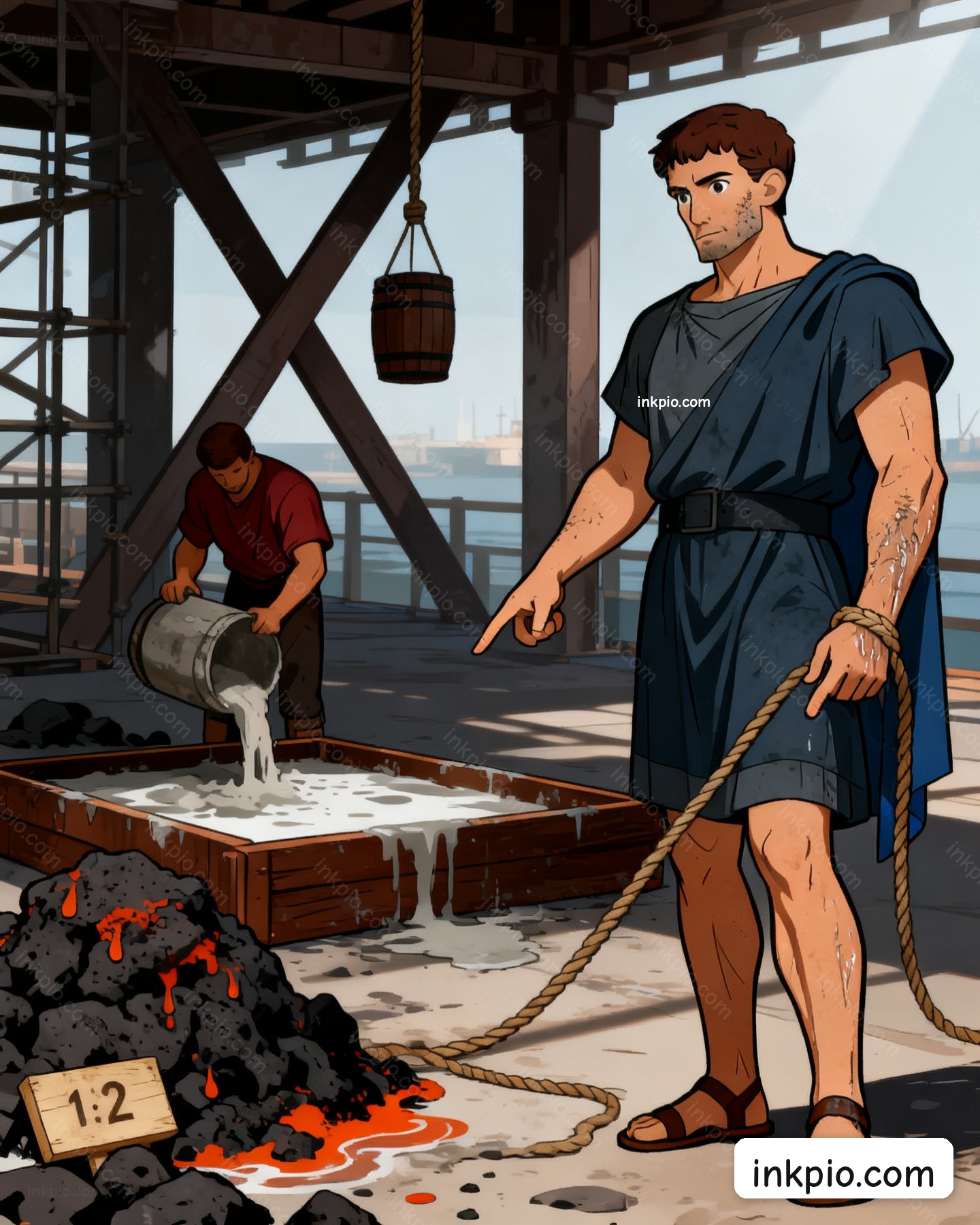
He decided to look at the cliffs near Pozzuoli instead. Nature had already solved the puzzle there. Volcanic dust washing down the slopes met the saltwater and slowly fused into solid rock. So he gathered the black ash, ground it fine, and mixed it with white lime and seawater in a submerged mold. Think of it like a slow oven bake: the saltwater triggers the volcanic dust, releasing a steady heat that knits the loose particles into a tight grid. You pour the wet paste into the ocean, it warms up, and it locks itself into a waterproof stone. The trick turned a messy powder into a reliable building block.
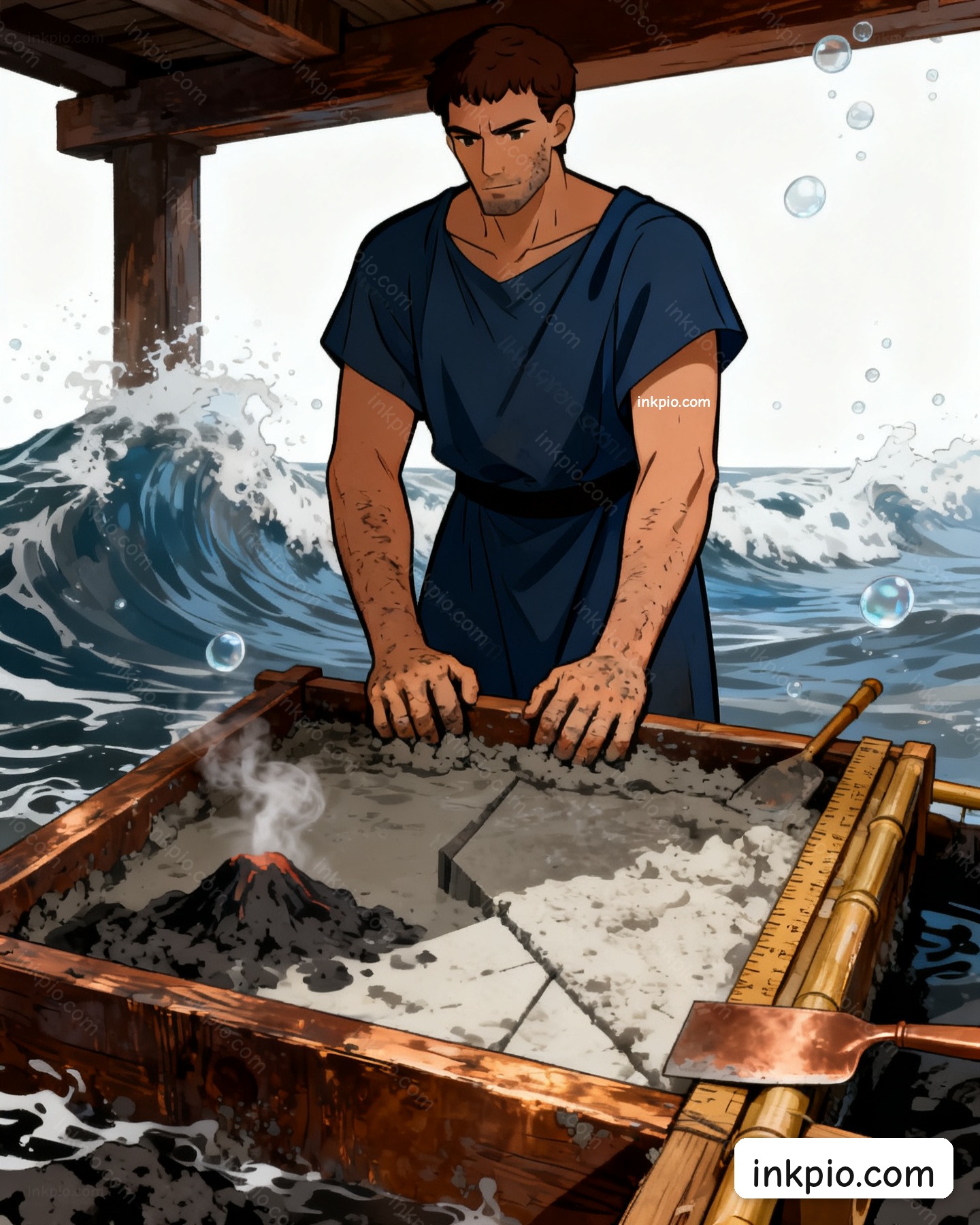
They lowered the mold into the surf and left it alone. Hours later, they pulled out a single, unbroken block that had completely ignored the churning waves. The engineers took the recipe straight to the construction line. They packed the hot mixture into underwater formworks and let the sea cure the foundation itself. Seamless breakwaters rose from the deep, forming a rigid barrier that winter swells simply bounced off of. The harbor floor finally stayed put.
Roman builders finally had a material that fought the tide instead of surrendering to it. Around 100 BC, Roman engineers developed hydraulic concrete using pozzolana ash to lock their ports in place. Vitruvius documented the underwater setting properties of pozzolana-lime mixtures in De Architectura, making sure the secret survived. He rested his palm on the newly set seawall, feeling the faint chemical warmth still radiating through the surface, while heavy merchant ships finally drifted safely into the quiet harbor.