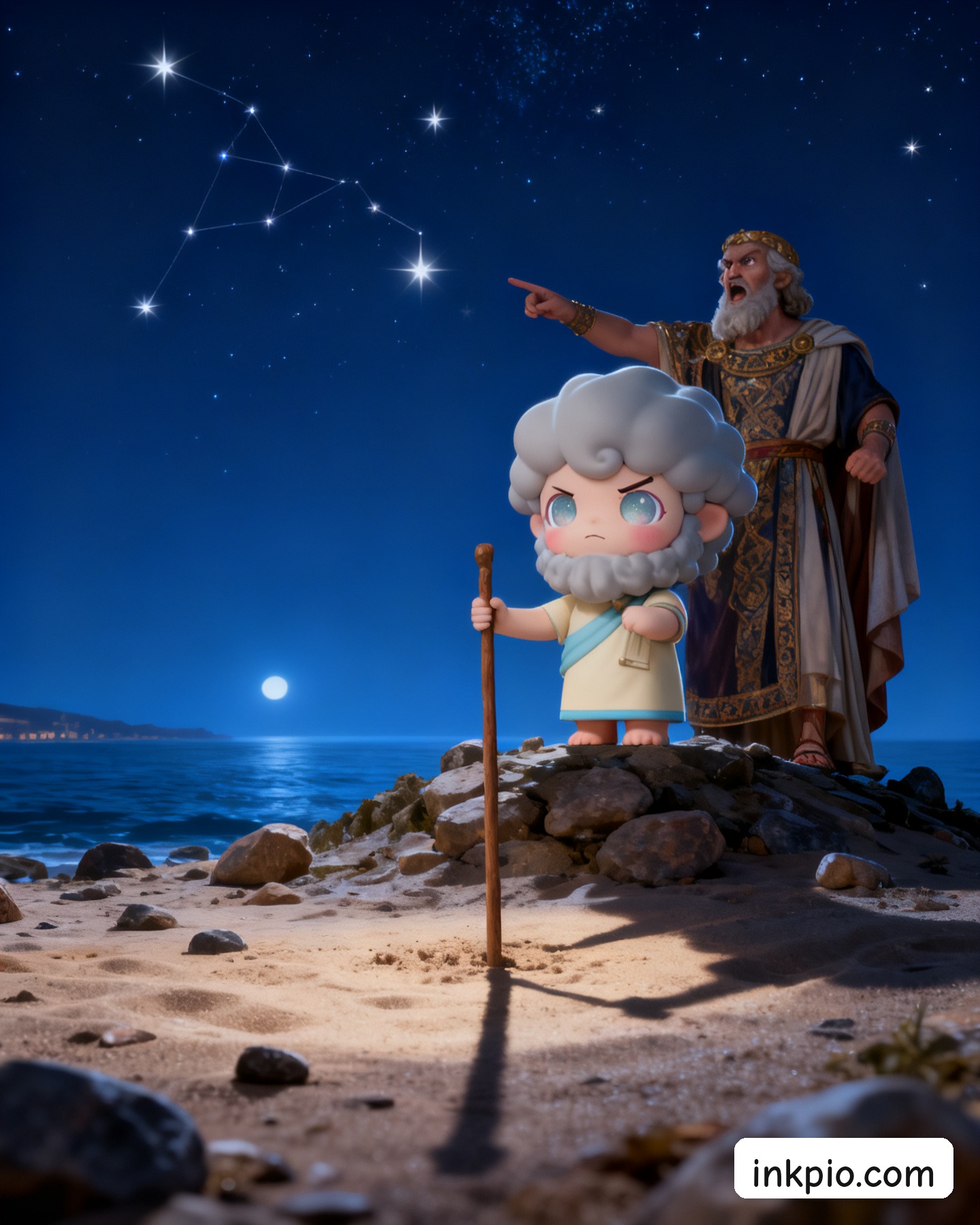
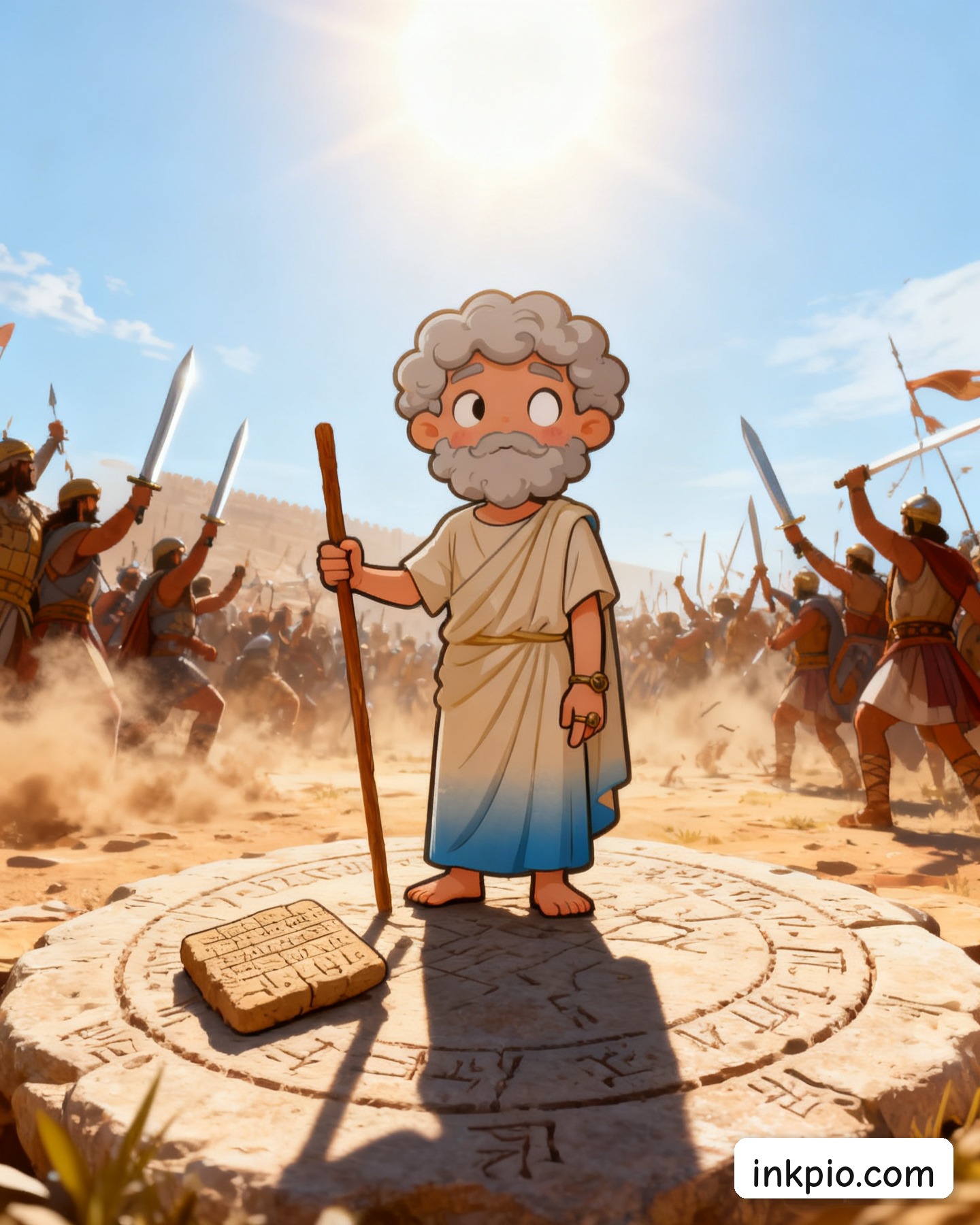
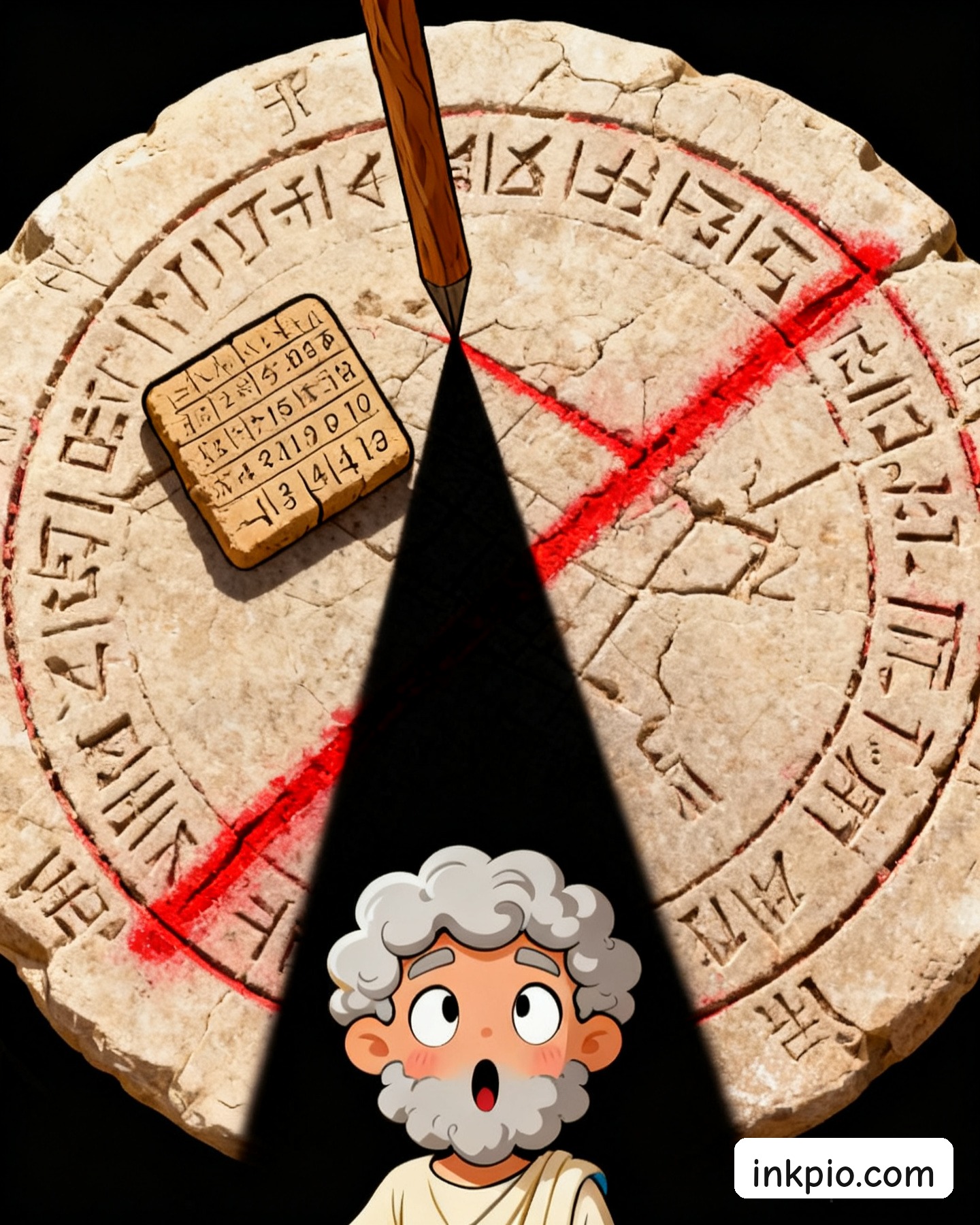
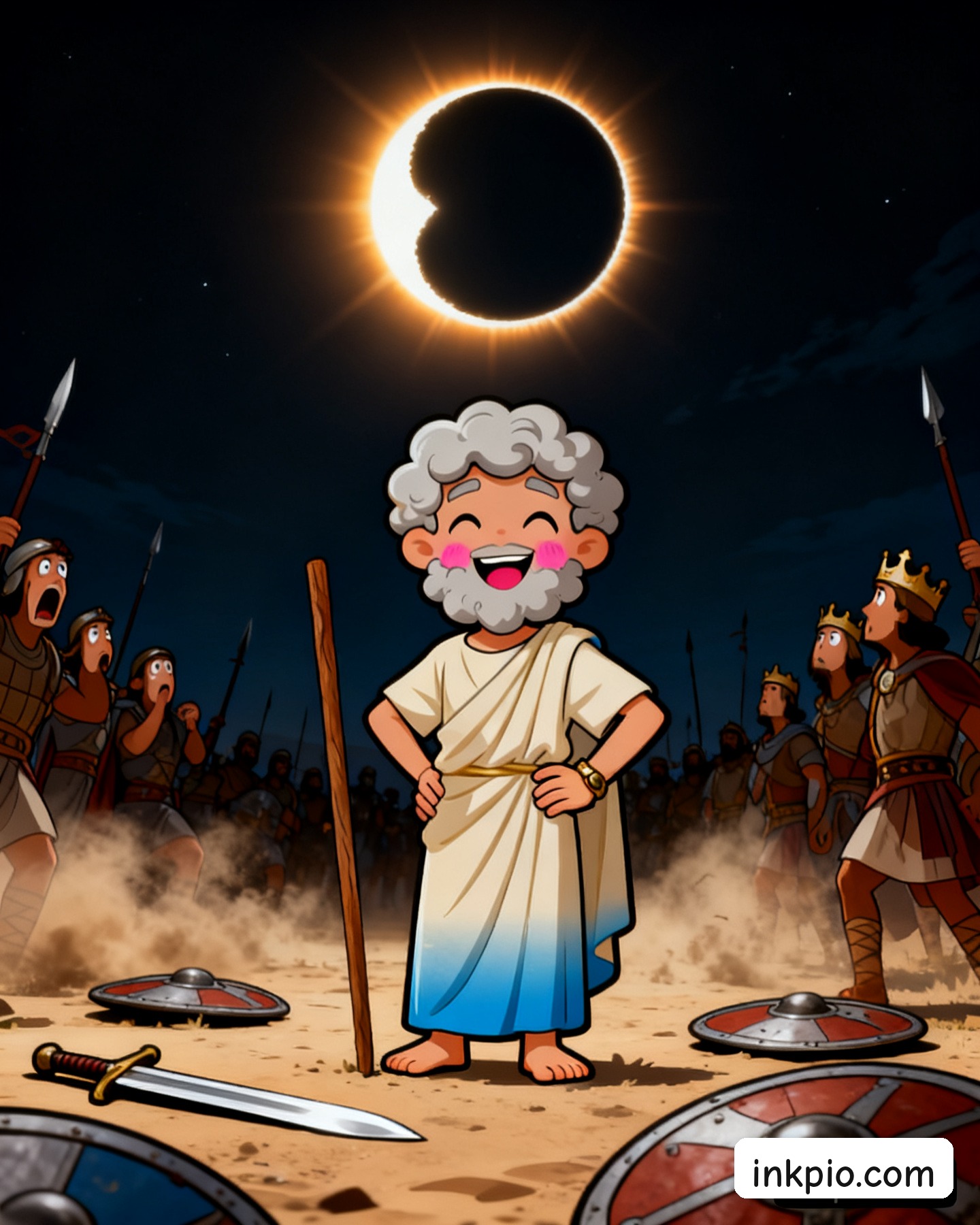

Spears clashed under the noon sun while an old man watched a shadow creep across stone. Thales of Miletus ignored the battle to count days instead of enemies. Lydian and Median soldiers fought nearby, kicking up dust that choked the air around the Halys River. Thales stood barefoot on hot rock, clutching a polished wooden stick like a sacred relic while chaos erupted everywhere. He focused entirely on a limestone slab marked with circles because one wrong move meant death from the failing light.
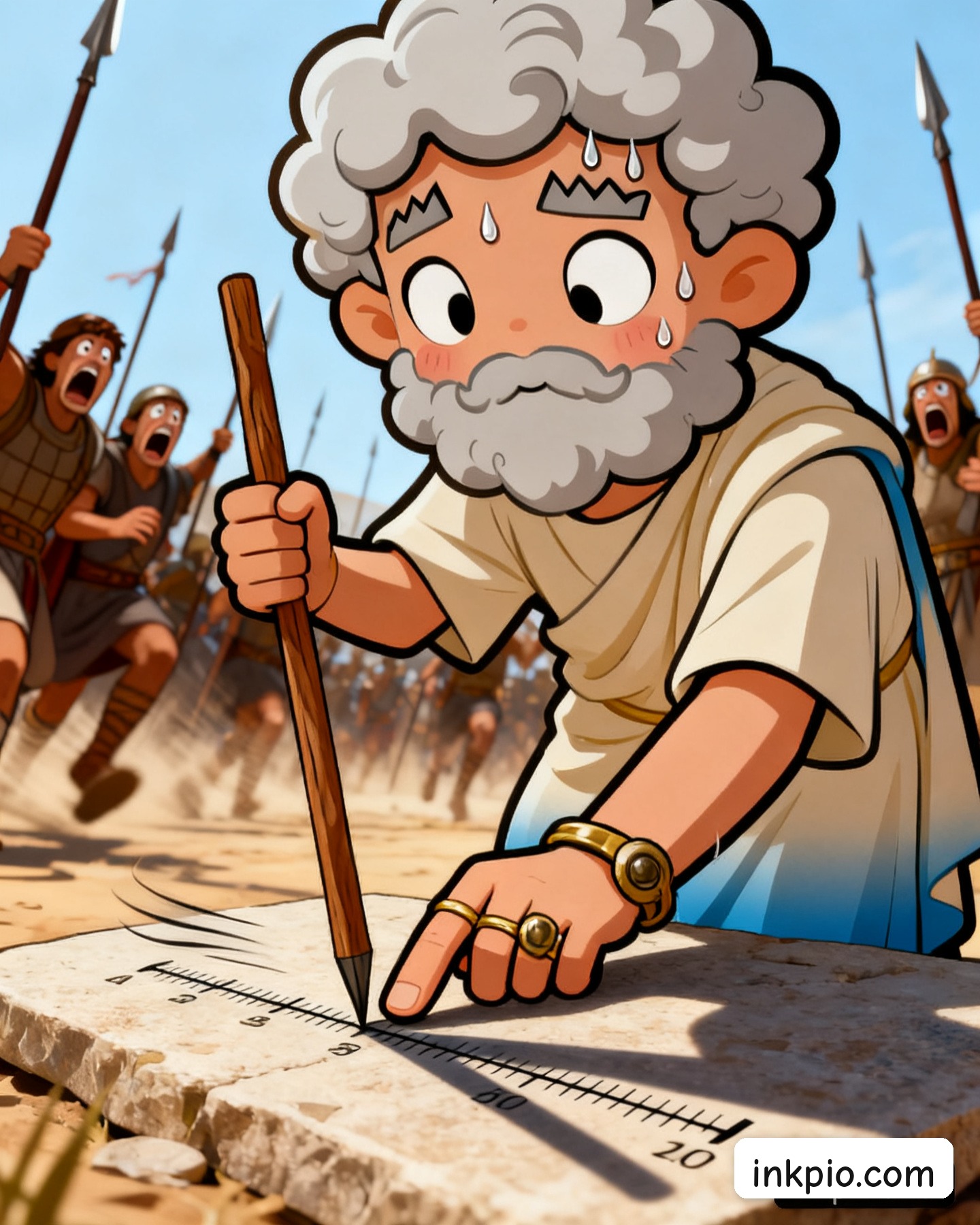
He did not guess when the sky would darken because Babylonian clay tablets at his feet held numbers spanning generations of star-gazers. Thales treated the sun like a clock with a broken gear he could fix using math. He matched the shadow's length against carved marks to find where the cycle stood today. Imagine tracking the moon for years until you see the pattern repeat itself exactly. That patience turned invisible time into a line he could draw on the ground using old records and steady hands.
Noon arrived, and the shadow tip touched the carved red Eclipse Mark line just as the sun began to vanish behind the moon. Herodotus later wrote that day turned into night right then while soldiers dropped their bronze weapons in fear. The light faded to a deep purple-grey, silencing the river bank instantly as kings looked confused. Panic spread faster than any army could march across the dry cracked earth while the old mathematician stood firm in the dimming glow.
Fighting stopped because nobody wants to kill neighbors when gods seem angry, yet Thales did not celebrate the peace treaty forming behind him. He checked his clay tablet first to confirm the numbers matched reality before acknowledging the miracle. Shadows lengthened across the dry earth as two armies walked away from the field bought by a stick and some old numbers. War ended not with a victory shout, but with a whisper of awe as peace settled over the Halys River.