



Textbooks said it couldn't exist. Andre Geim stared at the thick block of graphite on his desk and wondered why physics had to be so stubborn.
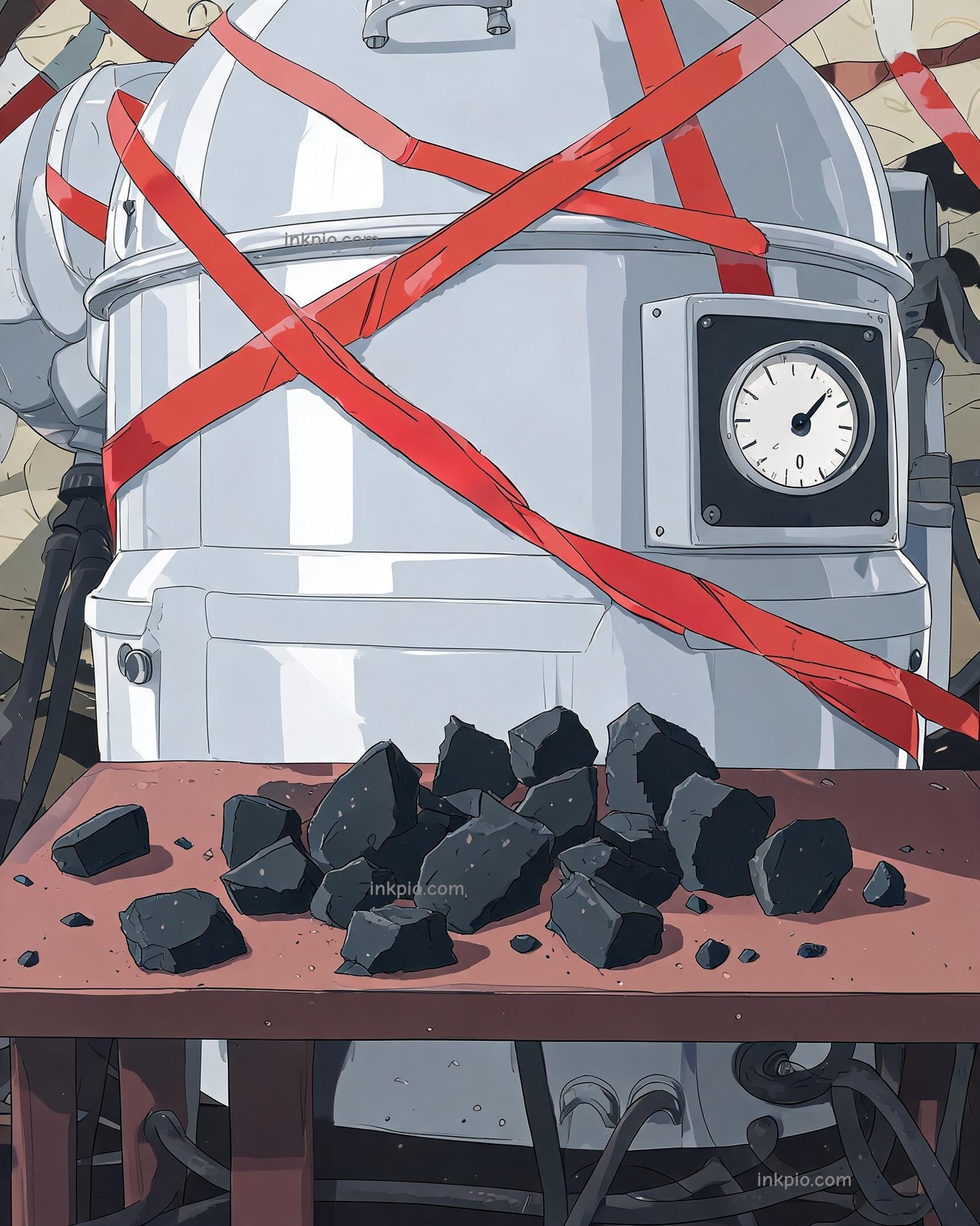
Condensed matter theory had spent decades warning that a crystal just one atom thick would instantly curl up and collapse into a three-dimensional pile. His lab had already wasted months feeding carbon vapor into expensive deposition machines. Those high-tech rigs only spat out clunky, useless flakes that looked like dirty pencil shavings.
Frustrated with the budget-draining gear, Geim decided to strip the material by hand. They used mechanical exfoliation with standard adhesive tape to obtain a single atomic layer of carbon. The process worked like peeling an onion down to its thinnest skin: press the tape onto a graphite block, peel it back, fold it over, and pull again. Each split halved the thickness. They repeated the routine dozens of times, leaving the million-dollar equipment forgotten in the corner.
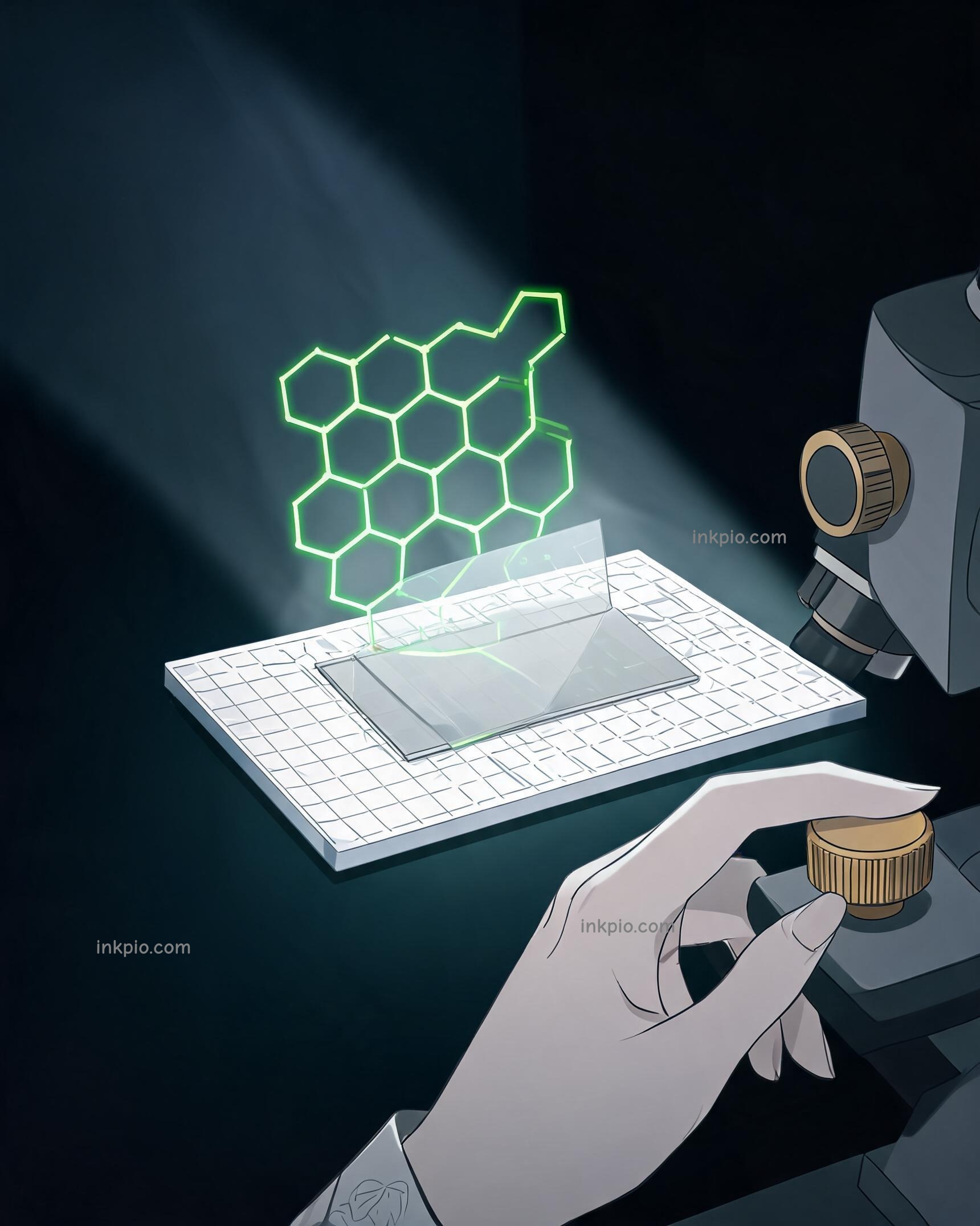
They carefully transferred the microscopic scraps onto a silicon wafer and slid it under an optical microscope. Under the lens, a faint, translucent scrap caught the light. It revealed a flawless honeycomb grid of carbon atoms, stretching out in every direction. The lattice didn't crumple or fold into a messy ball. It sat completely flat, stable as a sheet of glass. Andre Geim and Konstantin Novoselov isolated graphene at the University of Manchester in 2004, and the clear pictures finally proved the old thermodynamic rules completely wrong.
A piece of tape that cost pennies had quietly torn down a century-old assumption in materials science. The Nobel committee later noted that they unlocked a new era of electronics with nothing but common office supplies. Geim and Novoselov turned off the microscope that evening, knowing their simple experiment had changed the field forever. The flat carbon sheet stayed perfectly still, waiting to be put to work.