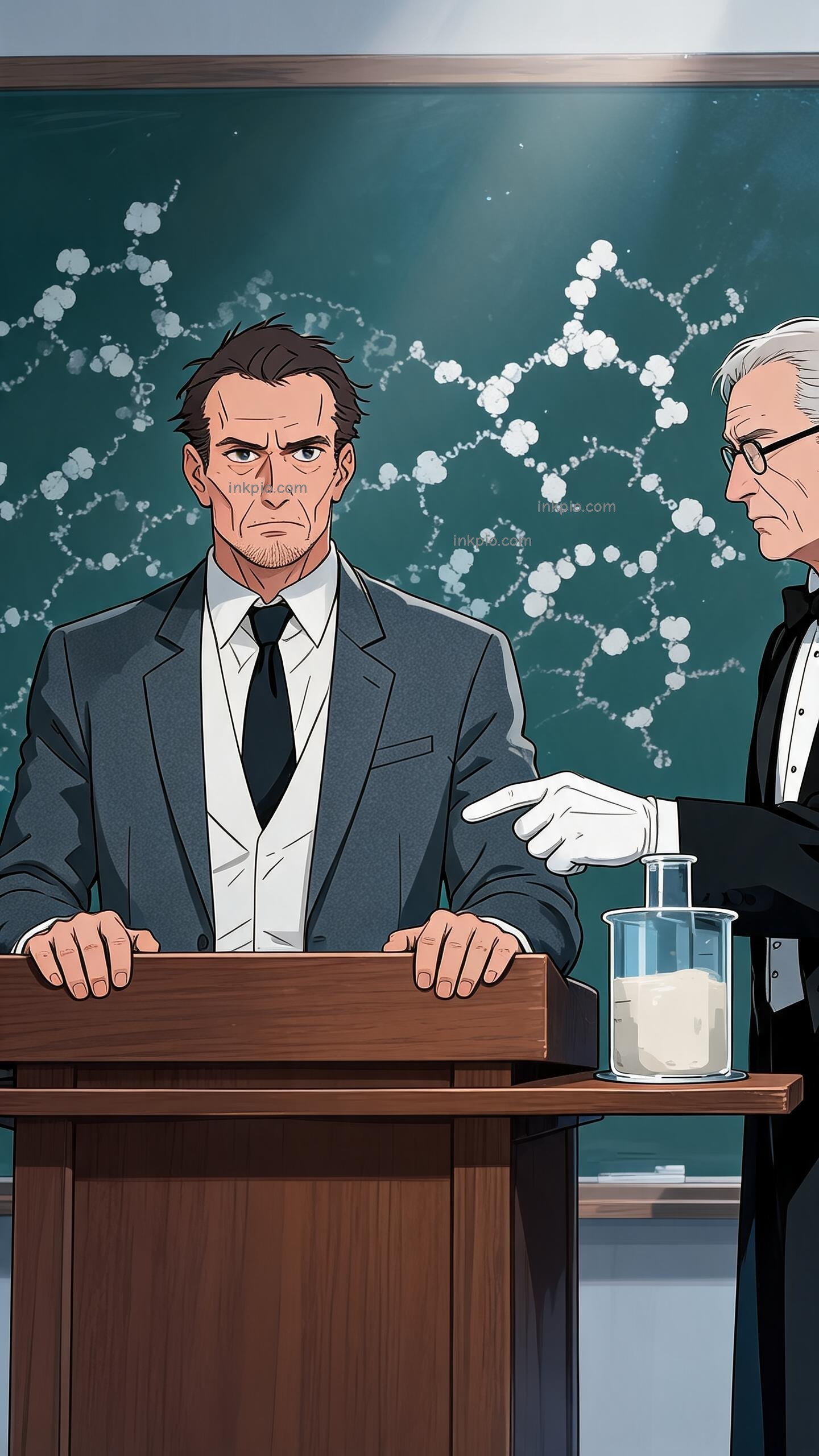

The air in the Zurich lecture hall was thick with cigarette smoke and intellectual arrogance. In 1920, the chemical elite sat with arms crossed, watching Hermann Staudinger present his radical idea. To them, rubber and cellulose were messy accidents—tiny molecules clumped together by weak, fleeting forces. They called it the 'colloid' theory. It was safe. It was conventional. And it was wrong.
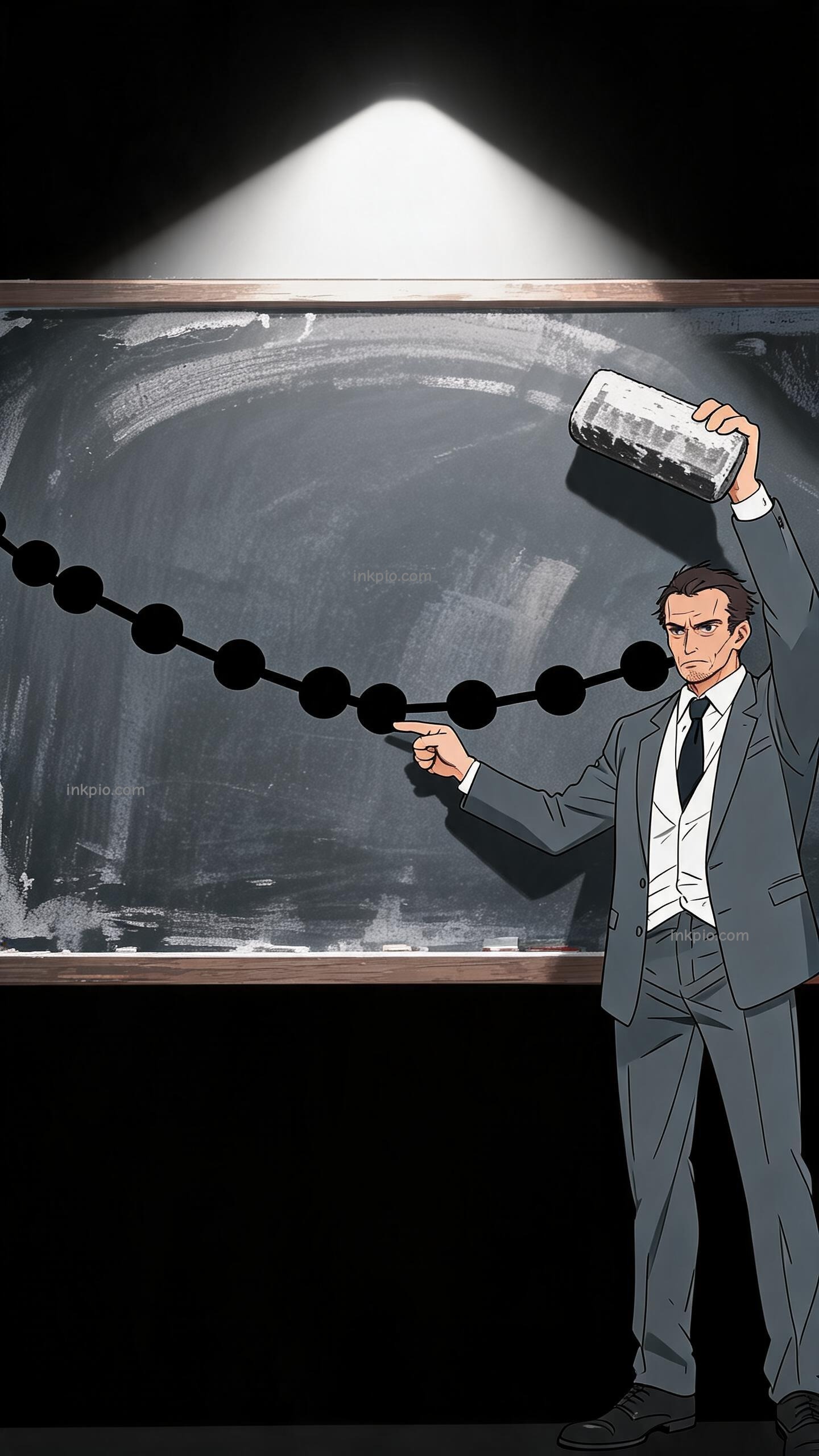
Staudinger saw something else entirely. He looked at the same rubber and visualized a giant, unbroken chain. Thousands of atoms locked together by strong covalent bonds, stretching into endless lines. When he voiced this, the room didn't just disagree; it sneered. Colleagues dismissed him as a mere 'rubber chemist,' a technician playing with toys rather than a scientist uncovering truth. The laughter wasn't loud, but it was cold. It stripped away his credibility layer by layer.
Isolation is a quiet companion for anyone challenging a paradigm. Staudinger returned to his lab, not with anger, but with a stubborn, almost painful clarity. He knew that arguing with people who refused to see was useless. He needed evidence that could not be mocked. He needed the physical world to speak for him.
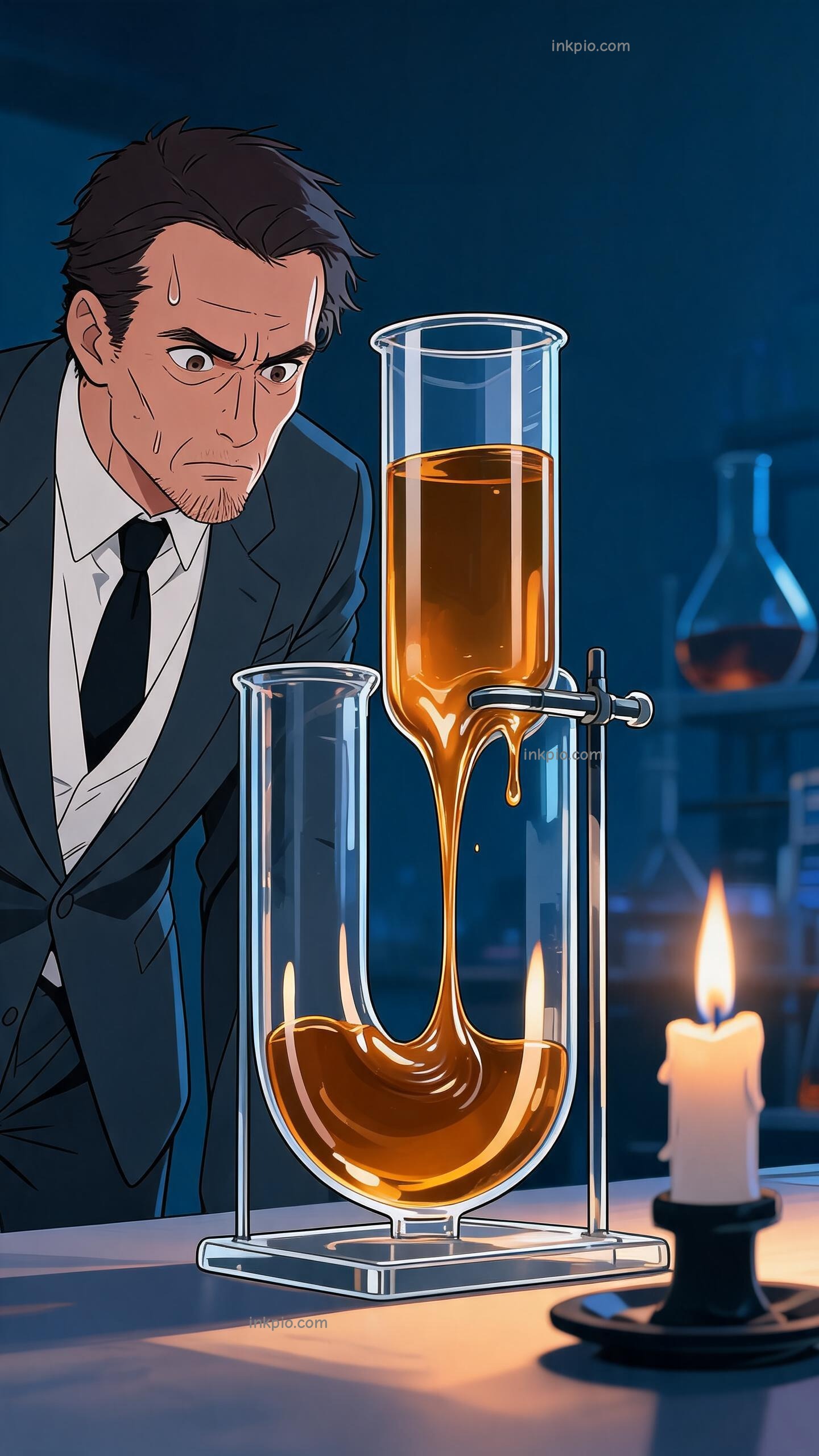
He turned to a simple glass tube and a viscous liquid. The logic was deceptively simple, yet profound. Think of stirring sugar into water. The crystals dissolve into independent, tiny pieces. The water flows freely, unchanged in its ease. Now imagine dropping a massive, tangled ball of yarn into that same glass. The water drags. It resists. It turns thick, like syrup, because the long threads tangle and pull against each other.
Staudinger measured this resistance, known as viscosity. If the colloid theorists were right, the tiny clumps would break apart in solution, leaving the liquid thin and free-flowing. But if his 'macromolecule' theory held true, those giant molecular threads would remain intact. They would stay tangled. They would make the liquid sluggish, heavy with the weight of invisible chains.
The experiments were not dramatic explosions or sudden flashes of light. They were hours of silence. Staudinger watched pale yellow polymer solutions creep through narrow capillaries, drop by agonizing drop. His assistants grew tired. The peers outside his door continued to demand impossible proof for something they insisted did not exist. Yet, the glass tubes did not lie. The solutions remained thick. The chains held.
In 1920, he published 'Über Polymerisation'. It was not a victory lap; it was a declaration of war against established dogma. The resistance did not vanish overnight. For decades, he fought against the strongest resistance, as he would later recall in his Nobel Lecture. He endured the label of outsider, the closed doors, and the silent treatment from the very institutions that should have championed him.
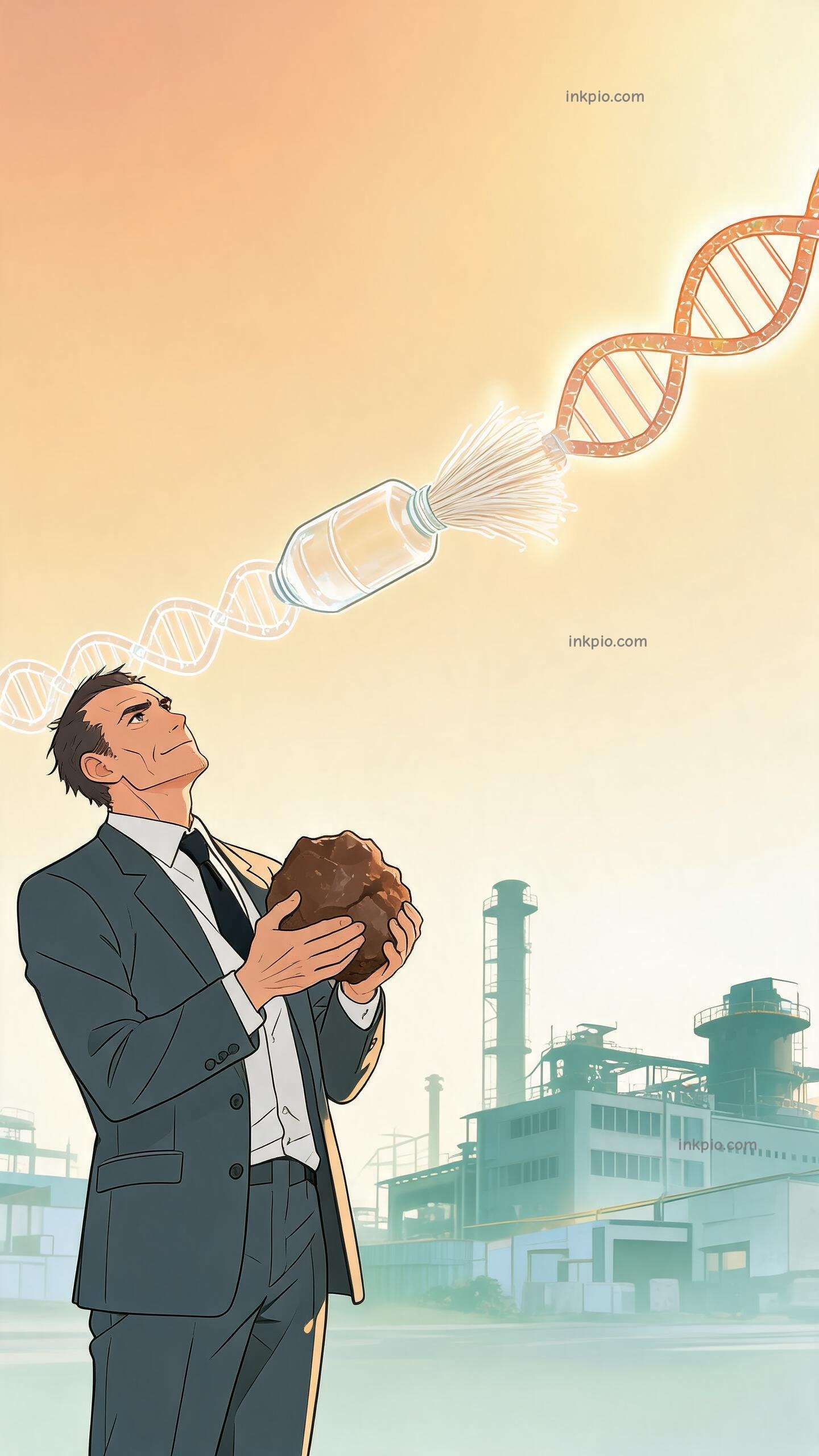
Time, however, is the ultimate judge of truth. The long chains he defended became the skeleton of the modern material world. They explained the strength of synthetic fibers, the flexibility of plastics, and eventually, the structure of DNA itself. The 'messy clumps' were swept from the blackboards, replaced by elegant, continuous lines.
When the Nobel Committee finally awarded him the Chemistry Prize in 1953, the ceremony was formal and distant. Staudinger walked to the podium, an old man now. He accepted the medal, but his mind likely drifted back to those quiet hours in the lab. He remembered the yellow liquid moving slowly through the glass, proving that what others saw as chaos was actually order. He had not just discovered a molecule; he had taught the world how to see the invisible threads that hold reality together.