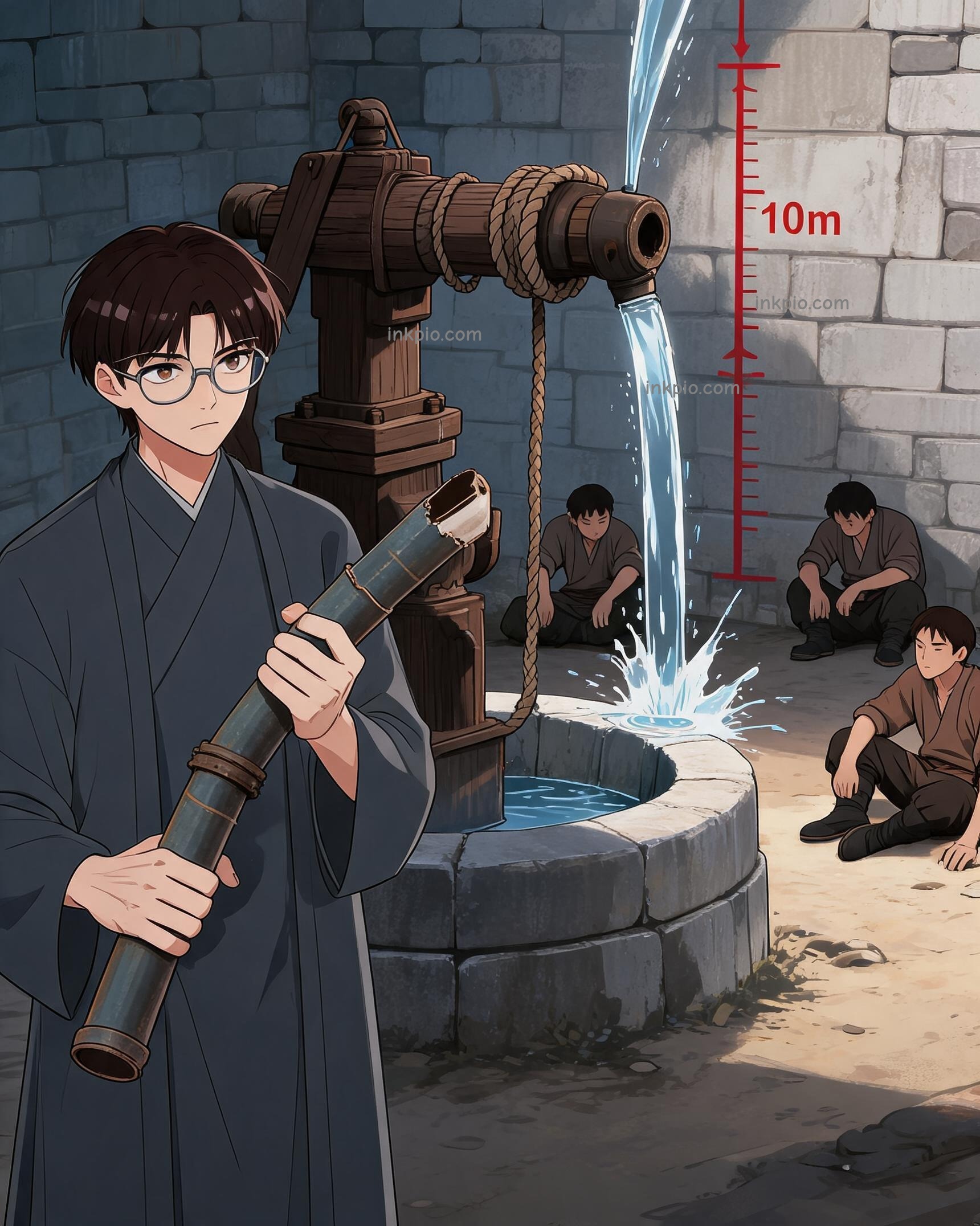
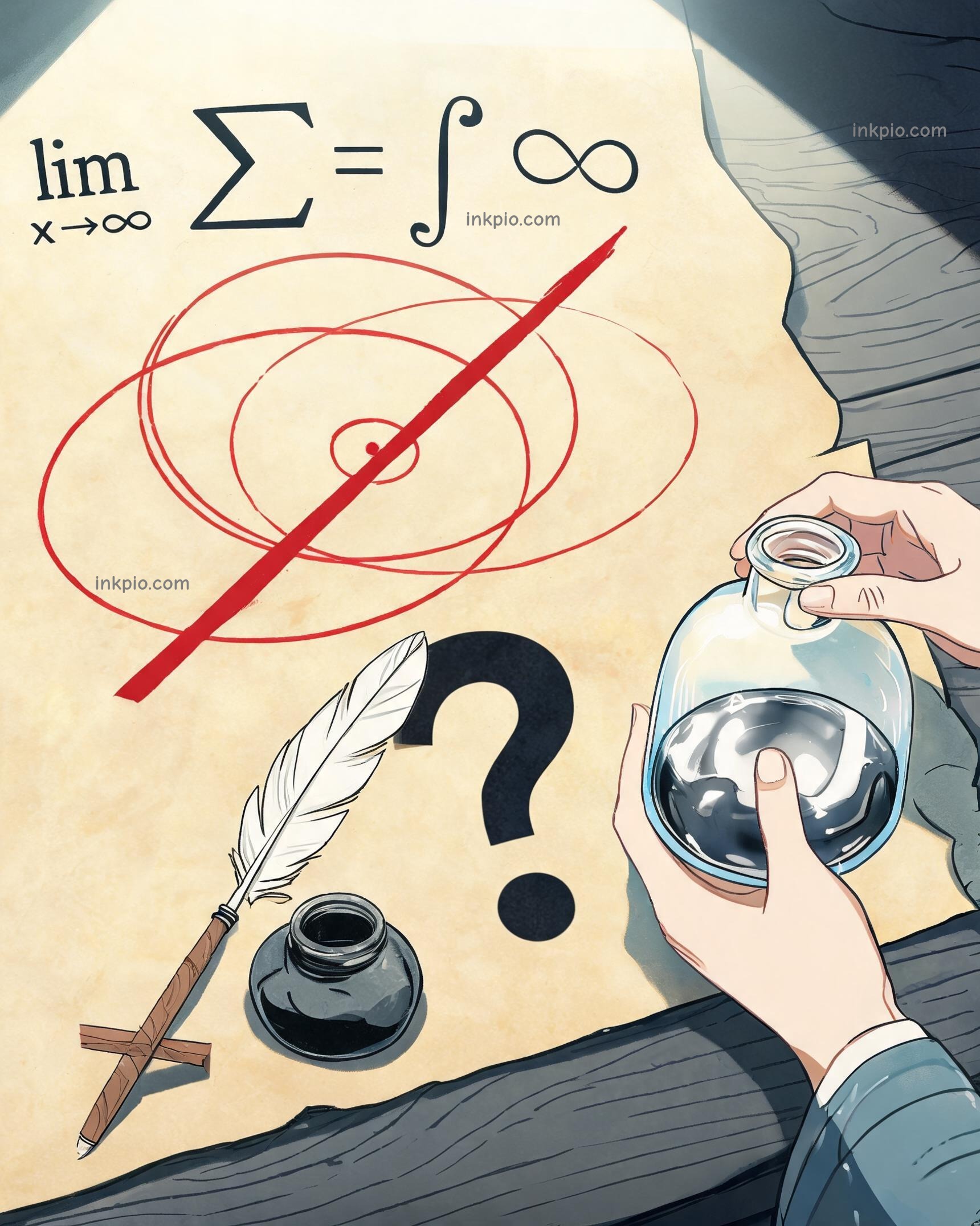

The pumps broke every single time at exactly thirty-three feet. Engineers in Florence threw their hands up, convinced nature just refused to leave empty space. Aristotle’s old rule claimed nature abhors a vacuum, but that ancient idea didn't explain why every suction machine hit the exact same wall. Torricelli stared at the cracked copper pipes and realized they were fighting a ghost. Water was simply too light to reveal the real force holding them back.
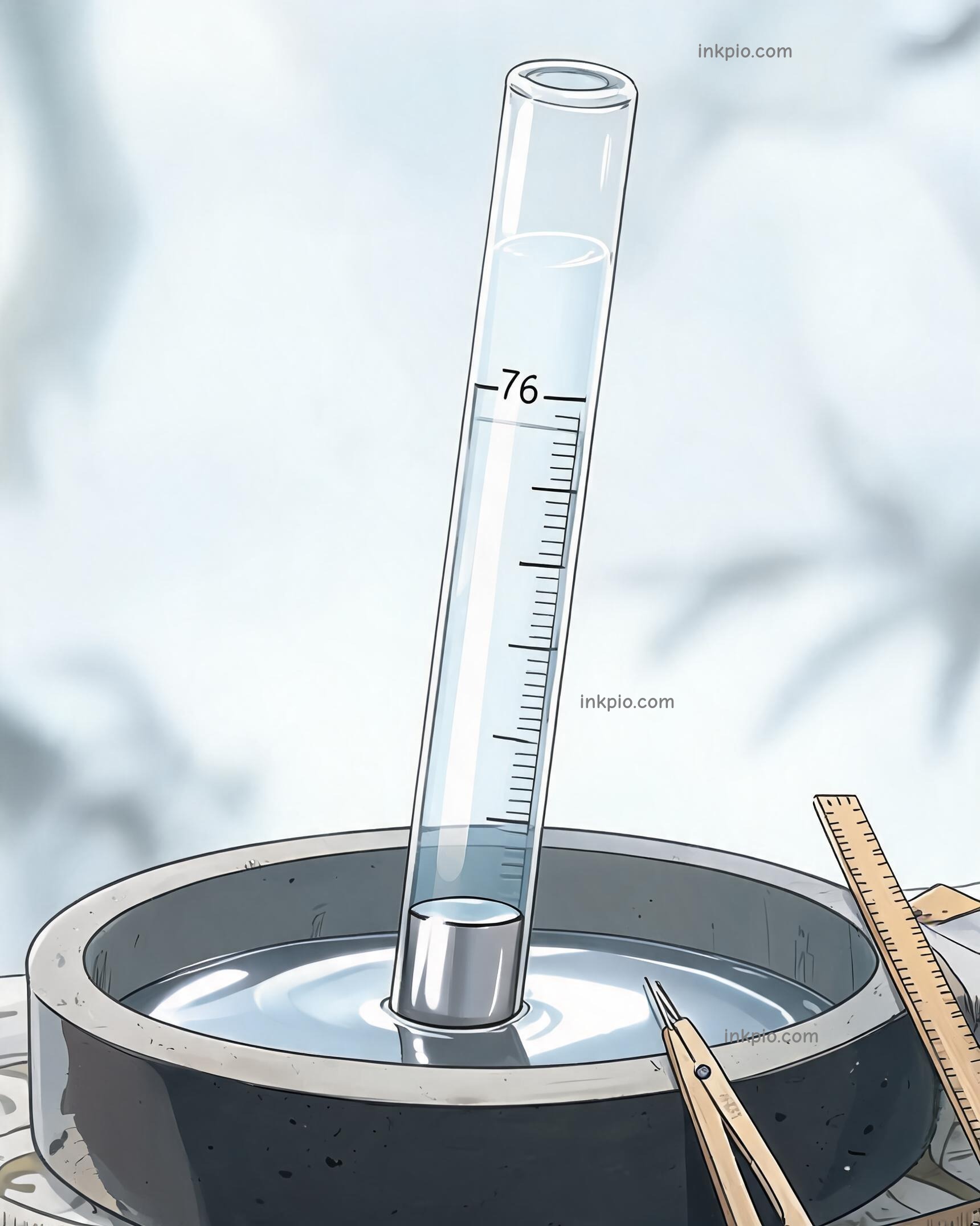
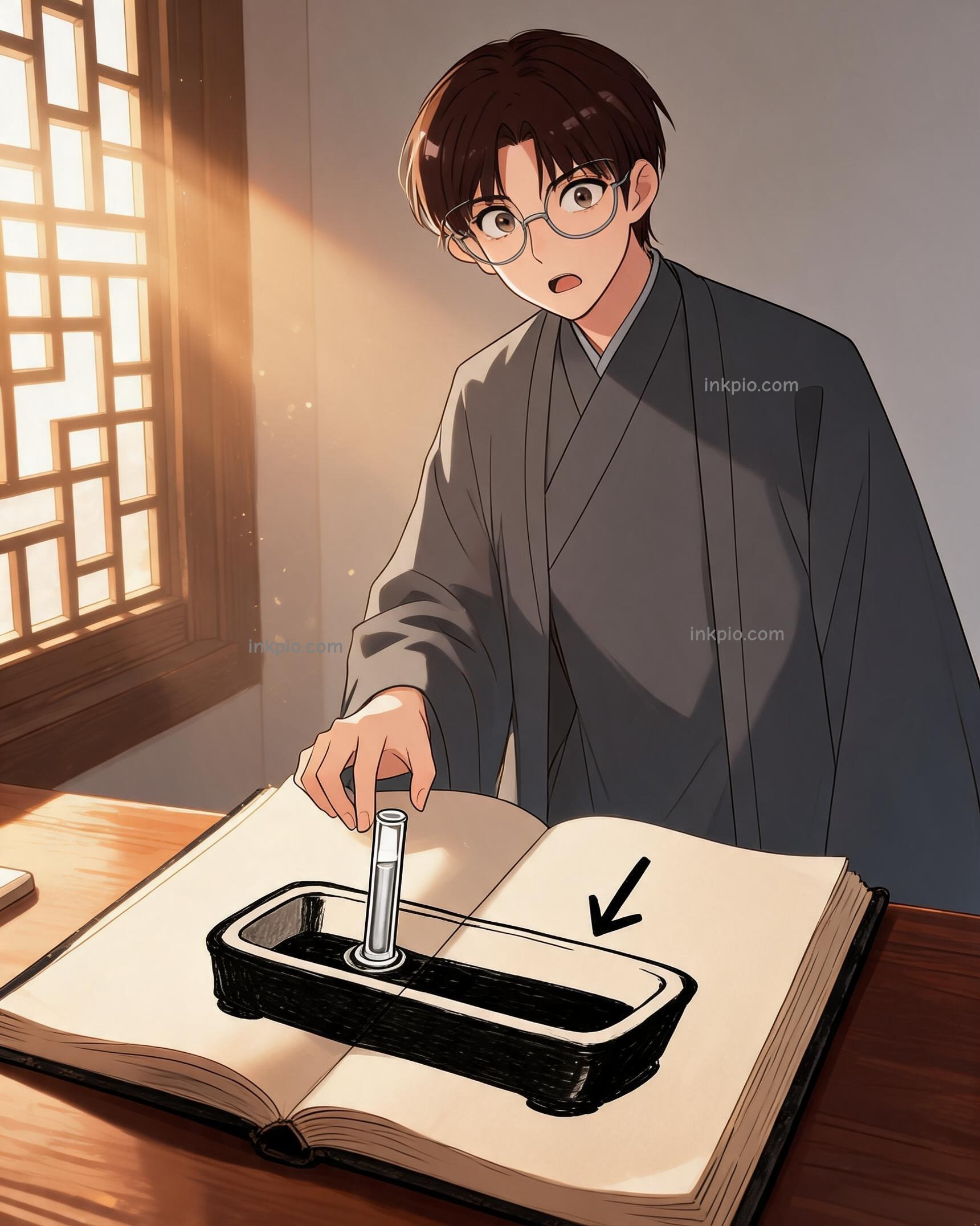
He decided to trade water for mercury. The silver liquid packed fourteen times more weight into the same space, turning a long wobbly column into a tight, heavy anchor. He took a four-foot glass tube, filled it completely with the heavy silver liquid, and kept his thumb pressed tight over the open end. He flipped it into a shallow dish, then slowly lifted his thumb away. The mercury column stabilizes at approximately 760 millimeters at sea level, proving atmospheric pressure. Above the silver surface, a completely empty space formed at the top of the tube.
That clear gap was the missing piece. The liquid didn't drain away because the open dish felt a steady push from everywhere outside. He pictured his city resting at the bottom of an invisible, shifting sea. The weight of the surrounding air pressed down on the basin, pushing the mercury up into the glass until the upward force matched the downward weight. It worked exactly like a seesaw finding its balance point. We live submerged at the bottom of an ocean of the element air, which by unquestioned experiments is known to have weight. The math finally matched the metal.
In 1643, Torricelli invented the mercury barometer in Florence, Italy, leaving the glass tube upright on his desk to track the sky's mood. The broken pumps and ancient philosophy stayed buried in the workshop dust. He just watched the silver line rise and fall, finally hearing the quiet push of the sky.